
Vehicle Impersonation Laws: When Car Paint Crosses Legal Lines
Understanding the legal implications of decorating your vehicle with police-style paint and equipment.
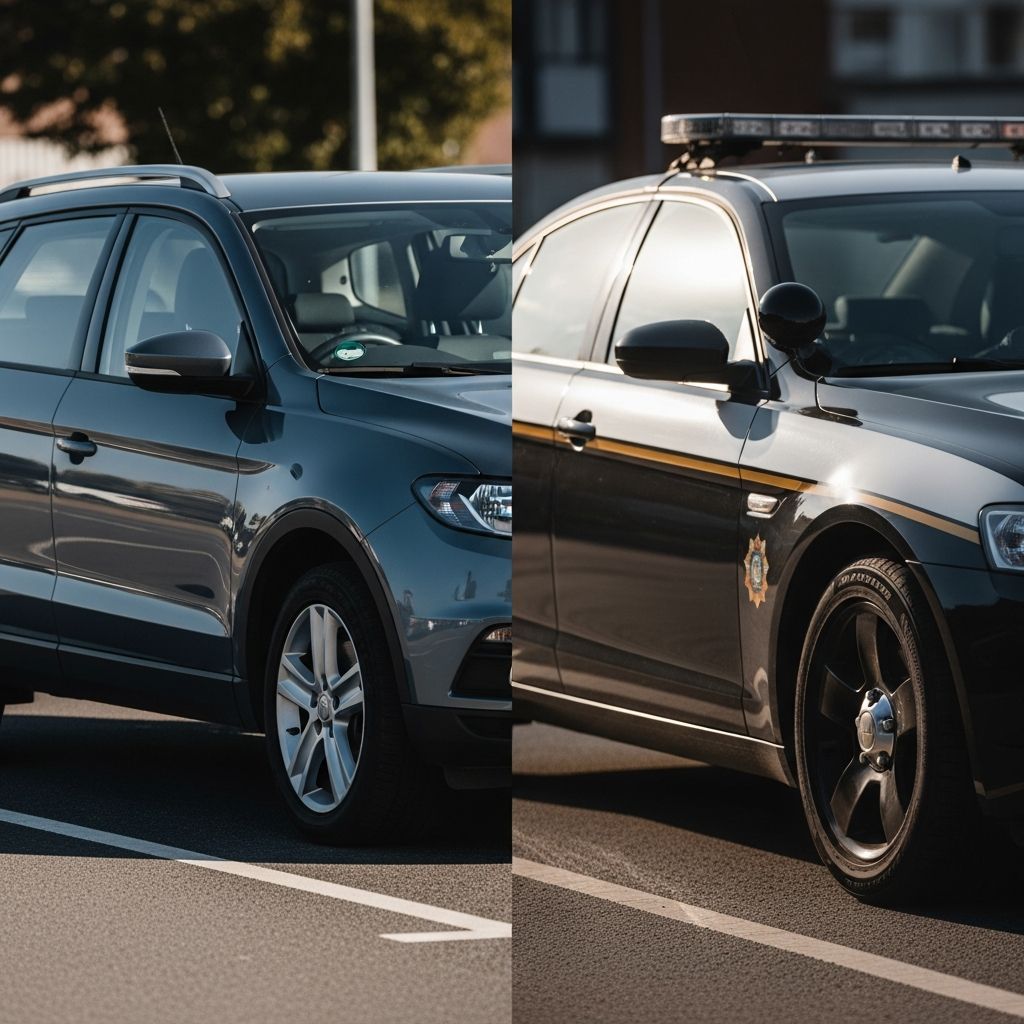
Understanding the Legal Framework Around Police-Style Vehicle Modifications
The desire to customize vehicles reflects personal expression and creativity, but certain modifications can venture into legally problematic territory. One particularly contentious area involves painting or decorating a vehicle to resemble a law enforcement cruiser. While some individuals have successfully created police-themed vehicles without legal consequences, the legality of such modifications depends heavily on jurisdiction, specific design elements, and the owner’s intentions. This distinction between allowable customization and criminal impersonation requires careful examination of both state statutes and federal regulations.
The fundamental question driving this legal inquiry is whether aesthetic similarity to police vehicles constitutes a violation. The answer is nuanced: appearing like a police car is not automatically illegal, but specific design choices and how the vehicle is used can trigger serious criminal liability.
The Critical Distinction Between Appearance and Impersonation
A vehicle’s superficial resemblance to a police cruiser differs significantly from actual impersonation under the law. Law enforcement agencies recognize this distinction when evaluating complaints about police-styled vehicles. The visual appearance alone—such as a black and white paint scheme—does not necessarily violate statutes designed to prevent impersonation of peace officers.
However, certain specific elements transform a vehicle from merely appearing police-like to crossing into illegal territory. These elements typically include:
- Official police department decals, insignia, or emblems
- Functional or activated emergency lighting systems (particularly blue and red lights)
- Official department identification numbers or badge numbers
- Authentic police radio equipment or communications systems
- Official department seals or logos
These components carry official meaning and convey false authority, which regulators view as the core problem. A vehicle styled to resemble a police car through paint alone may remain legal, while one equipped with functioning emergency lights and official insignia almost certainly crosses into impersonation territory.
Examining State and Local Variations in Vehicle Impersonation Laws
The United States lacks uniform federal legislation governing police vehicle aesthetics. Instead, each state and many municipalities establish their own standards through criminal statutes targeting impersonation of peace officers. This patchwork of regulations means that what is permissible in Nevada may be prohibited in neighboring California or Arizona.
Most jurisdictions frame impersonation statutes broadly to capture various forms of deception. These laws typically prohibit representing oneself as a peace officer through clothing, insignia, documentation, or vehicles when lacking legitimate authority. The specific language varies significantly, with some states focusing on intent to deceive, while others emphasize the mere representation itself.
For example, some jurisdictions distinguish between passive display and active use. A parked vehicle painted to look like a police car might receive different legal treatment than the same vehicle used during a traffic stop or in public interaction. The context and manner of use become critical factors in determining whether a violation has occurred.
What Law Enforcement Considers Permissible Vehicle Customization
According to statements from various police departments, certain vehicle modifications remain within legal bounds. Security companies, private investigation firms, and specialty contractors often operate vehicles with police-like aesthetics while remaining compliant with regulations. These businesses succeed by carefully avoiding specific prohibited elements.
Law enforcement officials have clarified that vehicles may legally incorporate:
- Black and white color schemes without official insignia
- Roof light bars that are not functional or are decorative only
- Custom text or messages that do not represent official authority
- Vintage police vehicle styling referencing historical designs
- Replica designs from entertainment properties or artistic concepts
These permissible modifications allow owners to achieve the aesthetic they desire while respecting legal boundaries. The key principle underlying these guidelines is avoiding false representation of official authority. A vehicle that looks like a police car but cannot reasonably fool someone into believing it is an actual law enforcement vehicle typically remains legally safe.
The Serious Criminal Consequences of Actual Impersonation
When vehicle modifications cross into actual impersonation, the legal consequences become severe. Impersonating a peace officer represents a serious crime in virtually all jurisdictions, often classified as a felony. The specific charges and penalties vary by state but generally reflect the gravity of misrepresenting official authority.
Potential criminal charges stemming from police vehicle impersonation include:
- Impersonation of a peace officer or law enforcement official
- False representation as a government official
- Fraud or deception for criminal purposes
- Unlawful restraint or false imprisonment (if the vehicle is used to stop or detain individuals)
- Kidnapping charges (in cases where deception leads to unlawful seizure)
- Misrepresentation of property or false advertising
- Operating unlicensed emergency equipment
These charges can result in substantial prison sentences, ranging from several months to years depending on jurisdiction and circumstances. Additionally, conviction creates a felony record that impacts employment, housing, and professional licensing opportunities for years to come.
Practical Considerations for Evaluating Your Vehicle Modification
Anyone considering decorating a vehicle with police-themed styling should evaluate several practical factors before proceeding. These considerations help determine whether your specific project falls within or outside legal boundaries.
Intent and Use: Consider your genuine motivation and how you plan to use the vehicle. Displaying a police-styled vehicle as a personal creative project differs from using it to interact with the public in ways that exploit its appearance. Your intentions matter both practically and legally.
Specific Design Elements: Audit every component against prohibited items in your jurisdiction. Remove or avoid any official insignia, functional emergency lights, or elements that convey false authority. Focus on color schemes, vintage styling, or entertainment references rather than authentic police equipment.
Geographic Location: Research the specific laws in your state and municipality. Contact local law enforcement or city legal departments to ask questions before beginning modifications. Many departments welcome inquiries and can provide clarity on what they consider permissible.
Communication with Authorities: Some individuals have successfully navigated this area by proactively consulting with local police before making modifications. This approach provides documentation of your good faith efforts to comply with the law and may offer protection if questions later arise.
Real-World Examples and Legal Outcomes
Several high-profile cases illustrate how courts and law enforcement distinguish between acceptable customization and criminal impersonation. In some instances, individuals have painted vehicles with police aesthetics for creative purposes—such as replicating a vehicle from entertainment properties—without facing criminal charges, particularly when they consulted with authorities beforehand and avoided prohibited elements.
Conversely, cases involving functional emergency lights, official insignia, or vehicles used in actual traffic stops or citizen interactions have resulted in serious charges and convictions. The difference typically hinges on specific prohibited elements rather than the mere resemblance to police vehicles.
These real-world scenarios demonstrate that law enforcement discretion plays a role. While some departments may overlook borderline cases, others strictly enforce impersonation statutes. This unpredictability makes proactive consultation and clear adherence to legal guidelines essential.
Alternative Approaches to Police-Themed Vehicle Expression
For those interested in police-themed vehicle aesthetics without legal risk, several alternative approaches exist. These options allow creative expression while definitively remaining within legal boundaries.
Consider decorating your vehicle with clear reference to entertainment properties, such as vehicles from specific movies or television shows. When styled to evoke a character or fictional vehicle rather than an actual police cruiser, these modifications typically avoid impersonation concerns. Vintage police car styling from historical eras with obvious vintage characteristics can also work well, as long as you avoid modern, functional emergency equipment.
Other creative options include police-themed graphics with clear artistic elements, custom paint designs inspired by law enforcement aesthetics without reproducing official insignia, or documentary-style vehicles highlighting police history. These approaches satisfy creative urges while maintaining clear legal compliance.
Common Questions About Police-Styled Vehicle Modifications
Q: Is painting my car black and white inherently illegal?
A: No. A black and white color scheme alone does not violate impersonation laws. The legality depends on additional elements such as official insignia, functional emergency lights, or actual representation of authority. However, context matters—using such a vehicle in ways that exploit the appearance could create legal problems.
Q: Can I install a light bar on my vehicle if it is not functional?
A: This varies by jurisdiction. Some areas allow decorative light bars as long as they are not functional or activated. Other areas restrict overhead light bars entirely. Consult your local regulations before installing any light bar, functional or not.
Q: What should I do if I want to create a police-themed vehicle but am unsure about legality?
A: Contact your local police department or city legal office directly. Ask specific questions about your planned modifications and request guidance. Many departments appreciate proactive inquiries and can clarify what is permissible in your jurisdiction.
Q: Can I be charged with impersonation if my vehicle is just parked and not in use?
A: This depends on specific circumstances and jurisdiction. Merely possessing a vehicle styled like a police car typically does not constitute active impersonation. However, if the vehicle is designed to actually deceive people into believing it is a legitimate police vehicle, legal exposure exists even in parked situations.
Q: Are private security companies allowed to use police-like vehicles?
A: Private security companies often operate vehicles with police-like aesthetics and typically avoid legal issues by removing all official insignia, emblems, and using different colored lights (if any). These vehicles look similar to police cars but do not represent actual law enforcement authority.
Q: What penalties might I face if convicted of police vehicle impersonation?
A: Penalties vary by jurisdiction but typically include significant fines, jail or prison time (potentially years in some cases), a felony record, and collateral consequences affecting employment and housing. Charges may escalate further if the vehicle is actually used to deceive or detain people.
References
- State Criminal Code Impersonation of Peace Officers — National Conference of State Legislatures. 2024. https://www.ncsl.org/research/civil-and-criminal-justice/
- Vehicle Impersonation Laws and Enforcement Guidelines — International Association of Chiefs of Police. 2023. https://www.theiacp.org/
- Federal Motor Vehicle Safety Standards for Emergency Lighting — National Highway Traffic Safety Administration (NHTSA), U.S. Department of Transportation. 2025. https://www.nhtsa.gov/vehicle-manufacturers
- Criminal Code Section on Impersonation of Public Officials — Legal Information Institute, Cornell Law School. 2024. https://www.law.cornell.edu/
- State Law Enforcement Agency Vehicle Standards — American Association of State Police Directors. 2023. https://www.aaspd.org/
Similar Articles








Read full bio of Sneha Tete




