
US Border Patrol Essentials: Key Insights
Discover critical facts about the US Border Patrol's history, mission, operations, and evolving role in national security.
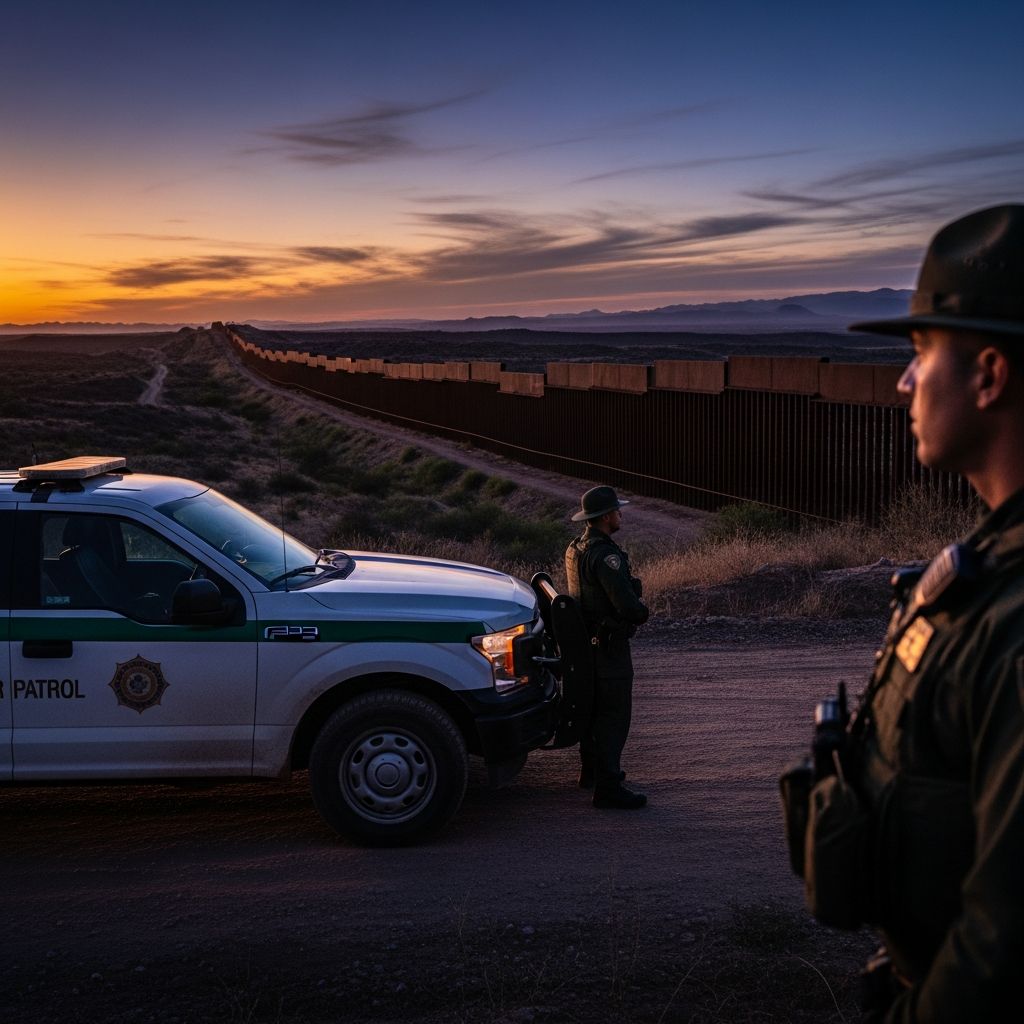
The United States Border Patrol stands as a cornerstone of national security, tasked with safeguarding the nation’s land borders from illegal entries, smuggling, and threats to public safety. Operating under U.S. Customs and Border Protection (CBP), this federal agency plays a pivotal role in immigration enforcement and counter-terrorism efforts.
Historical Foundations of Border Protection
The origins of the US Border Patrol trace back to May 28, 1924, when Congress passed the Labor Appropriation Act, creating the agency with an initial force of 450 patrol inspectors. Established to enforce Section 8 of the Immigration Act of 1917, the primary focus was preventing smuggling, harboring, or aiding undocumented entrants between official ports of entry.
Initially part of the U.S. Immigration Service under the Department of Labor, the Border Patrol distinguished itself from customs patrols by concentrating on immigration violations. By 1925, responsibilities expanded to include coastal surveillance in coordination with the U.S. Customs Service and Coast Guard. This early period saw close collaboration with local entities like Texas Rangers and sheriffs to apprehend violators.
World War II marked a significant shift, with 354 inspectors assigned to coastal watch duties in 1942 to detect enemy submarines, spies, and subversives. Post-war, the agency launched interior repatriation programs, transporting Mexican nationals deeper into Mexico via bus and train to deter repeat crossings.
The 1950s brought intensified operations, including the 1953 Boatlift from Texas to Mexico, which removed over 49,000 individuals, and Operation Wetback in 1954. This massive campaign deployed 750 inspectors, apprehending over 1.1 million people and prompting around 700,000 self-deportations.
Organizational Structure and Modern Evolution
Following the September 11, 2001 attacks, the Border Patrol integrated into the Department of Homeland Security (DHS), expanding its mandate to include anti-terrorism alongside traditional immigration and drug interdiction duties.
Today, the agency boasts nearly 20,000 uniformed agents as of fiscal year 2023, making it one of the largest law enforcement bodies in the U.S. Of CBP’s over 60,000 employees, about one-third are Border Patrol agents focused exclusively on areas between the 328 official ports of entry.
The workforce is diverse, with Latinos comprising over 50% of agents based on 2016 data, reflecting the demographic realities of border regions. The agency’s motto, “Honor First,” underscores its commitment to integrity amid expanding roles, including air security, civil unrest control, civil rights protection, fugitive searches, search-and-rescue, and disaster response.
Core Mission and Strategic Priorities
The Border Patrol’s mission is to “Protect the American people, safeguard our borders, and enhance the nation’s economic prosperity.” Key objectives include apprehending terrorists and weapons, deterring illegal entries, targeting smugglers of humans, drugs, and contraband, deploying advanced technology, and reducing border community crime.
Primary operations occur along the U.S.-Mexico border, where agents combat drug trafficking and unauthorized migration. In FY 2023, agents encountered about 2.5 million migrants, highlighting the scale of challenges. Nationwide, FY 2019 saw 19,648 agents, with 16,731 on the southern border.
Daily Operations and Tactical Approaches
Border Patrol agents engage in diverse activities to secure borders. “Line watch” forms the backbone, involving surveillance from hidden positions, responding to sensor alerts, aircraft sightings, and tracking physical signs like footprints to detect and apprehend intruders.
- Traffic Checks: 24/7 highway checkpoints verify citizenship, leading to arrests of criminals and drug seizures.
- Farm and Ranch Checks: Inspections of agricultural sites employing transient workers to identify undocumented individuals.
- City Patrols: Foot and vehicle surveys in communities to locate unauthorized immigrants.
- Transportation Checks: Monitoring buses, trains, and airports for smugglers and entrants.
- Interior Checkpoints: 33 permanent stations near the southern border facilitate traffic observation and intelligence gathering.
Advanced tools like electronic sensors, cameras, and aircraft enhance these efforts, embodying the “smart border” strategy.
Authority, Rights, and Legal Framework
Agents possess broad powers between ports of entry, including warrantless searches of vehicles, homes, and individuals for immigration violations. However, Fourth Amendment protections apply, requiring reasonable suspicion for stops and probable cause for arrests.
At interior checkpoints, brief citizenship inquiries are permissible without suspicion, but extended detentions need justification. Agents can board vessels within U.S. territorial waters (12 nautical miles) and use force proportionally when facing resistance.
| Operational Area | Agent Powers | Legal Limits |
|---|---|---|
| Border Proximity (100 miles) | Warrantless stops/searches for immigration | Reasonable suspicion required |
| Interior Checkpoints | Citizenship questions | No prolonged detention without cause |
| Private Property | Entry for surveillance | Cannot search structures without consent/warrant |
Budget, Resources, and Effectiveness Metrics
Congress allocated $3.8 billion for FY 2017, supporting vehicles, aircraft, boats, sensors, and infrastructure. Effectiveness is gauged by apprehensions, with FY 2024 data showing only 1.1% of border crossers had prior criminal convictions, indicating focused enforcement on threats.
Recent policy shifts, like enhanced enforcement and state partnerships, have reduced illegal crossings.
Challenges and Future Directions
Agents confront humanitarian crises, drug epidemics, and geopolitical pressures. Balancing security with rights remains critical, as does technological integration like drones and AI surveillance.
Training emphasizes cultural sensitivity, de-escalation, and use-of-force protocols. Recruitment targets diverse candidates to build community trust.
Frequently Asked Questions (FAQs)
What is the primary role of US Border Patrol agents?
Agents detect, prevent, and apprehend illegal entrants, terrorists, and smugglers between ports of entry through patrols, checkpoints, and technology.
How many agents does the Border Patrol have?
As of recent figures, nearly 20,000 agents serve nationwide, with the majority on the southern border.
Can Border Patrol enter private property?
Yes, for border-related surveillance within reasonable distances, but searches require consent, warrants, or exigent circumstances.
What happens at interior checkpoints?
Agents conduct brief citizenship inquiries; vehicles may be referred for secondary inspection based on suspicion.
Has the Border Patrol’s mission changed over time?
Originally immigration-focused, it now includes anti-terrorism, drug interdiction, and disaster response post-9/11.
References
- United States Border Patrol — Wikipedia. 2022. https://en.wikipedia.org/wiki/United_States_Border_Patrol
- United States Border Patrol — Texas State Historical Association. 2023. https://www.tshaonline.org/handbook/entries/united-states-border-patrol
- How the U.S. Patrols Its Borders — Council on Foreign Relations. N/A. https://www.cfr.org/backgrounders/how-us-patrols-its-borders
- Border Patrol History — Border Patrol Museum. N/A. https://borderpatrolmuseum.com/history/
- Border security and enforcement: a data-driven guide — USAFacts. 2024. https://usafacts.org/guides/border-security/
- U.S. Customs and Border Protection (CBP) — USAGov. N/A. https://www.usa.gov/agencies/u-s-customs-and-border-protection
- Secure the Border — The White House. 2025. https://www.whitehouse.gov/priorities/border-immigration/
Similar Articles








Read full bio of medha deb




