
Rule Of Law: 7 Principles That Protect Citizens’ Rights In 2025
Discover the foundational principles of the rule of law, its historical roots, and why it remains essential for justice and democracy today.
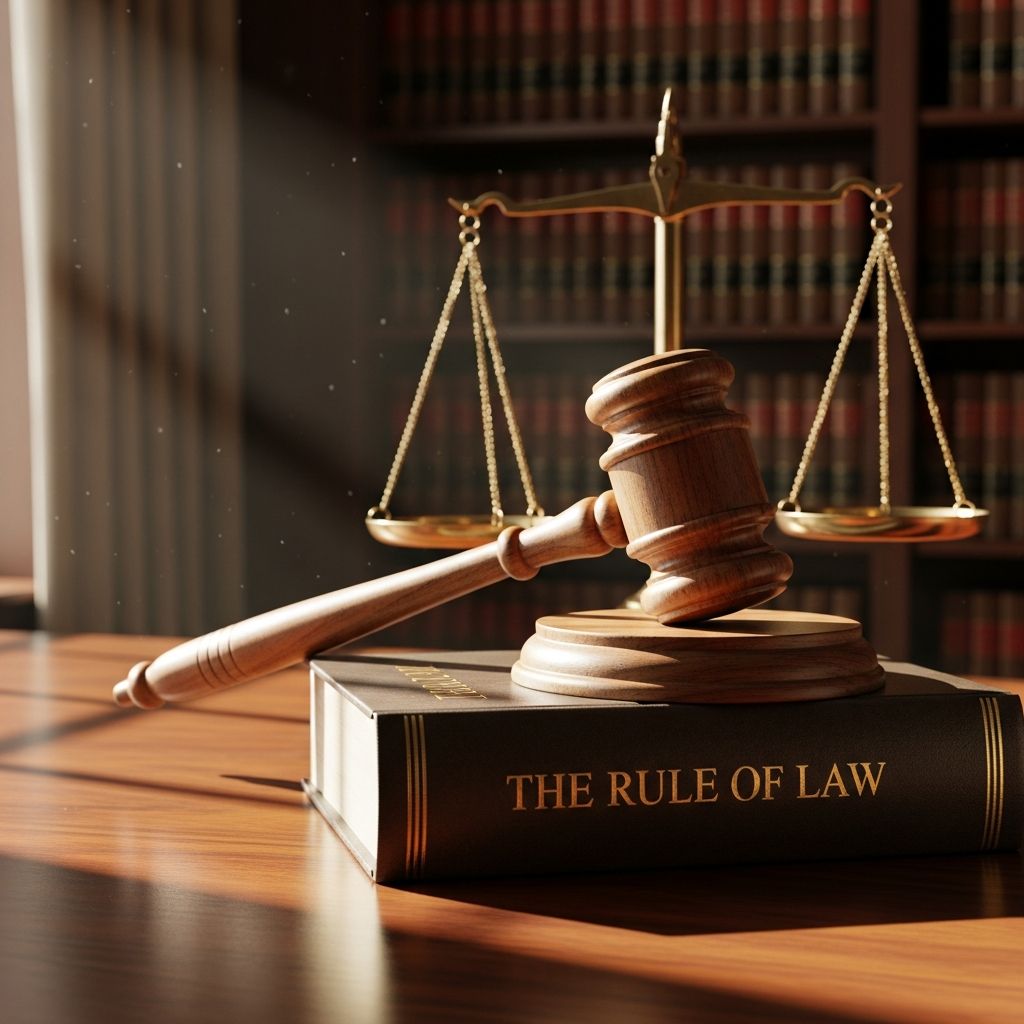
The
rule of law
stands as a cornerstone of modern societies, ensuring that governance operates within defined legal boundaries rather than personal whims or unchecked power. It guarantees that laws apply equally to everyone, from ordinary citizens to the highest officials, fostering stability, fairness, and trust in public institutions.Defining the Core Concept
At its essence, the rule of law requires that all individuals, organizations, and governments are accountable to laws that are publicly known, consistently applied, and independently judged. This principle prevents arbitrary decision-making and protects fundamental rights. According to the United Nations, it encompasses accountability to publicly promulgated laws that align with international human rights standards, emphasizing supremacy of law, equality, and fairness in application.
The European Commission outlines it through six interconnected principles: legality in law-making, legal certainty, prevention of arbitrary executive power, effective judicial protection, separation of powers, and equality before the law. These elements ensure public powers act within legal constraints, respecting democracy and rights under impartial courts.
In practical terms, the World Justice Project describes it as a system delivering accountability for government and private actors, just laws that are clear and stable, open government processes, and accessible impartial justice. This framework supports human rights, property protections, and efficient legal administration.
Historical Foundations and Evolution
The idea traces back centuries, evolving from ancient notions of justice to formalized principles in constitutional thought. British jurist A.V. Dicey articulated key characteristics in the 19th century: supremacy of regular law over arbitrary power, equality under the law without exemptions for officials, and constitutional rights derived from judicial decisions rather than abstract declarations.
Earlier roots appear in 17th-century England and the Magna Carta of 1215, which limited monarchical authority. In the U.S., Founding Fathers like John Adams championed a ‘government of laws, not of men,’ embedding it in the Constitution. Federalist Paper No. 78 underscores courts’ role in prioritizing the Constitution over conflicting statutes, ensuring judicial review.
Over time, the concept globalized, influencing international bodies. The UN links it to peace, development, and Sustainable Development Goals, viewing strong rule-of-law societies as outcomes of equitable progress.
Key Principles in Action
Several universal principles underpin the rule of law, each vital for its functionality:
- Accountability: Governments and private entities answer to the law, curbing corruption and abuse.
- Just and Clear Laws: Legislation must be publicized, stable, and evenly applied, protecting rights like contracts and procedures.
- Open Government: Law creation, enforcement, and adjudication processes are transparent and efficient.
- Impartial Justice: Competent, ethical courts provide timely access to justice, reflecting community diversity.
In the U.S., this manifests through separation of powers, due process, and equal protection, as affirmed by the American Constitution Society. Laws bind all, including the presidency, with courts resolving disputes independently.
| Principle | Description | Example |
|---|---|---|
| Legality | Transparent, democratic law enactment | Parliamentary debates and public consultations |
| Legal Certainty | Predictable, non-retroactive laws | Fixed tax codes applied uniformly |
| Separation of Powers | Checks between branches | Judicial review of executive actions |
| Equality | No one above the law | Prosecuting officials for misconduct |
Global Significance and Applications
Internationally, the rule of law underpins peace, economic growth, and human rights. The EU treats it as a fundamental value, essential for democracy and freedoms. Violations, like undermining judicial independence, threaten member states’ cohesion.
In developing contexts, it facilitates access to services, reduces corruption, and builds social contracts between states and citizens. The UN emphasizes its role in achieving SDGs, linking legal stability to poverty reduction and inclusive development.
U.S. courts reinforce it by interpreting the Constitution as supreme law, holding entities accountable to publicly enforced standards consistent with human rights.
Challenges and Threats Today
Despite its strengths, the rule of law faces erosion from populism, executive overreach, and political interference in judiciaries. Claims that leaders can selectively ignore laws undermine predictability and trust. As the American Constitution Society warns, presidential assertions of unilateral law interpretation risk collapse of legal foundations.
Global reports highlight declining judicial independence in various nations, arbitrary detentions, and media suppression. Yet, resilient institutions and civil society pushback demonstrate its durability when defended.
Why It Matters for Everyday Life
Beyond abstractions, the rule of law affects daily realities: secure property ownership, fair contracts, uncontaminated environments, and police accountability. It enables planning—businesses invest knowing rules won’t shift capriciously, individuals pursue justice without fear or favor.
Weak rule of law correlates with instability, inequality, and conflict. Strong adherence, conversely, drives prosperity and rights protection. As philosopher Charles Barzun notes, it constrains even democratic majorities, preventing tyranny of the majority in constitutional orders.
Frequently Asked Questions (FAQs)
What is the simplest definition of the rule of law?
It means no one is above the law—all are equally subject to clear, fair, and consistently applied legal codes.
How does the rule of law differ from rule by law?
Rule of law binds rulers to limits; rule by law allows instrumental use of laws for control without accountability.
Why is judicial independence crucial?
Independent courts provide impartial adjudication, checking other powers and protecting rights.
Can the rule of law exist without democracy?
It can in limited forms, but thrives best with democratic accountability and participation.
What role does the rule of law play in economic development?
It ensures stable contracts, property rights, and anti-corruption measures, fostering investment and growth.
Maintaining the Rule of Law Forward
Safeguarding this principle demands vigilance: robust civic education, support for independent judiciaries, transparent governance, and international cooperation. By prioritizing it, societies secure justice, prosperity, and dignity for all. Education on its nuances equips citizens to defend it against erosion, ensuring governance serves the public good.
References
- What is the Rule of Law? — United Nations. 2023. https://www.un.org/ruleoflaw/what-is-the-rule-of-law/
- What is the rule of law? — European Commission. 2024-10-16. https://commission.europa.eu/strategy-and-policy/policies/justice-and-fundamental-rights/upholding-rule-law/rule-law/what-rule-law_en
- Rule of law — Wikipedia (citing primary sources). 2026. https://en.wikipedia.org/wiki/Rule_of_law
- What Is the Rule of Law? — American Constitution Society. 2020-12-15. https://www.acslaw.org/inbrief/what-is-the-rule-of-law/
- What is the Rule of Law? — World Justice Project. 2024. https://worldjusticeproject.org/about-us/overview/what-rule-law
- Overview – Rule of Law — United States Courts. 2023. https://www.uscourts.gov/educational-resources/educational-activities/overview-rule-law
Similar Articles








Read full bio of medha deb




