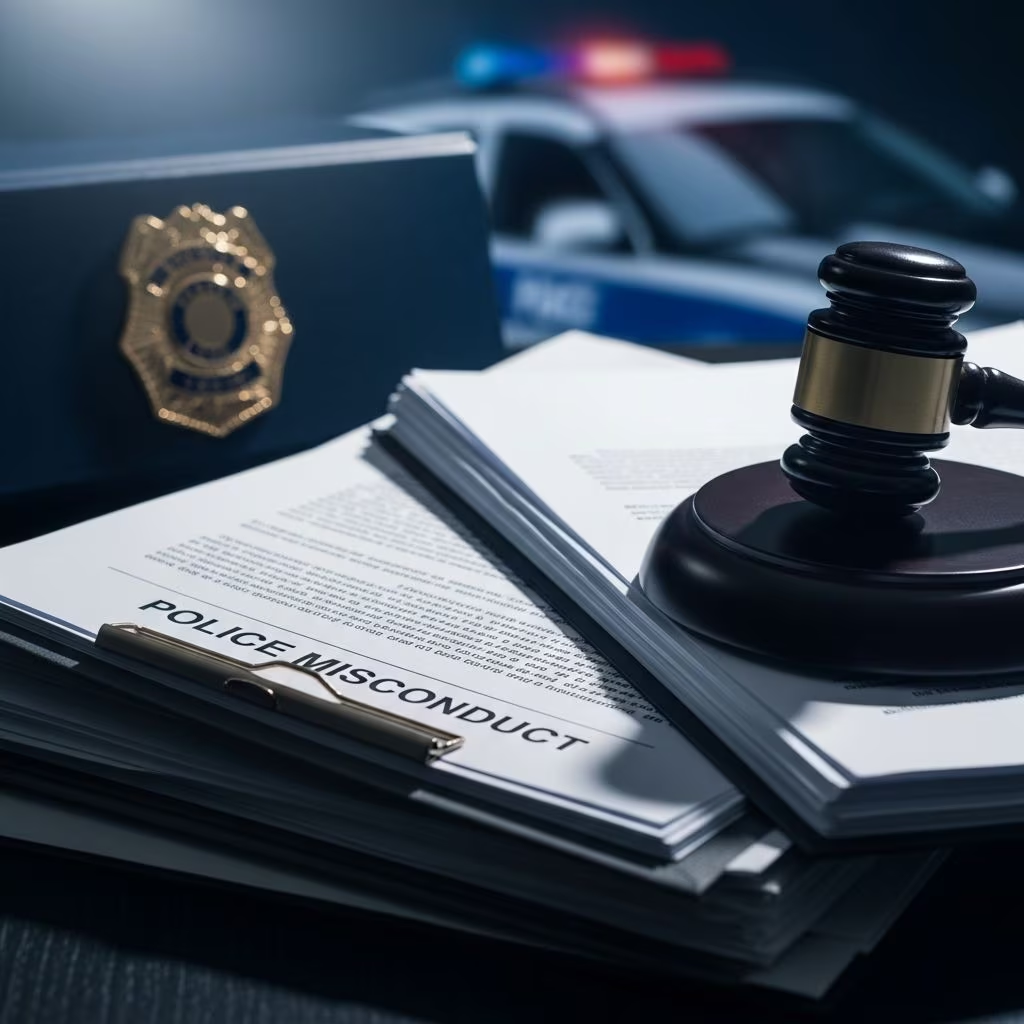
Police misconduct undermines public trust and individual rights, encompassing actions that deviate from legal and ethical standards during official duties. These violations range from physical abuse to procedural irregularities, often leading to wrongful convictions or injuries. This article examines prevalent forms, supported by documented cases and official data, while outlining remedies and preventive measures.
Defining Police Misconduct and Its Broader Impact
Police misconduct refers to inappropriate or illegal behaviors by officers connected to their roles, such as excessive force, false arrests, or evidence manipulation. According to the U.S. Department of Justice, investigations frequently address excessive force alongside issues like sexual misconduct and theft. Such actions not only harm victims but also strain community relations and inflate taxpayer costs for settlements.
In California, data from 2016–2019 shows use-of-force incidents often stem from routine calls, highlighting systemic patterns. Nationally, high-profile incidents have sparked reforms, yet challenges persist. Victims may pursue civil lawsuits under 42 U.S.C. § 1983 for constitutional violations, seeking damages or policy changes.
Excessive Force: When Restraint Crosses into Brutality
Excessive force occurs when officers apply unreasonable physical power beyond what’s needed to address a threat. This includes chokeholds, tasers on compliant individuals, or prolonged restraints. The George Floyd case exemplifies this: an officer knelt on Floyd’s neck for over nine minutes despite pleas, resulting in death and federal convictions.
Other instances involve non-firearm violence, like the Philando Castile shooting during a traffic stop, where excessive shots followed compliance. California DOJ reports indicate most serious force events arise from service calls, not planned operations. Legally, courts evaluate “objective reasonableness” under Graham v. Connor (1989), considering threat severity, suspect resistance, and immediacy.
- Red flags: Force after submission, strikes to non-threat areas, or ignoring medical needs.
- Consequences: Criminal charges, terminations, and multimillion-dollar payouts.
False Arrests and Unlawful Detentions: Lacking Legal Grounds
False arrest happens without probable cause or warrants, violating Fourth Amendment protections. A Chicago Good Samaritan, who aided an injured officer, was wrongly jailed for ten months and coerced into false statements, later winning $7.7 million. Officers must articulate specific facts justifying custody; hunches suffice not.
Unlawful detentions prolong holds without charges, tainting subsequent evidence. In Maryland, extended custody absent probable cause allows suppression of gathered items. Document details like stop duration and stated reasons to challenge validity.
| Type | Legal Requirement | Violation Example |
|---|---|---|
| Stop | Reasonable suspicion | No articulated reason given |
| Arrest | Probable cause | Detention >48 hours sans charges |
| Search | Warrant or exception | Coerced consent post-threats |
Evidence Tampering: Planting, Fabricating, and Withholding
Officers planting or falsifying evidence erodes justice. A South Carolina officer placed his taser by an unarmed man’s body to justify a shooting, earning 20 years imprisonment. Fabricating fingerprints on evidence cards in a New York murder case led to convictions decades later.
Withholding exculpatory (Brady) material breaches due process. Altering reports or hiding defense-favorable info constitutes misconduct. Prosecutors must disclose such evidence; failures prompt dismissals.
- Common tactics: Dropping contraband, falsifying lab results, or selective reporting.
- Detection: Body cams, witness videos, forensic re-analysis.
Coerced Confessions and Witness Manipulation
Coercion involves tricking or pressuring statements sans Miranda warnings. Officers might imply leniency or lie about evidence, invalidating admissions. Witness tampering uses threats or bribes to alter testimony, as in a Hawaii theft case where officers faced prison.
These violate Fifth Amendment rights against self-incrimination. Courts suppress coerced fruits, potentially collapsing cases.
Bias-Driven Actions: Profiling and Prejudice
Racial profiling targets based on race absent cause, as in Ferguson where stops disproportionately hit people of color. Bias extends to gender, orientation; patterns in officer history can discredit arrests. DOJ pattern-or-practice probes address systemic issues.
Abuses of Authority: From Sexual Misconduct to Intoxication
Abuses include sexual assault, as in a New York kidnapping-rape post-arrest. On-duty drunkenness, like a Georgia officer at 0.087 BAC, prompts firings. Entrapment lures crimes unlike legitimate stings.
Protecting Yourself: Rights and Immediate Steps
Know your rights: Remain silent, request lawyers, decline consent searches. Record encounters if safe. Post-incident, seek medical care, preserve evidence, contact attorneys promptly.
- During stops: Ask purpose, avoid consenting searches.
- If arrested: Invoke rights clearly: “I want a lawyer.”
- Report misconduct: Internal affairs, DOJ Civil Rights Division.
Legal Recourse: Suing and Seeking Justice
Civil suits under §1983 target constitutional breaches. Qualified immunity shields unless rights clearly violated. Class actions reform departments. Criminal prosecutions via DOJ yield indictments.
Suppression motions exclude misconduct-derived evidence, aiding dismissals or pleas.
Frequently Asked Questions (FAQs)
Can I sue for police misconduct?
Yes, via §1983 for rights violations; consult attorneys for viability.
What proves excessive force?
Objective unreasonableness per Graham v. Connor factors.
How to challenge false arrest?
Prove lacking probable cause; suppress fruits.
Does body cam footage help cases?
Often pivotal, but policies vary on access/release.
What if evidence was planted?
Forensic review, officer history expose tampering.
Pathways to Reform: Oversight and Prevention
Reforms include body cams, de-escalation training, civilian boards. DOJ consent decrees enforce changes. Community policing builds trust. Data tracking, as California’s use-of-force reports, aids accountability.
Victims’ advocacy drives progress; sustained pressure yields results.
References
- 10 Examples of Police Misconduct to Refer to for Your Case — AER Law Group. 2023. https://www.aerlawgroup.com/blog/10-examples-of-police-misconduct-to-refer-to-for-your-case/
- 4 Examples of Improper Police Tactics — West Palm Beach Defense. 2022-09. https://www.westpalmbeachdefense.com/blog/2022/september/4-examples-of-improper-police-tactics/
- 5 Examples of Police Misconduct to Refer to for Your Case — RJ Affe Law. N.D. https://www.rjaffelaw.com/blog/5-examples-of-police-misconduct-to-refer-to-for-your-case/
- Police misconduct – Wikipedia — Wikipedia. 2026-04 (accessed). https://en.wikipedia.org/wiki/Police_misconduct
- 5 Examples of Police Misconduct to Refer to for Your Case — Andrew Alpert. N.D. https://andrewalpert.com/blog/5-examples-of-police-misconduct-to-refer-to-for-your-case/
- Police Use of Force and Misconduct in California — Public Policy Institute of California (PPIC). 2021. https://www.ppic.org/publication/police-use-of-force-and-misconduct-in-california/
- Law Enforcement Misconduct — U.S. Department of Justice (DOJ). 2026 (current). https://www.justice.gov/crt/law-enforcement-misconduct