
Understanding Criminal Mischief: Property Damage and the Law
A practical guide to how criminal mischief laws treat vandalism, property damage, penalties, and possible defenses.
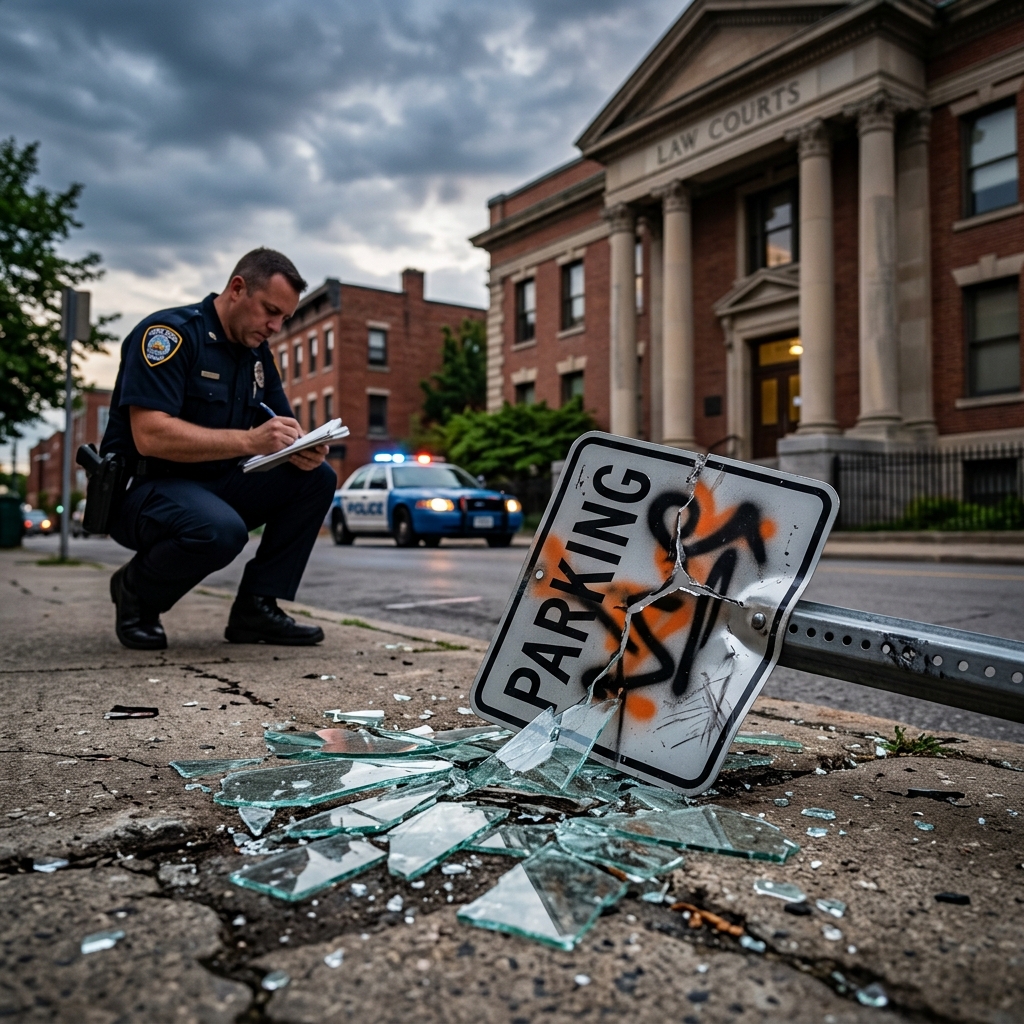
Criminal mischief is one of the most common property-related offenses in the United States, yet many people only encounter the term after an arrest or citation. In everyday language, it often overlaps with what people call vandalism, graffiti, or simply damage to property. In legal terms, though, criminal mischief is a defined offense that can range from a minor violation to a serious felony, depending on the circumstances and the amount of harm caused.
This guide explains what counts as criminal mischief, how different laws treat property damage, when charges become more serious, and what kinds of defenses may be available. While specific rules vary by state or jurisdiction, the core ideas are similar across the country.
What Does “Criminal Mischief” Mean?
Most criminal mischief laws focus on intentional or reckless damage to someone else’s property without consent. That property can be private (such as a car or home) or public (such as a park bench or utility equipment).
Although statutes differ, they typically cover three main kinds of conduct:
- Damaging or destroying property – breaking, burning, or otherwise harming tangible property that belongs to another person or to the public.
- Tampering with property – interfering with the use or operation of property in a way that causes loss, inconvenience, or danger, even if the item is not fully destroyed.
- Defacing or marking property – placing graffiti, inscriptions, slogans, or other markings on property without the owner’s consent.
In some jurisdictions, criminal mischief can also include causing financial loss through deception or threats tied to property, or damaging property with the intent to defraud an insurer.
Key Legal Elements of Criminal Mischief
Although the exact phrasing of statutes differs, most criminal mischief charges require prosecutors to prove several basic elements. These are the components that determine whether an act of property damage rises to the level of criminal mischief.
1. Property Belonging to Another
The property involved must belong to someone else or be public property, meaning the accused does not have full ownership or permission to damage it.
- Damage to your own property is generally not criminal mischief (unless other laws are implicated, such as insurance fraud).
- Public property includes items owned by government entities, such as signs, roads, public buildings, and utility infrastructure.
2. Lack of Consent
Criminal mischief almost always requires that the damage or tampering occur without the effective consent of the owner.
- If the owner authorizes alterations, painting, or removal, the conduct typically will not be treated as criminal mischief.
- Some statutes specify “effective consent,” meaning consent obtained by fraud or coercion may not shield the conduct from criminal liability.
3. Mental State (Intent, Knowledge, or Recklessness)
Most criminal mischief laws require a particular mental state at the time of the act. Common standards include:
- Intentionally – the person means to cause damage or loss.
- Knowingly – the person is aware their conduct will damage property.
- Recklessly – the person disregards a substantial risk that property will be damaged.
- In some regulations, negligence can also support criminal mischief when dangerous means such as fire or explosives are used.
In certain states, such as Florida, prosecutors must show that the accused acted willfully and maliciously when damaging another’s property, indicating a conscious and wrongful intent.
4. Damage, Loss, or Danger
The conduct must result in some form of harm, which can include:
- Physical damage or destruction to the property.
- Financial or “pecuniary” loss, such as repair or cleanup costs.
- Substantial inconvenience, such as disruption of service or impaired use.
- Endangerment to persons or property, for example by tampering with safety equipment.
Common Examples of Criminal Mischief
Criminal mischief statutes are broad on purpose, allowing them to cover many forms of property damage. Typical scenarios include:
- Spray-painting graffiti on a store’s wall without permission.
- Breaking windows at a residence or vehicle during an argument.
- Keying or scratching someone else’s car out of anger or revenge.
- Pulling down or defacing street signs or public monuments.
- Cutting utility lines or damaging equipment that disrupts communication or power service.
- Tampering with fencing, gates, or other structures in a way that endangers animals or interferes with property use.
States can also create special versions of criminal mischief for specific contexts, such as damage caused during controlled substance manufacturing or harm to law enforcement animals.
How Serious Is Criminal Mischief? Misdemeanor vs. Felony
The seriousness of a criminal mischief charge usually depends on the extent of the damage, the type of property involved, and sometimes the accused’s prior record. These factors affect whether the charge is treated as a minor offense or a felony.
Damage Amount as a Key Factor
Many statutes use the dollar value of the loss (repair, replacement, or cleanup costs) to set the level of offense.
| Typical Damage Range | Common Charge Level | General Consequences (Example Patterns) |
|---|---|---|
| Minor damage (e.g., under a few hundred dollars) | Petty offense or lower-level misdemeanor | Fines, short jail exposure, restitution to the property owner. |
| Moderate damage (hundreds to thousands of dollars) | Higher-grade misdemeanor or low-level felony | Longer possible jail or prison terms, higher fines, more significant criminal record consequences. |
| High damage (thousands of dollars or major disruption) | Felony offense | Potential multi-year prison sentences, substantial fines, and long-term collateral effects. |
For example, under Florida law, criminal mischief can be a second-degree misdemeanor when the damage is $200 or less, a first-degree misdemeanor for damage between $200 and $1,000, and a third-degree felony if the damage reaches $1,000 or more or causes significant interruption of public services.
Specially Protected Property
Certain types of property carry enhanced penalties if damaged. Typical examples include:
- Places of worship and burial sites – damage to churches, synagogues, mosques, or human burial places may be treated as a felony, even when the dollar amount is lower.
- Public monuments and historic memorials – defacing statues, memorials, or historic markers can trigger higher level charges.
- Critical infrastructure and utilities – harming equipment used for communication, transportation, water, gas, or power can lead to severe penalties due to public risk and disruption.
- Law enforcement animals and public records – some states create specific felony versions of criminal mischief when police dogs or official records are damaged.
Prior Convictions and Other Aggravating Factors
In certain jurisdictions, a prior criminal mischief conviction can elevate a new offense to a higher level, even if the damage amount would otherwise be relatively minor.
Other common aggravating factors include:
- Using fire, explosives, or other dangerous means.
- Acting as an unlawful occupant of a property when causing extensive damage.
- Engaging in a common scheme that results in aggregated loss across multiple incidents.
Legal Consequences of a Criminal Mischief Conviction
The penalties for criminal mischief can affect both short-term freedom and long-term opportunities. While exact sentencing ranges differ by state, typical consequences include:
- Fines – monetary penalties that can range from modest to substantial, especially in felony cases.
- Jail or prison time – minor cases may involve short jail exposure, while serious felonies can carry potential multi-year prison sentences.
- Restitution orders – courts often require defendants to reimburse property owners for repair or replacement costs.
- Probation – instead of or in addition to incarceration, a person may be placed under supervision with conditions such as community service or counseling.
- Criminal record impact – a conviction, particularly a felony, can affect employment, housing, professional licenses, and civil rights.
Because criminal mischief is sometimes seen as a “minor” offense, people may underestimate the consequences. However, even misdemeanor convictions can carry lasting effects, especially if the record cannot be easily sealed or expunged.
Common Defenses to Criminal Mischief Charges
Whether a person can defend against a criminal mischief charge depends on the facts and the law in their jurisdiction. Defense strategies typically focus on challenging one or more of the legal elements described above.
1. Lack of Intent or Wrong Mental State
Since many statutes require intentional, knowing, or reckless behavior, demonstrating that the damage was accidental or unavoidable can weaken the prosecution’s case.
- Unforeseeable accidents, such as damage caused by a sudden mechanical failure, may not meet the required mental state.
- If the law demands “willful and malicious” conduct, evidence of misunderstanding or mistake can be important.
2. Consent or Authorization
If the property owner or relevant authority permitted the conduct, this can undercut the charge. For instance, a mural painted with the building owner’s approval is different from graffiti placed without any permission.
3. Disputes About Ownership or Property Rights
Criminal mischief requires damage to property “of another” or public property. In some cases, a defense may be based on legitimate ownership or joint rights to use and modify the property.
4. Insufficient Evidence of Damage or Loss
Because the level of damage often determines the severity of the charge, evidence about repair costs, actual harm, or the functionality of the property can be critical.
- Challenging inflated damage estimates can affect whether the case is treated as a misdemeanor or felony.
- In some cases, minimal damage or quick repair might support negotiations for reduced charges.
5. Misidentification or Weak Proof of Involvement
As with any criminal case, the prosecution must link the defendant to the alleged act. If identifications are unreliable or surveillance footage is unclear, a defense may focus on the lack of proof that the accused was the person who caused the damage.
Because criminal mischief laws vary and the facts of each case are unique, anyone facing charges should consult a qualified criminal defense lawyer in their jurisdiction to evaluate specific options and potential outcomes.
Frequently Asked Questions About Criminal Mischief
Is criminal mischief the same as vandalism?
In many jurisdictions, vandalism is simply a non-technical way of referring to criminal mischief. The statute may use the term “criminal mischief” to cover all intentional property damage, including graffiti and defacement, even though people commonly call such acts vandalism.
Can minor property damage really lead to a criminal record?
Yes. Even relatively small acts of property damage, such as scratching a car or breaking a small item, can result in misdemeanor criminal mischief charges. While penalties for minor damage are generally less severe, a conviction can still produce a record that shows up on background checks.
How is the amount of damage calculated?
Courts typically look at the reasonable cost of repair or replacement, including necessary labor and materials. In some states, statutes define “pecuniary loss” to include inspection, cleaning, and decontamination costs related to the damage.
Can I be charged if I did not personally damage the property?
It is possible to face charges for aiding, encouraging, or conspiring with others to damage property, depending on the jurisdiction’s laws on accomplice liability. In group incidents, prosecutors may treat participants as jointly responsible if they contributed to or helped plan the damage.
What should I do if I am accused of criminal mischief?
Anyone accused or under investigation should avoid making detailed statements to law enforcement without legal counsel and should promptly contact a criminal defense attorney who understands local property damage laws. A lawyer can assess the strength of the evidence, explain potential penalties, and help explore defenses or negotiated resolutions.
Practical Takeaways
- Criminal mischief laws are designed to protect both private and public property from intentional or reckless damage.
- The seriousness of a charge often hinges on the amount of financial loss, the type of property involved, and any aggravating factors such as prior convictions or disruption of public services.
- Even if an incident seems minor, it can still create a criminal record and require restitution to the owner.
- Defenses commonly focus on intent, consent, ownership, and the actual extent of damage or loss.
- Because laws vary, local legal advice is essential for anyone facing criminal mischief allegations.
References
- 25 CFR § 11.410 – Criminal mischief — U.S. Department of the Interior, Bureau of Indian Affairs / Legal Information Institute. 2024-01-01. https://www.law.cornell.edu/cfr/text/25/11.410
- Florida Statute § 806.13 – Criminal mischief; penalties — Florida Legislature (Online Sunshine). 2023-07-01. https://www.leg.state.fl.us/statutes/index.cfm?App_mode=Display_Statute&URL=0800-0899/0806/Sections/0806.13.html
- Texas Penal Code § 28.03 – Criminal Mischief — Texas Legislature / FindLaw Codes. 2023-09-01. https://codes.findlaw.com/tx/penal-code/penal-sect-28-03/
- 45-6-101 Criminal mischief — Montana Code Annotated, Montana Legislature. 2023-10-01. https://mca.legmt.gov/bills/mca/title_0450/chapter_0060/part_0010/section_0010/0450-0060-0010-0010.html
- What Is Criminal Mischief in Florida? — Brancato Law Firm / Tampa Defense Lawyer. 2023-06-15. https://www.brancatolawfirm.com/blog/what-is-criminal-mischief-in-florida/
- Charged with Criminal Mischief in Indiana? — Keffer Hirschauer LLP. 2022-11-10. https://www.indyjustice.com/blog/criminal-mischief-indiana/
- Criminal Mischief in Texas — Texas Criminal Defense Group. 2021-04-01. https://texascriminaldefensegroup.com/criminal-mischief-in-texas/
Similar Articles








Read full bio of Sneha Tete




