
Understanding Criminal Arraignment Hearings
Learn what happens at a criminal arraignment, what rights you have, and how this first court appearance shapes the rest of your case.
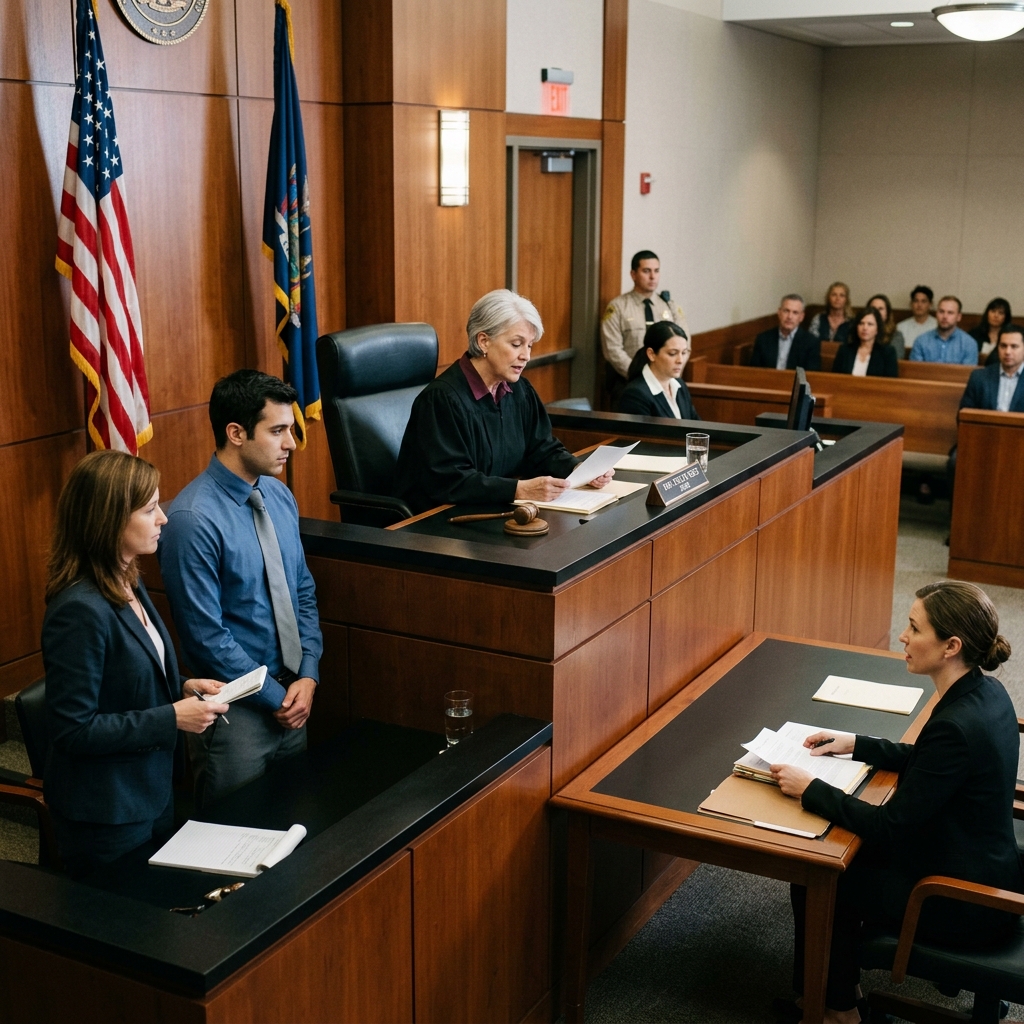
An arraignment is usually a defendant’s first formal appearance in criminal court. It is the hearing where the charges are publicly announced, rights are explained, and an initial plea is entered.
Although an arraignment is often brief, it has long-lasting consequences for the rest of the case. Knowing what to expect and what decisions are made at this stage can reduce anxiety and help defendants protect their legal rights.
What Is an Arraignment?
In criminal procedure, an arraignment is a court hearing held after a person has been arrested or charged, during which the judge formally informs the defendant of the accusations and asks them to respond with a plea.
This hearing is not a trial. No witnesses testify, and the court does not decide guilt or innocence at this stage. Instead, the focus is on notifying the defendant of the charges, clarifying rights, and setting the case on a path toward resolution.
- Timing: Often occurs the same day or shortly after an arrest or filing of formal charges, depending on local procedures.
- Court level: May take place in a trial-level criminal court such as state, superior, or magistrate court.
- Participants: A judge or magistrate, prosecutor, defendant, defense lawyer (if any), and usually a court clerk are present.
Where Arraignment Fits in the Criminal Process
An arraignment does not occur in isolation; it sits within a broader sequence of events that make up the criminal justice process.
| Stage | What Typically Happens | Connection to Arraignment |
|---|---|---|
| Arrest & Booking | Police detain the suspect, record personal information, and note alleged offenses. | Creates the initial case that will later be presented at arraignment. |
| Initial or First Appearance | Defendant is brought before a judge to be informed of basic charges and rights; bail may be considered. | In some jurisdictions, this appearance is combined with or closely followed by the arraignment. |
| Arraignment | Formal reading of charges, advisement of rights, entry of plea, and setting of case schedule. | Officially launches the court case and determines how it will proceed (e.g., to trial or toward a plea). |
| Pretrial Hearings | Conferences, motion hearings, and plea negotiations, often scheduled at or after arraignment. | Deadlines and future dates are commonly set at the arraignment. |
| Trial or Disposition | Case is finally resolved through dismissal, plea agreement, or trial and sentencing. | Plea entered at arraignment influences whether the case ends early or proceeds to trial. |
What Happens During an Arraignment Hearing?
While local rules differ, most arraignment hearings follow a similar core structure. Defendants can expect several key steps in rapid sequence.
1. Calling the Case and Identifying the Defendant
The court clerk or judge calls the case, typically by the defendant’s name and case number. The judge confirms the defendant’s identity, ensures they can hear and understand what is happening, and may ask basic questions about representation by counsel.
2. Formal Notice and Reading of Charges
The central purpose of an arraignment is to give the defendant formal notice of what they are accused of.
- The judge or clerk reads the charges aloud, or the judge may summarize the indictment or complaint.
- The defendant receives a written copy of the charging document.
- Any amendments or additions to the charges are noted on the record.
This ensures the defendant is not left guessing about the specific crimes alleged, such as the statute numbers, level of offense (misdemeanor or felony), and brief factual basis.
3. Advisement of Rights
Judges use arraignments to confirm that the defendant understands their constitutional and procedural rights.
Common rights explained include:
- Right to an attorney: Including court-appointed counsel if the defendant cannot afford a lawyer, in many cases.
- Right to remain silent: The defendant is not required to speak or answer questions about the alleged crime.
- Right to a trial: Often a jury trial, where the prosecution must prove guilt beyond a reasonable doubt.
- Right to confront witnesses: The opportunity to challenge testimony and evidence in future proceedings.
- Right to file motions: Defendants are usually informed of deadlines for filing pretrial motions, such as motions to suppress evidence.
In some courts, the judge also explains that the defendant can choose to resolve minor matters quickly, but that they are never required to give up their right to trial.
4. Addressing Legal Representation
If the defendant appears without a lawyer, the judge often asks whether they plan to hire counsel or wish to request a court-appointed attorney.
Key points include:
- For defendants who qualify financially, the court can appoint an attorney, often a public defender.
- If a defendant wishes to represent themselves, some courts require a written waiver acknowledging the risks of self-representation.
- In less serious cases, an attorney may appear on behalf of the defendant at arraignment if permitted by the court.
5. Bail, Release Conditions, or Detention
Another major function of arraignment is deciding whether the defendant will be held in custody or released while the case is pending.
Depending on jurisdiction and the severity of charges, the judge may:
- Release the defendant on recognizance (no money bail, based on a promise to return).
- Set a monetary bail amount the defendant must pay or secure.
- Impose non-monetary conditions such as no contact orders, restrictions on weapons, or bans on drugs and alcohol.
- Deny bail and order detention in serious cases or where the defendant poses a significant flight risk or danger.
Judges typically consider factors like the seriousness of the offense, prior criminal record, ties to the community, and any history of failing to appear in court.
6. Entering a Plea
After charges and rights are clearly explained, the defendant is asked to enter a plea to the charges.
Common plea options are:
- Not guilty: The defendant disputes the charges or demands that the prosecution prove the case at trial.
- Guilty: The defendant admits committing the offense and accepts conviction.
- No contest (nolo contendere): The defendant does not admit guilt but also does not dispute the charges; treated similarly to a guilty plea for sentencing.
In many jurisdictions, most defendants initially plead not guilty at arraignment, even if they plan to negotiate a plea later. This preserves the opportunity to review evidence, consult counsel, and file motions before deciding whether to resolve the case.
7. Scheduling Future Court Dates
Finally, the court sets the next steps in the case.
- The judge may schedule a pretrial conference or hearing.
- Deadlines for filing motions and other paperwork are often announced.
- The clerk provides the defendant with written notice of future hearing dates.
Failure to appear for these scheduled dates can result in a warrant for arrest and additional legal consequences.
Defendant Rights and Practical Considerations
Because arraignment is often a defendant’s first in-court experience, it is important to approach it with preparation and awareness.
Key Rights to Remember
- You have the right to know the charges: The court must clearly inform you what crime or crimes you are alleged to have committed.
- You have the right to counsel: In many criminal cases, you may have a lawyer appointed if you cannot afford one.
- You have the right to remain silent: You do not have to answer questions about the alleged offense in open court.
- You have the right to a trial: You are not required to plead guilty at arraignment, even if asked whether you wish to resolve the case quickly.
Preparing for Arraignment
Defendants can take several steps to make arraignment smoother and safer from a legal standpoint:
- Seek legal advice as early as possible, even before the hearing, if you know charges are coming.
- Arrive early, dressed appropriately, and bring any paperwork given to you by police or the court.
- Be ready to tell the court whether you already have an attorney or need help requesting one.
- Understand that a quick guilty plea may have long-term consequences; consider speaking with counsel first.
Common Variations Among Jurisdictions
Although the basic function of arraignment is similar across the United States, some procedural details vary by state or court system.
- Number of arraignments: Some systems have both a preliminary arraignment soon after arrest and a formal arraignment later if the case advances.
- Who must appear: In some misdemeanor cases, an attorney may appear without the defendant if the court allows it.
- Timing: Certain states require arraignment or initial appearance within a specific number of hours after arrest, especially if there was no warrant.
- Minor infractions: For very low-level offenses, courts may offer to resolve the case at arraignment if the defendant wishes, but the defendant can choose to go to trial instead.
Frequently Asked Questions About Arraignment
Is an arraignment the same as a trial?
No. An arraignment is a procedural hearing to inform you of charges, advise you of your rights, and take your initial plea. The court does not decide guilt or innocence and generally does not hear evidence or witness testimony at this stage.
Do I need a lawyer at my arraignment?
While you may appear without a lawyer, having counsel is strongly recommended in criminal cases. At arraignment, the judge will ask about your representation and, if you qualify, may arrange for a court-appointed attorney. Some courts allow a lawyer to appear without you in minor misdemeanor cases.
What happens if I plead guilty at arraignment?
If you plead guilty, the court may proceed directly to sentencing or set a later date to determine the consequences of the conviction. Because pleading guilty ends the contested part of the case, most defendants consult an attorney before making this decision.
Can I change my plea after arraignment?
In many jurisdictions, a defendant who initially pleads not guilty may later change the plea to guilty or no contest as part of a negotiated resolution. Changing a plea from guilty to not guilty is more complex and may not always be allowed, so legal advice is essential.
What if I miss my arraignment?
Missing an arraignment is serious. Courts commonly issue a warrant for your arrest, and you may face additional consequences for failing to appear. If you cannot attend due to a genuine emergency, you or your attorney should contact the court as soon as possible to explain the situation.
References
- Initial Hearing / Arraignment — U.S. Department of Justice, U.S. Attorneys’ Office. 2024-01-10. https://www.justice.gov/usao/justice-101/initial-hearing
- The Arraignment — California Courts, Self-Help Guide. 2023-06-15. https://selfhelp.courts.ca.gov/criminal-court/overview/arraignment
- Your Arraignment or First Appearance in Court — Mass.gov. 2022-11-30. https://www.mass.gov/info-details/your-arraignment-or-first-appearance-in-court
- What Should I Know About the Criminal Justice Process in Georgia? — Georgia Legal Services Program. 2023-02-20. https://www.georgialegalaid.org/resource/what-should-i-know-about-the-criminal-justice-process-in-georgia
- The Criminal Justice Process: Arraignment and Charging — King County Prosecuting Attorney’s Office. 2022-08-05. https://kingcounty.gov/en/dept/pao/courts-jails-legal-system/victim-services-resources/criminal-justice-process/arraignment-charging
- “Arraignment” in Colorado Criminal Cases – How It Works — Colorado Legal Defense Group. 2023-05-19. https://cldg.legal/process/arraignment/
- What Happens at an Arraignment Hearing: A Clear Guide — Challenge My Charge. 2023-04-12. https://challengemycharge.com/what-happens-at-arraignment-hearing/
Similar Articles








Read full bio of Sneha Tete




