
Understanding Crime Victims’ Rights in the U.S.
A practical guide to core crime victim rights, how they work in real cases, and the limitations survivors still face in the justice system.
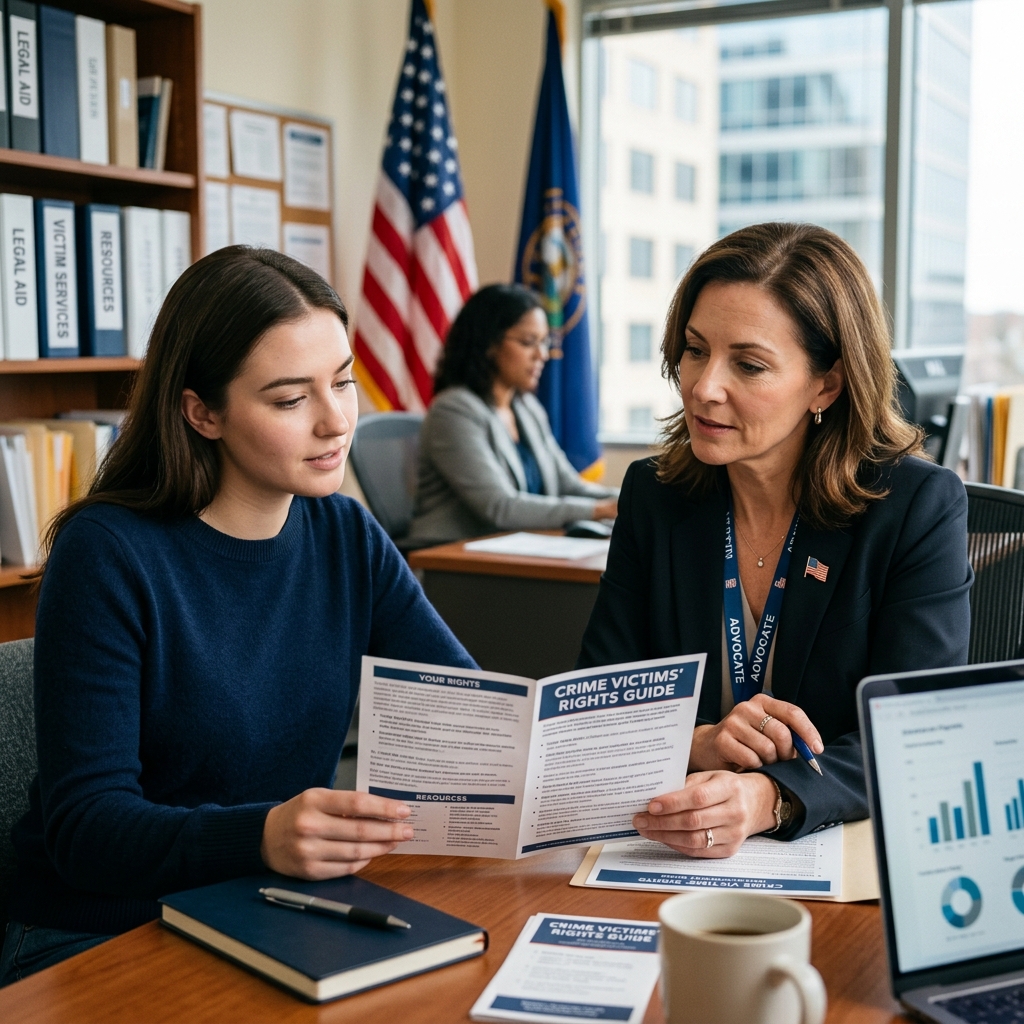
Over the last several decades, crime victims in the United States have gained a set of important legal rights that were once largely absent from the criminal justice process. At the federal level, many of these protections are contained in the Crime Victims' Rights Act (CVRA), a statute that specifies what victims can expect when a criminal case is investigated, prosecuted, and sentenced. While these rights represent meaningful progress, they also include built‑in limits and exceptions that victims often do not learn about until they are already in crisis.
This article offers a plain‑language overview of core crime victim rights, explains how they function in practice, and highlights practical caveats survivors should understand before relying on them.
Big Picture: What Does Victims' Rights Law Do?
Victims' rights laws do not turn criminal cases into lawsuits controlled by victims. In the United States, criminal prosecutions are brought by the government, not by private individuals. Victims' rights laws instead aim to ensure that people harmed by crime are:
- Informed about what is happening in the case
- Given reasonable opportunities to speak and be heard
- Protected from ongoing harm related to the offender or the proceedings
- Treated with dignity and respect throughout the process
Federal law, state constitutions, and state statutes all play a role. The CVRA, found at 18 U.S.C. § 3771, applies to federal criminal cases and sets out a baseline list of rights for federal crime victims. Many states have adopted similar lists or expanded them in their own victims' rights laws.
Who Counts as a Crime Victim Under Federal Law?
Before any right can be invoked, the legal system must decide who qualifies as a “crime victim.” Under the CVRA, a victim is generally defined as a person directly and proximately harmed as a result of the commission of a federal offense. This definition can be straightforward in some cases (for example, an individual assaulted in a violent crime), but more complicated in others, such as large‑scale fraud or crimes affecting many people.
The law also addresses situations where the victim is unable to act personally. When a victim is under 18, incompetent, incapacitated, or deceased, a legal guardian, family member, or another suitable person may exercise the victim's rights. Courts are explicitly barred from naming the defendant as such a representative.
Key Caveats About Victim Status
- Not everyone harmed by wrongdoing is a “crime victim” under the statute. The harm must be tied to a charged federal offense and meet the legal standards of direct and proximate causation.
- Courts sometimes disagree about who qualifies. In complex cases, victims may have to petition the court to be recognized as crime victims under the CVRA.
- Victim status is tied to specific proceedings. Rights are asserted in the district court where the defendant is prosecuted, or if no prosecution is underway, in the district where the crime occurred.
Core Federal Crime Victim Rights
The CVRA sets out a list of substantive rights. Below is a structured overview, grouped by theme and translated into practical terms.
| Right (Plain Language) | What It Means in Practice | Key Caveats |
|---|---|---|
| Protection from the accused | Victims have a right to be reasonably protected from the defendant, including information that helps them safeguard themselves. | “Reasonable” protection can vary widely; it does not guarantee specific outcomes like relocation or personal security details. |
| Notice of proceedings and release | Victims are entitled to reasonably accurate and timely notice of public court hearings, parole proceedings, and a defendant's release or escape. | Notice often depends on victims opting in and keeping contact information current; administrative errors can still occur. |
| Presence at public proceedings | Victims have a right not to be excluded from public court proceedings, barring specific judicial findings. | Courts may exclude a victim if they determine that hearing other testimony would materially alter the victim's own testimony. |
| Right to be heard | Victims may be reasonably heard at hearings involving release, plea, sentencing, and parole. | The court typically controls timing and format (oral statements, written impact statements, or both). |
| Confer with the prosecutor | Victims have a reasonable right to confer with the government attorney handling the case. | This does not mean victims direct the prosecution or veto charging decisions. |
| Restitution | Victims are entitled to full and timely restitution as provided by law for economic losses caused by the offense. | Restitution depends on other statutes that authorize it; the CVRA itself does not create new categories of compensable loss. |
| Proceedings free from unreasonable delay | Victims have a right to proceedings that are not subject to undue delay. | Courts balance this right against the defendant's rights and the practical needs of complex litigation. |
| Dignity and privacy | Victims have a right to be treated with fairness and with respect for their dignity and privacy. | Implementation can vary; the right does not automatically seal records or close courtrooms. |
| Information about plea deals and rights | Victims must be informed of any plea bargain or deferred prosecution agreement, and of their rights and available services. | Notification is focused on informing victims, not necessarily securing their consent. |
Participation Rights: Notice, Attendance, and Voice
One of the most visible changes brought by victims' rights laws is the increased opportunity for victims to participate in court proceedings.
Right to Notice
The right to notice means that victims should receive information about key events such as initial appearances, plea hearings, sentencing, and post‑conviction proceedings. In many jurisdictions, victims must affirmatively request notice and provide up‑to‑date contact information. Without that step, the system may have no way of reaching them.
Right to Be Present
Federal and state laws now broadly recognize a victim's right to attend criminal proceedings, including trial and sentencing. This right reflects an understanding that being present can help victims feel informed and may contribute to a sense of procedural justice.
Right to Be Heard
The right to be heard is most often exercised through a victim impact statement, presented at sentencing or parole hearings. Victims might describe:
- Physical injuries or ongoing medical needs
- Emotional and psychological effects
- Financial losses and disruption of work or family life
- Their views on appropriate sentencing or release conditions
Courts generally regard victim impact statements as relevant to sentencing decisions, and federal guidance emphasizes the “indefeasible” nature of a victim's right to be heard at sentencing.
Important Limitations on Participation
- Participation is not control. Victims can speak, but they do not decide whether charges are filed, what plea offers are made, or what sentence the court imposes.
- Judges manage courtroom procedures. Courts may limit the length or scope of statements to maintain order and fairness.
- Confidentiality rules still apply. Certain types of information cannot be disclosed publicly, even in victim statements, due to legal or privacy constraints.
Safety and Protection Rights
Many victims' rights provisions are designed to help survivors feel and remain safer as a case moves forward.
Right to Reasonable Protection
The CVRA begins with a promise: victims have the right to be reasonably protected from the accused. In practice, this right may intersect with:
- Conditions of pretrial release (for example, no‑contact orders)
- Protective orders or restraining orders under separate statutes
- Information that allows victims to plan for their safety, such as notice of release or escape
State law often reinforces these protections by guaranteeing notice of releases, escapes, or clemency decisions that could affect victim safety.
Caveats About Safety Measures
- “Reasonable” does not guarantee comprehensive physical protection. The government is not required to provide private security or relocation, though some victims may access such services through specialized programs.
- Notice does not equal zero risk. Even when notice is provided, there can be delay between an offender's release and a victim's ability to take protective steps.
- Enforcement varies by jurisdiction. Some areas have well‑developed victim notification systems; others may still rely on more manual processes.
Financial Rights: Restitution and Its Limits
Financial loss is a common consequence of crime. Restitution seeks to address that harm by requiring the offender to pay for certain expenses caused by the offense. Under the CVRA, victims have a right to full and timely restitution as provided in law.
What Restitution Can Cover
Depending on the underlying statutes authorizing restitution, payments can include:
- Medical expenses related to injuries
- Lost income due to the crime
- Property damage or loss
- Certain counseling or mental health treatment costs
The CVRA itself is not a standalone restitution law; it reinforces a victim's entitlement to restitution when other laws make it available.
Practical Restitution Caveats
- Restitution depends on a conviction. Without a qualifying conviction, courts generally cannot order restitution under criminal statutes.
- Collection can be challenging. Offenders may lack resources, leading to small payments over long periods or unpaid balances.
- Restitution differs from compensation. Many states also offer victim compensation programs funded by government sources, which can help when restitution is unavailable or insufficient.
Procedural Rights and Enforcement Mechanisms
Rights on paper are meaningful only if victims can request and enforce them. The CVRA contains mechanisms for asserting rights and seeking review, but it also limits the remedies available.
Asserting Rights in Court
The statute allows crime victims, their representatives, and government attorneys to assert CVRA rights in the relevant district court. If victims believe their rights are being violated, they may file motions or petitions asking the court to enforce those rights. In some cases, they can seek review through a writ of mandamus, a special form of appellate relief.
Built‑In Limits on Remedies
Even when a violation occurs, the CVRA places significant limits on what courts can do. For example:
- No automatic new trial. The statute specifies that failure to afford a right under the chapter does not by itself provide grounds for a new trial.
- Strict conditions for reopening pleas or sentences. Victims can move to reopen only if they asserted the right to be heard and that right was denied; additional timing and case‑specific requirements apply.
- Defendants cannot use victim rights as a shield. The statute bars accused persons from obtaining relief under CVRA provisions.
Data collected by the federal judiciary show that many petitions asserting CVRA rights result in denial of relief, underscoring the practical limits of enforcement.
Dignity, Respect, and Privacy in Proceedings
The CVRA explicitly recognizes a victim's right to be treated with fairness and respect for dignity and privacy. While this right is less concrete than notice or restitution, it informs how courts and agencies interact with survivors.
Examples of Dignity‑Focused Practices
- Ensuring victims have a separate waiting area away from the defendant when feasible
- Using trauma‑informed approaches when gathering victim statements
- Avoiding unnecessary disclosure of sensitive personal information in open court
Implementation often relies on policies and training rather than specific court orders. Federal and state victim assistance offices provide guidance and resources to help professionals fulfill these obligations.
Where Victims Can Turn for Help
Even with legal rights in place, navigating the criminal justice system can be complex and emotionally taxing. Victims benefit greatly from support services that understand both law and trauma.
Government‑Based Support
- Office for Victims of Crime (OVC). A component of the U.S. Department of Justice, OVC funds victim service programs and provides educational materials about rights and services.
- Victims' Rights Ombudsman. The Department of Justice maintains an ombudsman to address complaints related to enforcement of CVRA rights in federal cases.
Nonprofit and Community Resources
- Victim assistance organizations. Groups such as the National Center for Victims of Crime connect survivors with confidential support and referrals.
- Local advocates. Many prosecutors' offices and community‑based agencies employ victim advocates who help explain rights, accompany victims to court, and assist with impact statements.
Frequently Asked Questions About Crime Victims' Rights
Do victims control whether charges are filed or dropped?
No. Prosecutors represent the government, not individual victims. While victims have a right to confer with the government attorney and to be heard at certain proceedings, they do not control charging decisions or plea agreements.
What happens if a victim never receives notice of a hearing?
If a victim who requested notice is not informed of a proceeding, they may raise the issue through the court or the Victims' Rights Ombudsman. However, the CVRA generally does not allow a case to be overturned solely because a victim was not notified.
Can a victim attend all parts of a trial?
Victims have a right not to be excluded from public proceedings, but courts may limit attendance when they find that hearing other witnesses would materially alter the victim's testimony. In many cases, victims are allowed to attend most or all trial sessions.
Is restitution the same as damages in a civil lawsuit?
No. Restitution is ordered in a criminal case to cover certain losses narrowly linked to the offense under specific statutes. Damages in a civil lawsuit can include broader categories such as pain and suffering or punitive damages, depending on the law.
What should victims do first to protect their rights?
Victims should promptly inform law enforcement or the prosecutor's office that they wish to assert their rights, ask how to register for notifications, and request contact with a victim advocate. Consulting a lawyer familiar with victims' rights can also help clarify available options.
References
- Crime Victims' Rights Act (18 U.S.C. § 3771) — U.S. Department of Justice. 2023-05-01. https://www.justice.gov/usao/resources/crime-victims-rights-ombudsman/victims-rights-act
- 18 U.S. Code § 3771 – Crime victims' rights — Legal Information Institute, Cornell Law School. 2023-01-01. https://www.law.cornell.edu/uscode/text/18/3771
- Crime Victims' Rights Primer — United States Sentencing Commission. 2025-01-01. https://www.ussc.gov/sites/default/files/pdf/training/primers/2025_Primer_Crime_Victims.pdf
- Ten Common Victims' Rights — National Crime Victim Law Institute. 2024-02-01. https://ncvli.org/wp-content/uploads/2024/02/Common-Victims-Rights_final.pdf
- Crime Victims' Rights Report — Administrative Office of the U.S. Courts. 2023-10-01. https://www.uscourts.gov/data-news/reports/statistical-reports/crime-victims-rights-report
- Office for Victims of Crime: About OVC — Office for Victims of Crime, U.S. Department of Justice. 2024-06-01. https://ovc.ojp.gov
- National Center for Victims of Crime — National Center for Victims of Crime. 2024-04-01. https://victimsofcrime.org
Similar Articles








Read full bio of Sneha Tete




