
Understanding California Auto Theft Laws
A clear guide to how California defines, prosecutes, and punishes auto theft, joyriding, and related vehicle crimes.
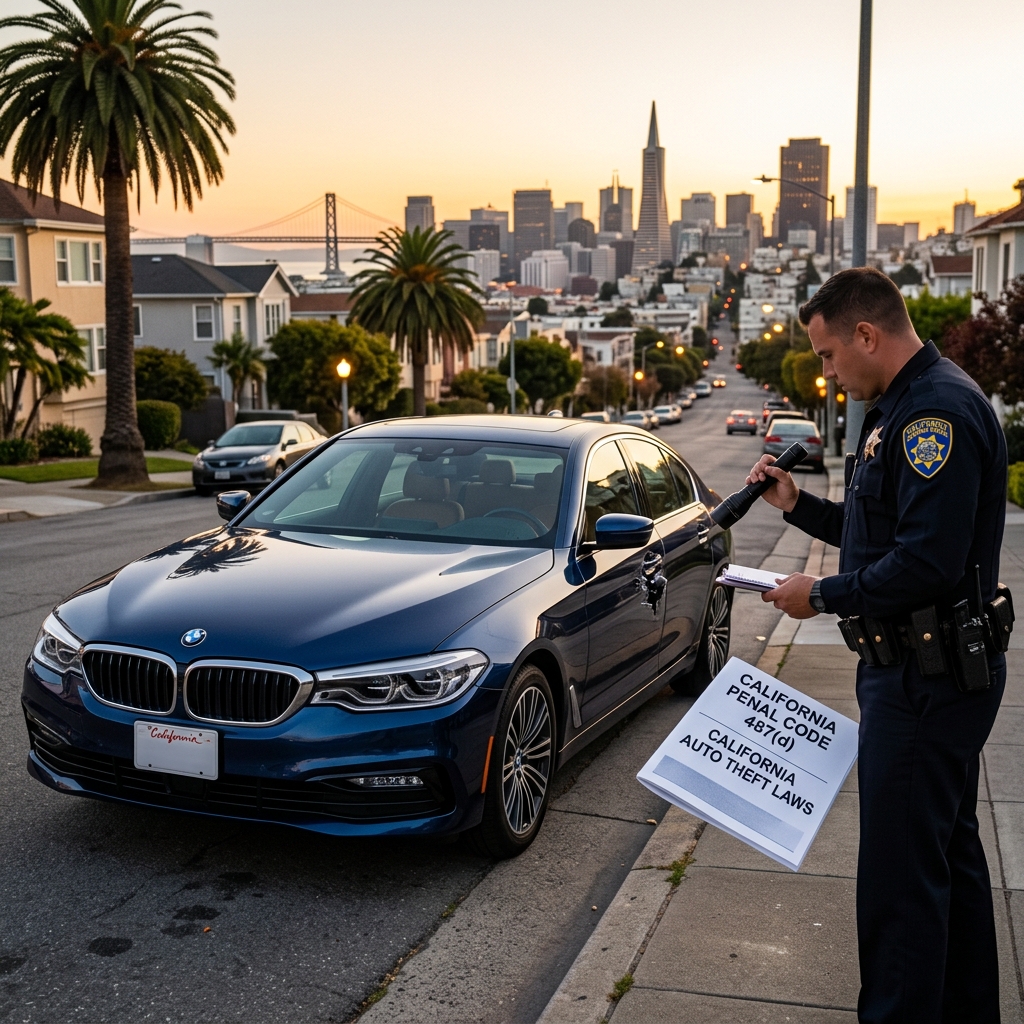
California treats vehicle theft as a serious crime, but not all auto-related offenses are handled the same way. Some situations are charged as grand theft auto, others as joyriding, and still others involve possession of a stolen vehicle or enhanced penalties for repeat offenders. Knowing how these laws work is critical whether you are a vehicle owner, a driver, or someone facing criminal charges.
This guide explains the main California auto theft statutes, how prosecutors decide what to charge, the penalties that can result, and the defenses that may be available. It is informational and not a substitute for advice from a qualified attorney.
Key Concepts in California Vehicle Theft
Although people often refer to any stolen car as “auto theft,” California law divides vehicle-related crimes into several categories, each with specific elements and consequences.
- Grand theft auto – Taking a vehicle, usually worth more than $950, without permission and with intent to steal it.
- Unlawful taking or driving (joyriding) – Using a vehicle without the owner’s consent, even temporarily, without necessarily intending permanent theft.
- Petty theft involving a vehicle – Theft of a low-value vehicle or parts when the property is worth $950 or less.
- Possession of a stolen vehicle – Having a vehicle known to be stolen, even if the possessor did not personally steal it.
- Repeat auto theft and enhancements – Tougher sentencing rules when a person has prior felony vehicle theft convictions.
These categories overlap, and prosecutors often choose between them based on the facts, the value of the car, and the defendant’s criminal history.
Grand Theft Auto: When Vehicle Theft Becomes a Major Felony
Under California law, what people commonly call grand theft auto is defined in Penal Code 487(d)(1). This provision covers theft of a motor vehicle when certain conditions are met.
Legal Elements of Grand Theft Auto
To prove grand theft auto, prosecutors generally must show:
- The defendant took a car owned by someone else.
- The defendant did not have the owner’s permission to take the car.
- The vehicle was typically worth more than $950 at the time of the offense.
- The defendant intended to permanently deprive the owner of the car or to keep it long enough to deprive the owner of a significant portion of its value or enjoyment.
Intent is crucial. A person who takes a car with the plan to keep it, sell it, or strip it for parts fits classic grand theft auto, while someone who only intends a brief unauthorized drive may instead face joyriding charges.
How Grand Theft Auto Is Charged
Grand theft auto is a type of “wobbler” offense in California, which means it can be charged either as a misdemeanor or as a felony.
- Misdemeanor grand theft auto – Typically reserved for lower-value vehicles or less serious circumstances; carries up to around one year in county jail.
- Felony grand theft auto – More common when the vehicle is valuable or the facts are aggravated; punishable by a term such as 16 months, two years, or three years in state prison.
Charging decisions take into account the value of the vehicle, the defendant’s past record, and the overall seriousness of the conduct.
| Charge Level | Jail/Prison Exposure | Possible Fines |
|---|---|---|
| Misdemeanor GTA | Up to approximately 1 year in county jail | Often up to several thousand dollars, plus fees |
| Felony GTA | 16 months, 2 years, or 3 years in state prison | Up to $10,000 in fines in many felony theft cases |
Joyriding: Unlawful Taking or Driving of a Vehicle
Not every unauthorized use of a car is prosecuted as grand theft auto. California’s Vehicle Code 10851 addresses what is commonly called joyriding—taking or driving a vehicle without consent, even if the intent is only temporary.
What Counts as Joyriding
Under Vehicle Code 10851, prosecutors need to show that the defendant intentionally drove or took a vehicle without the owner’s consent. Unlike grand theft auto, joyriding does not necessarily require proof that the defendant intended to permanently steal the car.
Examples can include:
- Driving a friend’s car overnight without permission while they are away.
- Taking a stranger’s car for a short trip and abandoning it.
- Operating a company vehicle outside of authorized use for personal reasons.
Misdemeanor vs. Felony Joyriding
Joyriding is also a “wobbler” and can be charged as either a misdemeanor or felony.
- Misdemeanor joyriding – Often used for first-time or less serious violations; penalties may include up to one year in county jail.
- Felony joyriding – Reserved for more severe cases or defendants with prior records; potential prison terms similar to grand theft auto, such as 16 months, two years, or three years.
In practice, proving joyriding can be simpler for prosecutors than proving grand theft auto because it focuses on unauthorized driving rather than permanent theft.
Vehicle Value and Petty Theft Thresholds
California uses the vehicle’s market value to help determine whether the offense is treated as petty theft or grand theft. Under current rules, stealing a vehicle worth $950 or less is generally handled as petty theft, while theft of a vehicle worth more than $950 usually falls under grand theft.
- Petty theft of a vehicle (≤ $950) – Typically a misdemeanor; can lead to up to six months in county jail and fines up to $1,000.
- Grand theft auto (> $950) – As noted above, a wobbler that can be charged as a misdemeanor or felony with higher potential sentences.
Vehicle appraisals, repair records, and market data are often used to estimate the car’s value at the time of the offense.
Special Situations: Protected Vehicles and Aggravating Factors
California law imposes enhanced penalties in certain auto theft cases, particularly when the vehicle serves a critical public or personal function.
Increased penalties may apply when the stolen or unlawfully taken vehicle is:
- An ambulance or emergency medical vehicle on a call.
- A marked police or fire department vehicle responding to an incident.
- A vehicle modified and clearly identified for use by a disabled veteran or person.
In such cases, a crime that might otherwise be charged as a misdemeanor can be elevated to a felony with potential sentences of two, three, or four years in custody. The rationale is that depriving emergency services or vulnerable individuals of transportation can pose a heightened risk to public safety.
Possession of a Stolen Vehicle
California also criminalizes knowing possession of a stolen motor vehicle, a separate offense from auto theft itself. Someone who did not steal a car but knowingly keeps or uses a stolen vehicle can face significant penalties.
Elements of Possession Offenses
To secure a conviction for possession of a stolen vehicle, prosecutors generally need to show:
- The vehicle was stolen or obtained by theft.
- The defendant possessed, received, or concealed the vehicle.
- The defendant knew, or reasonably should have known, that the vehicle was stolen.
This offense is also a wobbler, meaning it can be prosecuted as either a misdemeanor or felony. Misdemeanor convictions can bring up to 364 days in county jail, while felony convictions can result in 16 months, two years, or three years in custody.
Repeat Auto Theft and Sentencing Enhancements
California imposes tougher penalties on individuals who repeatedly commit felony auto theft. Penal Code 666.5 is a sentencing enhancement that targets people with prior felony vehicle theft convictions.
Who Faces Enhanced Penalties
PC 666.5 can apply when:
- The defendant has a prior felony conviction for a vehicle theft crime, such as grand theft auto or joyriding charged as a felony.
- The defendant is convicted again of a felony vehicle theft offense.
When this enhancement applies, the possible sentence can increase to two, three, or four years in state prison and fines up to $10,000, along with victim restitution. Importantly, the enhancement focuses on repeat felony behavior, not minor or first-time misdemeanors.
Even with an enhancement, judges still retain discretion. In some cases, courts may impose probation instead of prison, depending on mitigating circumstances and the defendant’s overall background.
How Auto Theft Cases Are Investigated and Charged
Auto theft investigations in California often involve local law enforcement agencies, and for broader patterns of vehicle theft, the California Highway Patrol (CHP) plays a statewide coordination role. CHP reviews relevant laws and works with other agencies to address emerging vehicle theft trends.
When prosecutors review an auto-related case, they typically consider:
- The nature of the conduct (permanent theft vs. temporary unauthorized use).
- The value and type of vehicle, including emergency or specially equipped vehicles.
- Any prior criminal record, especially previous felony vehicle theft convictions.
- Available evidence, such as CCTV footage, witness statements, and recovery reports.
Based on these factors, prosecutors decide whether to charge grand theft auto, joyriding, possession of a stolen vehicle, or related offenses, and whether to pursue misdemeanor or felony treatment.
Common Defenses in California Auto Theft Cases
People accused of auto theft are not automatically guilty. Several defenses may be available depending on the facts of the case and the specific charge.
- Consent from the owner – If the owner gave permission to use the vehicle, there is generally no theft. For grand theft auto, the lack of permission is a required element. Consent can sometimes be disputed, but proof of authorization (texts, emails, verbal agreements) may be critical.
- Lack of intent to steal – For grand theft auto, prosecutors must show intent to permanently or significantly deprive the owner of the vehicle. If the defendant intended only a brief use and returned the car promptly, the facts may align more closely with joyriding or a lesser offense.
- Mistaken identity or false accusation – Auto theft often hinges on eyewitness accounts or surveillance footage, which can be incomplete or mistaken. Evidence showing the defendant was elsewhere or that another person committed the offense can undermine the prosecution’s case.
- Ownership or lawful claim – Disputes over title, loan repayment, or shared ownership sometimes lead to criminal allegations. If the defendant had a reasonable, lawful claim to the vehicle, that can undercut theft charges.
- Insufficient evidence – Prosecutors must prove each element of the crime beyond a reasonable doubt. Weak or contradictory evidence regarding consent, intent, or identity can form the basis of a defense.
Because the distinctions between joyriding and grand theft auto turn heavily on intent, defense strategies often focus on the defendant’s state of mind at the time of the alleged offense.
Practical Steps for Vehicle Owners
While this article focuses on the legal side of auto theft, it is also helpful for vehicle owners to understand basic preventive measures. Law enforcement agencies such as the CHP encourage practical steps to reduce the risk of theft and assist investigations when theft occurs.
- Always lock your vehicle and avoid leaving keys inside.
- Use anti-theft devices such as steering wheel locks or alarms.
- Park in well-lit, visible areas and consider secure parking structures.
- Keep records of your vehicle’s VIN, license plate, and distinguishing features.
- Report suspected thefts to law enforcement promptly and provide detailed information.
These measures do not guarantee prevention, but they can deter opportunistic theft and aid recovery.
Frequently Asked Questions About California Auto Theft
Is taking a car without permission always grand theft auto?
No. Unauthorized use of a car can be charged as joyriding under Vehicle Code 10851 if there is no intent to permanently steal the vehicle. Grand theft auto under Penal Code 487(d)(1) requires proof of a more serious intent to deprive the owner permanently or for a significant period.
Does the value of the vehicle matter?
Yes. The vehicle’s value helps determine whether the offense qualifies as petty theft or grand theft. Generally, theft of a vehicle worth $950 or less is treated as petty theft, while vehicles worth more than $950 fall into grand theft territory, with higher potential penalties.
Can first-time offenders go to prison for auto theft?
It is possible but not guaranteed. Many first-time offenses, especially less serious ones, are charged as misdemeanors that carry county jail rather than state prison exposure. However, courts consider factors such as the nature of the offense, any aggravating circumstances, and the defendant’s background when imposing sentence.
How do prior convictions affect auto theft sentencing?
People with prior felony auto theft convictions may face enhanced penalties under Penal Code 666.5 if they are convicted again of a felony vehicle theft offense. This enhancement can increase the potential sentence to two, three, or four years in prison and higher fines.
What should someone do if they are accused of auto theft in California?
Auto theft charges can carry serious consequences, including jail or prison time, fines, and long-term effects on employment and licensing. Anyone facing such allegations should seek advice from a qualified criminal defense attorney familiar with California theft laws. Legal counsel can evaluate the specific facts, identify potential defenses, and negotiate with prosecutors when appropriate.
References
- “Grand Theft Auto” in California – Penal Code 487(d)(1) — Shouse Law Group. 2023-05-01. https://www.shouselaw.com/ca/defense/penal-code/487d1/
- Auto Theft Laws in California — CriminalDefenseLawyer.com (Nolo). 2022-09-15. https://www.criminaldefenselawyer.com/legal-advice/ca-auto-theft-charge
- Car Theft in California — Los Angeles Criminal Lawyer. 2021-11-10. https://www.lacriminaldefenseattorney.com/legal-dictionary/c/car-theft/
- Auto Theft with a Prior in California | Penal Code 666.5 PC — EG Attorneys. 2023-03-20. https://www.egattorneys.com/auto-theft-prior-penal-code-666-5
- Auto Theft — California Highway Patrol (CHP). 2024-01-05. https://www.chp.ca.gov/notify-chp/Auto-Theft/
Similar Articles








Read full bio of medha deb




