
Business Contract Breaches: A Practical Legal Guide
Understand how business contract breaches happen, what you must prove, and which legal remedies and strategies can best protect your company.
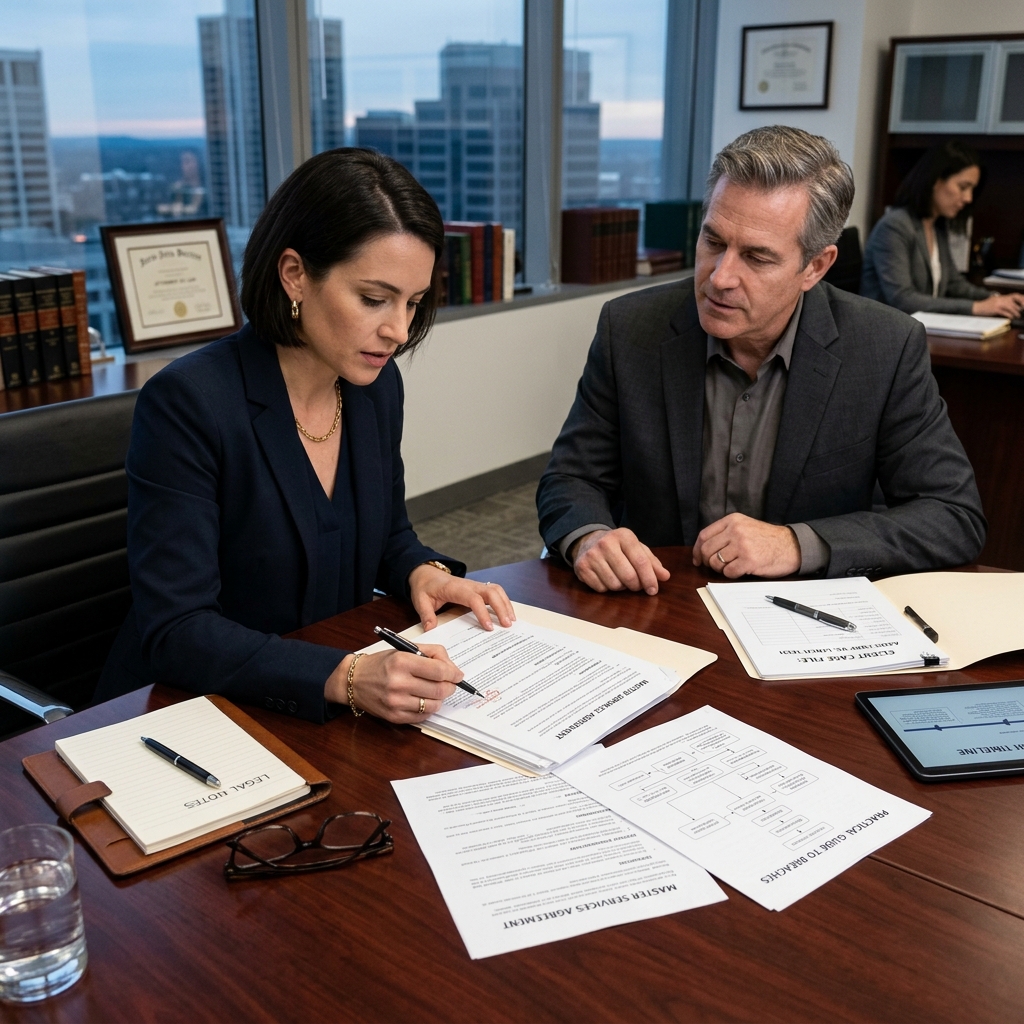
Business contracts are the backbone of commercial relationships, but when one party fails to honor its commitments, a breach of contract dispute can quickly become costly and disruptive. Understanding how breaches are defined, what you must prove, and which remedies are available is essential for any business owner or manager.
1. What Is a Breach of Business Contract?
In a business context, a breach of contract occurs when a party fails to perform any term of a legally binding agreement without a valid legal excuse. This failure can involve not completing agreed work, delivering non-conforming goods, paying late or not at all, or taking actions that directly violate the contract’s prohibitions.
For a breach to be legally actionable, the contract itself must be valid and enforceable, and the non-breaching party must suffer some form of loss or harm as a result of the failure to perform.
Common Business Scenarios That Constitute Breach
- Missing key payment deadlines or refusing to pay invoices for delivered goods or services.
- Delivering products that are substantially inferior to agreed specifications or industry standards.
- Failing to complete a project or abandoning work before the agreed completion date.
- Disclosing confidential information in violation of a non-disclosure clause.
- Expressly stating, before performance is due, that the party will not fulfill its obligations (anticipatory breach).
Not every mistake amounts to a breach; minor errors that are promptly corrected and cause no real harm may be treated differently than serious failures that undermine the contract’s central purpose.
2. Elements You Must Prove in a Breach Case
Courts and arbitrators typically look for several core elements before recognizing a breach of business contract claim. If any of these are missing, the claim can fail, even where relations have clearly broken down.
| Legal Element | What It Means | Evidence Examples |
|---|---|---|
| Valid contract | A legally binding agreement with offer, acceptance, and consideration. | Signed contract, purchase orders, email acceptance, invoices. |
| Breach of terms | Failure to perform required obligations or violation of prohibitions. | Missed deadlines, non-payment records, quality inspection reports. |
| Damages | Actual financial loss or measurable harm flowing from the breach. | Lost profits calculations, extra costs, replacement vendor invoices. |
| Causation | The breach caused the losses, not some unrelated factor. | Comparisons of performance before/after breach, market data. |
Documentation Businesses Should Maintain
- Complete copies of written contracts and amendments.
- Email and message threads documenting offers, acceptance, and changes.
- Invoices, payment records, and delivery receipts.
- Project plans, timelines, and status reports.
- Internal notes about performance issues and communications with the other party.
Good documentation strengthens your ability to show that a contract existed, that obligations were breached, and that your losses were caused by that breach.
3. Types of Contract Breaches in Business
Legal outcomes often depend on the type and severity of the breach. In commercial settings, lawyers and courts distinguish between several categories of breach to decide which remedies are appropriate.
3.1 Material vs. Minor Breach
A material breach is a substantial failure to perform that defeats the primary purpose of the agreement, often allowing the non-breaching party to suspend its own performance and seek extensive damages.
By contrast, a minor breach involves a deviation from contract terms that does not fundamentally undermine the deal. The non-breaching party may still recover damages, but often must continue fulfilling its own obligations.
- Material breach example: A manufacturer stops delivering essential components altogether, forcing the buyer to shut down operations.
- Minor breach example: Delivery arrives one day late but does not affect downstream production schedules.
3.2 Anticipatory Breach
Anticipatory breach occurs when a party clearly indicates, through words or conduct, that it will not perform its obligations when due. In such cases, the non-breaching party may have the right to treat the contract as breached immediately and seek legal relief rather than waiting until the deadline passes.
3.3 Breach in Business Debt and Collection Contexts
In business-to-business transactions, failure to pay for goods or services within the agreed time frame is a common form of breach. When a client or customer consistently misses payment deadlines or refuses to pay, the dispute may evolve into a commercial collection case, where the creditor pursues damages, interest, and sometimes attorneys’ fees.
4. Legal Remedies for Business Contract Breaches
When a breach is established, the law offers several potential remedies. The goal is typically to put the non-breaching party in the position it would have occupied had the contract been properly performed.
4.1 Monetary Damages
Compensatory damages are the most common remedy, designed to reimburse the non-breaching party for direct losses arising from the breach, such as replacement costs, lost profits, or extra labor expenses.
Courts may also award reliance damages, which compensate the injured party for expenditures made in reasonable reliance on the contract’s validity—for example, investments in equipment or staffing made specifically for the project.
- Direct losses: Cost of securing substitute performance from another vendor.
- Consequential losses: Lost sales resulting from production delays caused by the breach.
- Reliance costs: Marketing or development expenses incurred based on expectations of performance.
4.2 Specific Performance
If monetary damages are inadequate—such as where unique goods, specialized technology, or a rare asset are involved—a court may order specific performance, requiring the breaching party to fulfill its contractual obligations rather than simply pay damages.
This remedy is more common in contracts involving unique property or circumstances where a replacement cannot easily be obtained on the market.
4.3 Contract Cancellation and Rescission
In some cases, the most appropriate solution is to formally end the contractual relationship. Cancellation or rescission terminates the contract and may be combined with damages to compensate the non-breaching party for losses suffered up to the termination date.
Termination is particularly relevant where ongoing performance would create additional risk or loss, such as an unreliable supplier whose failures repeatedly disrupt your operations.
5. Dispute Resolution Options for Businesses
Many commercial contracts include clauses specifying how disputes should be resolved, such as negotiation, mediation, arbitration, or litigation. Choosing the right avenue can affect cost, timing, and outcome.
5.1 Negotiation and Mediation
- Direct negotiation: Parties discuss the issue informally, attempting to reach a practical solution, such as revised timelines or partial refunds.
- Mediation: A neutral mediator facilitates structured discussions, helping the parties explore settlement options while staying out of the decision-making role.
These approaches are often faster and less expensive than formal litigation, and they preserve business relationships by encouraging cooperative problem-solving.
5.2 Arbitration
Arbitration involves presenting the dispute to a private arbitrator or panel. The arbitrator hears both sides and issues a binding decision, which is usually final and subject to very limited judicial review.
Arbitration can be faster and more confidential than court proceedings, but parties may have limited ability to appeal an unfavorable award.
5.3 Litigation
When other methods fail or the contract calls for court resolution, the dispute may proceed to litigation. A judge or jury will decide whether a breach occurred and what remedies are appropriate.
Litigation can be time-consuming and costly, but it may be necessary for complex disputes, high-value claims, or matters involving important legal precedent.
6. Practical Steps When You Suspect a Breach
If you believe another party has breached a business contract, prompt and organized action improves your chances of recovery and reduces further losses.
Step-by-Step Response Checklist
- Review the contract carefully: Confirm the obligations, deadlines, quality standards, and any notice requirements for breach.
- Document the breach: Gather evidence such as emails, invoices, quality inspection reports, delivery records, and internal notes.
- Assess the impact: Estimate financial losses, operational disruptions, and reputational effects to gauge the severity.
- Communicate with the other party: Explain your concerns and attempt to resolve the issue directly, possibly through revised terms or partial performance.
- Consult legal counsel: An experienced business attorney can evaluate your claim, advise on remedies, and help you comply with any contractual dispute procedures.
- Consider formal action: If negotiation fails, explore mediation, arbitration, or filing a lawsuit to enforce your rights.
7. Strategies to Prevent Contract Disputes
Preventing breach of contract situations is often more cost-effective than litigating them. Businesses can take proactive steps at the contracting and performance stages to reduce risk.
Contract Drafting Best Practices
- Clear and explicit terms: Define scope of work, deliverables, timelines, payment schedules, and quality standards in unambiguous language.
- Dispute resolution clauses: Specify whether disputes will be handled through mediation, arbitration, or litigation and outline procedures.
- Force majeure provisions: Allocate risk for unforeseen events, such as natural disasters or major supply chain disruptions, that may excuse performance.
- Termination rights: Provide conditions under which either party may end the contract and how outstanding obligations will be handled.
Operational Practices to Reduce Breach Risk
- Maintain open communication with counterparties about potential delays or challenges.
- Use project management tools to track deadlines, deliverables, and responsibilities.
- Conduct periodic performance reviews with vendors and clients.
- Train staff on contractual obligations and escalation procedures when issues arise.
- Keep thorough records to quickly address misunderstandings and verify compliance.
8. FAQs on Breach of Business Contract
FAQ 1: Does a verbal business agreement count as a contract?
In many jurisdictions, oral agreements can form valid contracts if they include essential elements such as offer, acceptance, and consideration. However, certain types of contracts must be in writing, and proving the terms of a verbal agreement is often more difficult, making written contracts strongly preferable in business settings.
FAQ 2: How long do I have to file a breach of contract claim?
The time limit, known as the statute of limitations, varies by jurisdiction and by whether the contract is written or oral. For example, California generally allows four years for written contracts and two years for oral contracts, though specific circumstances can alter these periods. Businesses should consult local law or legal counsel promptly to avoid missing critical deadlines.
FAQ 3: Can I stop performing my obligations if the other party breaches?
In cases of material breach, the non-breaching party may be permitted to suspend its own performance and seek remedies. However, where the breach is minor, you may still be obligated to perform while pursuing damages. Always seek legal advice before halting performance, as an incorrect decision could expose you to counterclaims.
FAQ 4: What if both parties are partially at fault?
When both parties contribute to the breakdown of a contract, courts may examine each party’s conduct and allocate responsibility accordingly. Damages can be reduced if the claimant’s own actions contributed to the losses, especially in jurisdictions that recognize comparative fault principles in contract-related claims.
FAQ 5: Is litigation always necessary in breach of contract cases?
No. Many disputes are resolved through negotiation, mediation, or arbitration without going to court. Litigation is typically reserved for situations where informal resolution fails, where the stakes are high, or where a precedent-setting judicial decision is desirable.
References
- Legal Dictionary: Breach of Contract — Law.com. 2024-01-01. http://www.dictionary.law.com/default.aspx?selected=93
- Breach of Contract in Business Law: 2025 Guide — KLW-Law. 2025-04-10. https://www.klw-law.com/breach-of-contract-business-law
- Breach of Contract in Business & Commercial Collection Cases — SAI-Legal. 2023-11-15. https://www.sai-legal.com/commercial-collections/breach-of-contract/
- What Is Breach of Contract? Definition, Examples & Types of Breach — Raga Law Firm. 2023-05-01. https://ragablawfirm.com/blog/what-is-breach-of-contract-definition-examples-types-of-breach/
- Exploring the Elements of Breach of Business Contracts — Halling & Cayo. 2022-09-20. https://hallingcayo.com/exploring-the-elements-of-breach-of-business-contracts/
- Breach of Contract: What Business Owners Need to Know — Law Group NWA. 2022-08-05. https://lawgroupnwa.com/breach-of-contract-what-business-owners-need-to-know/
Similar Articles








Read full bio of medha deb


