
Understanding and Preventing LGBTQ Youth Bullying
A practical guide to the causes, harms, and solutions for bullying affecting LGBTQ students.
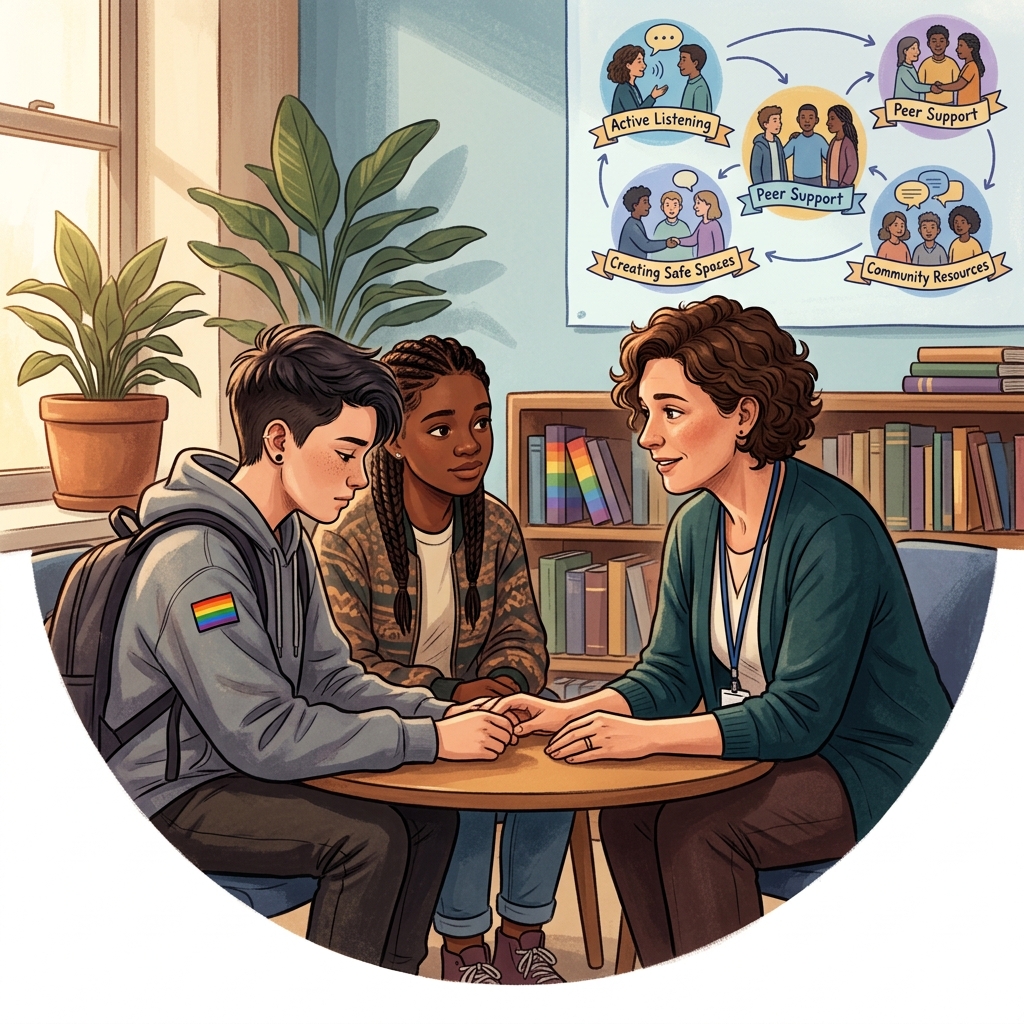
LGBTQ young people face bullying at school, online, and in their communities at rates that are consistently higher than those of their heterosexual and cisgender peers. The harm is not limited to hurt feelings or missed classes; research links bullying to mental health strain, school avoidance, and higher suicide risk.
Why this issue deserves attention
Bullying becomes especially serious when it targets a young person’s real or perceived sexual orientation, gender identity, or gender expression. In those cases, the harassment often attacks a core part of identity rather than a temporary behavior or a single conflict.
Official public health guidance and research both show that LGBTQ students are more likely than their peers to be bullied and to experience related health and academic consequences. That makes prevention a school safety issue, a mental health issue, and an educational equity issue at the same time.
How bullying shows up in daily life
Bullying is not always a dramatic event. For LGBTQ youth, it may include name-calling, exclusion, threats, rumor-spreading, physical intimidation, sexual harassment, or repeated online abuse.
- In person: harassment in hallways, classrooms, locker rooms, buses, or after-school spaces.
- Online: hateful messages, public shaming, doxxing, impersonation, or pressure to reveal private information.
- Social exclusion: being left out of groups, activities, or conversations because of perceived identity.
- Institutional neglect: adults ignoring reports, minimizing harm, or failing to enforce rules consistently.
Cyberbullying is especially harmful because it can follow a student beyond school hours and spread quickly to large audiences. A systematic review found that cyberbullying among LGBTQ youth varies widely across studies, but the pattern of harm is consistent across settings.
The connection between bullying and health
Research strongly links bullying victimization with depression, suicidal thoughts, and suicide attempts among LGBTQ youth. One large study found that bullied LGBTQ students had roughly three times the odds of attempting suicide in the past year compared with those who were not bullied.
These risks are not limited to emotional distress. Bullying has also been tied to school absenteeism, lower academic engagement, and weaker educational outcomes. When students feel unsafe, they are less likely to participate fully in class, join activities, or see school as a place where they belong.
What makes some environments safer than others
Supportive school climates can reduce harm. In one study, LGBTQ youth who described their schools as LGBTQ-affirming reported lower rates of bullying than those who did not. That finding points to a practical truth: prevention is not only about stopping individual incidents after they happen, but also about shaping the whole environment.
Several factors are associated with stronger protection:
- Visible adult support: Students do better when teachers, counselors, coaches, and administrators respond consistently and respectfully.
- Clear anti-bullying rules: Policies that explicitly include sexual orientation and gender identity provide clearer expectations for students and staff.
- Peer connection: Clubs and student groups can reduce isolation and build belonging.
- Fast intervention: Reports are more effective when adults act quickly and document incidents carefully.
What schools can do right now
Schools do not need to wait for a crisis to take action. Prevention works best when it is built into everyday practice, training, and communication.
| Action | Why it helps |
|---|---|
| Update anti-bullying policies | Makes it clear that harassment based on identity is prohibited and reportable. |
| Train all staff | Helps adults recognize bias-based bullying and respond consistently. |
| Support student clubs | Creates belonging and reduces isolation for marginalized students. |
| Improve reporting systems | Encourages students and families to come forward without fear of dismissal. |
| Use inclusive curriculum and assemblies | Normalizes respect and reduces the silence that lets bullying grow. |
Schools that treat bullying prevention as part of student wellness, rather than as a disciplinary afterthought, are better positioned to protect vulnerable students.
What families and caregivers can watch for
Young people often do not disclose bullying right away. Some try to hide it because they fear making the situation worse, losing privacy, or being blamed. Caregivers can look for changes in mood, sleep, appetite, grades, attendance, and willingness to go to school.
- Frequent requests to stay home
- Sudden withdrawal from friends or activities
- Lost or broken belongings
- Reluctance to use phones or social media
- Unexplained sadness, anger, or anxiety
When a young person shares an experience of bullying, the first response matters. Calm listening, privacy, and a practical next step can make it more likely that the student will keep asking for help.
How online harassment changes the equation
Online harassment can intensify the impact of bullying because it may occur at any hour and can be witnessed by classmates, strangers, or school communities. Research on cyberbullying and LGBTQ youth finds consistent associations with isolation, lower self-esteem, depression, and suicidal ideation.
Digital harm also creates a visibility problem. Content can be forwarded, screenshotted, and replayed, making it harder for a student to escape the abuse. That is why prevention efforts should include digital citizenship, platform reporting tools, and clear school expectations for off-campus conduct when it affects school climate.
Why supportive peers matter
Peer support can interrupt bullying in subtle but important ways. Students who speak up, sit with isolated classmates, or refuse to join in harassment help shift the social cost of cruelty.
Research and school guidance both point to the value of student-led spaces and ally behavior. Clubs, supportive peer networks, and visible signs of inclusion can reduce the feeling that a targeted student is alone.
A practical response plan for schools
A strong response plan should be simple enough for busy staff to follow and specific enough to avoid confusion. The goal is not only to punish misconduct but to prevent repeat harm.
- Listen to the student without judgment and document the concern.
- Assess immediate safety risks, including online threats or physical intimidation.
- Separate the student from the source of harm when needed.
- Notify the appropriate school personnel and follow policy consistently.
- Check back with the student after the incident is addressed.
- Review patterns to identify whether broader climate issues are involved.
This kind of response is most effective when staff have been trained before an incident occurs.
Frequently asked questions
Is bullying of LGBTQ youth only a school problem?
No. It can happen at home, in sports, in community settings, and online, but school remains one of the most common places where youth experience repeated peer harassment.
Does bullying really affect mental health?
Yes. Studies consistently associate bullying with depression, suicidal thoughts, and suicide attempts among LGBTQ youth.
What is one of the most effective prevention steps?
Clear, inclusive policies backed by trained staff are among the most practical steps because they set expectations and make intervention more consistent.
What should a student do if school staff do nothing?
The student should continue documenting incidents, seek support from trusted adults, and escalate the concern through school reporting channels or district-level procedures when available. Families can help keep records and follow up persistently.
Can schools reduce bullying even if they cannot control everything online?
Yes. Schools cannot control every online interaction, but they can teach safer digital behavior, respond to reports, support affected students, and address how online harassment affects the school environment.
Building a culture of belonging
Preventing bullying is not only about stopping harmful behavior; it is about building a culture where students are less likely to be targeted in the first place. That culture depends on language, enforcement, visibility, and trust.
When schools include LGBTQ students in their policies, welcome their identities without question, and respond promptly to harassment, they send a message that safety is not optional. The evidence suggests that message matters for attendance, well-being, and long-term educational outcomes.
References
- Bullying and Suicide Risk among LGBTQ Youth — The Trevor Project. 2024. https://www.thetrevorproject.org/research-briefs/bullying-and-suicide-risk-among-lgbq-youth/
- Bullying Victimization among LGBTQ Youth: Current and Future Research Needs — National Library of Medicine / PMC. 2019-03-01. https://pmc.ncbi.nlm.nih.gov/articles/PMC6497454/
- Cyberbullying and LGBTQ Youth: A Systematic Literature Review — National Library of Medicine / PMC. 2020-03-01. https://pmc.ncbi.nlm.nih.gov/articles/PMC7163911/
- Bullying: LGBT youth — Mental Health America. 2025. https://mhanational.org/resources/bullying-lgbt-youth/
- Health Disparities Among LGBTQ Youth — Centers for Disease Control and Prevention. 2024. https://www.cdc.gov/healthy-youth/lgbtq-youth/health-disparities-among-lgbq-youth.html
- Bullying of LGBT Youth — StopBullying.gov. 2017-09. https://www.stopbullying.gov/sites/default/files/2017-09/lgbtyouthtipsheet.pdf
- LGBTIQ+ Youth: Bullying and Violence at School — UN Free & Equal. 2024. https://www.unfe.org/know-the-facts/challenges-solutions/lgbtiq-youth-bullying-and-violence-at-school
Similar Articles








Read full bio of Sneha Tete


