
Understanding Alabama Computer Crime and Digital Laws
A practical guide to Alabama’s computer crime and digital offense laws, penalties, enforcement, and key protections for residents and businesses.
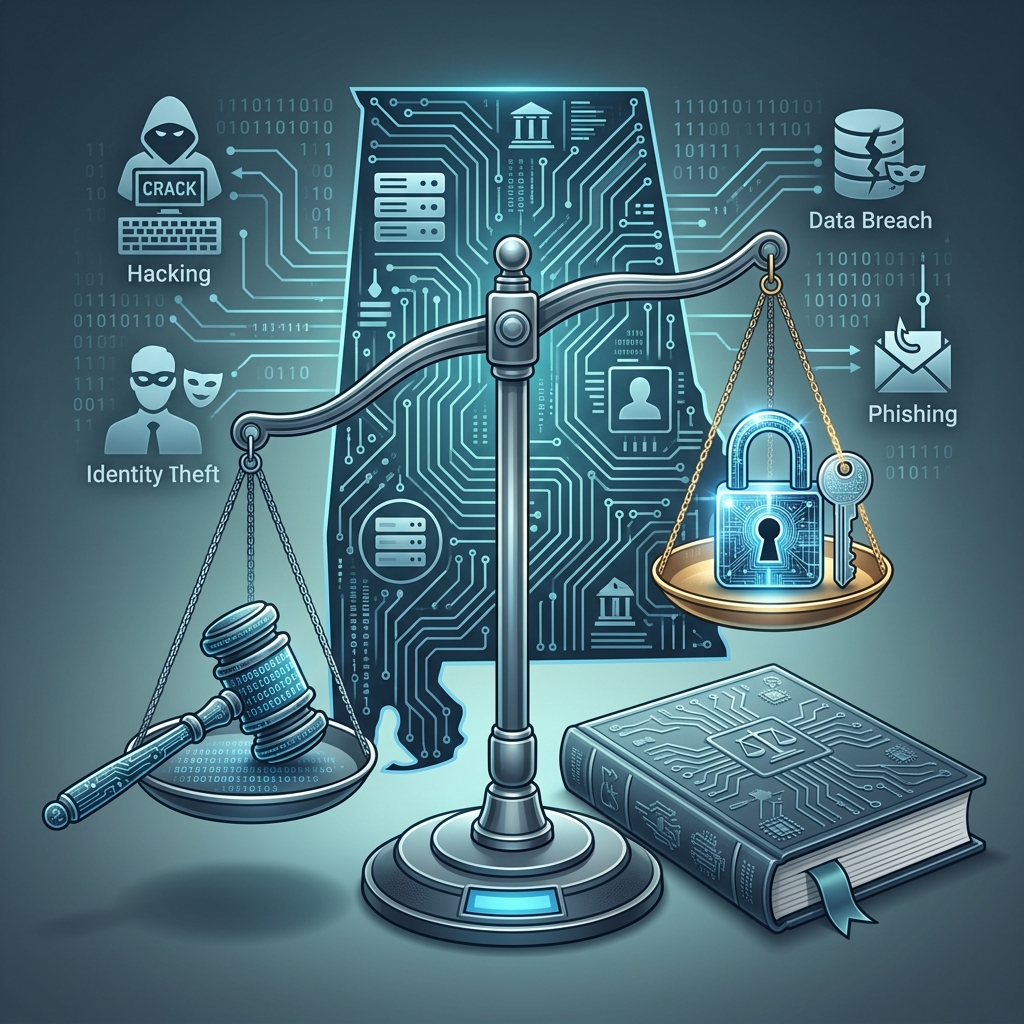
Alabama has built a detailed framework of statutes to address the growing problem of computer-related crimes, ranging from basic unauthorized access to complex schemes involving phishing and encoded data fraud. These laws aim to protect individuals, businesses, and government services from misuse of computers, digital networks, and electronic communications.
This guide explains the core concepts behind Alabama’s computer crime and digital offense laws, outlines how different crimes are classified and punished, and offers practical insights for residents and organizations who rely on technology in their everyday activities.
Overview of Alabama’s Approach to Computer Crime
Alabama treats computer-related misconduct as part of its criminal code, recognizing that theft, fraud, and interference can occur in purely digital spaces as easily as in the physical world. In addition to long-standing theft and property statutes, the state has enacted modern provisions specifically addressing digital crime and computer misuse.
- Traditional criminal concepts (such as theft and fraud) are extended to cover digital data and electronic communications.
- Computer systems and networks are treated as protected infrastructure, similar in importance to physical utilities and transportation.
- Specialized offenses such as phishing, computer tampering, and encoded data fraud are defined and penalized in detail.
These laws are designed both to deter malicious actors and to give law enforcement clear tools to investigate and prosecute digital wrongdoing.
Key Statutory Foundations
Alabama’s core digital crime provisions are found within Title 13A of the Alabama Code, which covers criminal offenses generally. Of particular importance is the Alabama Digital Crime Act, an article focused squarely on modern computer-related offenses.
The Alabama Digital Crime Act
The Alabama Digital Crime Act is an article within the state’s criminal code that consolidates several important computer and electronic crimes. It provides definitions and creates specific offenses tailored to digital behavior rather than traditional physical acts.
Key sections of this article include:
- Computer tampering – addressing unauthorized interference with computers or networks.
- Encoded data fraud – focusing on misuse of encoded information for fraudulent gain.
- Phishing – criminalizing deceptive electronic communications that attempt to obtain sensitive data.
- Disclosure of stored electronic communications – regulating improper release of stored messages and transaction records.
- Forfeiture and enforcement provisions – covering seizure of equipment and cross-state warrants.
Relationship to Broader Criminal Law
Digital crimes in Alabama do not exist in isolation. They interact with more general statutes covering theft, fraud, and property damage. For example, illegal access to a computer system may be prosecuted under specialized digital crime laws, but if that access is used to steal money or sensitive information, traditional theft and fraud provisions may also apply.
This layering allows prosecutors to select charges that fit both the digital method and the real-world consequences of the offense.
Major Types of Computer and Digital Offenses
Alabama law addresses several broad categories of wrongdoing related to computers and electronic communications. Understanding these categories helps clarify what conduct is prohibited and where liability may arise.
Unauthorized Access and Computer Tampering
Computer tampering typically involves accessing a computer, computer system, or network without appropriate authorization and modifying or interfering with data or functionality. Under the Alabama Digital Crime Act, tampering can include a wide range of actions, such as altering files, changing system configurations, or inserting malicious code.
Common examples of unauthorized access and tampering include:
- Logging into an account or system without permission.
- Changing or deleting files owned by another user or organization.
- Disrupting normal operations of a server or network through software changes.
- Installing malware or spyware on someone else’s device.
These acts may be charged as misdemeanors or felonies depending on factors such as the amount of damage caused or whether critical services are disrupted.
Encoded Data Fraud
Encoded data fraud focuses on misuse of coded or electronically stored information that represents value or identity, such as account numbers, digital tokens, or other forms of secure data. While the statute’s detailed language is technical, the basic idea is that manipulating encoded data to obtain money, goods, or services unlawfully is treated as a serious crime.
Conduct that can fall under encoded data fraud includes:
- Altering encoded payment information to divert funds.
- Misusing encrypted account credentials to make unauthorized purchases.
- Employing software tools to decode and exploit secure transaction data.
Phishing and Deceptive Electronic Communications
Phishing is specifically addressed in Alabama law as a separate offense. It generally involves sending electronic communications—often emails, messages, or web prompts—that impersonate trusted entities to trick recipients into revealing sensitive information, such as passwords or financial data.
Elements typically associated with phishing include:
- Use of deceptive branding or language to mimic banks, employers, or government agencies.
- Links to fraudulent websites designed to harvest login credentials.
- Requests for personal data under false pretenses.
Because phishing frequently leads to identity theft or financial loss, Alabama treats it as a distinct crime under the Digital Crime Act, in addition to any overlapping fraud or theft charges.
Improper Disclosure of Stored Electronic Communications
Alabama also regulates the disclosure of stored wire or electronic communications and certain transactional records. This type of offense is concerned with how messages and data are handled after they have been stored on a system or service.
Improper disclosure can involve:
- Releasing stored email or message content without proper legal authority.
- Providing transaction histories or communication logs to unauthorized parties.
- Exceeding lawful access rights when retrieving stored communications for non-legitimate purposes.
These provisions protect both privacy interests and the integrity of investigative processes that rely on secure handling of stored electronic information.
Penalties and Classification of Digital Offenses
Like other crimes, computer-related offenses in Alabama are classified by severity. The classification determines the potential sentence and fines a convicted person may face.
Misdemeanor vs. Felony Computer Crimes
Some digital offenses, especially those involving limited unauthorized access or minor tampering, can be treated as misdemeanors. More serious conduct, including substantial damage, broad data compromise, or interference with essential services, is prosecuted as a felony.
The underlying principle is that both the nature of the act and the amount of harm influence how harshly the law responds.
| Factor | Typical Impact on Classification |
|---|---|
| Monetary damage to data or systems | Higher losses can move a case from misdemeanor to felony. |
| Disruption of critical or public services | Interrupting government operations or utilities can lead to more serious felony charges. |
| Risk of physical harm | Altered data that causes injury may result in the most severe felony levels. |
| Scope and intent of the scheme | Broad, deliberate schemes, especially with financial motives, tend to attract higher penalties. |
Examples of Enhanced Penalties
Alabama’s computer crime framework allows for enhanced penalties where harm is substantial or affects crucial services. For instance, when damage to data or intellectual property exceeds a specified monetary threshold, the offense can be charged as a more serious felony. Similarly, if tampering or interference disrupts public communications, transportation, or utility service, harsher penalties apply.
These enhancements reflect the reality that computer crimes can cause widespread impact beyond the immediate victim—especially when they implicate infrastructure or safety-critical systems.
Investigation and Enforcement in Alabama
Effective enforcement of digital crime laws requires specialized skills and coordination across jurisdictions. Alabama has taken steps to build dedicated capacity for investigating cyber offenses.
Specialized Cybercrime Units
The Alabama Law Enforcement Agency maintains a CyberCrime Unit within its State Bureau of Investigations. This unit includes members of the Internet Crimes Against Children Task Force as well as agents trained in fraud and other digital investigations.
These investigators focus on areas such as:
- Crimes involving exploitation or endangerment of children online.
- Digital fraud schemes operating through computers and networks.
- Complex investigations requiring forensic analysis of devices and data.
By housing investigators around the state, Alabama aims to respond to computer-related offenses wherever they occur, bridging gaps between local agencies and broader state resources.
Forfeiture of Computers and Digital Tools
Alabama law allows courts to order forfeiture of certain computers, software, or related equipment used in committing digital crimes. When property is forfeited under the relevant article or other criminal provisions, courts may award that property to various governmental entities, including state, county, and municipal agencies.
Forfeiture serves multiple purposes:
- Removing tools that enabled the offense.
- Providing resources for ongoing enforcement and training.
- Deterring offenders by increasing the financial consequences of criminal conduct.
Cross-State Warrants and Cooperation
Because digital activity easily crosses state lines, Alabama’s digital crime statutes include mechanisms related to warrants and cooperation with other jurisdictions. These provisions help ensure that investigations can proceed even when servers, data, or suspects are located outside the state’s physical boundaries.
Practical Considerations for Residents and Businesses
Understanding Alabama’s computer crime laws is not only important for lawyers and law enforcement. Everyday users and organizations can benefit from being aware of what the law expects in terms of technological conduct and data handling.
For Individual Users
Individuals rely heavily on computers and smartphones for banking, communication, and social networking. Misusing these tools can unintentionally cross into criminal territory.
Best practices for staying within the law include:
- Respect access boundaries: Do not attempt to log in to accounts or systems you are not authorized to use.
- Avoid tampering with shared devices: Changing settings or removing data on workplace or school computers without permission can be risky.
- Be cautious with borrowed credentials: Using someone else’s login information, even with their casual permission, can create legal complications if systems are misused.
- Report suspicious messages: If you receive phishing emails or fraudulent prompts, report them and avoid clicking links or providing information.
For Businesses and Organizations
Businesses face significant exposure to digital crime, both as potential victims and as entities responsible for protecting customer information. Alabama’s digital laws intersect with broader cybersecurity and data protection obligations, including breach notification requirements and reasonable security measures.
Key considerations for organizations include:
- Implement robust access controls: Limit system access to authorized users and establish clear policies.
- Monitor for tampering and unauthorized use: Use logging and monitoring tools to detect anomalies.
- Train employees about phishing and fraud: Regular training reduces the risk of successful social engineering attacks.
- Coordinate with law enforcement: When crimes occur, early contact with specialized units can help preserve evidence and support prosecution.
Frequently Asked Questions
1. What counts as a computer under Alabama’s digital crime laws?
Under Alabama’s criminal framework, a computer generally includes any electronic device capable of processing data according to instructions, which can extend beyond desktop computers to laptops, servers, and other digital systems. The exact definitions are laid out in the statutory language of the Digital Crime Act.
2. Is accessing someone else’s account always a crime?
Unauthorized access to another person’s account or a protected computer system can constitute computer tampering or related offenses, especially when done without permission or reasonable belief of authorization. However, whether any specific situation is criminal depends on the facts, including consent, the nature of the system, and resulting harm.
3. How serious is phishing under Alabama law?
Phishing is treated as a standalone offense under the Alabama Digital Crime Act, reflecting its potential to cause substantial financial and privacy harm. Depending on the scope of the scheme and the losses involved, phishing-related cases may also involve other fraud or theft charges, increasing potential penalties.
4. Can law enforcement take my computer if it was used in a crime?
Yes. If a computer, software, or related equipment is involved in committing a digital crime, Alabama law allows courts to order forfeiture of that property. The forfeited items may be awarded to government agencies, and the owner may lose them permanently if the court determines forfeiture is appropriate.
5. What should I do if my business experiences a digital attack?
Businesses facing digital attacks should promptly secure systems, preserve logs and evidence, and notify appropriate authorities, which may include local law enforcement and specialized units such as Alabama’s CyberCrime Unit. They should also review any applicable data breach notification obligations and seek legal advice to ensure compliance with state requirements.
References
- Alabama Computer Crime Act — Internet Library of Law and Court Decisions. 2002-01-01. http://www.internetlibrary.com/statuteitem.cfm?Num=10
- Alabama Code Title 13A, Chapter 8, Article 5A: The Alabama Digital Crime Act — Justia. 2024-01-01. https://law.justia.com/codes/alabama/title-13a/chapter-8/article-5a/
- Section 13A-8-117 – Forfeiture of Certain Computers, Software, Etc. — Code of Alabama, Alabama Legislature. 2024-01-01. https://alison.legislature.state.al.us/code-of-alabama?section=13A-8-117
- Alabama Law Enforcement Agency – CyberCrimes Unit — International Association of Chiefs of Police Cyber Center. 2023-06-01. https://www.iacpcybercenter.org/labs/alabama-law-enforcement-agency-cybercrimes-unit/
- Alabama Cybersecurity Laws You Should Know — Pivit Strategy. 2026-01-15. https://pivitstrategy.com/alabama-cybersecurity-laws-you-should-know-2026/
Similar Articles








Read full bio of Sneha Tete




