
Twins with Two Dads: Rare Biology Meets Legal Battles
Unraveling the science and legal complexities when twins share a womb but not a father, from biology to court rulings.
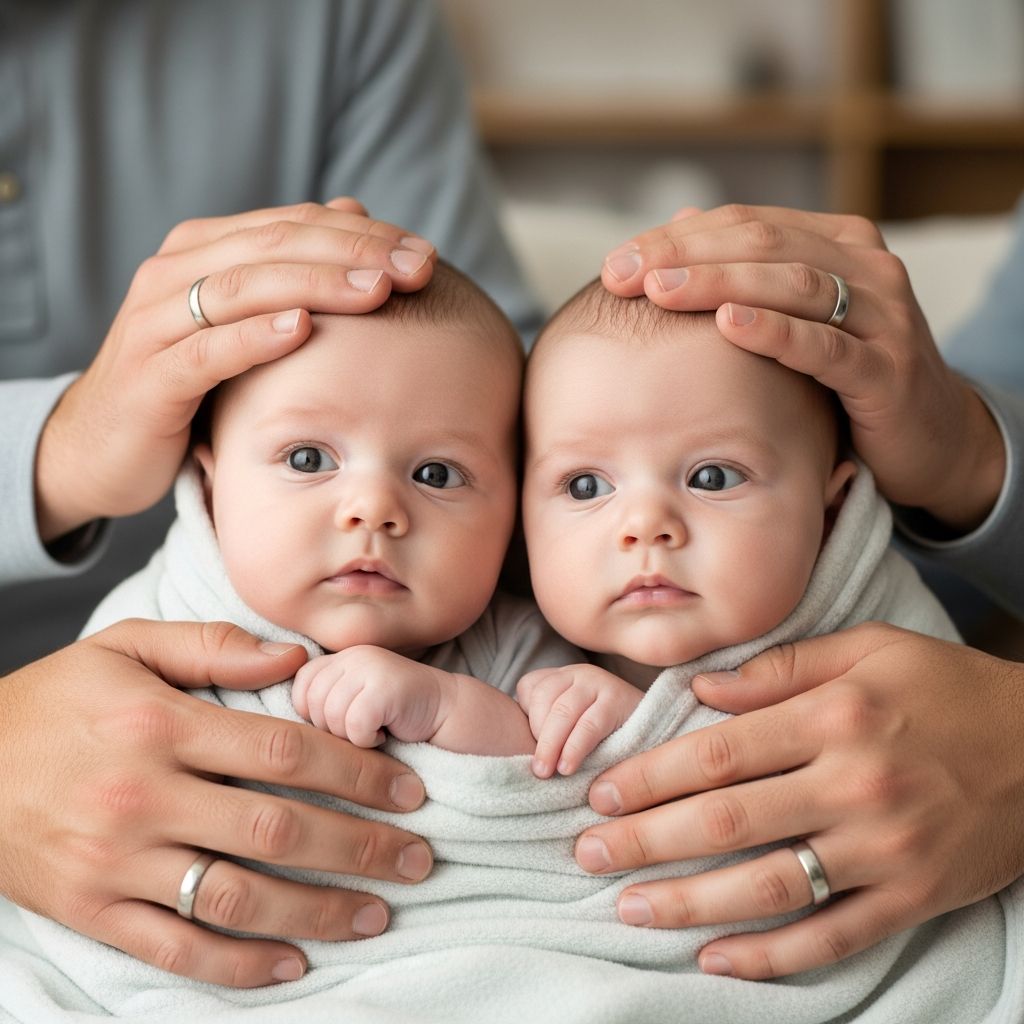
This phenomenon challenges everything we assume about twins, paternity, and family law. When fraternal twins share a birthday but have distinct biological fathers, it sparks scientific curiosity and courtroom drama. Heteropaternal superfecundation, as it’s medically termed, occurs more often than once thought, yet remains shrouded in rarity and misconception.
The Biological Miracle Behind Twins from Separate Fathers
Fraternal twins arise when a woman releases multiple eggs during ovulation, each potentially fertilized by different sperm. In heteropaternal superfecundation, those sperm come from separate men, typically during sexual encounters spaced hours or days apart. This double fertilization leads to dizygotic (non-identical) twins who implant closely in the uterus, developing side by side without health discrepancies from their origins.
Medical literature pegs this event’s frequency in paternity disputes at about 2.4% among dizygotic twins under scrutiny, based on analysis of 39,000 cases where parents contested fatherhood. A 1997 study cited in courts estimates one in 13,000 overall paternity tests reveal such twins. The process hinges on hyperovulation—releasing two ova in one cycle—followed by swift fertilization within the 12-24 hour viability window for eggs.
- Key Biological Steps: Ovulation releases two eggs; sperm from partner A fertilizes one, partner B the other; both embryos implant simultaneously.
- Twins appear gestationally identical, masking genetic divergence until testing.
- No increased health risks noted; they share womb environment equally.
Unlike identical twins from one fertilized egg splitting, fraternal pairs like these carry 50-70% shared DNA, flagging potential mismatches via zygosity tests.
How DNA Testing Uncovers Hidden Paternity Truths
Modern genetics demystifies these cases through precise testing. Post-birth cheek swabs compare 21 autosomal markers and Y-chromosome profiles against alleged fathers. In one documented case, twin 2 matched with a paternity index of 2.5134E+7 (99.9999% probability), while twin 1 excluded the man on 14 of 17 Y-markers and 14 of 21 autosomal ones.
Prenatal options like Non-Invasive Prenatal Paternity Testing (NIPPT) detect fetal DNA in maternal blood from week 7, ideal for early clarity without risk. Courts now mandate testing both twins in disputes, as assuming shared paternity risks error.
| Test Type | Method | Timing | Accuracy |
|---|---|---|---|
| Post-Birth Paternity | Cheek Swab | Anytime after birth | 99.99%+ |
| Twin Zygosity | DNA Comparison | Post-birth | Determines identical vs. fraternal |
| NIPPT Prenatal | Maternal Blood | 7+ weeks pregnancy | 99.9% non-invasive |
These tools shifted from rarity to routine in legal battles, ensuring equitable support allocation.
Landmark Court Cases That Redefined Fatherhood
A 2015 New Jersey ruling spotlighted this issue: a man petitioned against supporting twins after DNA showed he fathered only one. Judge Sohail Mohammed ordered support solely for his biological child, citing the mother’s relations with two men near conception. She named only him initially, but tests revealed heteropaternal superfecundation.
TV’s Paternity Court dramatized similar tales, like Morris v. Thorpe, where a man doubted twin daughters’ paternity, tests confirming one his. Such episodes underscore real stakes: financial ruin from erroneous obligations. Only a handful of U.S. cases predate 2015, known since the 1970s medically.
- New Jersey (2015): Support halved post-DNA.
- International reports: Turkish case excluded alleged father for one twin.
- Media amplification raises awareness, prompts testing mandates.
Legal Hurdles in Proving and Disputing Paternity
Family courts grapple with presumptions: marriage implies husband as father, rebuttable by clear evidence like DNA. In twin cases, partial paternity complicates child support formulas, often splitting obligations or seeking the second father.
Statutes vary by state. New Jersey law allows dismissal of claims for non-biological children once proven. Mothers risk perjury if concealing partners; fathers gain refunds for overpaid support in some jurisdictions. Interstate custody adds enforcement woes if fathers relocate.
Ethical dilemmas arise: testing minors without consent, emotional fallout on children learning divergent origins. Courts balance truth with welfare, prioritizing biology for support but flexibility for emotional bonds.
Child Support Realities When Fathers Differ
Support calculations factor income, custody, needs. With split paternity, courts apportion: one dad pays for his twin, hunt begins for the other. New Jersey’s ruling freed the tested man from the second child’s support, shifting burden.
Delays in identifying the second father strain single mothers. Some states impute income or pursue welfare recovery. Long-term, twins may qualify separately, ensuring neither lacks.
| Scenario | Support Outcome | Legal Action |
|---|---|---|
| One Father Found | Pays for his twin only | Dismiss other claim |
| Both Identified | Split proportional support | Joint orders |
| Second Unknown | State aid, later pursuit | Modified orders |
Family Dynamics and Emotional Impacts Explored
Beyond courts, families navigate identity shocks. Twins discovering separate fathers question bonds, heritage. Parents face trust erosion, co-parenting across rival fathers rare but possible.
Counseling aids processing; open dialogues foster resilience. Children often thrive, genetics mere fraction of kinship. Media sensationalism amplifies stigma, yet education normalizes rarity.
Medical Perspectives: Risks and Prevalence Deep Dive
Hyperovulation boosts fraternal twin odds, familial trait or fertility aid induced. No twin-specific risks from dual fathers; viability mirrors standard dizygotics.
Prevalence: 2.4% in disputed dizygotic cases. Routine twin testing urged in high-conflict paternities, preventing mismatches.
Future Directions in Law and Genetic Science
Advancing NIPPT and at-home kits democratize access, preempting disputes. Uniform laws could standardize rulings. Genetic counseling integrates into prenatal care for multiples.
Society evolves: biology informs but doesn’t dictate family. Courts increasingly weigh intent alongside DNA.
Frequently Asked Questions (FAQs)
Can twins really have different fathers?
Yes, through heteropaternal superfecundation, where two eggs are fertilized by sperm from different men in one cycle.
How common is this phenomenon?
Rare overall, but 2.4% of disputed dizygotic twin paternities show it per database studies.
What DNA test proves different fathers?
Standard paternity tests on both twins, comparing markers to alleged fathers; zygosity confirms fraternal status.
Does the court make one man pay for both?
No, rulings like New Jersey 2015 limit to biological child only.
Can you test paternity before birth?
Yes, NIPPT from 7 weeks via maternal blood, non-invasively.
Are there health issues for such twins?
None linked to dual paternity; they develop normally.
References
- New Jersey Twins Born to Different Dads – So Judge Rules Only 1 Gets Child Support — ABC News (Gillian Mohney). 2015-05-07. https://abcnews.go.com/Health/jersey-court-rules-dad-pay-support-twin/story?id=30902175
- Twins from different fathers: A heteropaternal superfecundation case identified on a large-scale parentage testing project — PMC / National Library of Medicine. 2021-01-19. https://pmc.ncbi.nlm.nih.gov/articles/PMC7808779/
- Can You Have Twins From Different Fathers? — AlphaBiolabs USA. Accessed 2026. https://alphabiolabsusa.com/learning-center/can-you-have-twins-from-different-fathers/
- Triple Episode: Do Twins Have Different Fathers? | Paternity Court — YouTube / Paternity Court. Accessed 2026. https://www.youtube.com/watch?v=j1iPWSoJdJw
Similar Articles








Read full bio of medha deb




