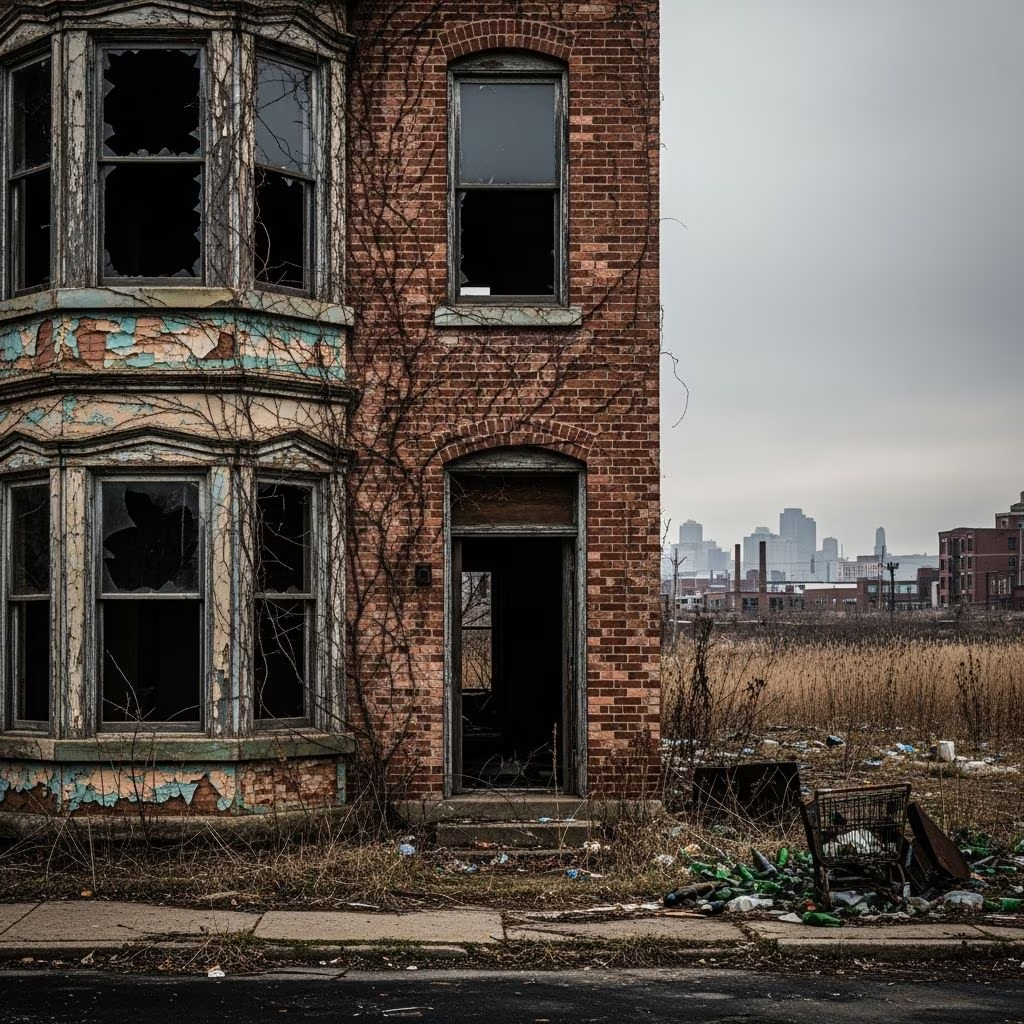
Across America, numerous urban areas struggle with high numbers of vacant and abandoned homes, signaling deeper economic and social challenges. These properties not only blight neighborhoods but also present unique opportunities for investors, developers, and local governments seeking revitalization. Drawing from recent data on vacancy rates and urban decay patterns, this analysis highlights the **top 10 cities** most affected, delving into root causes, legal considerations, and potential solutions.
Understanding the Vacancy Crisis in American Cities
The issue of abandoned properties stems from a mix of economic decline, population shifts, housing market fluctuations, and natural disasters. Nationally, vacancy rates have fluctuated, with homeowner vacancies hovering around 2.9% and rental vacancies at 10.1% in recent assessments, though some regions far exceed these averages. Industrial cities hit hard by manufacturing losses top many lists, while others suffer from overbuilding or seasonal use. Legally, these properties often fall into tax delinquency, foreclosure, or escheat processes, complicating ownership transfers.
Abandoned homes contribute to increased crime, falling property values, and strained municipal budgets. Cities respond through nuisance abatement laws, land banks, and tax auctions, but success varies. For instance, states like Maine and Vermont show high vacancy rates—21.09% and 20.06% respectively—largely due to seasonal homes, contrasting with urban decay in Rust Belt areas.
Ranking the Most Affected Cities
Based on compiled data from real estate analyses and census figures, here is a ranking of cities with notable concentrations of vacant homes. This list prioritizes metro areas with elevated rates from both historical and contemporary reports.
| Rank | City | Vacancy Highlights | Key Factors |
|---|---|---|---|
| 1 | Detroit, MI | 19.9% rental, 4% homeowner vacancy | Auto industry collapse, foreclosures |
| 2 | Flint, MI | High overall vacant homes | Water crisis, job losses |
| 3 | Baltimore, MD | Elevated abandonment rates | Depopulation, crime |
| 4 | Youngstown, OH | Significant vacant properties | Steel mill closures |
| 5 | Jackson, MS | High vacancy metrics | Economic stagnation |
| 6 | Toledo, OH | Notable empty homes | Manufacturing decline |
| 7 | Macon, GA | Persistent vacancies | Population outflow |
| 8 | Montgomery, AL | High regional rates | Southern economic shifts |
| 9 | Las Vegas, NV | 16% rental, 4.7% homeowner; new builds empty | Housing bust, overdevelopment |
| 10 | St. Petersburg, FL | Seasonal and abandoned stock | Tourism fluctuations |
Spotlight on Rust Belt Hotspots: Detroit and Flint
Detroit exemplifies urban decay, with thousands of abandoned structures following the decline of its automotive sector. Vacancy rates remain among the highest, prompting innovative land bank programs where properties are auctioned for as little as $1 to encourage rehabilitation. Flint faces similar woes, exacerbated by its water contamination scandal, leading to further exodus and property neglect. Local governments here navigate complex lien resolutions and demolition funding.
Southern Struggles: Jackson, Macon, and Montgomery
In the South, cities like Jackson, Mississippi, suffer from sluggish job growth and infrastructure issues, resulting in widespread abandonment. Macon, Georgia, and Montgomery, Alabama, mirror this with vacancy rates tied to outmigration. These areas often see higher proportions in states like Mississippi (15.08% statewide) and Alabama (14.99%), where rural-to-urban shifts leave homes empty. Legal tools include adverse possession claims, though rarely successful without occupancy.
Ohio’s Industrial Echoes: Youngstown and Toledo
Youngstown’s steel era collapse left a legacy of ghost neighborhoods, while Toledo grapples with glass and auto manufacturing losses. Both cities use receivership laws to force repairs or sales of blighted properties, aiming to stem decay. Revitalization efforts focus on mixed-use developments to attract young professionals.
Modern Challenges: Las Vegas and Florida Cities
Las Vegas shifted from bust-era vacancies to post-pandemic overbuilding, with new homes sitting empty amid economic uncertainty. St. Petersburg benefits from Florida’s 15.19% statewide vacancy, driven by seasonal retreats, but faces year-round abandonment in older districts. Investor interest is high here due to tourism recovery potential.
Legal Pathways to Reclaim Abandoned Homes
- Tax Foreclosure Auctions: Many cities sell delinquent properties at public auctions, offering low entry points for buyers.
- Land Banks: Nonprofit entities acquire and manage blighted homes for redevelopment, common in Detroit.
- Nuisance Ordinances: Allow municipalities to lien or demolish unsafe structures.
- Quiet Title Actions: Court processes to clear clouded titles on abandoned lots.
Prospective buyers must research liens, environmental hazards, and zoning. States like Michigan and Ohio have streamlined processes, making them investor-friendly.
Economic Drivers Behind the Abandonment
Key factors include deindustrialization in the Midwest, housing bubbles in the West, and seasonal patterns in the Northeast and Florida. Recent trends show new constructions in booming areas like Houston and Charlotte also facing surpluses due to affordability crunches and migration slowdowns. Population density plays a role; sprawling cities like Tucson and New Orleans exhibit ‘abandoned’ vibes despite residents.
Revitalization Success Stories and Strategies
Some cities turn the tide: Baltimore’s Vacants Reinhabitable program has rehabbed thousands of homes. Incentives like tax abatements and grants fuel progress. Investors eye these markets for flips or rentals, with ROI potential in undervalued areas. Community land trusts preserve affordability amid gentrification risks.
Investment Opportunities and Risks
Abandoned homes offer bargains but come with pitfalls: asbestos, lead paint, and squatters. Due diligence via title searches and inspections is crucial. High-reward areas include Detroit’s up-and-coming neighborhoods and Las Vegas suburbs.
Frequently Asked Questions (FAQs)
How can I buy an abandoned home legally?
Participate in tax sales or land bank auctions; conduct thorough title searches to avoid liens.
Are abandoned homes good investments?
Potentially yes in revitalizing cities, but risks like repair costs demand expertise.
What causes high vacancy in Rust Belt cities?
Primarily job losses from manufacturing declines.
Can cities force owners to fix abandoned properties?
Yes, via nuisance laws and fines leading to receivership.
Which states have the highest vacancy rates?
Maine (21.09%), Vermont (20.06%), Alaska (18.24%).
Future Outlook for Urban Renewal
As remote work evolves and interest rates stabilize, demand may rise in these cities. Federal programs like HUD’s Healthy Homes Initiative support cleanups. Proactive policies could transform blights into vibrant communities, boosting local economies.
References
- The Top 10 U.S. Cities for Vacant Homes — Gov1. 2016. https://www.gov1.com/community-development/articles/the-top-10-us-cities-for-vacant-homes-kJC1CQghP6eoS75C/
- America’s Top 15 Emptiest Cities — ABC News. 2009-02-10. https://abcnews.go.com/Business/Economy/story?id=6914381&page=1
- Top 10 U.S. Cities Where New Homes Sit Empty (Till Now) — YouTube (Gov1 channel inference). 2025. https://www.youtube.com/watch?v=8rDrxz7G3iY
- There Are Nearly 15 Million Vacant Homes in America — Realtor.com. 2024. https://www.realtor.com/news/trends/states-with-most-vacant-homes/
- 10 MASSIVE US Cities That Feel Completely Abandoned — YouTube. 2024. https://www.youtube.com/watch?v=KYQ9ccGlLdI