
Tire Blowout Accidents: Legal Responsibility and Compensation
Understanding who bears legal responsibility when tire failures cause serious injuries and accidents.
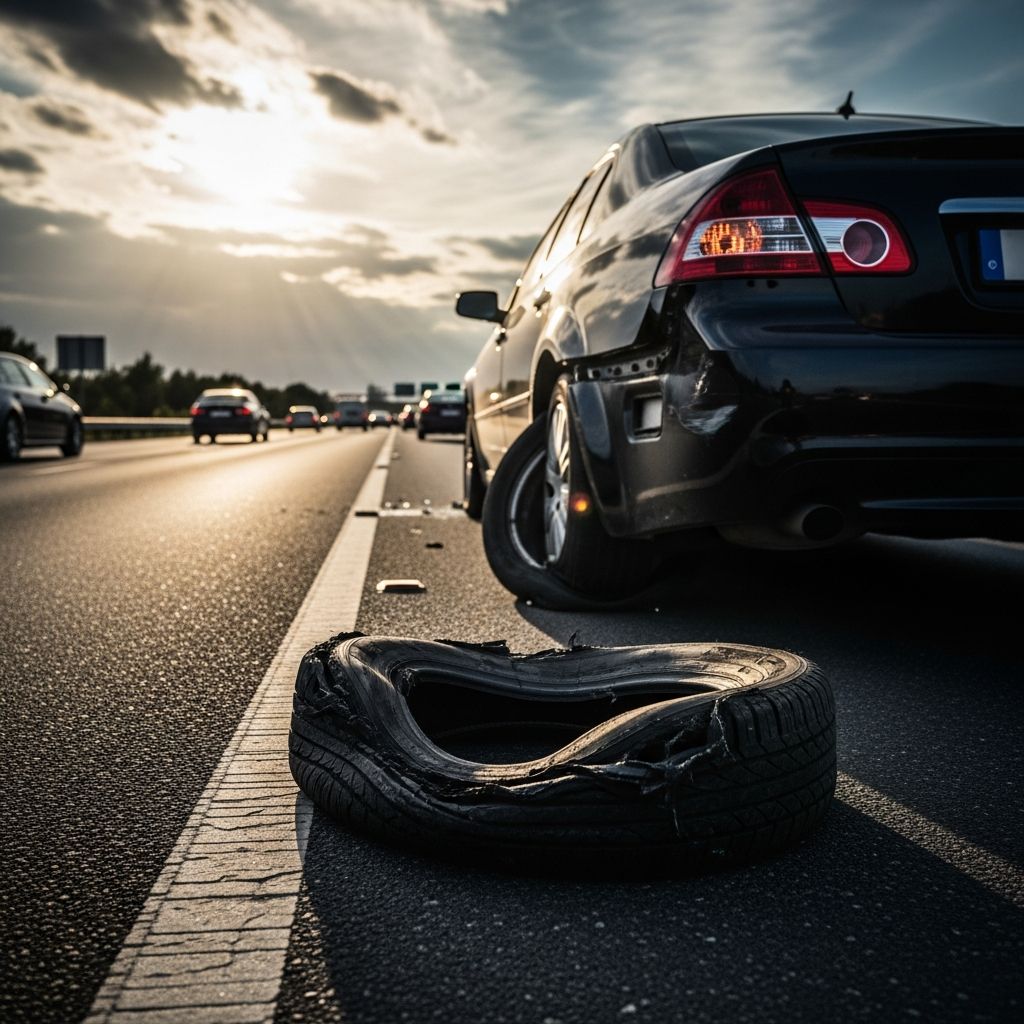
Understanding Tire Blowout Accidents and Legal Responsibility
When a tire suddenly fails during vehicle operation, the consequences can be catastrophic. A tire blowout can cause drivers to lose control of their vehicles, leading to collisions, rollovers, or multi-vehicle accidents that result in serious injuries or death. Beyond the immediate physical trauma, victims often face mounting medical bills, lost wages, and long-term rehabilitation costs. The critical question that arises is: who bears the legal responsibility for damages caused by tire failure? The answer is rarely straightforward, as multiple parties may share liability depending on the circumstances surrounding the blowout.
Determining fault in tire blowout cases requires careful investigation and legal analysis. Unlike straightforward fender-benders where driver error is obvious, tire failure accidents involve complex product liability, negligence, and maintenance considerations. Understanding the various parties who may be held accountable is essential for anyone seeking compensation following such an incident.
The Role of Vehicle Owners and Drivers in Tire Maintenance
One of the primary parties who may be found liable for a tire blowout accident is the vehicle owner or operator themselves. Drivers have a fundamental legal duty to maintain their vehicles in safe operating condition, and this includes proper tire care. This duty encompasses regular tire inspections, maintaining appropriate air pressure, monitoring tread depth, and replacing worn or damaged tires before they become hazardous.
Negligence on the part of a driver or vehicle owner can manifest in several ways. Drivers who ignore warning signs such as vibrations, bulges in the tire sidewall, or visible tread wear fail to exercise reasonable care. Additionally, operating a vehicle on tires that are underinflated, overinflated, or carrying loads beyond their rated capacity creates dangerous conditions. If an investigation reveals that a driver knew or should have known about tire defects but continued operating the vehicle, they may be held partially or fully liable for resulting injuries.
However, liability attribution requires demonstrating that the driver’s failure to maintain the tire directly caused the blowout and subsequent accident. Evidence such as maintenance records, service history, and expert testimony regarding tire condition at the time of failure becomes crucial in establishing this causal connection.
Tire Manufacturers and Product Defect Claims
Tire manufacturers bear significant responsibility for ensuring their products are safe for consumer use. When a tire contains a manufacturing defect or design flaw that leads to blowout, the manufacturer may be held liable under product liability law. Manufacturing defects can include improper vulcanization, inadequate material composition, or flaws in the tire’s internal structure that compromise its integrity.
Design defects represent another category of manufacturer liability. These occur when the fundamental design of a tire makes it inherently unsafe, regardless of how well it was manufactured. For example, if a tire design fails to adequately distribute heat or stress across the tire surface, it may be vulnerable to premature failure even under normal operating conditions.
Manufacturers also have a duty to provide adequate warnings about proper tire usage, maintenance requirements, and limitations. Failure to warn consumers about specific risks or usage parameters can constitute grounds for liability. To prove manufacturer liability, injured parties must demonstrate that the tire failed despite being used as intended, within its rated load capacity, recommended pressure, and appropriate speed limits. This often requires expert analysis of tire components, manufacturing records, and comparison with industry standards.
Tire Retailers, Installers, and Distribution Chain Responsibility
The parties who sell and install tires also bear responsibility for ensuring product safety. Tire retailers who knowingly sell defective, expired, or recalled tires can be held liable for accidents resulting from their sales. Similarly, installers who improperly mount tires, fail to balance them correctly, or install mismatched tires on a vehicle create dangerous conditions.
Mismatched tire installations represent a significant source of liability. When retailers install tires of different brands, sizes, or specifications on the same vehicle, they create an imbalanced condition that increases the risk of blowout. Professional standards and manufacturer guidelines specify compatibility requirements that retailers are legally obligated to follow.
Additionally, tire retailers have an obligation to comply with recall notices from manufacturers. When a tire model is subject to recall due to safety defects, retailers cannot legally continue selling that product. If a retailer sells a recalled tire that subsequently fails and causes an accident, the retailer becomes a potential defendant in liability claims. Documentation of the recall, the retailer’s knowledge of the recall, and the sale of the recalled product becomes critical evidence in such cases.
Maintenance Service Providers and Repair Negligence
Third-party mechanics and tire service facilities may also bear liability for accidents resulting from improper maintenance or repair work. These service providers have a professional duty to perform tire services according to industry standards and manufacturer specifications. Negligent service can include improper installation, failure to adequately inspect tires, incorrect tire pressure settings, or using defective replacement tires.
When a maintenance facility fails to identify existing tire damage during service, they may be liable if that undetected damage subsequently causes a blowout. Similarly, if a service provider performs repairs improperly or uses substandard materials, they can be held responsible for resulting accidents. Documentation of the work performed, invoices, and service records become important evidence in establishing whether the maintenance provider met professional standards.
In commercial trucking contexts, maintenance contractors hired by trucking companies to perform tire inspections and repairs bear particularly significant responsibility. Federal transportation regulations impose strict maintenance standards, and contractors must comply with these regulations. Failure to do so constitutes negligence per se—automatic presumption of negligence based on violation of safety regulations.
Government Entities and Road Maintenance Liability
In certain circumstances, government entities responsible for road construction and maintenance may be held liable for tire blowout accidents. Roads with inadequate surfaces, unrepaired potholes, sharp debris, or hazardous conditions can cause or contribute to tire failures. If a government entity knew about dangerous road conditions but failed to address them, or if their negligent maintenance directly caused a tire blowout, they may be held liable for damages.
However, pursuing claims against government entities involves navigating complex sovereign immunity doctrines and notice requirements. Most jurisdictions require injured parties to provide timely written notice of claims against government bodies and to comply with strict procedural requirements before litigation can proceed. Additionally, government entities may assert that the hazardous condition was open and obvious, arguing that drivers should have avoided it. Despite these procedural obstacles, cases involving severe neglect of public roadways have resulted in successful claims against government defendants.
Commercial Trucking Contexts and Multiple Liable Parties
In commercial trucking accidents involving tire blowouts, determining liability becomes more complex due to multiple potentially responsible parties. Federal Motor Carrier Safety Administration (FMCSA) regulations impose strict requirements on trucking companies regarding tire maintenance, inspection, and driver training. Trucking companies must maintain detailed inspection records, conduct regular tire assessments, and ensure drivers perform pre-trip inspections checking tire pressure, tread wear, and sidewall conditions.
Trucking companies may be held liable for negligent maintenance if they fail to comply with FMCSA requirements or if their maintenance records are incomplete or absent. Courts and regulatory agencies view missing or inadequate maintenance documentation as evidence of systemic negligence. Individual truck drivers may also be held liable if they fail to perform required pre-trip inspections or if they knowingly operate vehicles with tire defects without reporting them.
Additionally, improper cargo loading and weight distribution can cause excessive tire stress leading to blowouts. If third-party cargo handlers or loading services are responsible for loading, they may share liability. Overweight or imbalanced loads place enormous stress on tires, increasing blowout risk significantly.
Investigation and Evidence Collection in Blowout Cases
Successfully establishing liability in tire blowout cases depends on thorough investigation and preservation of evidence. The damaged tire itself represents the most critical piece of evidence, as physical examination can reveal whether failure resulted from defect, improper maintenance, or overuse. Tire experts can analyze the failure pattern, examining whether separation occurred at the tread, sidewall, or beads.
Photographs and video footage of the accident scene, tire damage, and road conditions provide valuable documentation. Dash camera recordings, if available, can establish the sequence of events leading to the blowout. The vehicle’s maintenance records and service history demonstrate whether the owner maintained the tire properly. Inspection and maintenance logs for commercial vehicles reveal whether companies complied with regulatory requirements.
Expert testimony plays a crucial role in tire blowout litigation. Tire engineers and forensic specialists can examine tire fragments, analyze manufacturing records, and determine whether defects existed. Accident reconstruction specialists can establish whether the blowout caused the accident or whether driver error contributed. Medical experts document the severity of injuries resulting from the accident.
Witness statements from other drivers, passengers, or bystanders can corroborate the accident sequence. Vehicle inspection records, including pre-purchase inspections, can establish baseline tire condition. Manufacturer records and recall notices demonstrate whether the tire was subject to known safety defects.
Comparative Negligence and Shared Liability
Many tire blowout accidents involve negligence by multiple parties. A vehicle owner might have failed to maintain a tire properly, but the tire might also contain a manufacturing defect. A driver might have ignored warning signs, but a maintenance facility might have also failed to identify the tire defect during service. In such cases, courts apply comparative negligence principles to allocate responsibility proportionally.
Under comparative negligence rules, each party’s percentage of fault is determined based on evidence and testimony. A court might find that a manufacturer bears 60% liability for a design defect, while the vehicle owner bears 40% liability for failing to maintain proper tire pressure. Damages are then reduced by the plaintiff’s own percentage of negligence. Understanding comparative negligence is important because it means injured parties may recover even if they bear some responsibility for the accident, as long as they were not the primary cause.
Pursuing Compensation and Damages
Injured parties in tire blowout accidents can pursue compensation through insurance claims or civil lawsuits. Damages typically include medical expenses, lost wages, property damage, pain and suffering, and in severe cases, punitive damages. Insurance companies may initially deny claims, arguing that the blowout was unavoidable or that the injured party bore primary responsibility. However, thorough investigation and legal representation can overcome such denials.
The process typically begins with prompt evidence preservation and early claim development. Legal representation should immediately secure the damaged tire, obtain accident reports, and preserve photographs and video evidence. Consulting with experts early in the process helps establish the cause of failure and identify potentially liable parties.
Key Factors in Liability Determination
- Tire Condition and Maintenance History: Documentation showing whether tires were properly maintained, rotated, and replaced according to manufacturer specifications
- Manufacturing and Design Defects: Expert analysis revealing whether the tire contained flaws in construction or design that caused failure
- Recall Status: Verification of whether the tire was subject to manufacturer recalls for safety defects
- Regulatory Compliance: In commercial contexts, adherence to FMCSA or similar regulatory requirements for maintenance and inspection
- Road Conditions: Assessment of whether hazardous road conditions contributed to or caused the blowout
- Proper Installation: Verification that tires were installed correctly and that all tires matched specifications
- Load and Pressure Ratings: Confirmation that the vehicle was not overloaded and tires were inflated to proper specifications
Frequently Asked Questions
Q: Can I hold a tire manufacturer liable if I never properly maintained my tires?
A: Possibly. Even if you failed to maintain your tires, a manufacturer can still be held liable if the tire contained a defect that caused failure regardless of maintenance level. However, your negligence may reduce your recovery under comparative negligence principles.
Q: What should I do immediately after a tire blowout accident?
A: Seek medical attention for any injuries, contact law enforcement to file an accident report, document the scene with photographs, preserve the damaged tire and any debris, obtain witness contact information, and notify your insurance company. Do not discard the damaged tire as it will be needed for expert analysis.
Q: How long do I have to file a lawsuit for a tire blowout injury?
A: Statutes of limitations vary by jurisdiction but typically range from two to four years for personal injury claims. Contact an attorney promptly to understand the deadline in your specific location.
Q: Is the trucking company always liable for tire blowouts in commercial truck accidents?
A: Not necessarily. Liability depends on whether the company failed to maintain tires according to FMCSA requirements or breached its duty to inspect and maintain equipment. However, trucking companies are often held liable because regulatory requirements impose strict maintenance obligations.
Q: What role do tire experts play in proving liability?
A: Tire experts examine physical evidence, analyze failure patterns, review manufacturing records, and provide expert testimony about whether defects caused the blowout. Their analysis is critical for establishing manufacturer liability or distinguishing between defect-caused failures and maintenance-related failures.
Q: Can I sue a tire retailer if they sold me a recalled tire?
A: Yes. Retailers have an obligation to comply with manufacturer recalls and cannot legally sell recalled products. If a retailer knowingly sold you a recalled tire that failed and caused an accident, they can be held liable for your damages.
References
- Motor Carrier Safety Regulations — U.S. Department of Transportation, Federal Motor Carrier Safety Administration. https://www.fmcsa.dot.gov/regulations/title-49-transportation
- Product Liability: Restatement of the Law — American Law Institute. 2010. https://www.ali.org/publications/show/product-liability-restatement-third/
- National Highway Traffic Safety Administration: Tire Recalls — U.S. Department of Transportation. https://www.nhtsa.gov/recalls
- Tire Safety Information and Standards — National Highway Traffic Safety Administration. 2024. https://www.nhtsa.gov/vehicle-owners/tires
- Comparative Negligence and Damages Allocation — American Bar Association, Section of Litigation. https://www.americanbar.org/groups/litigation/
- Commercial Vehicle Safety Standards — Commercial Vehicle Safety Alliance. 2025. https://www.cvsa.org/
Similar Articles








Read full bio of medha deb




