
Are Text Messages Legally Binding: 5 Practical Tips For Renters
Discover if casual texts with your landlord can create enforceable rental agreements and how to protect yourself in digital communications.
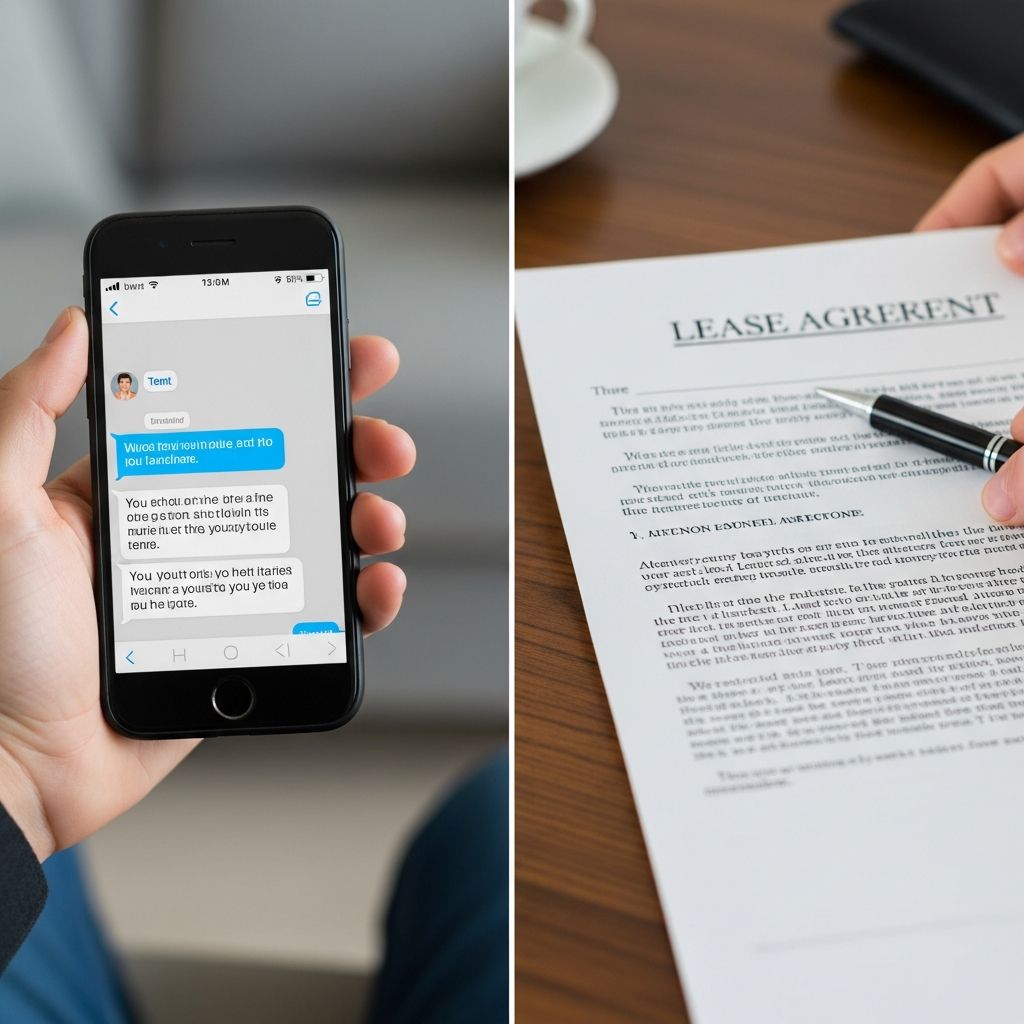
Digital communication has transformed how landlords and tenants interact, with text messages often replacing phone calls or letters for quick discussions on rent, repairs, or lease changes. But do these informal exchanges carry the same legal weight as formal documents? Courts increasingly recognize texts as potential contracts if they meet core legal standards, though limitations exist for official notices and modifications.
Understanding Contract Basics in Digital Exchanges
To determine if a text message creates a binding agreement, consider the foundational elements of contract law: a clear offer, acceptance, mutual understanding of terms, and consideration (something of value exchanged). These principles, long applied to paper and verbal deals, now extend to electronic formats like texts and emails.
For instance, courts have upheld texts where parties clearly outlined terms and agreed. A landlord proposing reduced rent in exchange for extended tenancy, followed by the tenant’s affirmative reply, can form an enforceable pact. This mirrors traditional analysis but adapts to concise messaging.
- Clear Offer: Specific terms like “I’ll fix the AC by Friday if you pay $50 towards it.”
- Acceptance: Tenant responds “Deal, sending payment now.”
- Mutual Assent: Both parties show agreement on essentials without ambiguity.
- Consideration: Mutual promises or payments solidify the deal.
Without these, casual chats like “Rent might be late” lack enforceability. Judicial precedents confirm this: New York courts enforced a tenant-landlord text on repair refunds, Massachusetts brokers’ commission texts, and a California arbitration agreement via simple “Agree” reply.
When Texts Modify Existing Leases
Many wonder if texts can alter a signed lease, such as extending duration or adjusting payments. The answer hinges on intent and clarity. If texts demonstrate mutual consent to changes, they may amend the original lease, especially if the lease allows modifications in writing—broadly interpreted to include digital records.
However, leases often require written amendments signed by both parties. Courts scrutinize texts for equivalent formality. In one scenario, a tenant texting to end a lease early with landlord approval could bind if terms are definite. But vague exchanges risk disputes.
| Scenario | Potentially Binding? | Key Factor |
|---|---|---|
| Text agreeing to month-to-month after fixed term | Yes | Clear mutual intent |
| Casual “OK to pay late?” reply “Sure” | No | Lacks definite terms |
| Proposal for pet approval with deposit | Yes | Consideration present |
| Verbal lease change via text summary | Maybe | Evidence of prior oral agreement |
Landlords and tenants should document agreements formally to avoid reliance on potentially deletable messages.
Texts as Formal Notices: Opportunities and Pitfalls
Legal notices—like eviction warnings, repair requests, or vacancy announcements—typically demand specific delivery methods under state statutes, such as certified mail or personal service. Texts rarely qualify as primary notice, though they gain evidentiary value.
Exceptions arise in jurisdictions permitting electronic service or where contracts specify texts. For example, San Francisco ordinances allow email for certain local notices, hinting at evolving acceptance. Courts may recognize texts as vacancy notice if clear, received, and habitual communication method.
- Direct language: “Official 30-day notice to vacate on [date].”
- Proof of receipt: Screenshots with timestamps.
- Contract alignment: No conflicting format requirements.
Problems include authentication challenges—forged screenshots or denials of receipt—and informality leading to ambiguity. Pair texts with formal methods for safety.
State Variations and Emerging Trends
Laws differ by jurisdiction. Uniform Electronic Transactions Act (UETA), adopted in 49 states, validates electronic records including texts as writings if parties agree. California and New York lead in enforcing digital contracts.
Federal E-SIGN Act reinforces this nationally. Yet tenant laws prioritize protections, often mandating traditional service to ensure receipt. Trends show courts adapting: as texting dominates, judges weigh context like ongoing SMS patterns.
Landlords in tech-forward areas like Oakland explore email options, but texts lag. Always verify local rules via housing authorities or statutes.
Protecting Yourself: Best Practices for Digital Communication
To minimize risks:
- Review your lease: Note notice and modification clauses.
- Be precise: Avoid casual phrasing; state “This is my formal agreement to [terms].”
- Backup evidence: Save threads, use read receipts, or apps logging SMS.
- Confirm in writing: Follow texts with email or mail recapping terms.
- Consult professionals: Attorneys clarify binding nature before acting.
Landlords: Qualify responses (e.g., “Not agreeing to change lease”) to prevent unintended contracts. Tenants: Document repair promises for habitability claims.
Real-World Examples from Court Rulings
Cases illustrate application. In a New York dispute, texts on repair reimbursements formed a mini-contract enforceable for payment. Massachusetts upheld broker texts as commission deals due to definite terms. California’s “Agree” to arbitration text bound parties despite informality.
Conversely, ambiguous texts fail: a vague “maybe out soon” lacks notice intent. These rulings signal caution—brevity invites scrutiny.
Frequently Asked Questions
Can a single “OK” text bind me to new lease terms?
Not usually; it must show clear acceptance of specific offer with consideration. Context matters.
Is texting rent payment proof sufficient legally?
For payment records, yes if timestamped. But for notices, supplement with formal methods.
What if my lease bans electronic changes?
Texts likely won’t override; adhere to stated requirements or risk invalidation.
Do courts require phone records to prove texts?
Often yes for authentication, alongside screenshots. Carrier logs strengthen cases.
Can landlords evict based solely on text notices?
Rarely; most states mandate stricter service to protect tenants.
Future of Digital Agreements in Rentals
As SMS evolves to apps like WhatsApp, courts will likely extend principles. Smart contracts and blockchain may formalize texts further. For now, blend digital convenience with legal rigor. Stay informed on state updates, as 2026 brings potential reforms aligning law with tech.
In summary, texts can bind but demand caution. Clear, documented exchanges protect all parties, bridging informal chats with enforceable rights.
References
- Are Text Messages Legally Binding? — BoyarMiller. 2024-06-27. https://www.boyarmiller.com/a-text-can-bind-you-enforceability-of-agreements-in-todays-digital-business-climate/
- Q&A: Is Texting or Emailing a Tenant Legally Binding? — Foster Swift. 2022. https://www.fwgc.law/single-post/is-texting-or-emailing-a-tenant-legally-binding
- Do Courts Recognize Text Messages as Written Notice? — Falkon SMS. N/A. https://www.falkonsms.com/post/text-messages-as-written-notice
Similar Articles








Read full bio of medha deb




