
Texas Senate Bill 4: Effects On Cities, Campuses, And Residents
Unpacking Texas Senate Bill 4: How it reshapes local immigration enforcement and impacts communities statewide.
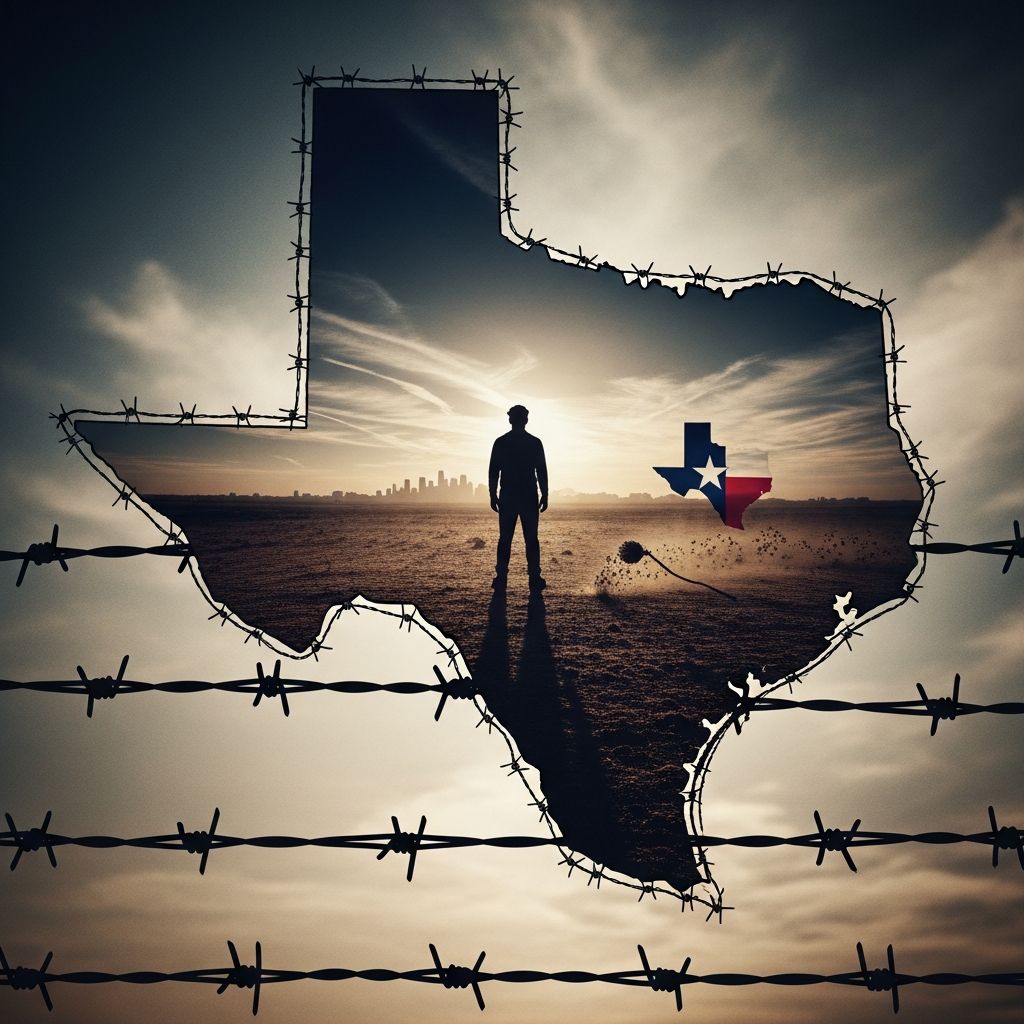
Texas Senate Bill 4, enacted in 2017, fundamentally altered how local governments handle immigration enforcement by banning so-called sanctuary policies and mandating cooperation with federal authorities. This legislation requires law enforcement to inquire about immigration status during lawful detentions and honor ICE detainer requests, with severe penalties for non-compliance.
Origins and Core Purpose of SB4
The push for SB4 arose amid national debates on immigration, particularly following President Trump’s Executive Order 13768 targeting sanctuary jurisdictions. Texas lawmakers, led by Sen. Charles Perry, aimed to eliminate local policies that restricted cooperation with federal immigration officials like ICE. The bill’s sponsor statement explicitly targets practices prohibiting inquiries into immigration status or compliance with detainers.
Enacted on May 7, 2017, by Gov. Greg Abbott, SB4 took effect September 1, 2017, after intense legislative battles involving protests and amendments. It responded to concerns that sanctuary policies endangered public safety by shielding undocumented immigrants from deportation.
Key Provisions: What SB4 Mandates
SB4 prohibits Texas cities, counties, and public institutions from adopting or maintaining policies that:
- Prevent peace officers from questioning a person’s immigration status during lawful stops or arrests.
- Restrict sharing immigration information with federal authorities.
- Prohibit honoring ICE detainer requests for individuals in custody.
College campuses and public universities must comply, affecting administrators who face personal liability. Officers can now legally inquire about status without mandates to do so for every detainee, expanding from initial drafts.
| Provision | Requirement | Applies To |
|---|---|---|
| Immigration Status Inquiry | Allowed during lawful detention | Police, sheriffs, campus security |
| Detainer Compliance | Mandatory honoring of ICE requests | All local law enforcement agencies |
| Policy Bans | No restrictions on federal cooperation | Cities, counties, state agencies |
| Penalties | Misdemeanor, fines, removal from office | Officials, sheriffs, chiefs |
This table summarizes SB4’s operational mandates, ensuring uniform enforcement statewide.
Penalties for Defiance: Holding Leaders Accountable
Non-compliance carries heavy consequences. Sheriffs, police chiefs, and other officials risk Class A misdemeanor charges, up to $4,000 fines, one year in jail, and removal from office. Private lawsuits allow citizens to sue non-compliant entities for $1,000-$25,500 daily, with attorney’s fees.
These measures deter resistance, as seen in pre-SB4 sanctuary-like policies in cities like Austin. Officials must certify compliance annually to the state, facing ouster for false statements.
Effects on Immigrants and Daily Life
For undocumented individuals, SB4 heightens deportation risks. Minor arrests—such as traffic stops or alcohol possession—can lead to status checks and ICE holds, even on college campuses where students fear routine interactions.
Opponents label it a ‘show-your-papers’ law, arguing it fosters fear, reduces crime reporting by immigrants, and invites racial profiling. Supporters counter that it prioritizes public safety without criminalizing mere presence, as undocumented status alone is not a crime per Supreme Court rulings.
Sanctuary policies never fully shielded immigrants; local police still enforced criminal laws and shared info when required. SB4 simply standardizes mandatory cooperation.
Immediate Legal Backlash and Court Battles
Lawsuits erupted immediately. Maverick County and El Cenizo sued first, joined by Houston, Dallas, San Antonio, Austin, El Paso, and others. Plaintiffs claim violations of U.S. and Texas constitutions, including preemption by federal law and free speech curbs on local policies.
The Mexican government filed an affidavit highlighting diplomatic concerns. Federal courts issued injunctions, but the DOJ supported SB4, aligning with efforts to defund non-cooperative areas.
As of 2026, core provisions remain intact post-appeals, though aspects like status inquiries faced partial blocks. Ongoing challenges underscore federalism tensions.
Statewide Impact: From Cities to Campuses
Large cities like San Antonio and Houston shifted policies post-SB4, mandating compliance despite opposition. Rural border areas faced unique pressures, with some leaders decrying enforcement burdens.
Public colleges adapted swiftly; non-compliance risks administrator removal. This extends to events like parties, where minor infractions could trigger scrutiny.
Texas stands among states curbing sanctuary practices, contrasting jurisdictions like New York where local decisions prevail via elected sheriffs.
National Context: Beyond Texas Borders
Sanctuary concepts trace to 1980s church-led protections for Central Americans. By 2018, over 560 U.S. areas limited ICE aid voluntarily.
Federal responses included 287(g) programs deputizing locals for immigration tasks—voluntary nationwide. DOJ grant threats failed in most courts, affirming no compulsion for participation.
Texas SB4 exemplifies state-level intervention where federal law permits, balancing immigration enforcement with local realities.
Current Status and 2026 Relevance
By April 2026, SB4 endures despite injunctions and suits. Core mandates—detainer compliance and inquiry permissions—stand upheld by higher courts. Annual certifications continue, with rare enforcement actions.
Debate persists: proponents cite safety gains; critics note chilled community-police ties. Asylum seekers arriving within a year with persecution fears remain eligible via USCIS, unaffected directly.
Frequently Asked Questions
Does SB4 require police to check everyone’s immigration status?
No, inquiries are permitted but not mandatory during lawful detentions.
Can local leaders still limit ICE cooperation?
No, SB4 bans such policies, with personal penalties for violators.
Has SB4 been struck down?
Partial injunctions occurred, but main provisions remain effective.
What happens on college campuses?
Administrators must comply or face removal; status checks apply.
Are undocumented immigrants safe from deportation in Texas?
No increased risk from arrests leading to ICE holds.
Broader Implications for Federalism
SB4 highlights states’ roles in immigration amid federal limits. It prohibits ‘sanctuary’ info barriers, aligning with 8 U.S.C. § 1373 requiring communication.
While not mandating 287(g) participation, it ensures basics like detainers. This model influences other states, prioritizing uniform enforcement.
Immigrants can still pursue asylum if fearing persecution based on protected grounds, provided timely application.
References
- San Antonio and the Importance of Protecting Sanctuary Cities — Opportunity Agenda. 2017. https://opportunityagenda.org/insights/protecting-sanctuary-cities/
- Everything you need to know about Texas’ “sanctuary cities” law — Texas Tribune. 2017-05-08. https://www.texastribune.org/2017/05/08/5-things-know-about-sanctuary-cities-law/
- Texas Law Regarding Immigration — Texas Woman’s University Legal Services. N/A. https://twu.edu/legal-services/warnings/texas-law-regarding-immigration/
- Sanctuary Cities in Texas | Learn More — Nanthaveth & Associates. N/A. https://austinimmigrationattorney.com/blog/sanctuary-cities-facts-history-texas
- Senate Bill 4 — Texas Legislature Online. 2017. https://capitol.texas.gov/tlodocs/85R/analysis/html/SB00004I.htm
- Sanctuary Policies: An Overview — American Immigration Council. N/A. https://www.americanimmigrationcouncil.org/fact-sheet/sanctuary-policies-overview/
- “Sanctuary” Jurisdictions — Albany Law School Government Law Center. N/A. https://www.albanylaw.edu/government-law-center/sanctuary-jurisdictions
Similar Articles








Read full bio of medha deb




