
Legal Tech Steps To Reduce AI Bias In Justice In 2025: A Guide
Exploring how innovative legal technologies can combat entrenched biases in law practice and justice systems.
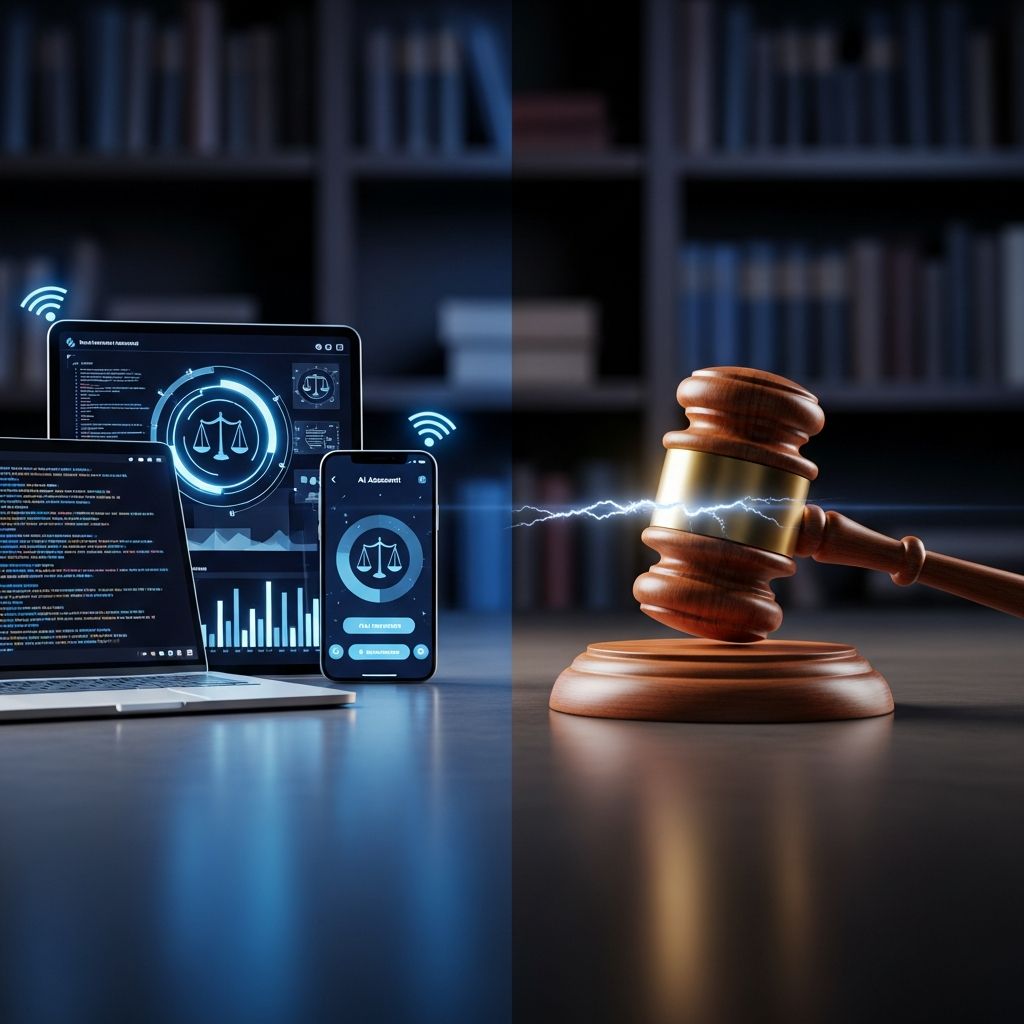
Legal technology holds significant promise for reducing bias in the justice system by promoting objectivity and consistency in decision-making processes. From predictive analytics to automated document review, these tools can help mitigate human prejudices if implemented with rigorous safeguards.
Understanding Bias in Modern Legal Systems
Bias in law manifests through historical data reflecting societal inequalities, affecting outcomes in criminal sentencing, bail decisions, and employment screenings. AI systems trained on such data risk perpetuating disparities, such as harsher predictions for certain demographic groups.
In criminal justice, algorithms assessing recidivism often draw from records skewed by past enforcement patterns, leading to disproportionate impacts on minority communities. A notable investigation revealed that certain tools labeled Black defendants as higher risk at nearly twice the rate of white defendants, even when controlling for criminal history.
Employment law faces similar issues, where resume-screening AI might favor candidates from privileged backgrounds due to training on imbalanced hiring data. These patterns underscore the need for tech solutions that actively counteract embedded prejudices.
Key Applications of Legal Tech in Bias Reduction
Legal tech innovations span multiple areas, each offering unique ways to enhance fairness.
- Predictive Analytics: Tools analyze case histories to forecast outcomes, helping attorneys strategize without relying on subjective judgments.
- Document Automation: Streamlines contract reviews, reducing errors from fatigue-induced oversights that can introduce inconsistency.
- Judicial Trend Analysis: Scans past rulings to identify patterns, enabling data-driven arguments over anecdotal biases.
These applications transform workflows, but their success hinges on bias-aware design.
Strategies for Developing Unbiased AI Models
Creating equitable legal AI requires multifaceted approaches focused on inputs, architecture, and deployment.
Data Diversity and Auditing
High-quality, representative datasets form the foundation. Developers must audit sources for imbalances across race, gender, socioeconomic status, and geography, then augment with synthetic or anonymized data to balance representation. Regular audits ensure ongoing equity as new data integrates.
| Strategy | Description | Benefits |
|---|---|---|
| Data Auditing | Systematic review of training sets for demographic skews | Prevents replication of historical disparities |
| Diverse Sourcing | Inclusion of multi-jurisdictional and varied firm data | Reduces regional or size-based blind spots |
| Synthetic Augmentation | Generating balanced supplemental data | Enhances representation without privacy risks |
Transparent and Explainable Algorithms
Black-box models are inadequate for legal use; explainable AI (XAI) provides traceable reasoning for outputs. For instance, a sentencing tool might detail how factors like prior convictions weighted its score, allowing judges to interrogate and adjust.
Australia’s AI Ethics Principles emphasize explainability, mandating systems that articulate decision logic in human terms. This aligns with legal standards demanding due process and equal protection under the Fourteenth Amendment.
Human Oversight Mechanisms
AI must augment, not supplant, professional judgment. Human-in-the-loop protocols require lawyers to validate recommendations, especially in high-stakes scenarios like bail or hiring. Feedback loops where users correct errors refine models iteratively, minimizing drift.
Real-World Examples of Bias Challenges and Solutions
ProPublica’s 2016 analysis of COMPAS recidivism software highlighted how opaque algorithms amplified racial disparities, prompting calls for reform. In response, newer tools incorporate fairness metrics, testing outputs against protected attributes to flag inequities.
Law firms adopting AI for contract analysis have implemented pre-launch bias tests across diverse client types, ensuring no undue penalties for smaller entities or non-traditional jurisdictions. Predictive litigation tools now scan for judicial tendencies without embedding demographic proxies, promoting strategic equity.
Governance Frameworks for Law Firms
Firms must establish robust structures to responsibly integrate AI.
- Form AI ethics committees blending legal, tech, and compliance expertise.
- Conduct red-teaming exercises simulating misuse scenarios.
- Maintain detailed logs of AI usage for auditability.
- Disclose AI involvement to clients, outlining limitations and oversight.
Australia’s Legal Services Board reinforces practitioner accountability, holding lawyers liable for AI-generated errors. Structured ethics audits, like those from CSIRO, map practices to principles such as fairness and transparency.
Regulatory Landscape and Future Directions
Governments are advancing rules for AI in sensitive domains. Australia’s eight AI Ethics Principles provide a blueprint: safe, reliable, and non-discriminatory systems. In the U.S., equal protection clauses challenge biased tools, with courts scrutinizing due process implications.
Emerging standards demand continuous monitoring and third-party validations. Legal education plays a role, training professionals to spot automation bias—over-reliance on AI outputs.
Looking ahead, hybrid models combining AI efficiency with human nuance could redefine fairness. Blockchain for immutable audit trails and federated learning for privacy-preserving diverse data are on the horizon.
Overcoming Implementation Barriers
Adopting bias-mitigating tech faces hurdles like cost, expertise gaps, and resistance to change. Smaller firms can leverage cloud-based platforms with built-in fairness tools, democratizing access.
Training programs foster AI literacy, emphasizing ethical deployment. Collaborative industry consortia share best practices, accelerating equitable innovation.
Frequently Asked Questions
What causes AI bias in legal tools?
Primarily skewed training data reflecting historical inequalities, leading to amplified disparities in predictions.
How can law firms ensure AI fairness?
Through data audits, explainable models, human review, and regular ethics audits aligned with principles like Australia’s framework.
Are lawyers liable for AI mistakes?
Yes, regulatory bodies hold practitioners accountable, regardless of AI assistance.
Can tech fully eliminate legal bias?
No, but combined with oversight, it significantly reduces human and systemic prejudices.
What role does regulation play?
It enforces transparency and accountability, with evolving rules targeting high-risk applications.
Conclusion: Toward Equitable Justice
Legal tech offers a pathway to fairer systems, but demands proactive ethics. By prioritizing diverse data, transparency, and oversight, the profession can harness innovation for justice.
References
- AI Bias in Legal Tech: Prevention Guide 2025 — Anytime AI. 2025. https://www.anytimeai.ai/blog/ai-bias-in-legal-tech-prevention-guide-2025/
- How Law Firms Can Use AI Responsibly and Avoid Bias in Legal Practice — TeamSquared. 2024. https://www.teamsquared.io/blog/how-law-firms-can-use-ai-responsibly-and-avoid-bias-in-legal-practice
- The Rise of AI in Legal Practice: Opportunities, Challenges — Colorado Technology Law Journal. 2023. https://ctlj.colorado.edu/?p=1297
- Avoiding Algorithmic Bias: Top 5 AI Liability Issues in Courts — Super Lawyers. 2024. https://www.superlawyers.com/resources/science-and-technology-law/avoiding-algorithmic-bias-top-5-ai-liability-issues-in-courts/
- Legal Education’s Role in Combating Automation Bias — University of Montana ScholarWorks. 2023. https://scholarworks.umt.edu/cgi/viewcontent.cgi?article=1232&context=faculty_lawreviews
Similar Articles








Read full bio of Sneha Tete




