
Tech Innovations Empowering People with Disabilities
Discover how cutting-edge technology is transforming lives, boosting independence, and opening new opportunities for individuals with disabilities.
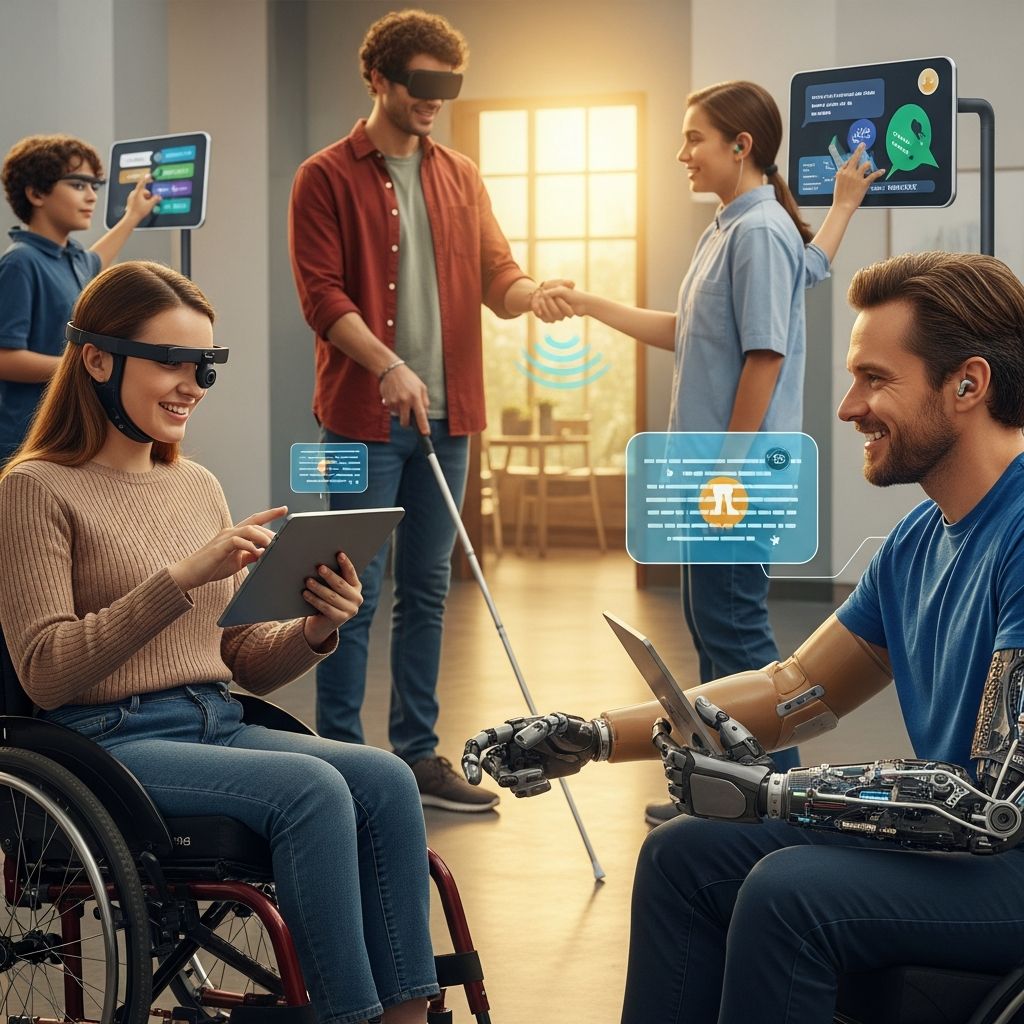
Modern technology is reshaping the landscape of accessibility, providing individuals with disabilities unprecedented levels of independence, productivity, and connection. From artificial intelligence that bridges neurological gaps to smart devices that automate daily tasks, these innovations are not just tools—they are gateways to fuller lives. This article delves into the transformative power of assistive technologies, highlighting key advancements across mobility, communication, education, employment, and home environments.
Revolutionizing Mobility with Intelligent Devices
Mobility challenges have long limited independence, but recent developments in smart wheelchairs and wearable aids are changing that narrative. Traditional wheelchairs are evolving into autonomous systems equipped with sensors and AI algorithms that detect obstacles and optimize paths.
For instance, advanced power wheelchairs now incorporate lidar technology for real-time navigation, allowing users to set destinations via apps while the device handles the rest. These chairs feature zero-turn radii and foldable designs for easy transport, making public spaces more navigable. Add-on kits like those from adaptive tech firms enhance existing chairs with pressure-monitoring sensors that prevent sores by auto-adjusting seats, all controllable through smartphone interfaces.
Beyond wheelchairs, AI-driven exoskeletons and implants are restoring natural movement. Wireless brain-spinal interfaces use machine learning to interpret neural signals, enabling paralyzed individuals to walk with fluid motion during clinical trials. These breakthroughs promise broader availability as registries open for participants with conditions like ALS or spinal injuries.
AI-Powered Homes for Seamless Living
Smart homes are becoming sanctuaries of autonomy, where voice commands and predictive AI handle routine tasks. Refrigerators that track inventory and auto-order groceries, lights activated by proximity or voice, and automated doors eliminate physical barriers for those with limited mobility or dexterity.
Funding programs, such as state assistive technology loans, make these upgrades accessible, covering costs for voice assistants and environmental controls. For visually impaired users, AI glasses with embedded cameras provide audio descriptions of surroundings—identifying objects, reading signs, and alerting to hazards—reducing reliance on guides or canes. These wearables use sophisticated sensors for continuous environmental feedback, empowering confident navigation in unfamiliar settings.
Enhancing Communication and Sensory Access
Technology bridges sensory gaps, turning silence into conversation and text into speech. Screen readers and text-to-speech apps, now supercharged with AI, vocalize web content, documents, and apps with natural intonation, aiding low-vision users in education and work. GPS navigation tools like those offering audio cues for crossings and landmarks further promote safe, independent travel.
For hearing impairments, cochlear implants and AI-enhanced hearing aids filter noise for clearer speech comprehension. Video relay services enable sign language interpretation via video calls, crucial for medical consultations where nuance matters. Adaptive inputs—eye-tracking, voice controls, head pointers—allow hands-free device interaction, vital for those with motor limitations. Brain-computer interfaces even translate thoughts to text, selecting letters via neural waves for those with severe movement restrictions.
Transforming Education for Inclusive Learning
Educational technology levels the playing field, customizing learning for diverse needs. AI platforms offer predictive text, speech recognition for stutterers, and personalized curricula via edtech tools like braille accessories and sign language translators. Online classes hide visible disabilities, fostering equal participation while preparing students for hybrid work environments.
Conversational AI agents assist with note-taking and real-time captioning, supporting cognitive and speech challenges. Augmentative communication devices predict phrases, easing expression in classrooms. Remote learning tools tailor content, with text-to-speech and magnification software ensuring accessibility.
Opening Doors in the Workplace
Employment barriers are crumbling as tech enables remote work and adaptive interfaces. Voice-activated software, foot pedals, and eye-gaze systems let workers bypass traditional inputs. AI tools prioritize visual cues via audio—object and facial recognition—for the visually impaired.
Fintech apps, automated captioning in video calls, and customizable workspaces reduce biases, focusing on output over appearance. Networking platforms connect disabled professionals, while telehealth and AI writing aids streamline administrative tasks like insurance claims. Over 1 billion people worldwide benefit from such inclusion, boosting economies and family stability.
Overcoming Barriers: Design and Policy Needs
While promising, tech’s potential hinges on inclusive design. Privacy issues, insurance gaps, and non-accessible platforms persist. Policymakers must prioritize universal design, ensuring AI and apps serve all. Public funding for devices and employer training amplify impact.
| Category | Examples | Primary Benefit | Accessibility Funding |
|---|---|---|---|
| Mobility | Smart wheelchairs, exoskeletons | Autonomous navigation | Insurance letters, loans |
| Home Automation | Voice assistants, smart appliances | Task automation | State programs |
| Communication | Screen readers, BCI | Sensory bridging | Federal research grants |
| Education | AI tutors, captioning | Personalized learning | Edtech subsidies |
| Employment | Adaptive inputs, remote tools | Productivity boost | Workplace accommodations |
Frequently Asked Questions
How can I access funding for assistive tech?
Programs like state assistive technology loans, insurance via medical necessity letters, and federal registries offer support. Check local resources for eligibility.
Are smart wheelchairs compatible with existing models?
Yes, add-on kits upgrade current chairs with sensors and apps without full replacement.
What AI tools help in education for disabled students?
AAC devices, predictive text, and captioning software enhance communication and learning.
Can technology fully replace human assistance?
It significantly reduces dependency but works best alongside support for complex needs.
How does remote work benefit disabled employees?
Custom workspaces, captioning, and bias reduction promote equal evaluation.
These innovations signal a future where disabilities don’t define limits. Continued collaboration between developers, users, and governments will ensure equitable access.
References
- Exciting Assistive Technology for People with Disabilities — Ability Montana. 2023-10-15. https://abilitymt.org/blog/assistive-technology-people-disabilities
- How Technology is Helping People With Disabilities Thrive — Rick Hansen Foundation. 2024-02-20. https://www.rickhansen.com/news-stories/blog/accessible-futures-how-technology-helping-people-disabilities-thrive
- How to Make Emerging Tech Work for Communities with Disabilities — New America. 2023-11-08. http://www.newamerica.org/insights/ai-tech-inclusion-disabilities-design/
- How Technology is Creating New Employment Opportunities — ACL.gov (Administration for Community Living). 2022-05-12. http://acl.gov/news-and-events/acl-blog/how-technology-creating-new-employment-opportunities-people-disabilities
- Technology Can Level the Playing Field for Disabled People — IMF Public Finance Management Blog. 2021-09-14. https://blog-pfm.imf.org/en/pfmblog/2021/09/technology-can-level-the-playing-field-for-disabled-people-in-the-workforce
- How AI in Assistive Technology Supports Students — Every Learner Everywhere. 2024-01-22. https://www.everylearnereverywhere.org/blog/how-ai-in-assistive-technology-supports-students-and-educators-with-disabilities/
Similar Articles








Read full bio of medha deb




