
Supreme Court Delays on Same-Sex Marriage: Key Insights
Understanding the Supreme Court's 2013 decision to sidestep nationwide same-sex marriage, paving the way for future equality rulings.
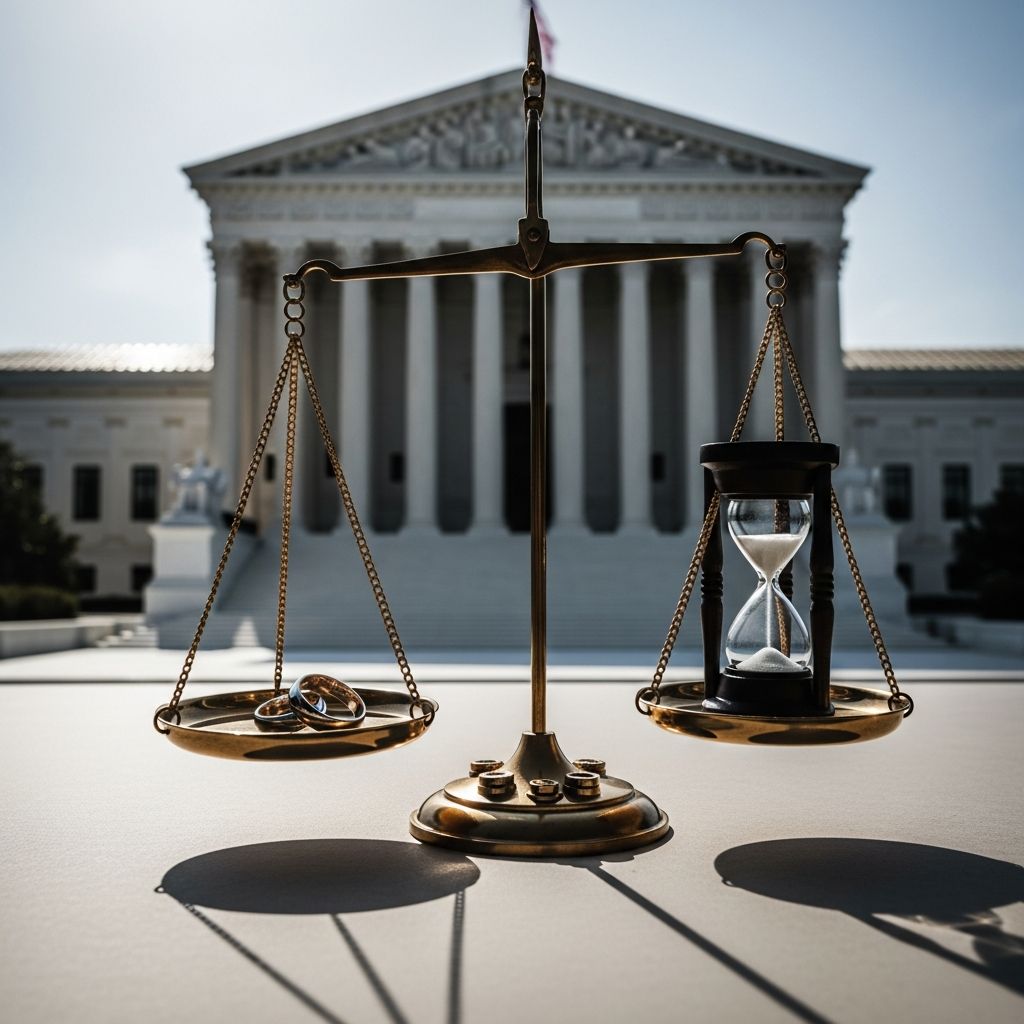
The U.S. Supreme Court’s handling of same-sex marriage in 2013 marked a turning point in American civil rights, even as it chose not to resolve the issue nationwide immediately. On June 26, 2013, the Court issued rulings in two landmark cases—United States v. Windsor and Hollingsworth v. Perry—that dismantled federal barriers while leaving state-level bans intact for the time being. These decisions signaled momentum toward equality without mandating uniform national policy, influencing legal battles that culminated in Obergefell v. Hodges two years later.
Background: The Legal Landscape Before 2013
By early 2013, same-sex marriage was legal in nine states and the District of Columbia, but federal law via the Defense of Marriage Act (DOMA) of 1996 refused recognition of these unions for federal purposes like taxes, benefits, and immigration. State bans persisted in most jurisdictions, creating a patchwork of rights. Activists challenged DOMA and California’s Proposition 8, propelling these issues to the highest court.
Edie Windsor, whose case became central, exemplified the human cost. After her partner Thea Spyer’s death, Windsor faced a $363,000 estate tax bill because their Canadian marriage wasn’t federally recognized under DOMA Section 3. In California, Proposition 8—a 2008 voter-approved ban—halted same-sex marriages post-initial legalization, prompting a federal lawsuit by advocates.
Decoding United States v. Windsor: Striking Down DOMA
In a 5-4 ruling, the Supreme Court invalidated Section 3 of DOMA, which defined marriage as between one man and one woman for federal law. Justice Anthony Kennedy’s majority opinion argued that DOMA violated the Fifth Amendment’s Due Process Clause by denying equal liberty to same-sex couples legally married in their states. The law, Kennedy wrote, demeaned these unions and intruded on state authority over domestic relations.
This decision had immediate ripple effects. The Obama administration extended federal benefits like Social Security survivor benefits and immigration rights to same-sex spouses. It also invalidated DOMA’s uniformity defense, emboldening challenges to state bans.
Hollingsworth v. Perry: California’s Proposition 8 Falls
Simultaneously, the Court dismissed the Proposition 8 appeal on standing grounds in a 5-4 decision. Proponents lacked injury to sue after a district court struck down the ban and California’s officials refused to defend it. Effectively, same-sex marriage resumed in California, the most populous state, adding urgency to national debates.
While not a merits ruling, this outcome expanded marriage equality to millions and highlighted procedural barriers to defending voter initiatives.
Immediate Consequences Across the Nation
The dual rulings spurred rapid change:
- Federal Recognition: Thousands of same-sex couples gained access to over 1,000 federal rights, from tax filings to veteran benefits.
- State Momentum: By late 2013, states like Rhode Island, Delaware, and others legalized same-sex marriage, reaching 17 by 2014.
- Circuit Splits: Federal courts began invalidating bans in the 4th, 7th, 9th, and 10th Circuits, creating conflicts necessitating Supreme Court intervention.
These shifts underscored the Court’s 2013 choices as catalysts rather than finales.
The Road from Windsor to Obergefell
The 2013 decisions set up Obergefell v. Hodges. Consolidated cases from Michigan, Kentucky, Ohio, and Tennessee challenged bans after lower courts split. On June 26, 2015, in another 5-4 Kennedy-authored opinion, the Court held that the Fourteenth Amendment guarantees same-sex couples the right to marry and requires recognition of out-of-state unions.
Four principles anchored the ruling: personal autonomy in marriage, its dignitary importance, safeguarding children and families, and equal treatment under law. This overruled Baker v. Nelson (1972) and ended state bans nationwide.
| Year | Case | Outcome | Impact |
|---|---|---|---|
| 2013 | United States v. Windsor | Struck Section 3 of DOMA | Federal benefits extended |
| 2013 | Hollingsworth v. Perry | Dismissed Prop 8 on standing | CA marriages resume |
| 2015 | Obergefell v. Hodges | Nationwide right to marry | All states must license/recognize |
Legal Arguments and Constitutional Foundations
Central to these cases were Due Process and Equal Protection Clauses. Windsor emphasized federalism and liberty, rejecting DOMA as discriminatory animus. Obergefell fused these with fundamental rights doctrine, affirming marriage’s centrality to identity and equality.
Dissenters, led by Chief Justice Roberts in Obergefell, argued the issue belonged to democratic processes, warning of judicial overreach. Yet the majority prioritized constitutional imperatives over policy.
Societal and Political Ripples
Post-2013, public support surged; Gallup polls showed majority approval by 2014. Politically, the rulings neutralized DOMA as a wedge issue while fueling grassroots organizing. Challenges persisted, like religious exemptions, but equality advanced.
By 2026, Obergefell’s legacy endures amid debates on transgender rights and beyond.
Challenges and Future Directions
While marriage equality is settled, related fights continue: parental rights, adoption, and interstate recognition post-Obergefell. Recent cases test balances with religious freedoms[10].
The 2013 pivot demonstrated judicial caution yielding to inevitability, reshaping American family law.
Frequently Asked Questions (FAQs)
What did the Supreme Court decide in United States v. Windsor?
The Court ruled 5-4 that Section 3 of DOMA was unconstitutional under the Fifth Amendment, allowing federal recognition of state-legal same-sex marriages.
Why didn’t the Court rule directly on Proposition 8?
Lack of standing for proponents after state officials declined defense led to dismissal, effectively reinstating marriages in California.
How did 2013 rulings lead to Obergefell?
They created momentum, federal benefits access, and circuit splits, prompting the 2015 nationwide mandate.
Is same-sex marriage legal everywhere now?
Yes, since Obergefell in 2015, all states must license and recognize them.
What rights did Windsor grant immediately?
Access to federal taxes, benefits, and protections for legally married same-sex couples.
References
- United States v. Windsor — Supreme Court of the United States. 2013-06-26. https://en.wikipedia.org/wiki/United_States_v._Windsor
- Obergefell v. Hodges — Supreme Court of the United States. 2015-06-26. https://en.wikipedia.org/wiki/Obergefell_v._Hodges
- Windsor v. United States — American Civil Liberties Union. 2013-06-26. https://www.aclu.org/cases/windsor-v-united-states
- Obergefell v. Hodges — Legal Information Institute, Cornell Law School. 2015-06-26. https://www.law.cornell.edu/supremecourt/text/14-556
- Obergefell v. Hodges – A Brief History — Howard University School of Law Library. N/A. https://library.law.howard.edu/civilrightshistory/lgbtq/obergefell
- Obergefell v. Hodges — GLAD Law. 2015-06-26. https://www.gladlaw.org/cases/obergefell-v-hodges/
Similar Articles








Read full bio of Sneha Tete




