
Summer Safety Essentials for Outdoor Business Spaces
Protect your team, customers, and property with proven strategies for managing seasonal outdoor areas during hot weather.
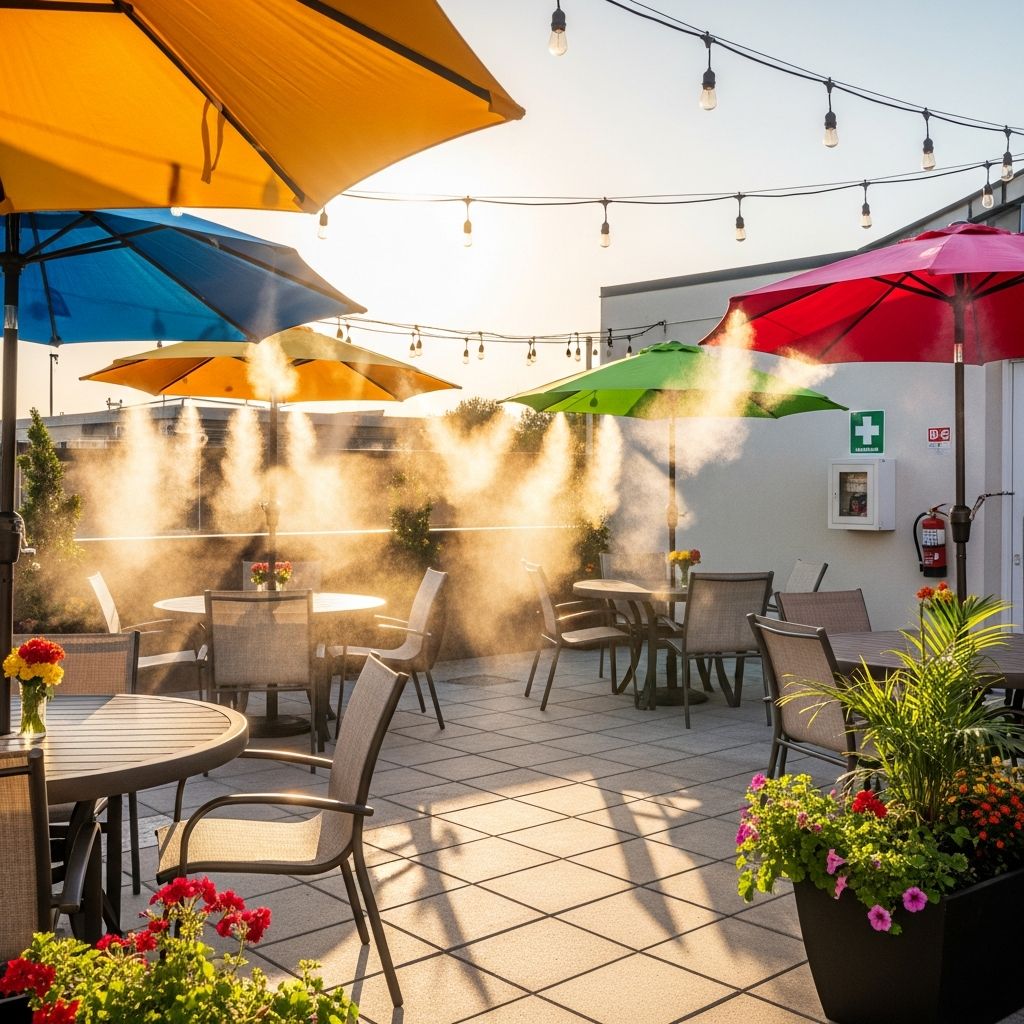
Operating a business with outdoor patios, gardens, beer tents, or event spaces brings excitement during warm months but also heightens risks from heat, sun, pests, and weather shifts. Proactive measures protect employees, patrons, and your operations from injuries and liabilities.
Combating Heat Stress in Outdoor Work Environments
High temperatures pose the greatest threat to outdoor workers, leading to dehydration, exhaustion, and life-threatening heatstroke. The body loses up to 2 quarts of fluid per hour during intense activity in heat, per Johns Hopkins Medicine guidelines. Businesses must prioritize hydration stations with cool water, electrolyte drinks, and frequent access.
- Install shaded cooling zones using canopies, umbrellas, or misters for mandatory breaks every 15-20 minutes during peak heat (11 a.m. to 4 p.m.).
- Shift strenuous tasks to early mornings or evenings, rotating staff to prevent prolonged exposure.
- Train all team members to spot early heat illness signs: dizziness, nausea, rapid pulse, or confusion, and implement immediate response protocols like moving to shade and cooling with wet cloths.
OSHA mandates water, rest, and shade for outdoor laborers; non-compliance risks fines up to $15,625 per violation. Acclimatize new hires gradually over 7-14 days with shorter shifts.
Sun Protection Strategies for Staff and Visitors
Ultraviolet radiation causes over 3 million skin cancer cases yearly in the U.S., disproportionately affecting outdoor workers. Provide broad-spectrum SPF 30+ sunscreen dispensers at entry points, reapplied every two hours or after sweating.
| Protection Item | Benefits | Implementation Tip |
|---|---|---|
| Wide-brimmed hats | Blocks 97% of UV rays | Stock in various sizes at no cost to staff |
| UV-blocking sunglasses | Prevents eye damage | Choose wraparound styles for full coverage |
| Long-sleeve moisture-wicking shirts | UPF 50+ rating | Light colors reflect heat better |
Encourage patrons to seek shade during peak UV hours (10 a.m.-4 p.m.). For businesses like cafes or markets, position seating under natural tree cover or install retractable awnings.
Managing Pests and Insect Threats Effectively
Summer surges in mosquitoes, ticks, and wasps amplify disease risks like West Nile or Lyme. Supply EPA-registered repellents with DEET (20-30%) or picaridin at workstations.
- Treat uniforms and gear with permethrin for tick deterrence; perform daily body checks focusing on scalp, armpits, and legs.
- Eliminate standing water in planters or coolers to curb mosquito breeding; use fans to disrupt flight patterns around seating.
- Secure food waste promptly in lidded bins to avoid attracting rodents or flies in dining areas.
For high-traffic patios, partner with licensed exterminators for weekly barrier sprays, ensuring child-safe products.
Preventing Slips, Trips, and Storm-Related Falls
Sudden showers turn outdoor surfaces slick, while overgrown paths create trip hazards. Increased foot traffic from vacationers heightens incident odds. Conduct bi-weekly inspections:
- Clear debris from walkways, patios, and ramps.
- Apply non-slip coatings to wooden decks or install rubber mats near wet zones.
- Trim landscaping to maintain 3-foot clear paths; post wet-floor signs proactively.
Illuminate evening areas with solar LED lights to deter trips after dusk. Summer storms demand securing loose furniture and awning ties to avert wind-blown projectiles.
Equipment Maintenance and Fire Risk Mitigation
Heat stresses grills, generators, and fans, raising malfunction risks. Overheated motors spark fires, especially near dry brush. Daily pre-use checks include:
- Inspecting cords for frays and ensuring grounded outlets.
- Positioning propane tanks in shaded, ventilated spots away from crowds.
- Keeping 10-foot clearance from combustibles; stock ABC-rated extinguishers nearby.
For wildfire-prone regions, create defensible space by clearing 30 feet of vegetation around structures. Test backup generators monthly for power outage readiness during heatwaves.
Boosting Security Amid Seasonal Vulnerabilities
Longer days and owner vacations correlate with 20% burglary spikes. Fortify outdoor spaces:
| Measure | Cost-Effective Option | Impact |
|---|---|---|
| Motion-sensor lighting | Solar-powered | Reduces break-ins by 50% |
| Surveillance cameras | Cloud-stored footage | 24/7 monitoring |
| Landscaping tweaks | Low shrubs under windows | Improves visibility |
Minimize cash holdings and use timers for interior lights to simulate occupancy.
Legal and Insurance Considerations for Outdoor Operations
Negligent safety invites lawsuits; slips account for 15% of worker comp claims. Document all trainings, inspections, and incident responses in a safety log. General liability policies should cover patron injuries—verify seasonal rider coverage for tents or expanded patios.
Comply with local codes for crowd capacity, alcohol service in outdoor areas, and ADA-accessible paths. Consult attorneys for waivers on high-risk activities like live music events.
Air Quality and Respiratory Safeguards
Ozone spikes and pollen worsen in summer heat, triggering asthma. Monitor EPA air quality indexes; restrict outdoor exertion on ‘unhealthy’ days. Deploy HEPA purifiers in semi-enclosed lounges and ban smoking near entrances.
Frequently Asked Questions
What are the first signs of heat exhaustion in outdoor workers?
Heavy sweating, weakness, cool clammy skin, fast weak pulse, and nausea. Move to shade, hydrate, and cool immediately.
How often should sunscreen be reapplied outdoors?
Every 2 hours, or immediately after water exposure or heavy sweating, using SPF 30+ broad-spectrum.
Can businesses be liable for customer slips on wet patios?
Yes, if failure to warn or maintain surfaces is proven; post signs and inspect regularly to mitigate.
What PPE is essential for summer outdoor tasks?
Breathable long sleeves/pants, hats, gloves, and safety glasses that don’t trap heat—OSHA-compliant.
How to prepare outdoor areas for thunderstorms?
Secure items, trim trees, ensure drainage, and have an evacuation plan for lightning within 10 miles.
This guide equips businesses to thrive safely through summer. Implement a checklist for daily, weekly, and monthly actions to foster a culture of vigilance.
References
- Workplace Safety in the Summer: Tips to Keep Employees Safe and Productive — Gannon Associates. 2024-07-02. https://gannonassociates.com/2024/07/02/workplace-safety-in-the-summer-tips-to-keep-employees-safe-and-productive/
- Summer Work Safety Tips: Sun, Heat & Bug Protection — Marathon Health. 2024. https://marathon.health/blog/worker-tips-for-outdoor-safety-this-summer
- Summer Safety Basics for Outdoor Workers — The West Equipment. 2024. https://www.thewestequipment.com/summer-safety-basics-for-outdoor-workers
- Workplace Summer Safety Tips: 12 Hot Weather Risks — Next Insurance. 2024. https://www.nextinsurance.com/blog/small-business-summer-safety-tips/
- Summer Safety Tips for Working Outdoors in Extreme Heat — Flagger Force. 2024. https://flaggerforce.com/blog/summer-safety-tips/
- Summer safety tips for outdoor workers — Texas Department of Insurance (tdi.texas.gov). 2024. https://www.tdi.texas.gov/tips/safety/summer.html
Similar Articles








Read full bio of Sneha Tete




