
Suing for Vehicle Damage from Roads and Construction
Learn your legal rights when poor roads or construction wreck your car—hold governments and contractors accountable for repairs and more.
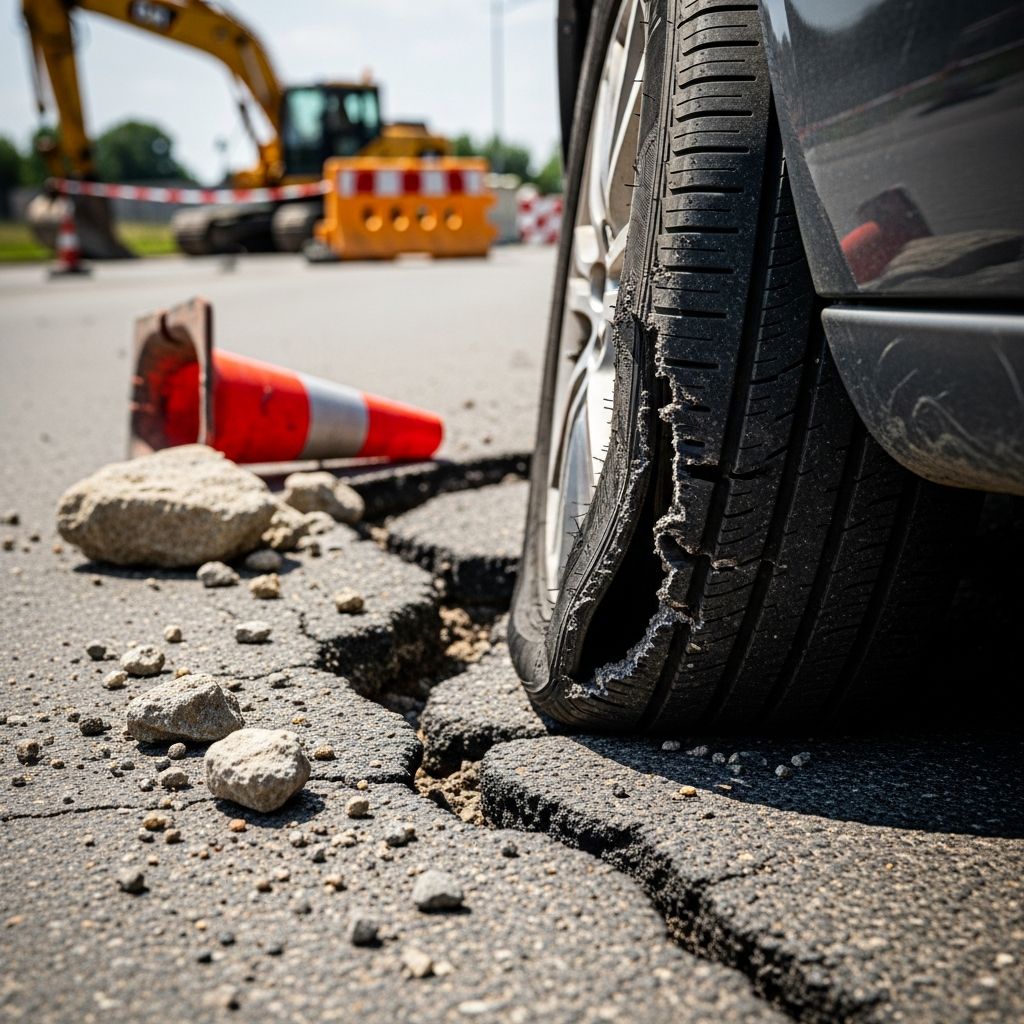
Poor road conditions and active construction zones frequently cause significant vehicle damage, leaving drivers with costly repairs and potential injuries. While frustration is immediate, legal avenues exist to seek compensation from responsible parties like government agencies or private contractors. Success hinges on proving negligence, navigating strict deadlines, and gathering compelling evidence.
Common Road Hazards Leading to Claims
Drivers encounter various defects that can destroy tires, alignments, or entire undercarriages.
Potholes
top the list, forming from water infiltration and freeze-thaw cycles that weaken pavement. Unmarkedconstruction debris
—such as gravel, metal shards, or loose barriers—scatters across lanes, puncturing tires or cracking windshields.Uneven pavement transitions
in work zones create sudden drops, whilepoor drainage
leads to standing water that hides deeper hazards. Missing guardrails, faded signage, or malfunctioning signals compound risks, turning routine drives into disasters.These issues not only damage vehicles but can cause loss of control, resulting in crashes. Statistics from state transportation departments reveal thousands of annual incidents tied to such defects, underscoring the need for accountability.
Determining Liability: Governments vs. Private Parties
Liability varies by the responsible entity. Government bodies like state Departments of Transportation (e.g., TxDOT in Texas or PennDOT in Pennsylvania) maintain public roads and can face claims if they fail to address known hazards promptly. Private construction firms bear responsibility for work-site negligence, including inadequate barriers or cleanup.
| Party | Common Negligence Examples | Key Challenges |
|---|---|---|
| Government Agencies | Ignored pothole reports; missing signs; faulty signals | Immunity laws; short notice periods |
| Construction Companies | Debris left behind; poor lane markings; unsafe transitions | Proving direct causation; multiple subcontractors |
| Engineering Firms | Flawed designs; inadequate drainage plans | Design vs. maintenance disputes |
Multiple parties may share fault, requiring thorough investigation to apportion blame accurately.
Proving Negligence in Road Defect Cases
To win compensation, establish four negligence elements: duty of care, breach, causation, and damages. Governments and contractors owe a duty to maintain safe roadways. A breach occurs when they know of a defect—via reports or inspections—but delay repairs unreasonably. Causation links the defect directly to your damage, supported by photos, witness statements, and expert analysis. Damages encompass repair bills, towing, rental cars, medical costs, and lost income.
- Document Immediately: Photograph the hazard, your damaged vehicle, and surroundings from multiple angles.
- Obtain Reports: File a police report if safe; request maintenance logs via public records.
- Witnesses: Collect contacts from others who saw the defect or prior complaints.
- Expert Input: Mechanics’ reports or engineers can affirm the defect caused specific harm.
Comparative negligence rules apply in most states. In Texas, recovery bars if you’re over 51% at fault; Pennsylvania caps at 50%. Defenses like speeding or poor maintenance may reduce awards.
Filing Claims Against Government Entities
Suing governments demands precision due to sovereign immunity waivers. Acts like Texas Civil Practice and Remedies Code limit property claims but allow personal injury suits if negligence proven. Notice requirements are stringent: Texas mandates claims within six months; New York requires 90 days.
- Identify Maintainer: Use state DOT maps to pinpoint responsible agency (state, county, city).
- Submit Notice: Detail incident date, location, defect description, damages, and evidence. No oral claims accepted.
- Await Response: Agencies have months to review; denials pave way for lawsuits.
- Lawsuit if Needed: File within 1-3 years, depending on state statute of limitations.
Texas explicitly bars state funds for mere property damage from pavement conditions, pushing claims to insurance first. Persistence and legal aid boost success rates.
Pursuing Private Contractors and Insurers
Construction negligence claims follow standard tort law with longer statutes (often 2 years) and no caps. Target the firm via their insurer with a demand letter outlining negligence and costs. If denied, litigate in civil court.
Insurance options include comprehensive coverage for potholes/debris (subject to deductibles) or collision for swerves. Claims may hike premiums, so weigh direct liability pursuits. Subrogation lets your insurer sue after reimbursing you.
Potential Compensation and Real-World Outcomes
Awards cover tangible and intangible losses: vehicle repairs, medical bills, wages, pain, and diminished vehicle value. Successful cases yield thousands; severe injury claims reach six figures.
- Property Damage: $1,000-$10,000+ for tires, suspensions, alignments.
- Personal Injury: ER visits, therapy, surgery if applicable.
- Economic Losses: Missed work, rentals during downtime.
- Non-Economic: Discomfort, stress from ordeal.
Cases against TxDOT often settle post-notice if evidence strong; contractor suits faster via insurance.
Challenges and How to Overcome Them
Government defenses cite ‘discretionary functions’ or claim lack of prior notice. Contractors blame driver error or acts of God. Counter with maintenance records, prior complaints, and dashcam footage. Attorneys adept in these niches secure better settlements by negotiating aggressively and litigating strategically.
Time sensitivity amplifies hurdles—delays forfeit rights. Costs of pursuit (experts, filings) necessitate contingency-fee lawyers who front expenses.
Frequently Asked Questions (FAQs)
Can I sue the government for a pothole-damaged tire?
Yes, if you prove they knew of the pothole and failed to repair it timely, following notice rules.
Does auto insurance always cover road debris?
Comprehensive policies often do, minus deductibles; check terms as collision may apply too.
What if construction caused my crash?
Sue the contractor for negligence like poor signage or debris; no special immunity.
How long to file a road hazard claim?
90 days to 6 months for governments; 1-3 years for lawsuits—act fast.
Am I barred if partially at fault?
Depends on state: recoverable if under 50-51% fault, reduced proportionally.
Steps to Protect Your Rights Post-Incident
1. Stop safely, assess damage/injuries.
2. Call police for report.
3. Gather evidence extensively.
4. Notify insurer promptly.
5. Consult personal injury attorney free.
6. File government notice immediately.
Professional guidance demystifies complexities, maximizing recovery odds.
References
- Can You Sue for Injuries Caused by Road Hazards in Texas? — Grimes & Fertitta. 2023. https://www.grimesfertitta.com/injuries-from-road-hazards/
- What To Do If Road Debris Has Damaged Your Vehicle — HGSK Lawyers. 2024. https://www.hgsklawyers.com/blog/what-to-do-if-road-debris-damaged-your-vehicle/
- Car Damage Caused by Road Construction / Defects — Eckell, Sparks, Levy, Auerbach, Monte, Sloane, Matthews & Auslander, P.C. 2025-05-04. https://www.eckellsparks.com/2025/05/04/car-damage-caused-road-construction-defects/
- Car Accidents During Road Construction: Liability and Compensation — LawInfo. 2024. https://www.lawinfo.com/resources/car-accident/car-accidents-during-road-construction-liability-and-compensation.html
- What Constitutes Negligence in Road Construction? — Eglet Law. 2023. https://www.egletlaw.com/constitutes-negligence-road-construction/
- Can I Sue for Accidents Due to Poor Road Conditions? — Sadaka Law. 2024. https://www.sadakafirm.com/blog/can-i-sue-for-accidents-due-to-poor-road-conditions/
- Pavement condition claim resolution process — Texas Department of Transportation (TxDOT). 2026 (Accessed). https://www.txdot.gov/about/contact-us/pavement-condition-claim-resolution-process.html
Similar Articles








Read full bio of medha deb




