
Suing Government for Road Salt Car Damage
Learn if you can hold government agencies accountable for vehicle corrosion caused by winter road salt treatments and your legal options.
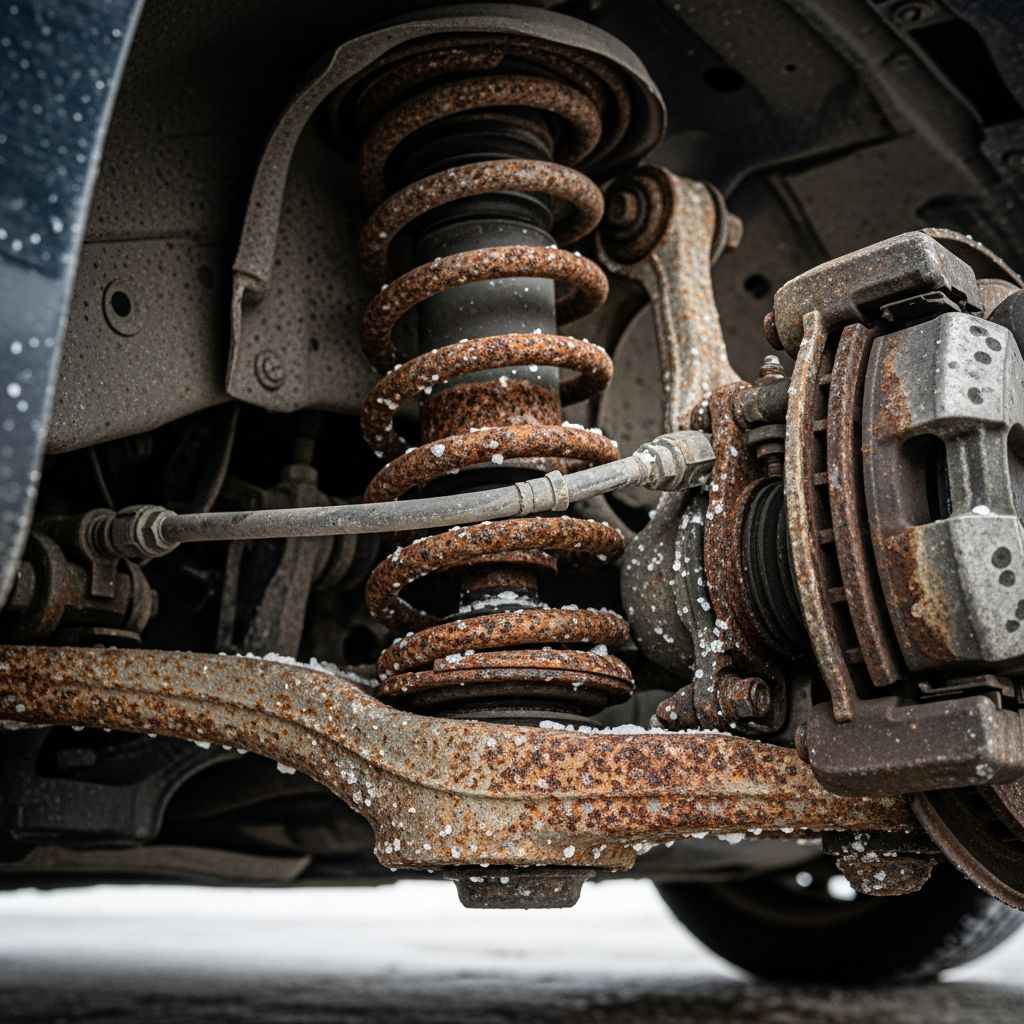
Road salt used by government agencies to melt ice on highways can severely corrode vehicles, leading many drivers to question if they can seek compensation through lawsuits. While sovereign immunity often protects public entities, specific procedures like tort claims acts allow potential recovery under certain conditions.
Understanding Road Salt’s Impact on Vehicles
Winter road maintenance involves spreading salt to lower the freezing point of water, making roads safer during snowstorms. However, this practice accelerates metal corrosion, particularly on a car’s undercarriage, exhaust system, brakes, and suspension components. Salt ions trigger chemical reactions with moisture and oxygen, speeding up oxidation and forming rust that weakens structural integrity over time.
The underbody is most vulnerable because it lacks protective paint and stays close to salted surfaces. Over repeated exposures, salt erodes frames, fuel lines, and electrical connections, potentially causing safety hazards like brake failures or exhaust leaks. The U.S. Environmental Protection Agency notes that road salt contributes to billions in annual vehicle and infrastructure damage nationwide.
- Frame and chassis erosion: Salt accumulates and eats away at metal, leading to costly frame replacements.
- Paint degradation: Surface pitting exposes bare metal, hastening rust spread.
- Component failures: Brake lines, fuel tanks, and exhausts corrode, risking accidents.
Damage typically manifests after 2-5 years of exposure, depending on local salt usage, driving frequency, and maintenance habits. States like Vermont and New Hampshire apply the highest per-mile volumes, amplifying risks for residents.
Legal Barriers: Sovereign Immunity Explained
Governments enjoy sovereign immunity, a doctrine shielding them from lawsuits without consent. This stems from common law principles treating the state as immune from its own wrongs, preserving public funds for essential services. However, most states and the federal government waive this immunity partially through statutes for specific negligence claims, including highway maintenance issues.
For federal highways, the Federal Tort Claims Act (FTCA) permits suits against the U.S. government if employees acted negligently within their scope. State-level equivalents, like California’s Tort Claims Act or New York’s Court of Claims, impose notice requirements and caps on damages. Failure to comply—such as missing filing deadlines—bars claims permanently.
| Jurisdiction | Key Statute | Notice Period | Damage Cap |
|---|---|---|---|
| Federal | FTCA (28 U.S.C. § 2671) | 2 years | No cap (varies by case) |
| California | Gov. Code § 905 | 6 months | $250,000 per claim |
| New York | Court of Claims Act § 10 | 90 days | None |
| Texas | Tort Claims Act § 101 | 6 months | $250,000 per person |
Proving government negligence requires showing excessive or improper salt application deviated from standard practices, causing foreseeable harm beyond normal wear.
Building a Viable Claim Against Public Entities
To sue successfully, demonstrate the government’s duty to maintain safe roads included reasonable de-icing methods, a breach via over-salting or neglect, causation linking salt to specific damage, and quantifiable losses like repair bills or diminished vehicle value. Expert testimony from corrosion specialists strengthens cases by quantifying accelerated rust versus natural aging.
Common defenses include ‘discretionary function’ immunity for policy decisions like salt quantities, arguing choices were judgment calls not subject to judicial review. Courts often defer to agencies on winter operations unless gross negligence is evident, such as ignoring less corrosive alternatives like magnesium chloride.
- Gather evidence: Photos of undercarriage rust, mechanic reports, salt exposure logs.
- Document costs: Invoices for repairs, appraisals showing value loss.
- Prove negligence: Compare local salt usage to state guidelines or peer jurisdictions.
Precedents vary; some drivers recover for pothole-related damage but struggle with salt claims deemed inherent to winter safety. Persistence through administrative claims often precedes court action.
Navigating the Claims Filing Process Step-by-Step
- Inspect and repair: Get a professional assessment detailing salt-induced damage.
- File notice: Submit a formal claim form to the agency (e.g., DOT) within the statutory window, including all evidence.
- Await response: Agencies have 45-180 days to investigate and settle or deny.
- Lawsuit if denied: File in appropriate court; federal claims go to U.S. District Court.
- Discovery and trial: Exchange evidence; most settle pre-trial.
Attorneys specializing in governmental liability boost success rates, often on contingency. Average awards cover repairs but rarely punitive damages due to immunity limits.
Insurance Coverage Limitations for Salt Damage
Standard auto policies exclude salt corrosion as ‘wear and tear,’ not a covered peril like collisions or theft. Comprehensive coverage handles sudden events (e.g., hail) but not gradual exposure. Insurers like Progressive confirm this stance, urging prevention over claims.
Exceptions arise if salt combines with another incident, like a storm causing immediate pitting. Otherwise, drivers bear full costs, emphasizing proactive care.
Effective Strategies to Shield Your Car from Salt Corrosion
Prevention trumps litigation; routine maintenance minimizes damage and weakens negligence arguments against you.
- Weekly undercarriage washes: Use touchless or underbody rinse car washes post-snow.
- Pre-winter prep: Wax exterior, apply rust inhibitors to underbody.
- Avoid peak salting: Limit drives during/after storms when concentrations peak.
- Spring deep clean: Remove residual salt to halt ongoing corrosion.
- Upgrades: Install protective coatings or mud flaps.
Mechanics recommend inspections in high-salt regions, repairing chips promptly to seal metal.
Environmental and Public Policy Considerations
Beyond vehicles, road salt pollutes waterways, harming ecosystems and water supplies. Agencies balance safety with environmental impact, testing alternatives like beet juice blends. Public pressure may shift practices, reducing future claims.
Frequently Asked Questions
Can I sue my state’s DOT for salt damage?
Yes, via tort claims processes if you prove negligence and meet notice deadlines; outcomes depend on jurisdiction.
Does comprehensive insurance cover road salt rust?
No, it’s classified as wear and tear; only sudden damages qualify.
How quickly does salt damage appear?
Visible rust in months with heavy exposure, structural issues in 2+ years.
What evidence is needed for a claim?
Repair estimates, photos, expert reports linking salt to damage.
Are there salt alternatives governments use?
Yes, like calcium magnesium acetate, though costlier and less effective in extreme cold.
Conclusion: Know Your Rights and Protect Your Ride
While suing the government for road salt damage is challenging due to immunities and procedural hurdles, viable paths exist with strong evidence and timely action. Combine legal awareness with diligent vehicle care to safeguard your investment amid winter woes.
References
- Does Road Salt Damage Cars? — Insurify. 2023. https://insurify.com/car-insurance/knowledge/how-road-salt-damages-cars/
- Does Car Insurance Cover Salt Damage? — Progressive. 2023. https://www.progressive.com/answers/does-car-insurance-cover-salt-damage/
- AAA: Road salt and other de-icers can lead to expensive rust damage to vehicles — U.S. Army (reporting AAA). 2018-12-10. https://www.army.mil/article/217311/aaa_road_salt_and_other_de_icers_can_lead_to_expensive_rust_damage_to_vehicles
Similar Articles








Read full bio of medha deb




