
Suing Cruise Lines for Injuries: Your Guide
Discover your legal rights, compensation options, and steps to take after a cruise ship injury under maritime law.
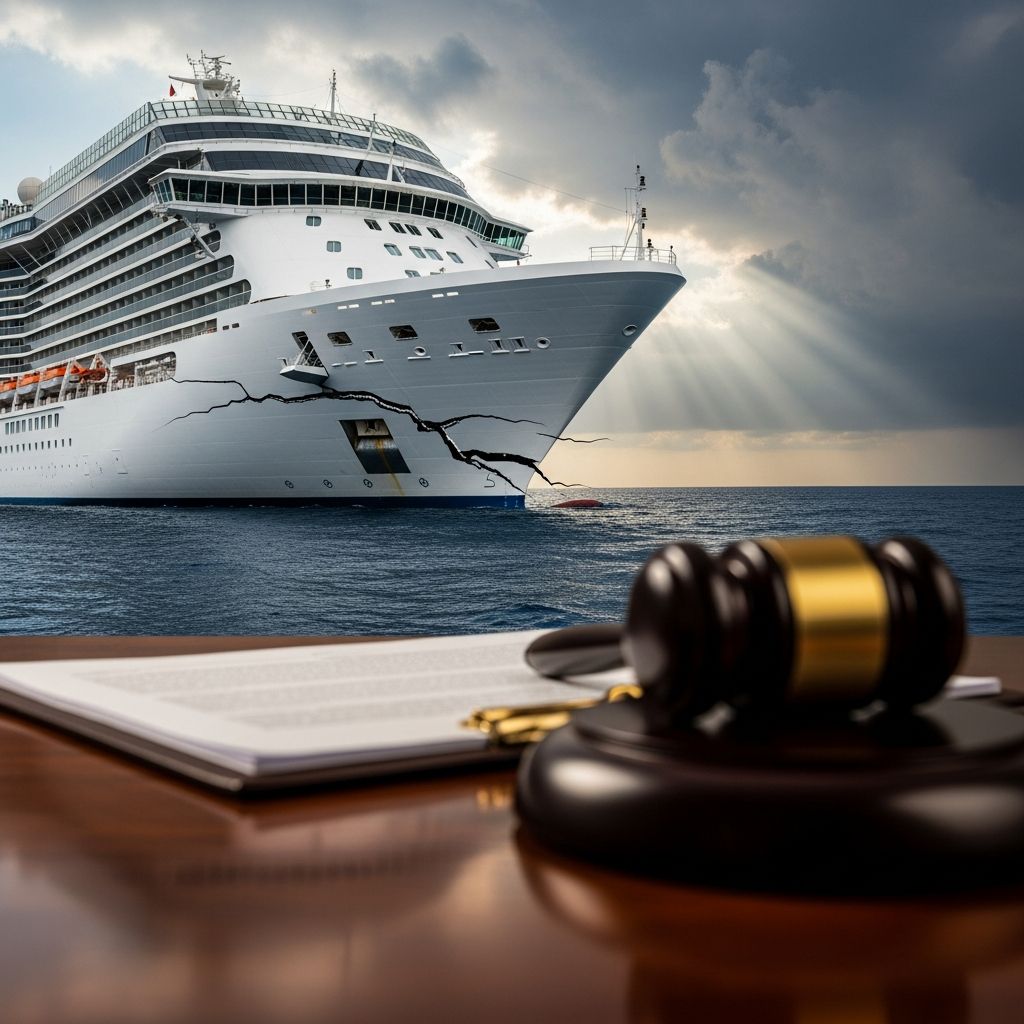
Cruise ship injuries happen more frequently than many passengers realize, often due to slippery decks, faulty equipment, or inadequate security. Under federal maritime law, injured passengers can pursue claims against cruise operators for negligence, seeking compensation for medical costs, lost income, and suffering. Success requires proving the cruise line breached its duty of care, navigating strict contract deadlines typically limited to one year.
Understanding Passenger Rights on Cruise Ships
Every fare-paying passenger benefits from a legal expectation of safety aboard a vessel. Cruise operators must maintain decks, railings, and facilities to prevent foreseeable hazards, hire competent staff, and enforce security measures. Breaches like unmarked wet floors or untrained crew can form the basis of a negligence claim under 46 U.S.C. § 30508, which governs passenger injury timelines.
- Duty of Reasonable Care: Operators owe passengers a heightened standard compared to land-based businesses, including warnings for risks like uneven pool areas.
- Medical Care Obligation: Ships must provide prompt, adequate treatment; failures leading to worsened conditions may trigger liability.
- Security Responsibilities: Inadequate lighting or staffing in high-risk areas can hold lines accountable for assaults or thefts.
These rights stem from general maritime law, enforced in U.S. federal courts, often in Florida due to ticket contract forum clauses.
Common Causes of Cruise Ship Injuries
Slips on wet surfaces account for many incidents, but claims arise from diverse negligence. Faulty elevators trap passengers, leading to falls or panic; poor food handling causes outbreaks affecting hundreds.
| Injury Type | Common Negligence | Example Compensation Areas |
|---|---|---|
| Slip-and-Fall | No warning signs on decks | Medical bills, pain |
| Excursion Mishaps | Cruise-endorsed tours without oversight | Lost wages, evacuation costs |
| Medical Errors | Substandard ship doctor care | Future treatments, suffering |
| Assaults | Poor security patrols | Therapy, emotional damages |
| Equipment Failures | Unmaintained gym machines | Rehab, disability support |
Shore excursions complicate liability: if marketed by the cruise line, operators may share responsibility; independent operators limit claims to the ship.
Proving Negligence in Maritime Claims
To win, claimants must show four elements: duty existed, it was breached, injury resulted directly, and damages occurred. Evidence like photos, witness statements, and medical logs proves causation—e.g., a greasy cafeteria floor without mats breached care standards.
Cruise lines deploy aggressive defenses, disputing fault or blaming passengers. Expert witnesses on ship maintenance bolster cases, as seen in multimillion-dollar recoveries for assaults and falls.
Strict Deadlines and Ticket Contract Traps
Cruise tickets hide critical limits: notice often due within six months, suits within one year per federal law and contracts. Disney requires six-month written details and Florida filing; Holland America mandates California courts.
- Notice Requirement: Written injury report to the line, detailing facts.
- Suit Timeline: One-year limit from incident, far shorter than state laws.
- Forum Clauses: Predesignated courts, like Southern District of Florida, force travel.
Missing deadlines bars recovery forever; attorneys review contracts to comply.
What Compensation Can You Recover?
Maritime claims cover economic and non-economic losses without caps common in some states. Recoveries include:
- Medical bills, including onshore follow-ups and evacuations.
- Lost earnings, future income if disabled.
- Pain, suffering, emotional distress, enjoyment loss.
- Aggravated pre-existing issues or lifelong care.
Verdicts reach millions for severe cases, though most settle confidentially.
Immediate Actions After Injury
Act fast to preserve your claim:
- Get Treated: Use ship facilities, demand records; seek land doctors for thorough exams.
- Report Formally: Insist on incident logs, copies before disembarking.
- Document Everything: Photos, videos, contacts from witnesses, staff names.
- Avoid Statements: Limit talks with crew beyond basics; no fault admissions.
- Lawyer Up: Consult maritime specialists promptly for deadline navigation.
These preserve evidence against cruise line tactics to minimize reports.
Navigating Legal Hurdles and Choosing Representation
Cases go to federal courts per contracts, applying uniform maritime rules differing from state tort law—no jury trials in some, damage caps rare. Corporations hire top firms; solo passengers risk low settlements.
Experienced maritime attorneys level the field, securing experts and negotiating. Free consultations assess viability without upfront costs.
Frequently Asked Questions
Can I sue after returning home?
Yes, but meet ticket deadlines—often one year for suits, six months notice.
Does the cruise line cover initial medical care?
They provide reasonable onboard care, but you pay later; claims reimburse.
What if injured on a cruise excursion?
Cruise liability if they arranged or promoted it; otherwise, sue tour operator.
Are settlements public?
Often confidential, but rights remain unaffected.
How much are typical payouts?
Varies; millions for grave injuries, thousands for minor.
Protecting Your Voyage and Claim
Cruises offer adventure, but vigilance prevents issues: report hazards immediately, read ticket fine print pre-boarding. If hurt, prioritize health and evidence. Maritime law empowers passengers against powerful lines, ensuring accountability for unsafe voyages.
With proper steps, thousands recover justly yearly despite hurdles. Consult professionals to transform injury into fair compensation, restoring financial stability post-trauma.
References
- What Are My Legal Rights If I Was Injured on a Cruise Ship? — Brais Law. Accessed 2026. https://www.braislaw.com/blog/what-are-my-legal-rights-if-i-was-injured-on-a-cruise-ship/
- What Are Your Rights After a Cruise Ship Injury? — Trial Law. Accessed 2026. https://www.triallaw1.com/what-are-your-rights-after-a-cruise-ship-injury/
- Injured on a Cruise Ship? Your Legal Rights Explained — Perkins Law Offices. Accessed 2026. https://www.perkinslawoffices.com/injured-on-a-cruise-ship-your-legal-rights-claims-compensation-explained/
- Cruise Ship Slip-and-Fall Injuries: Understanding Liability and Your Rights — 888 Boat Law. Accessed 2026. https://www.888boatlaw.com/cruise-ship-slip-and-fall-injuries-understanding-liability-and-your-rights/
- Yes – You Can Sue A Cruise Line After An Accident or Injury — CruiseLawyers.com. Accessed 2026. https://cruiselawyers.com/sue-a-cruise-line/
Similar Articles








Read full bio of medha deb




