
Subpoenaing Texts in Divorce: Legal Realities
Discover if divorce attorneys can subpoena text messages, the hurdles involved, and strategies for using digital evidence effectively in court.
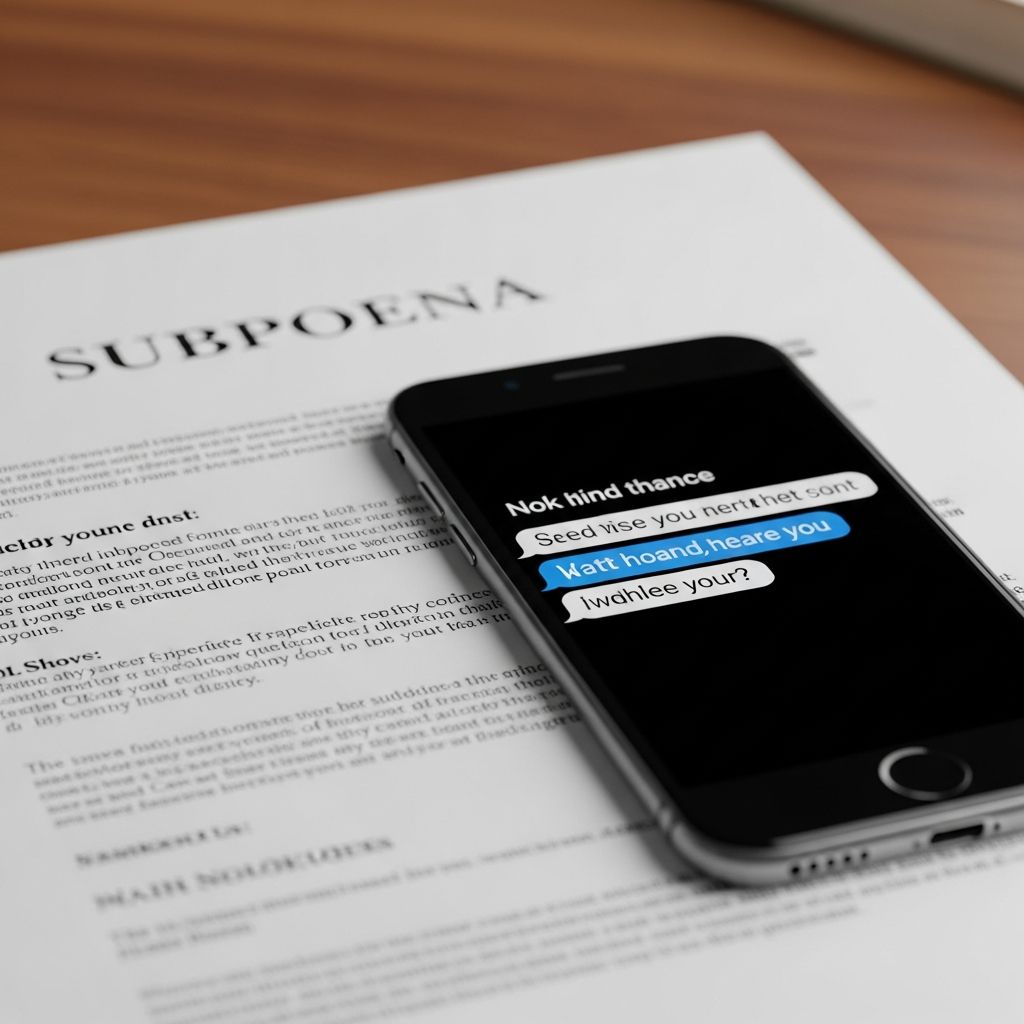
Digital communications like text messages often hold pivotal information in divorce proceedings, potentially revealing infidelity, financial deceit, or parenting issues. While attorneys can issue subpoenas for these records, success hinges on overcoming technical, legal, and evidentiary barriers that make direct retrieval from carriers rare.
The Power of Digital Trails in Family Disputes
In modern divorces, smartphones generate vast data trails that can sway asset division, alimony, or custody battles. A single thread of exchanges might expose hidden affairs, coercive behavior, or neglectful parenting, directly impacting judicial decisions. Courts increasingly recognize these as valid evidence when properly handled, yet the path to admissibility is fraught with obstacles.
Consider how routine interactions evolve into courtroom exhibits: late-night messages to unknown contacts, disputes over child support, or admissions of squandered marital funds. These aren’t just personal chats; they form a narrative that judges evaluate for relevance and authenticity. However, unlike physical documents, texts reside on volatile devices or servers with strict retention policies.
Legal Framework for Obtaining Phone Data
Subpoenas in divorce cases fall under civil discovery rules, governed by state-specific procedures and federal statutes like the Stored Communications Act (18 U.S.C. § 2701 et seq.). This law limits what carriers can disclose without user consent or court order, primarily restricting access to content stored over 180 days.
Attorneys typically target two sources: the opposing spouse’s device or the service provider. Direct subpoenas to providers like AT&T or Verizon yield metadata—timestamps, numbers, and message counts—but rarely content, as carriers purge texts within days to comply with privacy mandates. Forensic extraction from phones offers better odds but demands judicial approval to avoid privacy violations.
Key Challenges in Securing Text Evidence
- Provider Retention Limits: Major carriers delete SMS content swiftly, often within 24-72 hours, leaving only logs of activity.
- Authentication Hurdles: Proving a message’s origin requires admission, witness corroboration, or contextual replies linking sender and recipient.
- Hearsay Risks: Texts may qualify as out-of-court statements, admissible only under exceptions like party admissions.
- Privacy Protections: Unauthorized access invites sanctions; evidence must stem from lawful discovery channels.
- Cost and Scope: Broad requests for years of data can be deemed burdensome, prompting courts to narrow or deny them.
These factors explain why subpoenas succeed infrequently, pushing lawyers toward device seizures or voluntary productions during discovery.
Proven Methods to Access Messages
Success begins with targeted discovery requests. Spouses must produce relevant texts under penalty of contempt, often preserved via screen captures or exports. If resistance arises, motions to compel escalate to forensic imaging, where experts clone devices without altering data.
| Method | Pros | Cons | Typical Use Case |
|---|---|---|---|
| Discovery Demand | Low cost; direct from party | Relies on compliance | Initial evidence gathering |
| Carrier Subpoena | Easy metadata access | No content; short retention | Proving contact patterns |
| Forensic Dump | Recovers deleted texts | Expensive; needs court order | High-stakes custody fights |
| Third-Party Witness | Authenticates via testimony | Hard to secure | Corroborating infidelity |
Courts favor proportional discovery, balancing probative value against intrusion. Skilled counsel crafts narrow subpoenas, e.g., ‘texts to/from [number] between [dates],’ to boost approval odds.
Admissibility Standards Explained
Beyond acquisition, texts must clear authenticity and relevance thresholds. Federal Rule of Evidence 901 (mirrored in states) demands proof via distinctive characteristics, like unique phrasing or device metadata. Chain-of-custody logs prevent tampering claims.
Hearsay exceptions under Rule 801(d)(2) treat opponent statements as non-hearsay, common in divorces. Relevance ties to case issues: custody texts might show alienation, while financial chats reveal dissipation. Judges exclude prejudicial or cumulative material, ensuring fair trials.
Strategic Applications Across Divorce Issues
Custody and Parenting Time
Messages belittling co-parenting or ignoring child needs can tip scales toward supervised visitation. Patterns of evasion, like repeated ‘busy’ excuses during pickup times, bolster unfitness arguments.
Asset and Debt Division
Proof of extravagant spending via shopping links or transfers to lovers supports unequal splits. Hidden accounts surfaced in chats justify forensic accounting orders.
Alimony and Support Modifications
Boasts of new income or lifestyle upgrades contradict need claims, prompting reductions. Conversely, harassment texts may extend protective orders with support implications.
In each arena, texts amplify other evidence like bank records or affidavits, creating compelling mosaics.
Privacy Rights and Ethical Boundaries
Spouses retain Fourth Amendment-like protections against unreasonable searches. Hacking or spyware voids evidence and risks criminal charges under laws like the Computer Fraud and Abuse Act. Ethical attorneys advise preservation letters, notifying parties to retain data pre-subpoena.
Courts penalize spoliation—deleting relevant texts—with adverse inferences, presuming destroyed evidence favored the other side. Proactive backups mitigate this risk.
Alternatives When Subpoenas Fall Short
- Phone Bills and Logs: Itemized records map relationships without content.
- Social Media Scrapes: Posts and DMs often mirror text sentiments, easier to subpoena.
- Witness Depositions: Friends or family recount observed exchanges.
- App Data: WhatsApp or iMessage backups yield richer, cloud-stored threads.
Layering these builds robust cases sans direct texts.
Costs Associated with Digital Discovery
Expect $500-$2,000 for basic subpoenas, escalating to $5,000+ for forensics. Carrier compliance fees add $50-$200 per request. Budget-conscious strategies prioritize high-impact evidence first.
State Variations in Procedures
While federal rules guide, states diverge: California emphasizes electronic discovery under Code of Civil Procedure § 1985, while Texas streamlines via Rule 205. Local rules dictate carrier service methods, from registered agents to out-of-state commissions.
Frequently Asked Questions
Can any text message be subpoenaed in divorce?
Only relevant, non-privileged ones; courts quash overly broad or fishing expeditions.
How long do carriers keep texts?
Typically 3-10 days for content; metadata longer, per provider policy.
What if my spouse deletes texts?
Forensic tools recover many; spoliation sanctions may apply.
Are iMessages easier to get than SMS?
Yes, via iCloud backups, but require device or account access.
Can I use my own screenshots?
Possibly, if timestamped and unchallenged; authentication strengthens them.
Navigating Digital Evidence with Expertise
Divorce attorneys must blend tech savvy with litigation prowess to harness texts effectively. Early consultation identifies viable paths, avoiding futile pursuits. As digital footprints deepen, mastering this domain separates winning strategies from wasted efforts.
References
- Stored Communications Act — U.S. Code. 1986 (as amended). https://www.law.cornell.edu/uscode/text/18/part-I/chapter-121
- Federal Rules of Evidence, Rule 901: Authenticating or Identifying Evidence — U.S. Congress. 1975 (current). https://www.law.cornell.edu/rules/fre/rule_901
- California Code of Civil Procedure § 1985 — California Legislature. Ongoing. https://leginfo.legislature.ca.gov/faces/codes_displaySection.xhtml?lawCode=CCP§ionNum=1985
- Texas Rules of Civil Procedure, Rule 205 — Texas Supreme Court. 2023. https://www.txcourts.gov/media/1452341/205-discovery-from-nonparties.pdf
- Electronic Discovery in Family Law — American Bar Association. 2024-10-15. https://www.americanbar.org/groups/family_law/resources/family-advocate/archive/electronic-discovery-family-law/
Similar Articles








Read full bio of Sneha Tete




