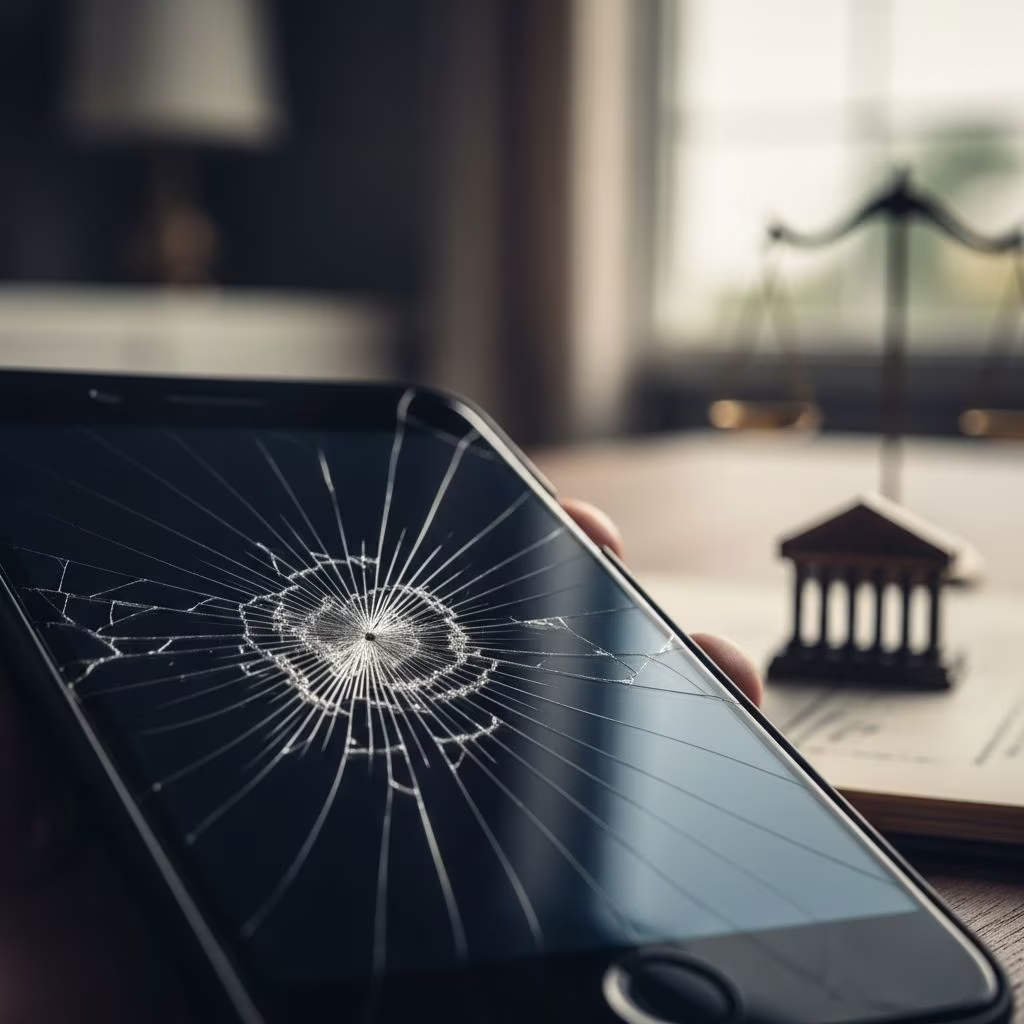
Digital surveillance tools, commonly known as stalkerware, have become a pervasive threat in domestic violence scenarios. These applications allow abusers to secretly monitor a victim’s location, communications, and activities, often without consent. Legal professionals face unique challenges in accessing and utilizing this evidence to protect survivors. This article delves into the nature of stalkerware, its implications for victims, barriers for attorneys, available legal remedies, and support systems designed to empower those affected.
Understanding the Rise of Stalkerware in Abusive Relationships
Stalkerware refers to software installed on devices to track users covertly, frequently marketed as parental controls or device finders but repurposed for malicious spying. Research indicates over 200 such apps available on major app stores, many explicitly promoted for monitoring partners. Abusers exploit these tools to maintain control post-separation, turning smartphones into instruments of intimidation.
Victims often discover the intrusion through unusual battery drain, data usage spikes, or unexplained notifications. The psychological toll is immense, fostering constant fear and isolation. According to advocacy groups, this form of tech-enabled abuse is underreported, as many survivors initially dismiss suspicions as paranoia.
- Common Stalkerware Features: GPS tracking, call logging, text message interception, camera/microphone access, and social media monitoring.
- Installation Methods: Physical access to the device, phishing links, or shared family plans.
- Prevalence: Studies show a significant uptick, with law enforcement noting increased cases involving these apps.
Challenges Attorneys Face in Accessing Stalkerware Evidence
Lawyers representing domestic violence survivors encounter substantial obstacles when attempting to retrieve stalkerware data. Forensic tools required for detection are costly and demand specialized training, often beyond the reach of underfunded public defenders or family law practitioners. Police departments, primary collaborators for prosecutors, frequently lack these resources, particularly for misdemeanor cases common in stalking prosecutions.
App developers complicate matters further by hosting servers overseas or purging records rapidly, rendering delayed warrants ineffective. One notable case involved StealthGenie, prosecuted under federal wiretap laws, prompting many competitors to relocate operations internationally.
| Barrier | Description | Impact on Cases |
|---|---|---|
| Costly Software | Expensive forensic kits needed for app detection | Limits access for DV investigators |
| Limited Training | Officers untrained in tech forensics | Evidence overlooked or mishandled |
| Data Purging | Companies delete logs quickly | Warrants become obsolete |
| Server Location | Offshore hosting evades U.S. jurisdiction | Blocks data retrieval |
These hurdles result in lost evidentiary opportunities, weakening survivor cases and allowing abusers to evade accountability.
Legal Frameworks and Protections Against Tech Abuse
U.S. laws increasingly address technology-facilitated stalking. The Violence Against Women Act (VAWA) extends housing safeguards to survivors of domestic violence, dating violence, sexual assault, and stalking. Federally, the Legal Assistance for Victims (LAV) Program funds comprehensive civil and criminal aid, covering protection orders, family law, immigration, and housing issues tied to abuse.
State-level initiatives, like Florida’s Domestic Violence Legal Hotline, offer free advice on injunctions, family matters, and more, with interpreter services for non-English speakers. Recent legislation, such as the 2022 Safe Connections Act, facilitates phone line separations from shared plans while retaining numbers, bolstering privacy. The FTC has banned rogue apps like SpyFone for unauthorized data harvesting.
Strategies for Documenting and Preserving Evidence
Survivors and attorneys must prioritize evidence preservation. Contact advocates or law enforcement from a secure device to avoid detection. Key steps include:
- Screenshot all suspicious activity, noting dates and times.
- Preserve call logs, emails, and messages without deleting.
- Document physical symptoms of surveillance stress.
- Seek professional forensic analysis if possible.
Civil remedies, including lawsuits for damages and injunctions, complement criminal charges. Skilled counsel can navigate these paths, building robust cases.
Empowering Survivors: Safety Planning and Resources
Comprehensive support is vital. Safety plans incorporate tech hygiene: changing passwords, enabling two-factor authentication, and scanning devices for malware. Organizations like the National Network to End Domestic Violence provide tech safety guides.
Counseling, support groups, and hotlines offer emotional aid. HUD’s VAWA protections ensure housing stability. Attorneys collaborate with these services for holistic advocacy.
Role of Judges and Courts in Admitting Tech Evidence
Courts grapple with novel digital evidence. Judges and lawyers often encounter stalkerware for the first time, leading to admissibility debates. Creative authentication methods, such as expert testimony or chain-of-custody logs, have succeeded. As cases proliferate, precedents will standardize procedures.
Future Directions: Policy Reforms and Tech Innovations
Advocates push for mandatory forensic training in police academies and federal mandates for app store vetting. Innovations like AI-driven detection tools promise easier identification. International cooperation could address offshore servers.
Survivors benefit from empowered responses, turning stalkerware against abusers as prosecutorial leverage.
Frequently Asked Questions (FAQs)
Q: What is stalkerware?
A: Stalkerware is spyware installed secretly on devices to monitor location, messages, and activities without consent, often used by abusers.
Q: How can victims detect stalkerware?
A: Look for battery drain, high data use, or strange sounds; consult experts for confirmation.
Q: Can lawyers force app companies to provide data?
A: Warrants help, but overseas servers and quick data purges hinder access.
Q: What legal aid exists for tech abuse victims?
A: Programs like LAV and state hotlines offer free services for protection orders and more.
Q: Is stalking via apps a crime?
A: Yes, prosecutable under stalking, wiretap, and computer fraud laws.
Q: How does VAWA help with housing?
A: It protects survivors from eviction due to abuse-related incidents.
References
- Apps used to stalk can endanger domestic violence victims, but may be hard for lawyers to access — ABA Journal, Lorelei Laird. 2018-05-21. https://www.abajournal.com/news/article/phone_apps_used_for_stalking_can_endanger_domestic_violence_victims_but_be
- Stalking, Technology, and Domestic Violence — Gelman Law, LLC. N/A. https://www.gelmanlawfirm.com/blog/navigating-the-intersection-of-stalking-technology-and-domestic-violence/
- Stalkerware: What To Know — Federal Trade Commission (FTC). N/A. https://consumer.ftc.gov/articles/stalkerware-what-know
- The Abuser in Your Pocket: How Stalkerware Threatens Women’s Privacy — Safe Escape. N/A. https://safeescape.org/stalkerware-threatens-womens-privacy/
- Legal Assistance For Victims Program — U.S. Department of Justice. N/A. https://www.justice.gov/ovw/legal-assistance-victims-program
- The Laws – Domestic Violence — Florida Department of Children and Families. N/A. https://www.myflfamilies.com/services/abuse/domestic-violence/laws-domestic-violence
- Violence Against Women Act (VAWA) — U.S. Department of Housing and Urban Development (HUD). N/A. http://www.hud.gov/vawa