
Spousal Firearm Sharing: Legal Boundaries
Navigating the complex legal landscape of firearm purchases, possession, and concealed carry between married couples across U.S. states.
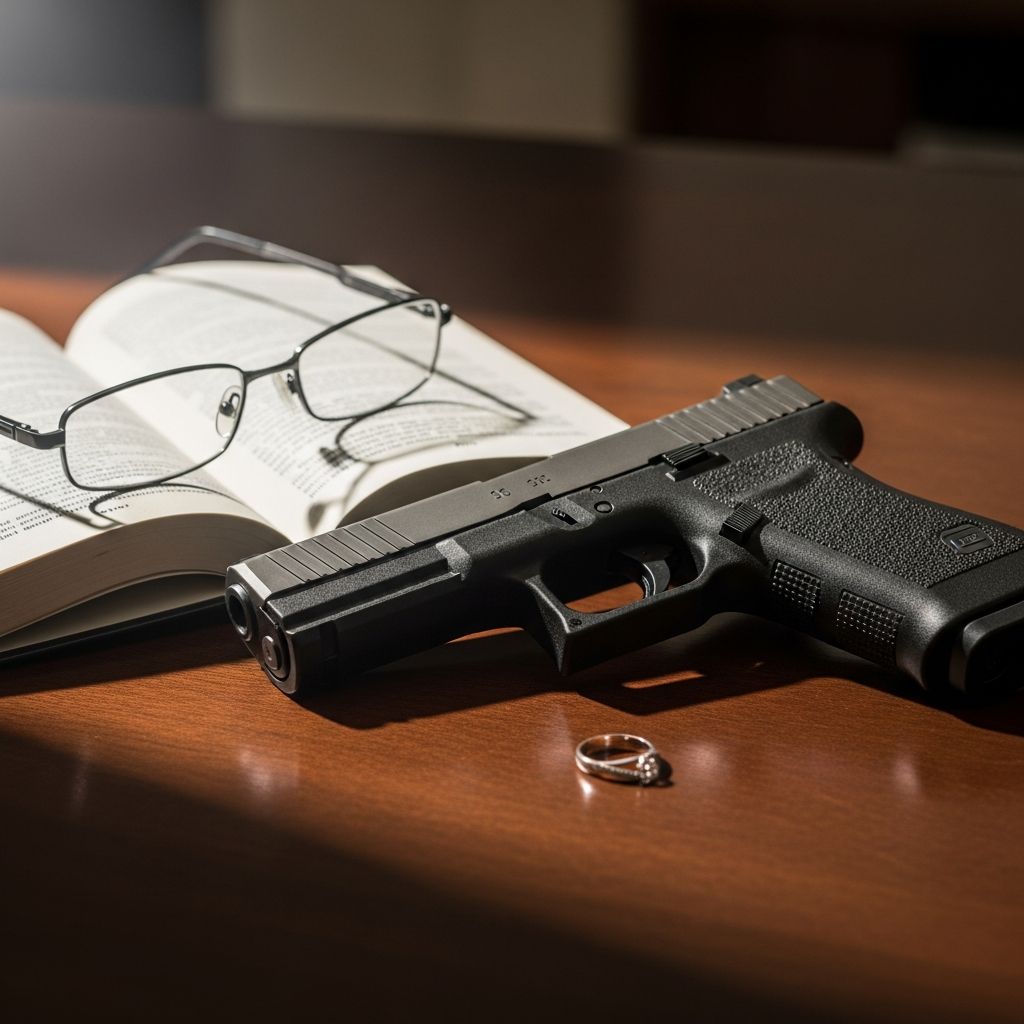
Firearm ownership within marriages raises unique legal questions about purchasing, possession, and carrying rights between spouses. While federal law permits certain transfers, state regulations create a patchwork of rules that demand careful navigation to avoid violations.
Understanding Ownership vs. Possession in Marital Contexts
In firearm law, ownership denotes legal title, while possession involves physical control. Spouses often share firearms, but this distinction is critical. Federal regulations, enforced by the Bureau of Alcohol, Tobacco, Firearms and Explosives (ATF), prohibit ‘straw purchases’—buying a gun for someone prohibited from owning one. However, gifting or sharing within a marriage is generally allowed if both parties are eligible.
Joint ownership simplifies matters, granting both spouses equal rights to use the firearm. Sole ownership, however, may restrict carrying depending on state laws. For instance, temporary possession by a spouse is often permissible for activities like hunting or self-defense, but concealed carry introduces stricter scrutiny.
Federal Framework Governing Spousal Transfers
The Gun Control Act of 1968 outlines key federal rules. No national registration exists, but buyers must complete ATF Form 4473, certifying they are the ‘actual transferee/buyer.’ Spouses can purchase guns as gifts for eligible partners in the same state, avoiding felony charges if the recipient passes background checks.
Prohibitions apply universally: felons, fugitives, unlawful drug users, and those adjudicated mentally defective cannot possess firearms. Domestic violence convictions or restraining orders also bar possession under the Lautenberg Amendment. Spouses must verify eligibility before any transfer.
State-by-State Variations in Spousal Gun Rights
U.S. states diverge significantly on spousal firearm sharing. Below is a comparative table of select states:
| State | Purchase for Spouse | Concealed Carry of Spouse’s Gun | Registration Required | Key Notes |
|---|---|---|---|---|
| Texas | Allowed if both eligible | Yes, with permit | No | Permissive sharing laws. |
| California | Restricted; must register | No, unless re-registered | Yes | Strict individual registration. |
| Florida | Allowed for joint use | Yes, with permit | No | Supports spousal sharing. |
| North Carolina | Allowed with caution | Open carry ok; CC permit needed | No | No pistol permit since 2023; background check required. |
| New York | Restricted | Only registered owner | Yes | Handgun licensing mandatory. |
Consult state attorney general websites or local law enforcement for updates, as laws evolve. For example, North Carolina eliminated pistol purchase permits in 2023, streamlining resident handgun buys via instant background checks.
Prohibitions for Domestic Violence Survivors and Partners
Domestic violence significantly impacts spousal gun rights. Federal law bans firearm possession for those convicted of misdemeanor domestic violence or under protective orders. North Carolina mirrors this, requiring surrender of firearms upon ex parte orders if risk factors exist.
- Courts must order firearm relinquishment if the defendant poses a credible threat.
- Fingerprinting aids identification of domestic violence misdemeanants.
- Spouses in abusive situations cannot use partner’s gun if individually prohibited.
Even without convictions, active restraining orders prohibit possession, purchase, or concealed carry permits.
Practical Steps for Compliant Spousal Firearm Use
1. Verify Eligibility and Permits
Both spouses should confirm legal status via NICS background checks. Obtain concealed handgun permits (CHP) where required—essential for carry, even of a partner’s firearm.
2. Opt for Joint Purchases or Gift Certificates
Avoid straw purchase risks by buying together or using retailer gift cards, ensuring the recipient completes Form 4473. This clarifies the ‘actual buyer’ and promotes choice.
3. Prioritize Training and Communication
Shared firearms demand mutual proficiency. Enroll in NRA-certified courses for safe handling, storage, and carry. Discuss usage boundaries openly to prevent disputes.
- Practice disassembly, cleaning, and malfunction clearing.
- Establish household storage rules (e.g., locked safes).
- Review insurance for shared liability.
4. Travel and Temporary Sharing Considerations
For trips, check reciprocity maps for CHPs. Some states permit temporary family transfers; others do not. Transport unloaded and cased across state lines.
Risks of Non-Compliance and Penalties
Violating rules can lead to severe consequences:
- Federal felonies: Straw purchases carry 10+ year sentences.
- State penalties: Fines, permit revocation, jail time for unlawful carry.
- Civil liabilities: Accidents with shared guns may void insurance or spur lawsuits.
In domestic violence cases, violations exacerbate legal troubles, potentially leading to extended no-contact orders.
Best Practices for Safe Marital Firearm Management
To foster responsibility:
- Document ownership: Use bills of sale for transfers.
- Secure storage: Biometric safes prevent unauthorized access.
- Regular reviews: Reassess laws biennially or post-legislation.
- Professional advice: Engage firearms attorneys for complex scenarios.
Safety protocols reduce accidents: treat every gun as loaded, keep fingers off triggers, and know your target/backstop.
Frequently Asked Questions (FAQs)
Can a spouse legally buy a gun as a gift for their partner?
Yes, if both reside in the same state and the recipient is eligible. Use gift certificates to sidestep Form 4473 issues.
Is it legal for my spouse to conceal carry my registered firearm?
Depends on state: permissive in Texas/Florida with permits; prohibited in California without re-registration.
What if a domestic violence order is in place?
Prohibited from possessing any firearms; must surrender them immediately.
Do all states require gun registration for spousal sharing?
No, only strict states like CA/NY; most do not.
What are the penalties for unlawful spousal gun sharing?
Fines, imprisonment, felony charges varying by jurisdiction.
References
- Can My Wife Conceal Carry My Gun? Understanding the Legalities … — BattlBox. 2023. https://www.battlbox.com/blogs/outdoors/can-my-wife-conceal-carry-my-gun-understanding-the-legalities-and-practicalities
- Giving a Firearm as a Gift? Some Reminders from NSSF — National Shooting Sports Foundation (NSSF). 2023-12-20. https://www.nssf.org/articles/giving-a-firearm-as-a-gift-some-reminders-from-nssf/
- North Carolina Gun Laws Explained — Manning Law Firm. 2023. https://manninglaw.com/criminal-law/north-carolina-gun-laws-explained/
- Domestic Violence Gun Laws in North Carolina — Giffords Law Center. 2023. https://giffords.org/lawcenter/state-laws/domestic-violence-and-firearms-in-north-carolina/
- Can Someone Purchase a Gun for His or Her Spouse? — Online Texas LTC. 2023. https://onlinetexasltc.com/can-someone-purchase-a-gun-for-his-or-her-spouse/
Similar Articles








Read full bio of medha deb




