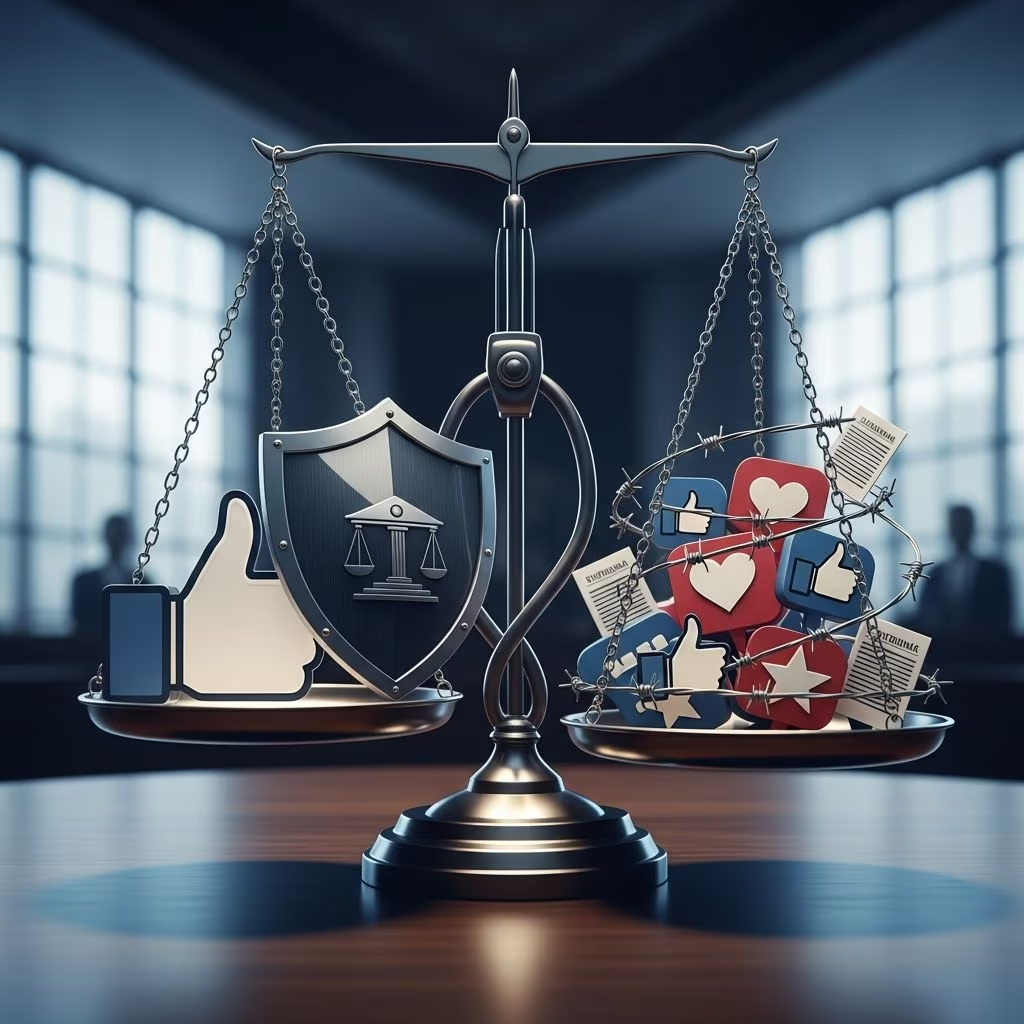
In the digital age, a simple click on a **Facebook like** button can ripple through legal landscapes, either safeguarding rights or igniting disputes for businesses. This phenomenon underscores the intersection of social media engagement and corporate liability, where seemingly innocuous interactions carry weighty consequences.
The Protective Power of Likes in Employment Disputes
One of the most significant developments in labor law involves recognizing social media interactions as shielded activities. Federal courts have affirmed that liking a post critical of an employer can qualify as protected concerted activity under the National Labor Relations Act (NLRA).
In a landmark case, employees at a sports bar ‘liked’ and commented on a former colleague’s Facebook post complaining about tax withholding errors. The employer terminated them, prompting charges with the National Labor Relations Board (NLRB). The Board ruled these actions constituted mutual support among workers discussing workplace issues, thus protected under Section 7 of the NLRA, which covers rights to engage in collective activities for mutual aid.
The Second Circuit Court of Appeals upheld this, noting the interactions revealed an ongoing labor dispute without crossing into unprotected defamation or disloyalty. Businesses must balance employees’ rights to online discourse with reputational interests, as courts weigh public communications against potential harm.
- Key NLRA Protections: Applies to union and non-union employees alike.
- Concerted Activity Defined: Involves group discussions originating from workplace concerns.
- Exceptions: Loses protection if comments are egregiously disloyal or defamatory.
Small business owners should implement clear social media policies that respect these boundaries, training staff on what constitutes protected speech to avoid unfair labor practice claims.
False Endorsements: When Likes Fuel Class Action Storms
Conversely, platforms like Facebook have faced scrutiny for allegedly manipulating user profiles to imply endorsements without consent, leading to high-stakes class actions.
A plaintiff claimed Facebook featured his likeness in ads suggesting he ‘liked’ USA Today, despite no such action on his part. The suit argued this violated users’ rights to control their personal data and likeness, breaching implied promises in the platform’s terms.
Similar allegations arose in ‘Sponsored Stories’ cases, resulting in a $20 million settlement. Plaintiffs contended reasonable users expect truthful representations, not fabricated affinities. These disputes highlight risks for businesses advertising via social media, as unauthorized use of user images can trigger misrepresentation claims.
| Case Element | Description | Outcome |
|---|---|---|
| Allegation | Unauthorized use of profile in ads | Class action certified |
| Plaintiff Claim | Violation of likeness rights | $20M settlement in prior suit |
| Platform Defense | Terms of service allow | Ongoing litigation |
Entrepreneurs leveraging Facebook ads must ensure compliance with endorsement guidelines from the Federal Trade Commission (FTC), verifying genuine user support to mitigate litigation exposure.
Combating Fake Engagement: Platform Enforcement Actions
Businesses seeking to boost visibility through purchased likes encounter severe backlash. Facebook has aggressively litigated against vendors selling artificial engagement, such as fake likes and followers on Instagram.
In a California federal suit, the platform targeted a New Zealand firm for deploying bots to inflate metrics, violating terms and laws like the Computer Fraud and Abuse Act. Seeking $10 million, Facebook emphasized its use of machine learning to detect inauthentic behavior.
This crackdown protects genuine advertisers but warns small businesses against ‘black hat’ tactics. Inflated metrics not only risk account suspensions but also legal penalties, undermining long-term credibility.
Social Media as a Double-Edged Sword in Litigation Evidence
Beyond direct interactions, likes and posts serve as pivotal evidence in diverse lawsuits. Courts increasingly mine social profiles for insights into claims’ validity.
In employment disputes, plaintiff posts revealing active lifestyles post-injury can undermine damages claims. For intellectual property battles, shared images help assess infringement via consumer confusion.
A striking example involved a village trustee’s deleted Facebook post implying bias, leading to sanctions and an adverse jury instruction due to spoliation. The court stressed social media’s role in evidencing state of mind, even on personal pages.
Additionally, platforms have facilitated service of process. In debt collection, lawyers served defendants via Facebook after verifying identities through friended profiles and privacy lapses.
- Discovery Applications: IP comparisons, injury contradictions, harassment proof.
- Risks of Deletion: Inferences of guilt or bias.
- Strategic Use: Verifying identities across jurisdictions.
Business Strategies for Navigating Social Media Legalities
To harness social media without courting disaster, companies should adopt proactive measures:
- Policy Development: Draft comprehensive guidelines covering protected speech and appropriate conduct.
- Training Programs: Educate employees on NLRA rights and platform rules.
- Ad Compliance: Obtain explicit consents for user-generated endorsements.
- E-Discovery Prep: Preserve relevant posts; avoid deletions that invite sanctions.
- Authenticity Focus: Build organic engagement over fake boosts.
Regular audits of social accounts ensure alignment with legal standards, fostering a compliant digital presence.
Broader Implications for Algorithmic Ad Targeting
Recent enforcement reveals additional pitfalls in ad delivery. A U.S. Attorney’s suit against Meta alleged discriminatory housing ads via algorithms limiting reach based on protected traits.
While resolved, it signals heightened scrutiny on how likes and interactions inform targeting, potentially exposing businesses to fair housing or anti-discrimination claims.
Frequently Asked Questions (FAQs)
Can an employee’s Facebook like protect them from firing?
Yes, if it qualifies as concerted activity under NLRA discussing workplace issues, courts have ruled it protected.
Do businesses risk lawsuits from unauthorized likes in ads?
Absolutely; class actions have succeeded over false endorsements using user likenesses without consent.
Is buying fake likes illegal?
It violates platform terms and can lead to federal lawsuits under laws like CFAA.
How does social media impact lawsuit evidence?
Posts and likes often prove or disprove claims in IP, employment, and personal injury cases.
Should businesses serve legal papers via Facebook?
Courts have allowed it when identities are verified and privacy settings permit access.
This comprehensive guide equips small businesses to thrive amid social media’s legal complexities, turning potential pitfalls into strategic advantages.
References
- Facebook Faces Class Action Lawsuit Over False ‘Like’ Ads — Top Class Actions. 2014. https://topclassactions.com/lawsuit-settlements/lawsuit-news/facebook-faces-class-action-lawsuit-false-like-ads/
- Facebook ‘Like’ Considered Protected Activity — McAfee & Taft. 2015-10-15. https://www.mcafeetaft.com/facebook-lsquolikersquo-considered-protected-activity/
- Facebook Sues Again Over the Sale of Fake Likes and Followers — FKKS Advertising Law. 2020. https://advertisinglaw.fkks.com/post/102fj60/facebook-sues-again-over-the-sale-of-fake-likes-and-followers
- “Like” It or Not: How Social Media Can Lead to Litigation — RM Magazine. 2012-10-08. https://www.rmmagazine.com/articles/article/2012/10/08/-Like-It-or-Not-How-Social-Media-Can-Lead-to-Litigation-
- Can Clicking “Like” Make or Break a Lawsuit? — Bleakley Blakely. N/A. https://www.bsk.com/news-events-videos/e-discovery-information-management-can-clicking-like-make-or-break-lawsuit
- United States Attorney Resolves Groundbreaking Suit Against Meta Platforms Inc. — U.S. Department of Justice. 2025. https://www.justice.gov/usao-sdny/pr/united-states-attorney-resolves-groundbreaking-suit-against-meta-platforms-inc-formerly