
Smartphones and the Surge in Roadway Crashes
Discover how smartphones fuel distracted driving, spike crash rates, and reshape legal battles on modern roads.
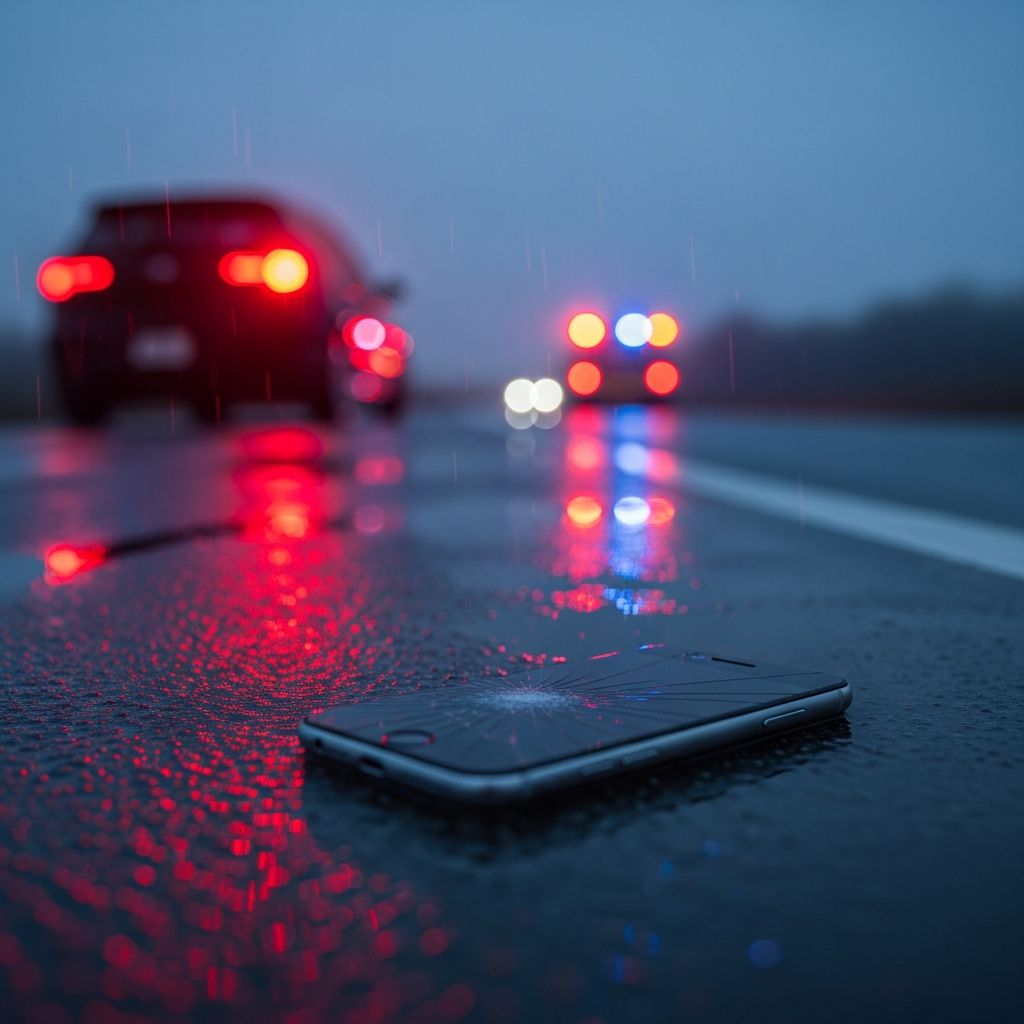
Smartphones have revolutionized communication but have also dramatically increased car accidents by promoting distracted driving. With drivers routinely checking notifications, texting, or scrolling social media, roadways have become more dangerous, reversing decades of safety gains.
The Alarming Rise in Distracted Driving Fatalities
Recent data reveals a troubling uptick in motor vehicle deaths linked to smartphone distractions. Despite improvements in vehicle safety features and reduced drunk driving, fatalities are climbing, largely due to drivers’ inability to resist their devices. The Fatality Analysis Reporting System (FARS) tracks these incidents, but underreporting remains a significant issue because crash scene investigations rarely capture phone usage accurately.
In 2023, 3,275 people died in U.S. crashes where distraction contributed, representing 8% of all fatal crashes, with cellphone use directly involved in 397 deaths—less than 1% but indicative of broader trends. The National Safety Council estimates cell phone use leads to 1.6 million crashes yearly, with 660,000 drivers actively using phones at any moment. A 2015 AT&T survey found 70% of drivers admit to smartphone activities behind the wheel, a habit persisting into 2026.
| Year | Fatal Crashes Involving Distraction | Cellphone-Related Fatalities | % of Total Fatalities |
|---|---|---|---|
| 2023 | 3,275 | 397 | 8% |
| 2011-2021 Avg. | N/A | N/A | 13% |
This table highlights the persistent threat, showing distraction’s role in fatalities even as reporting improves.
Why Smartphones Are Uniquely Perilous Behind the Wheel
Unlike older cell phones, smartphones demand visual, manual, and cognitive attention simultaneously. Texting requires eyes off the road for about 5 seconds at 55 mph—equivalent to driving a football field’s length blind. Studies show drivers are 4 times more likely to crash when using phones, per World Health Organization data.
Cognitive distraction is key: even hands-free calls impair reaction times and decision-making. A PMC study confirmed mobile phone use degrades driving performance, increasing lane deviations and speed variability. Naturalistic driving research from IIHS indicates 2-6 times higher crash risk during phone manipulation, especially for drivers under 30 and over 64.
- Visual distraction: Glancing at screens reduces hazard detection.
- Manual distraction: Typing or swiping removes hands from the wheel.
- Cognitive distraction: Conversations divide mental focus, slowing responses by 1+ seconds.
These factors compound, turning minor glances into catastrophic failures.
Underreported Realities: The Hidden Scope of Phone-Related Crashes
Official stats underestimate the problem. FARS data depends on police reports, which miss phone use unless phones are found in hand post-crash. Records are hard to subpoena, and timing rarely matches exactly. The National Safety Council pegged 26% of 2014 crashes to cell phones; today’s smartphones likely push this higher.
A study of college students found 34% in accidents or near-misses, with 21% involving phones—hands-free users showed similar risks to handheld, debunking ‘safe’ alternatives. Behaviors like speeding or eating amplify phone risks, creating a perfect storm. In Virginia, 2024 saw 18,688 distraction-related crashes despite hands-free laws.
Psychological and Behavioral Shifts Fueling the Crisis
Constant connectivity fosters addiction-like checking. 62% keep phones within reach, normalizing in-car use. This leads to lane drifting, tailgating, and signal ignoring. Younger drivers, 14% of licensees but 26% of fatal crash involvers, are hit hardest.
Even brief distractions accumulate: a 1-second delay at highway speeds covers 80 feet, enough for disaster. Victims suffer medical bills, lost wages, and trauma, often needing attorneys for justice.
Legal Evolution: Laws Targeting Tech Distractions
All 50 states ban texting while driving; 30+ prohibit handheld calls. Early bans reduced usage, but crash impacts are mixed—some claims rose post-law. Virginia’s hands-free law targets manual distraction but ignores in-car screens.
In accidents, proving phone use strengthens negligence claims. Dashcams, witnesses, and data recorders provide evidence. Victims can pursue compensation for injuries, with distracted drivers facing fines up to $1,000+ and license points.
| Law Type | States with Bans | Effect on Usage |
|---|---|---|
| Texting Ban | 50 | Large reduction |
| Handheld Call Ban | 30+ | Significant drop |
| Hands-Free Only | 10+ | Mixed crash data |
These measures evolve, but enforcement lags smartphone innovation.
Beyond Phones: Emerging In-Vehicle Distractions
2026 brings new risks from car tech. Touchscreens for nav, climate, and entertainment mimic phones, pulling eyes off roads. Voice assistants demand mental focus, similar to calls. Distracted driving now includes 18% of Virginia crashes from ‘eyes off road’. Safety must address these built-in hazards.
Proven Strategies to Curb Smartphone Distractions
Prevention works. Apps like DriveMode lock phones during drives. Campaigns educate on risks. Employers ban phone use for fleets. Schools teach safe habits.
- Enable Do Not Disturb While Driving.
- Mount phones for voice-only access.
- Pull over for urgent checks.
- Support stricter laws and tech like auto-locks.
IIHS notes bans cut usage; combining with education yields best results.
Frequently Asked Questions
Are hands-free devices safe for driving?
No, they reduce cognitive distraction but not fully; crash risk remains elevated.
How many crashes involve phones yearly?
About 1.6 million, per NSC.
Do phone laws reduce accidents?
They lower usage, but crash effects vary by study.
What if injured by a distracted driver?
Consult a lawyer; evidence like phone records can prove fault.
What’s the crash risk multiplier for texting?
Up to 6 times higher.
References
- Fatal Distraction: Smartphones and Recent Increases in US Motor Vehicle Fatalities — RGA. 2017. https://www.rgare.com/knowledge-center/article/fatal-distraction
- How Mobile Phones Impact Driver Awareness — Woomer & Talarico. 2023. https://www.woomerlaw.com/how-mobile-phones-impact-driver-awareness
- Distracted Driving — Insurance Institute for Highway Safety (IIHS). 2024. https://www.iihs.org/research-areas/distracted-driving
- The Impact of In-Vehicle Cell-Phone Use on Accidents or Near-Accidents Among College Students — California State University Sacramento. 2006. https://www.csus.edu/faculty/m/fred.molitor/docs/cell%20phones%20and%20accidents.pdf
- Texting and Driving Accident Statistics 2024 — Edgar Snyder & Associates. 2024. https://www.edgarsnyder.com/resources/texting-and-driving-accident-statistics
- Distracted Driving Isn’t Just Phones Anymore — Hilton & Somer. 2026. https://www.hiltonsomer.com/distracted-driving-isnt-just-phones-anymore-new-causes-of-car-accidents-in-2026/
- Effects of Mobile Phone Use on Driving Performance — National Center for Biotechnology Information (PMC/NIH). 2021. https://pmc.ncbi.nlm.nih.gov/articles/PMC8297239/
Similar Articles








Read full bio of Sneha Tete




