
Smart Legal Strategies for Disobedience Day
Celebrate Disobedience Day responsibly with essential legal insights to protect your rights during acts of protest and civil defiance.
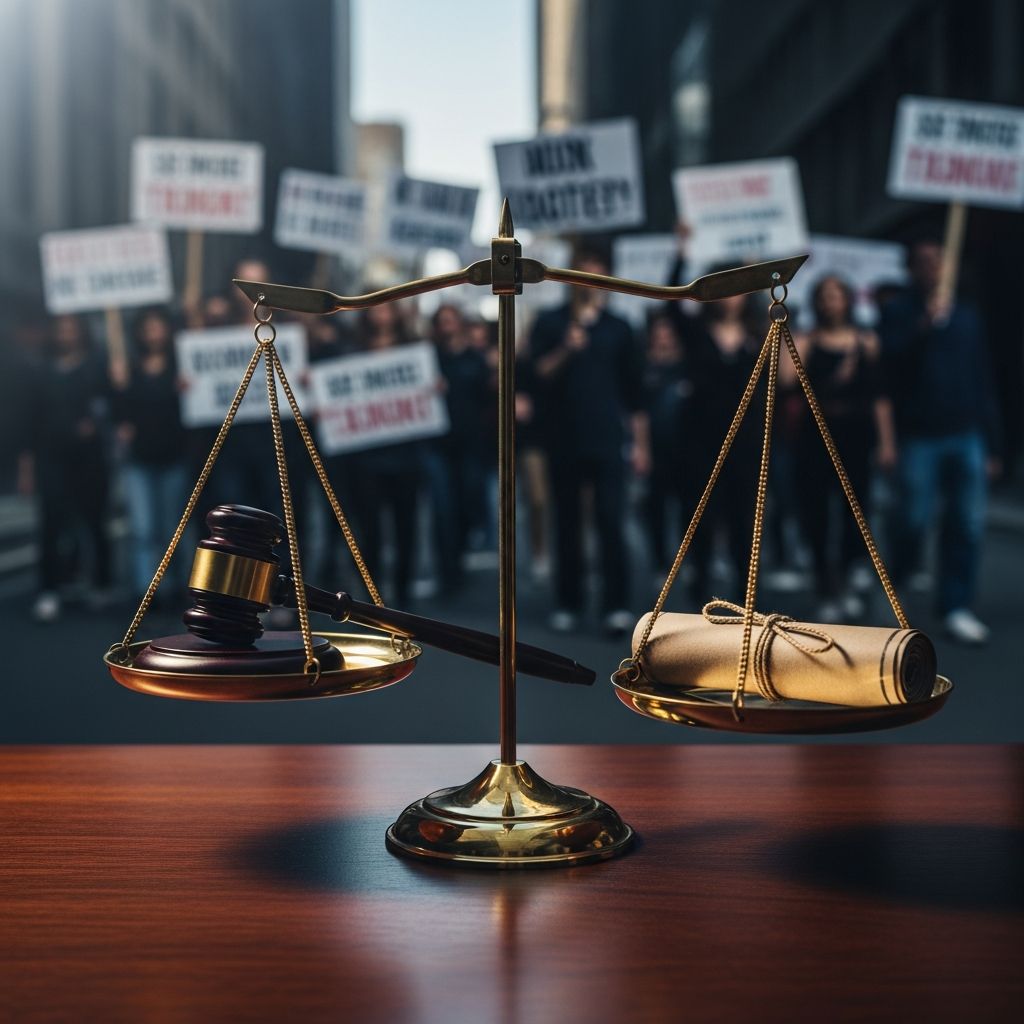
Disobedience Day offers a unique opportunity to reflect on the power of nonviolent resistance and challenge unjust laws through thoughtful activism. While the spirit of defiance fuels change, understanding the legal landscape ensures participants stay safe and maximize impact. This guide provides comprehensive strategies drawn from established activist resources, emphasizing preparation, rights awareness, and responsible execution to turn symbolic gestures into meaningful advocacy.
Understanding the Foundations of Lawful Defiance
Civil disobedience involves intentionally breaking laws to protest injustice, but it must align with principles of nonviolence and public accountability. Historically, figures like Martin Luther King Jr. outlined core tenets: shield the face from blows, avoid defiance of direct orders, do not evade arrest, and willingly accept penalties to underscore moral conviction. These guidelines remain relevant today, adapting to modern legal contexts where penalties can escalate quickly.
Key distinctions matter: differentiate between protected protest under the First Amendment and actions crossing into criminal territory, such as property damage or interference with officials. Activists must map local laws impacting tactics, from assembly restrictions to noise ordinances, ideally consulting legal experts beforehand.
Pre-Action Planning: Building a Solid Framework
Effective disobedience starts with meticulous preparation. Begin by researching jurisdiction-specific regulations. Many locales mandate permits for gatherings exceeding certain sizes or using amplification devices; failure to secure one can lead to dispersal orders or arrests.
- Assemble a legal team: Line up attorneys familiar with protest law to advise on risks and represent arrestees. Organizations like the National Lawyers Guild offer trained observers to document events impartially.
- Conduct risk assessments: Evaluate potential charges like disorderly conduct (e.g., excessive noise or blocking pathways) or trespass (entering private property without permission).
- Secure consents and briefings: Obtain informed agreement from all participants on risks, including financial and legal support levels. Provide clear guidelines on expected consequences.
- Logistics checklist: Arrange bail funds, transportation for releases, medication management, and communication protocols for detainees.
Planning distinguishes spontaneous outbursts from strategic actions, enhancing safety and legitimacy. Notify organizers if intending arrest-risk activities, allowing non-risk participants to separate.
Navigating Permits, Public Spaces, and Boundaries
Public spaces carry “time, place, and manner” restrictions upheld as reasonable under the First Amendment. Permits streamline compliance; even if philosophically contested, obtaining one prevents unnecessary escalations. For instance, amplified sound often requires approval, while unpermitted events may prompt shutdowns.
| Activity | Potential Requirement | Consequence of Non-Compliance |
|---|---|---|
| Large gatherings (>25 people) | Permit from city/county | Dispersal order, arrests for unlawful assembly |
| Sound equipment use | Amplification permit | Equipment confiscation, noise violation fines |
| March on streets | Parade/traffic control permit | Trespass or obstructing traffic charges |
| Private property entry | Owner consent | Criminal trespass prosecution |
Trespass laws prohibit unauthorized entry onto private land; once asked to leave, immediate compliance is mandatory. Federal statutes like the Animal Enterprise Terrorism Act (AETA) amplify penalties for actions causing facility disruptions, treating non-violent damage up to $10,000 as potential terrorism with up to one year imprisonment.
Documenting Actions: The Power of Evidence
Multi-angle video recording captures interactions, preserving records of police conduct and participant behavior. Designate non-participating videographers to avoid compromising footage admissibility. This documentation proves invaluable in court challenges to unlawful arrests or excessive force.
Filming officials in public spaces is generally protected, though some jurisdictions impose restrictions during civil disobedience. Always prioritize non-confrontational recording to de-escalate tensions.
Interacting with Law Enforcement: De-Escalation Essentials
Police encounters demand calm, polite responses—treat officers as you would a volatile situation requiring diffusion. Core rules: comply with dispersal orders, avoid physical resistance, and invoke rights clearly.
- Know your status: Ask, “Am I free to go?” If not detained, leave promptly.
- Invoke silence: State, “I want to speak with my lawyer,” and stop talking. Blame non-cooperation on counsel if pressed.
- Refuse searches: You need not consent to vehicle, home, or personal searches absent a warrant.
- Avoid obstruction: Do not interfere; challenge violations later via complaints or litigation.
Post-order compliance allows courtroom defenses, where rights are enforced, not streets. Running or resisting justifies force escalation.
Arrest Protocols: What Happens Next
If arrested, remain non-confrontational. Jails require preparation: remove jewelry, document medications, inventory belongings, and note booking details. Communicate respectfully to facilitators smoother processing.
Post-arrest:
- Silence until attorney arrival—no statements about the incident.
- Bail posting via pre-arranged funds.
- Legal observers report observations to counsel.
Attorneys should demystify proceedings: explain court roles, seating, and timelines without legalese.
Advanced Risks: Federal and Specialized Laws
Beyond local charges, federal laws target specific activism. AETA penalizes disruptions to animal enterprises, reclassifying investigative entries or minor damages as terrorism. Conscientious objectors refusing drafts face separate prohibitions.
Attorneys advising clients must delineate guidance from facilitation to uphold ethics; thorough protest law knowledge equips balanced counsel.
Post-Action Support and Reflection
Follow-up sustains momentum: provide arrestees counseling, financial aid, and media amplification of injustices. Evaluate tactics against goals—did actions sway opinions without undue harm?
Civil disobedience aims to transform hearts, not merely incur arrests. Nonviolence claims moral authority, public visibility amplifies messages.
Frequently Asked Questions
Is civil disobedience always protected by the First Amendment?
No, while protests are shielded, intentional law-breaking carries consequences. Courts weigh public safety against expression.
What if police block safe dispersal routes?
Comply with arrest; contest blockages and rights violations in court later.
Can lawyers participate in planning disobedience?
Advising is ethical; actively aiding illegality crosses lines. Focus on education.
How to handle federal charges like under AETA?
Seek specialized counsel immediately; penalties are severe even for non-violent acts.
What’s the role of legal observers?
They monitor for rights abuses, providing unbiased testimony without participating.
Disobedience Day reminds us that informed, disciplined resistance drives progress. By prioritizing safety, documentation, and legal savvy, activists honor the tradition while minimizing personal costs.
References
- Legal Guide for Activists — Animal Legal Defense Fund. Accessed 2024. https://aldf.org/project/legal-guide-for-activists/
- Civil Disobedience Toolkit — Amnesty International. 2024-02. https://www.amnesty.org/fr/wp-content/uploads/2024/02/ACT1074712024ENGLISH.pdf
- Navigating Civil Disobedience — Robert Lloyd Artist & Advocate. Accessed 2024. https://4comculture.com/navigating-civil-disobedience
- Advice for Lawyers: Civil Disobedience 101 — Bill Quigley. 2016-01-18. https://billquigley.wordpress.com/2016/01/18/advice-for-lawyers-civil-disobedience-101/
- Protest Planner 2024 — Center for Constitutional Rights. 2024-11. https://ccrjustice.org/sites/default/files/attach/2024/11/Protest%20Planner%202024.pdf
- What Every Lawyer Should Know About Civil Disobedience — National Business Institute. Accessed 2024. https://nbi-sems.com/blogs/news/what-every-lawyer-should-know-about-civil-disobedience
Similar Articles








Read full bio of Sneha Tete




