
Smart Homes Under Watch: Police Access to IoT Data
Discover how connected devices in your home are becoming tools for law enforcement, raising critical privacy concerns in the digital age.
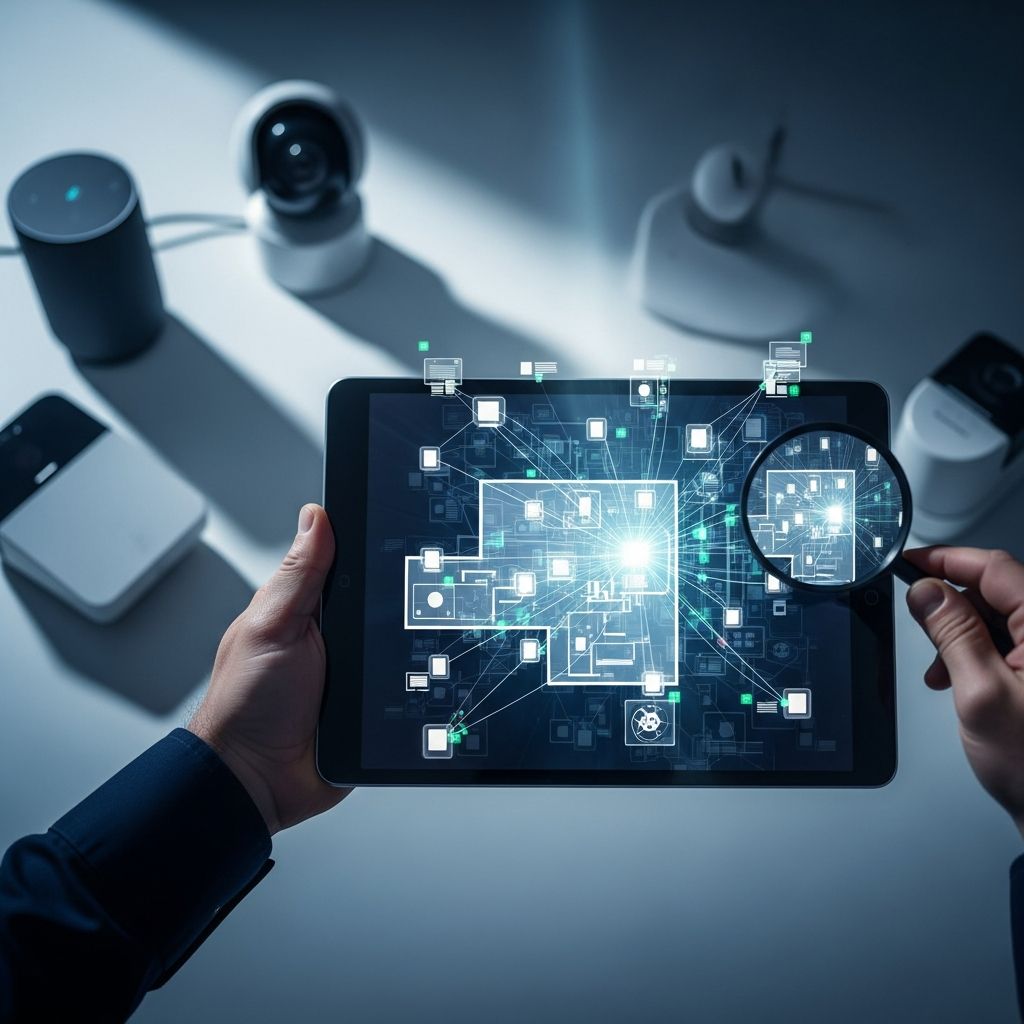
Modern homes are filled with internet-connected devices that promise convenience, from voice-activated assistants to video doorbells and automated thermostats. However, these innovations are transforming private residences into potential sources of digital evidence for law enforcement. As police increasingly request data from companies like Amazon and Google, homeowners must navigate the fine line between technological benefits and privacy erosion.
The Rise of Connected Living and Its Hidden Risks
The Internet of Things (IoT) has revolutionized daily life, enabling remote control of lights, locks, and cameras via smartphones. Devices such as smart speakers, fitness trackers, and security systems continuously collect data on movements, voices, and routines. This information, often stored on corporate servers, can reveal intimate details about inhabitants’ lives.
While users enjoy seamless automation, the flip side is vulnerability. Law enforcement agencies have discovered that these ‘always-on’ gadgets serve as silent observers, capturing traces of physical activities through sensors, microphones, and cameras. For instance, motion detectors might log when someone enters or leaves a room, while voice commands provide timestamps of interactions.
- Smart speakers record audio snippets for processing commands.
- Doorbell cameras store video footage accessible via apps.
- Thermostats track occupancy patterns through temperature adjustments.
This data’s persistence on cloud servers means it survives local deletions, making it obtainable through legal requests. The comprehensiveness varies—microphones capture speech but not visuals—yet combined traces paint detailed pictures of home activities.
Legal Avenues for Law Enforcement Data Acquisition
Police access to smart home data typically requires warrants, but thresholds differ by jurisdiction and data type. Traditional searches demand probable cause, yet digital information sometimes faces relaxed standards, as noted by privacy advocates.
Companies comply with court orders, subpoenas, or geofence warrants that encompass broad areas. For shared devices, investigators corroborate data with location pings or biometrics to link activities to specific users. Challenges include chain-of-custody maintenance for physical devices and admissibility debates under human rights frameworks.
| Legal Tool | Description | Common Use for IoT Data |
|---|---|---|
| Warrant | Requires probable cause | Video footage, audio logs |
| Subpoena | Lower threshold for records | Usage metadata, timestamps |
| Geofence Warrant | Location-based data sweep | Device pings near crime scenes |
In privacy-strong states like California, courts scrutinize digital warrants closely, balancing public safety against Fourth Amendment protections.
Real-World Investigations Leveraging Smart Devices
Criminal probes increasingly rely on IoT evidence. In one scenario, detectives used a smart speaker’s recordings to uncover a murder plot, where routine commands masked incriminating discussions. A warrant unlocked the ‘digital vault,’ turning the device into a key witness.
Video doorbells like Ring have drawn scrutiny after reports of police obtaining footage without user consent. Authorities request clips via apps like Neighbors, where users voluntarily share, or directly from Amazon. Connected cameras verify alibis by confirming presence or contradicting statements through movement logs.
Other examples include fitness trackers revealing activity levels inconsistent with alibis, or smart locks timestamping entries during crimes. Law enforcement contacts providers to identify network access, as local networks obscure user attribution.
Privacy Vulnerabilities in Everyday Devices
Smart ecosystems create webs of data sharing. Refrigerators log openings, TVs track viewing via apps, and health devices monitor biometrics—all potentially subpoenaed.
Concerns amplify with AI integrations, like facial recognition in cameras, enabling real-time tracking. Predictive policing tools aggregate IoT feeds into central databases, forecasting crimes but risking bias and overreach.
- Data retention varies: some companies keep footage indefinitely with subscriptions.
- Third-party sharing occurs with ‘highest bidders’ or police requests.
- Hacks expose data, as seen in past Ring breaches.
Evidentiary gaps exist—deleted logs, blocked cameras, or power outages limit utility—but surviving fragments often suffice for narratives.
Protecting Your Digital Fortress: Practical Strategies
Homeowners can mitigate risks without abandoning convenience. Start by reviewing privacy settings: disable cloud storage, enable local-only recording, and use guest networks for IoT devices.
- Opt for privacy-focused brands: Choose devices with end-to-end encryption and minimal data collection.
- Regular audits: Delete old footage and review connected apps.
- Physical safeguards: Cover cameras, mute microphones when idle.
- Legal awareness: Understand your rights; consult attorneys if served a warrant.
Advocate for reforms like mandatory transparency reports from manufacturers on police requests. Use VPNs for router traffic and firmware updates to patch vulnerabilities.
Debating the Balance: Security vs. Surveillance
Proponents argue IoT data enhances justice, exonerating innocents via alibis while ensnaring perpetrators. Critics, including the ACLU, warn of eroded privacy standards in the ‘electronic age,’ urging stricter oversight.
Human rights questions loom: Does seizing a smart TV infringe family life? Courts grapple with hybrid digital-physical evidence admissibility. As AI surveillance surges, real-time crime centers fuse feeds, amplifying tracking capabilities.
Future regulations may mandate warrants for all metadata, but technology evolves faster than laws.
Frequently Asked Questions (FAQs)
Can police access my smart home data without a warrant?
Generally, no—warrants are required for content like video/audio, but metadata may fall under subpoenas. Policies vary by provider and state.
How long is smart device data retained?
Retention depends on subscriptions: some keep indefinite cloud storage; local devices overwrite quickly.
Can I block police from my Ring camera footage?
Users control sharing via apps, but court orders compel companies to provide stored data.
Are smart devices admissible in court?
Yes, if properly authenticated with chain-of-custody and corroboration.
What if multiple people use my smart home?
Investigators use biometrics or cross-data to attribute actions.
References
- Police Can Use Your “Smart Home” Data Against You — Law Offices of Leifert & Leifert. 2023-05-15. https://www.leifertlaw.com/blog/police-can-use-smart-home-data/
- Policing the smart home: The internet of things as ‘invisible witnesses’ — SAGE Journals. 2022-03-01. https://journals.sagepub.com/doi/10.3233/IP-211541
- Your ‘smart home’ is watching, can share data with police | Rush Hour — YouTube (NewsNation). 2021-06-10. https://www.youtube.com/watch?v=TG85FkIPO1I
- Law Enforcement Access to Smart Devices — Brennan Center for Justice. 2023-11-20. https://www.brennancenter.org/our-work/research-reports/law-enforcement-access-smart-devices
- Smart Home Security — International Association of Chiefs of Police Cyber Center. 2024-02-14. https://www.iacpcybercenter.org/whats-new/smart-home-security/
- Smart devices, privacy law and the future of digital policing — Police1. 2024-08-22. https://www.police1.com/investigations/when-smart-devices-testify-rethinking-privacy-warrants-and-digital-policing
Similar Articles








Read full bio of medha deb




