
Smart Contracts and Legal AI: Key Insights
Unlock the potential of smart contracts and legal AI while navigating legal challenges and best practices for secure implementation.
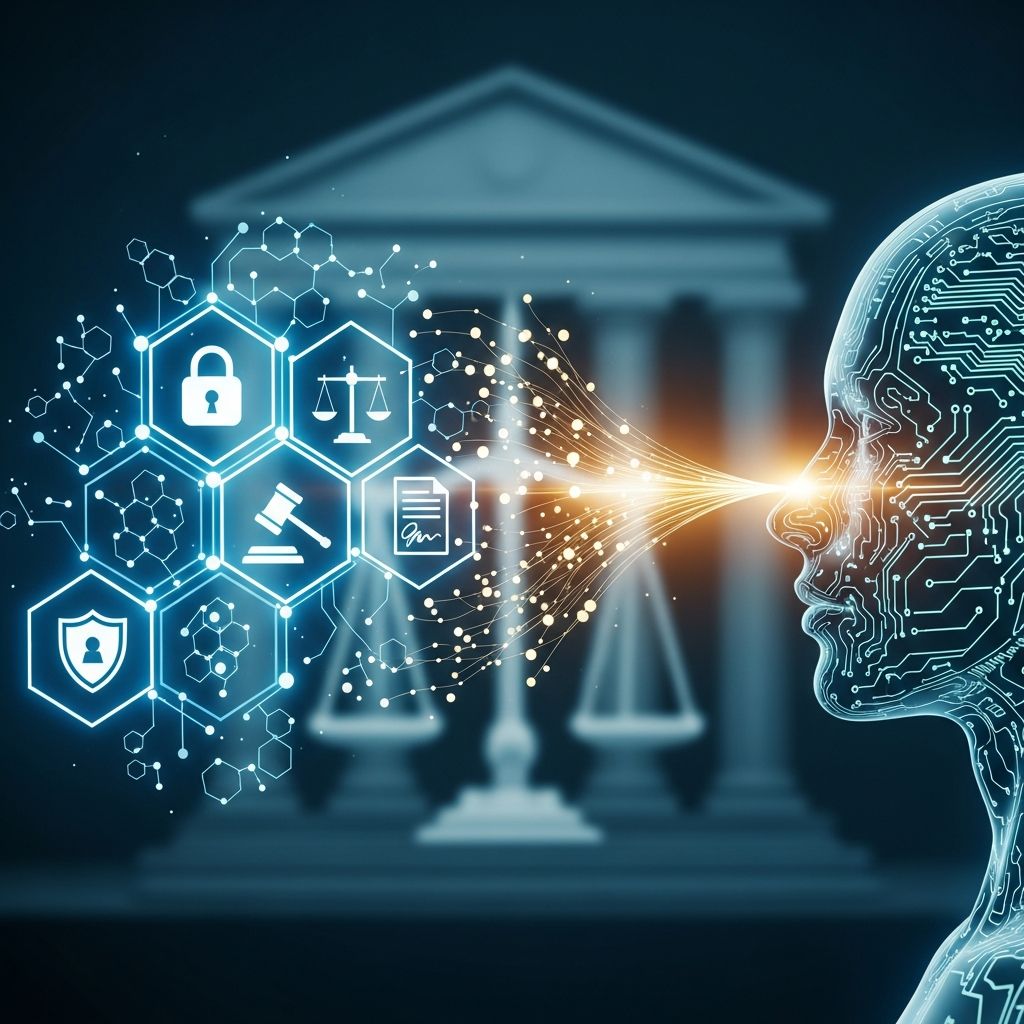
Blockchain-based smart contracts and artificial intelligence tools are transforming how agreements are formed, executed, and managed. These technologies promise efficiency, transparency, and automation but introduce unique legal complexities. This article delves into critical considerations for professionals evaluating these innovations.
Understanding Smart Contracts in the Digital Age
Smart contracts are self-executing programs stored on a blockchain that automatically enforce terms when predefined conditions are met. Unlike traditional contracts, they eliminate intermediaries by running code that triggers actions like payments or data transfers upon verification.
Key advantages include immutability—once deployed, terms cannot be altered—and real-time execution, reducing disputes over fulfillment. However, their reliability hinges on code accuracy; bugs can lead to irreversible errors, as seen in high-profile hacks.
- Core Components: Conditional logic (if-then statements), blockchain ledger for transparency, and cryptographic security.
- Applications: Supply chain tracking, insurance payouts, and decentralized finance (DeFi).
While innovative, smart contracts must interface with off-chain data via oracles, raising questions about external input trustworthiness.
The Rise of AI in Legal Services
Legal AI encompasses machine learning models trained on vast datasets of case law, contracts, and regulations to assist with drafting, review, and analysis. Tools range from predictive analytics for litigation outcomes to generative AI for clause suggestions.
These systems accelerate workflows, allowing lawyers to focus on strategy rather than rote tasks. For instance, AI can flag non-standard clauses in seconds, far outpacing manual review.
| Traditional Review | AI-Assisted Review |
|---|---|
| Hours to days per contract | Minutes |
| Human error prone | High accuracy with oversight |
| Scales poorly | Handles volume effortlessly |
Despite benefits, concerns like data privacy and output reliability persist, demanding rigorous vetting.
Essential Questions on Smart Contract Legality
Are smart contracts enforceable in court? Existing laws apply to coded agreements, treating them as binding if they meet offer, acceptance, and consideration standards. The U.S. Commodity Futures Trading Commission (CFTC) affirms that code-based contracts fall under traditional regulations, potentially exposing them to fraud or manipulation risks.
Challenges arise when code diverges from natural language intent, or when disputes require human interpretation not coded in. Hybrid approaches—pairing smart code with legal wrappers—enhance enforceability.
- Do they comply with statutes of frauds requiring writing? Courts increasingly recognize electronic execution.
- Can they be amended? On-chain governance or multi-signature wallets allow controlled updates.
Evaluating Legal AI Tool Reliability
Before adoption, probe the AI’s reasoning process. Transparent tools cite sources, provide confidence scores, and offer audit trails, mitigating ‘black box’ opacity. Ask: Does it explain decisions with references to statutes or precedents?
Data sourcing is pivotal—training on public contracts may suffice for basics, but proprietary or jurisdiction-specific data yields better results. Multilingual capabilities and customization options are crucial for global firms.
Critical Risks and Mitigation Strategies
AI introduces biases from flawed training data, risking discriminatory outputs, especially in regulated sectors like finance. Smart contracts face oracle failures or code vulnerabilities.
Best practices include:
- Conducting thorough vendor due diligence on security and compliance.
- Implementing governance frameworks with ethical guidelines and audit rights.
- Securing IP ownership for inputs and outputs, plus indemnities for infringements.
Contracting Best Practices for AI and Smart Tech
When procuring AI or blockchain services, prioritize frameworks matching organizational needs—build versus buy analysis is key. Negotiate terms addressing scalability, data protection, and evolving regulations like EU AI Act or U.S. executive orders.
Include warranties for model transparency, bias audits, and PII handling. For smart contracts, specify liability for code errors and integration with legacy systems.
| Risk Area | Mitigation Clause |
|---|---|
| Bias/Accuracy | Periodic audits and performance SLAs |
| Data Privacy | Ownership rights and no-retention policies |
| Regulatory Changes | Compliance updates and indemnities |
Integration Challenges and Solutions
Seamless onboarding minimizes disruption. Seek tools with low learning curves, versatile reporting, and compatibility with existing software like contract management systems. Test for workflow fit, from document analysis to client billing.
For smart contracts, ensure oracle reliability and legal hybridity to bridge on-chain automation with off-chain enforcement.
Future Regulatory Landscape
AI regulations are proliferating—U.S. actions include NIST frameworks, while global standards emphasize transparency. Contracts must define ‘laws’ broadly, covering future enactments and voluntary codes.
Smart contracts may face scrutiny under securities or commodities laws if tokenized assets are involved.
Frequently Asked Questions on Smart Contracts and Legal AI
What makes a smart contract legally enforceable?
Smart contracts are enforceable if they satisfy contract law elements and comply with electronic signature statutes. Code execution serves as acceptance, but courts may interpret ambiguities via intent.
How transparent is legal AI reasoning?
Top tools provide citations, confidence levels, and logs, enabling verification. Avoid opaque models to prevent liability.
Who owns AI-generated legal content?
Confirm provider grants usage rights and indemnifies copyright claims. Protect inputs as trade secrets.
Can smart contracts handle real-world complexities?
Yes, via oracles for external data, but reliability depends on source quality. Hybrids combine code with human oversight.
What due diligence is needed for AI vendors?
Assess training data, security, bias testing, and governance. Secure audit rights for ongoing compliance.
Does AI integrate with current legal tech stacks?
Leading solutions offer APIs for contract management and billing, ensuring smooth adoption.
Are there indemnity standards for AI risks?
Negotiate coverage for bias, inaccuracy, and regulatory violations, with clear scopes.
These technologies herald a new era, but success demands proactive legal strategy. By addressing these facets, firms can harness innovation securely.
References
- Contracting for AI technologies – top five best practices — Global Legal Post. 2023-10-05. https://www.globallegalpost.com/news/contracting-for-ai-technologies-top-five-best-practices-1889322053
- 5 Essential Questions Every Lawyer Should Ask Before Using AI Tools — Attorney at Work. 2024-01-15. https://www.attorneyatwork.com/5-questions-every-lawyer-should-ask-before-using-legal-ai-tools/
- Top Five AI Procurement Questions General Counsel for Manufacturers Should Consider — Baker Donelson. 2024-03-20. https://www.bakerdonelson.com/top-five-ai-procurement-questions-general-counsel-for-manufacturers-should-consider
- 10 must-answer questions about smart contracts — Process Excellence Network. 2023-08-12. https://www.processexcellencenetwork.com/tools-technologies/articles/10-must-answer-questions-about-smart-contracts
- 5 questions to ask of your legal AI technology — Wolters Kluwer. 2023-11-10. https://www.wolterskluwer.com/en-gb/expert-insights/5-questions-to-ask-of-your-legal-ai-technology
- 7 Questions to Ask Your Legal AI Tech Provider — CLOC.org. 2024-02-28. https://cloc.org/blog/sponsored/we-always-thought-the-best-ai-was-ai-you-didnu2019t-know-was-there-we-set-out-with-the-goal-of-helping-lawyers-solve-the-kind-of-problems-that-only-software/
Similar Articles








Read full bio of Sneha Tete




