
Slippery Floors at Big-Box Stores: Slip-and-Fall Lawsuits Explained
Uncover the legal battles over hazardous floors in warehouse clubs like Costco, from notice requirements to court victories and defeats.
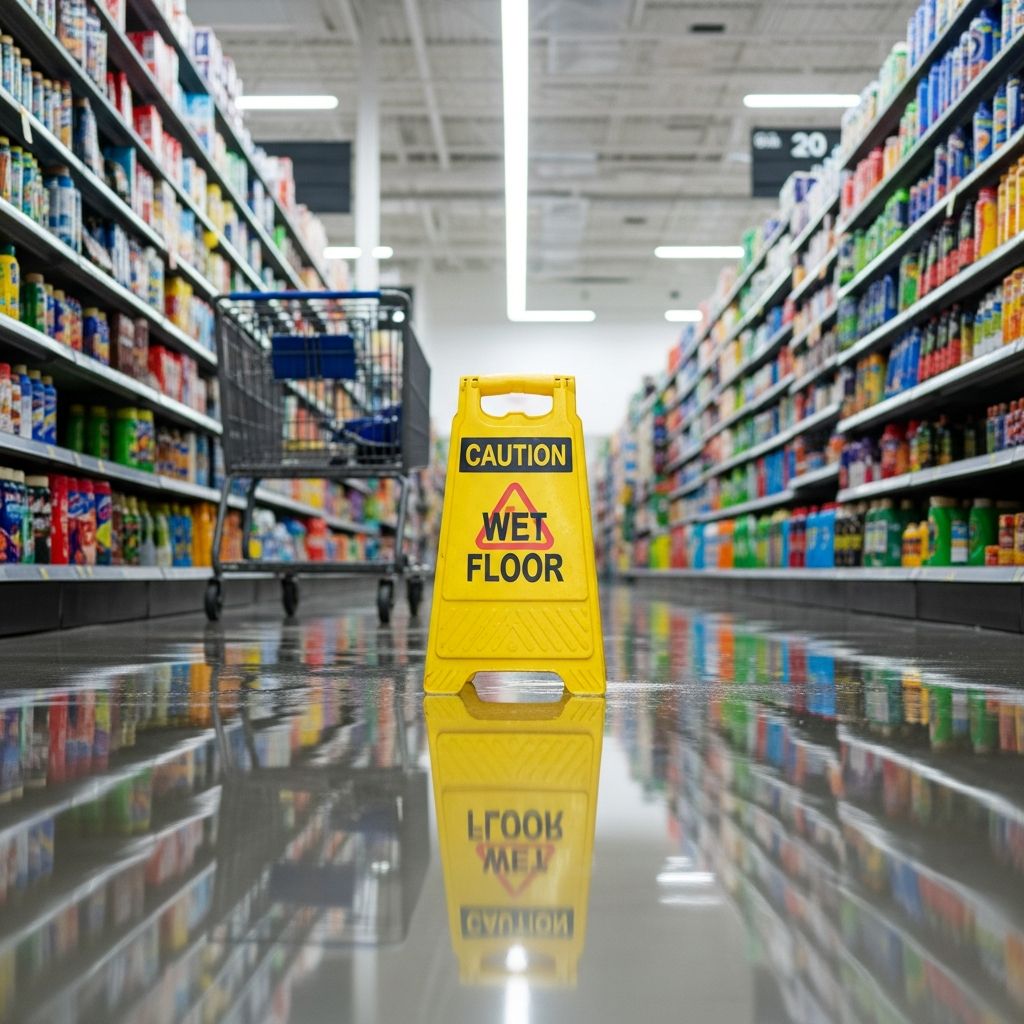
In the bustling environment of large warehouse retailers, where crowds navigate vast aisles laden with bulk goods, slip-and-fall accidents represent a persistent risk. These incidents often involve spilled beverages, produce debris, or overlooked hazards, leading to serious injuries and subsequent legal battles. Understanding the intricacies of premises liability law is crucial for both potential claimants and store operators seeking to mitigate risks.
Understanding Premises Liability in Retail Settings
Premises liability holds property owners accountable for maintaining safe conditions for invitees, such as shoppers. In retail giants like Costco, this duty intensifies due to high foot traffic and self-service models that can generate hazards. Courts typically require plaintiffs to prove three elements: a dangerous condition existed, the owner had notice of it (actual, constructive, or created), and the condition proximately caused the injury.
For instance, constructive notice arises when a hazard remains unattended long enough that a reasonable inspection would have discovered it. This standard varies by jurisdiction but often hinges on evidence like surveillance footage showing the spill’s duration.
Key Elements of a Successful Slip-and-Fall Claim
- Dangerous Condition: Plaintiffs must demonstrate a substance or defect created an unreasonable risk, such as a liquid spill near food courts or crushed fruit in produce areas.
- Notice to the Defendant: Actual notice occurs via direct employee knowledge; constructive notice requires proof the hazard persisted beyond a reasonable inspection interval.
- Causation and Damages: Medical records and expert testimony link the fall to injuries like fractures, surgeries, or chronic pain.
- Defenses: Stores counter with claims of open and obvious dangers or plaintiff negligence.
New York law, for example, employs pure comparative negligence under CPLR §1411, allowing recovery reduced by the claimant’s fault percentage.
Notable Case Studies from Costco Locations
Several high-profile cases illustrate how courts apply these principles in Costco contexts.
The Florida Slurpee Spill That Ended Up in New York Courts
In a 2011 decision, Theresa Danza, a New York resident, sued Costco after slipping on a Slurpee spill at a North Miami, Florida store. She described flying through the air upon encountering the slippery substance near the cafeteria, witnessed by employees and shoppers. Costco sought dismissal via forum non conveniens, arguing Florida as the proper venue. The court denied the motion, citing Danza’s New York residency, her treatment with local providers, and Costco’s substantial New York presence. Factors like expired Florida statutes of limitations and travel burdens on the elderly plaintiff favored retaining the case in Brooklyn.
Surveillance Video Turns the Tide in Illinois Smoothie Case
Reyna Cruz’s fall in a Costco food court led to neck, back, knee, and wrist injuries requiring surgery. She claimed a pink smoothie spill caused the mishap. Costco’s video showed no purchase in the prior 28 minutes but captured a woman with a cart nearby. Post-fall, employees noted “smoothie drops” yet initially saw nothing. A district court granted summary judgment for lack of constructive notice proof, but the Seventh Circuit reversed in 2025. Viewing footage favorably to Cruz, 28 minutes sufficed for notice, creating triable fact issues.
Summary Judgment Victory Over Produce Cooler Claim
In Scalera v. Costco (2:21-cv-14425), the plaintiff alleged slipping on crushed strawberries in a produce cooler, despite not seeing them pre-fall. A recent employee inspection found no debris, and strawberries were packaged in secure clamshells, negating mode-of-operation liability. The court dismissed the case, emphasizing lack of notice and plaintiff’s failure to observe the hazard.
Legal Standards for Notice in Slip-and-Fall Litigation
| Type of Notice | Description | Example from Cases |
|---|---|---|
| Actual | Direct employee awareness | Manager’s report of “smoothie drops” post-incident |
| Constructive | Hazard present long enough for discovery via reasonable inspection | 28-minute video gap inferred as sufficient time |
| Created | Store employee’s actions caused the hazard | Stocking activity dropping debris (not proven in produce case) |
Mode-of-operation doctrine, invoked in self-service settings, presumes notice for foreseeable risks but requires specific evidence, as rejected in the strawberry case due to packaging.
Challenges in Proving Fault at Warehouse Clubs
Warehouse stores defend vigorously, leveraging surveillance, inspection logs, and employee testimonies. Common hurdles for plaintiffs include:
- Short-lived spills not captured on video.
- Plaintiff admissions of not watching footing.
- “Open and obvious” arguments reducing or barring recovery.
In New York, Brooklyn-specific claims demand prompt evidence preservation, especially near government property where 90-day Notice of Claim rules apply.
Comparative Negligence and Damage Recovery
Under pure comparative negligence, a distracted shopper pushing a cart might recover 60% of damages if deemed 40% at fault. Courts apportion based on witness accounts, video, and expert reconstructions. Pain and suffering, lost wages, and medical costs form the basis, with caps rare in private claims.
Strategies for Plaintiffs and Best Practices for Retailers
For Injury Victims
- Photograph the scene immediately, noting spill size and location.
- Seek medical attention promptly for records.
- Preserve clothing/shoes with residue.
- Request incident reports and video footage via counsel.
For Store Management
- Implement rigorous floor inspection protocols, documented hourly.
- Use signage proactively in high-risk zones like food courts.
- Train staff on spill response and reporting.
- Review surveillance regularly for patterns.
Consistent adherence reduces liability exposure significantly.
Statutes of Limitations and Jurisdictional Hurdles
Timelines vary: New York’s three-year general rule contrasts Florida’s two-year limit. Forum disputes, as in Danza, weigh plaintiff residence, witness locations, and defendant resources. Federal removals, seen in Cruz, invoke diversity jurisdiction for larger claims.
Frequently Asked Questions (FAQs)
What if the spill was from another shopper—does the store still liable?
Yes, if constructive notice applies; stores must anticipate and address customer-created hazards in self-service areas.
Can I sue if I didn’t see the hazard before falling?
Visibility aids defenses but doesn’t bar claims; focus shifts to store notice and maintenance.
Does video absence doom my case?
No—testimony, reports, and circumstantial evidence can suffice, as appeals show.
What about falls in parking lots or entrances?
Viable if under store control; ownership determines duties.
Are settlements common in these cases?
Yes, many resolve pre-trial to avoid jury uncertainties, especially with strong video evidence.
Broader Implications for Retail Safety
These cases underscore the need for proactive hazard management in big-box retail. Escalating litigation costs—averaging tens of thousands per claim—drive investments in AI monitoring and automated cleaning. Policy shifts may emerge, balancing customer safety with operational realities. Claimants benefit from specialized counsel to navigate evidentiary pitfalls and maximize recoveries.
Stay vigilant: one unseen puddle can trigger life-altering consequences and courtroom dramas.
References
- Danza v Costco Wholesale Corp. — New York Other Courts. 2011-11-15. https://law.justia.com/cases/new-york/other-courts/2011/2011-51610.html
- Cruz v Costco Wholesale Corporation, No. 24-1843 — 7th Circuit Court of Appeals. 2025-04-21. https://law.justia.com/cases/federal/appellate-courts/ca7/24-1843/24-1843-2025-04-21.html
- Scalera v. Costco Wholesale Corporation, Case #: 2:21-cv-14425-JKS-LDW — Weiner Law Group LLP. 2023. https://www.weiner.law/results/
- Costco ‘Slurpee Slip and Fall’ Suit Stays in New York — Pain and Injury Blog. 2011-08-29. https://painandinjury.com/blog/2011/08/29/costco-slurpee-slip-fall-suit-stays-york/
- Injured at Costco Brooklyn? What a Trip and Fall Claim Can Depend On — Gabo Law. N/A. https://gabolaw.com/blog/injured-at-costco-brooklyn-trip-and-fall/
Similar Articles








Read full bio of Sneha Tete




