
Sidewalk Repair Permits: What Homeowners Must Know
Uncover essential permit rules for sidewalk repairs to avoid fines, ensure safety, and comply with local codes across U.S. cities.
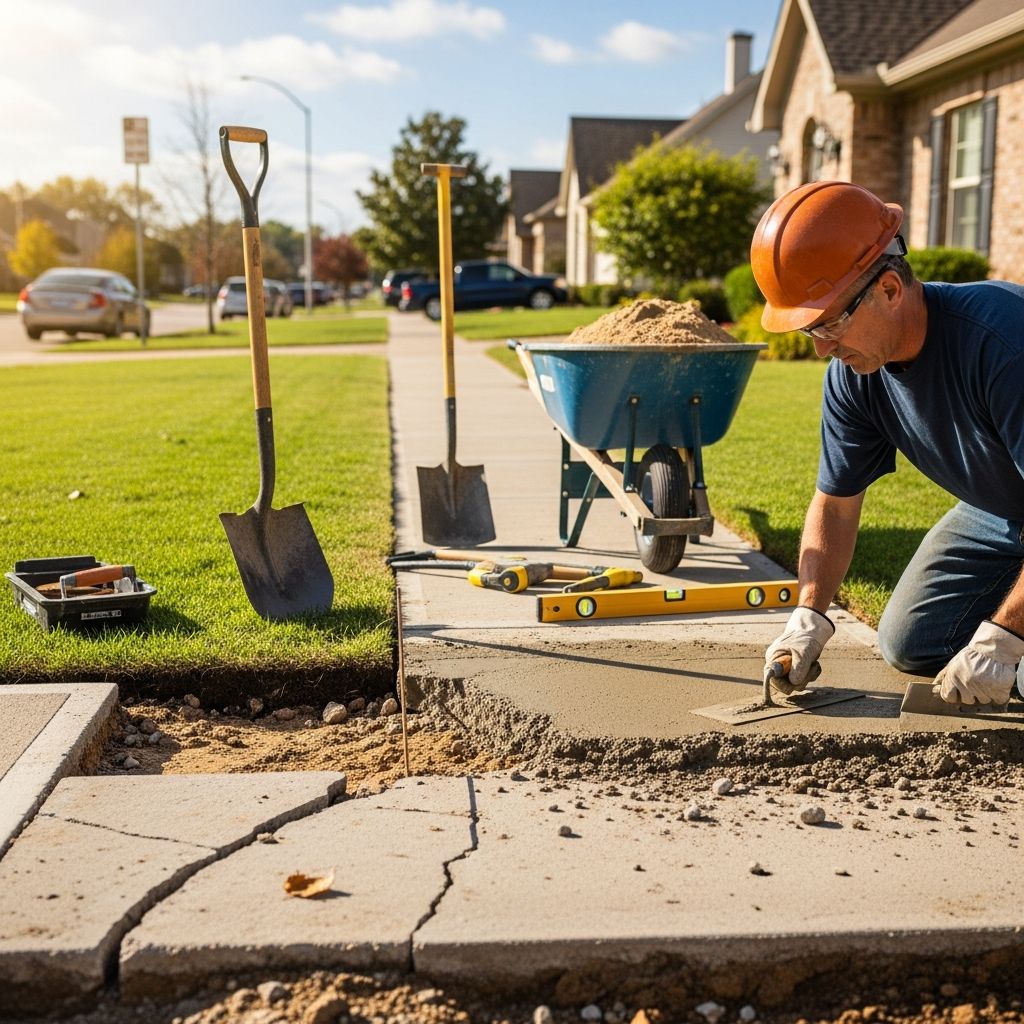
Repairing a damaged sidewalk seems straightforward, but in most U.S. jurisdictions, it triggers specific permitting requirements because sidewalks form part of the public right-of-way. Property owners bear responsibility for maintenance, yet modifications demand official approval to uphold safety standards, accessibility, and uniformity.
Understanding Public Right-of-Way Ownership
Sidewalks adjacent to private property belong to the public domain, managed by local governments. This designation means homeowners cannot alter them freely. Regulations ensure repairs align with city standards for slope, width, and materials, preventing hazards like uneven surfaces or tripping risks.
Local codes classify sidewalks within the right-of-way, extending from the street edge to property lines. Encroaching on this area without permission violates ordinances, as seen in cities like Chicago where unpermitted work incurs hefty penalties.
When Does a Sidewalk Fix Require a Permit?
Not every minor patch needs bureaucratic hurdles, but most substantial work does. Jurisdictions differentiate based on project scope:
- Minor non-structural repairs under $2,500, like filling small cracks, often bypass permits if approved by a building official and code-compliant.
- Full replacements or reconstructions always demand permits due to excavation, concrete pouring, and potential utility disruption.
- Accessibility modifications, such as adding ramps, must meet federal ADA guidelines, necessitating reviews.
- Driveway aprons or curb work tied to sidewalks require additional right-of-way approvals.
Cities like Johns Creek, GA, provide checklists clarifying thresholds; anything involving structural changes or land disturbance triggers oversight.
Common Types of Permits for Sidewalk Work
Permitting varies by location, but core types recur nationwide:
| Permit Type | Purpose | Typical Requirements |
|---|---|---|
| Right-of-Way (ROW) Permit | Authorizes work in public areas | Site plans, traffic control, insurance proof |
| Encroachment Permit | Covers boundary-adjacent alterations | Surveys, engineering drawings |
| Sidewalk Repair/Service Permit | Specific to pavement fixes | Photos of damage, proposed materials |
| Inspection Permit | Ensures post-work compliance | Scheduled visits, final sign-off |
In Lawrenceville, GA, constructing or repairing public sidewalks without a permit from Planning, Zoning & Inspections is unlawful. Atlanta mandates ROW permits for any disturbance, including decorative elements.
The Permit Application Process Step-by-Step
Securing approval involves methodical steps to avoid rejections:
- Gather documentation: Prepare site sketches, construction plans, damage photos, and contractor details if applicable.
- Submit application: Use online portals or in-person offices; include fees starting at $50.
- Undergo review: Officials assess for code adherence, ADA compliance, and safety—expect 2-6 weeks.
- Pay and receive approval: Bonds may be required for larger jobs, like $500 for driveway-related work.
- Schedule inspections: Pre-pour, during excavation, and final checks verify quality.
Decatur, GA, requires two sets of drawings plus traffic plans for ROW submissions. Online systems in many cities streamline this, but incomplete apps delay progress.
Costs and Timelines: Budgeting Realistically
Overlooking expenses leads to budget overruns. Expect:
- Fees: $50-$500 based on scope; inspections add $100+.
- Bonds/Insurance: $500+ for liability coverage.
- Processing: 2-6 weeks, longer in peak seasons.
- Delays from rework: Non-compliance means tear-outs, inflating costs.
National League of Cities data indicates fees offset administrative burdens, making them standard. Factor in contractor markups for permit handling.
Risks of Proceeding Without Permits
Skipping steps invites severe repercussions:
- Fines: $500-$2,500 daily in Chicago; similar elsewhere.
- Stop-work orders: Halt projects mid-way.
- Demolition mandates: Remove unapproved work at owner expense.
- Liability exposure: Injuries from substandard repairs lead to lawsuits.
- Insurance voids: Claims denied for unpermitted alterations.
East Point, GA, enforces credentials via portals, underscoring strict accountability.
ADA Compliance: A Non-Negotiable Standard
The Americans with Disabilities Act mandates accessible paths: maximum 1/2-inch height variations, 5% cross-slope, and proper curb ramps. Repairs must incorporate these, verified during inspections. Non-conformance risks federal complaints alongside local penalties.
Homeowner vs. Contractor Responsibilities
Property owners typically apply, but licensed contractors often manage. Homeowners can pull permits in some areas like East Point with proper credentials. Atlanta exempts repairs under $2,500 from building permits if code-compliant.
Regional Variations: A Comparative Overview
| City/State | Key Rules | Fee Range |
|---|---|---|
| Chicago, IL | Strict ROW, high fines | $500-$2,500 fines |
| Atlanta, GA | DOT ROW for all disturbances | $50+ |
| Johns Creek, GA | No permit <$2,500 minor | Varies |
| Lawrenceville, GA | Mandatory for public ways | Not specified |
Always consult local departments; tools like checklists aid determination.
Tips for Smooth Sidewalk Projects
- Photograph existing conditions pre-work.
- Hire permitted contractors familiar with locals.
- Apply early to beat timelines.
- Verify utility locates to avoid digs.
- Keep records of approvals and inspections.
Frequently Asked Questions
Do I need a permit for small sidewalk cracks?
Minor fills under $2,500 may not, with official okay, but check locally.
Who applies: me or my contractor?
Usually the owner, though contractors often handle.
What if my repair affects the curb?
Extra ROW or encroachment permits required.
Are decorative sidewalks different?
Yes, special standards apply in places like Atlanta.
What penalties face unpermitted work?
Fines, stop orders, demolition, liability.
References
- Permits and Local Codes You Need Before Replacing a Sidewalk — Asphalt Coatings Company. 2023. https://asphaltcoatingscompany.com/blog/permits-and-local-codes-you-need-before-replacing-a-sidewalk/
- Article V – Streets, Curbs and Sidewalks — City of Lawrenceville, GA. Accessed 2026. https://www.lawrencevillega.org/DocumentCenter/View/6049/Article-V—Streets-Curbs-and-Sidewalks-PDF
- Do I Need A Permit? — City of Johns Creek, GA. Accessed 2026. https://johnscreekga.gov/departments/community-development/building-permitting/do-i-need-a-permit/
- Permit Requirements — City of Decatur, GA. Accessed 2026. https://www.decaturga.com/dec/page/permit-requirements
- Permits — Atlanta Department of Transportation. Accessed 2026. https://atldot.atlantaga.gov/services-2/permits
- Decorative Sidewalk Permit — Atlanta Department of Transportation. Accessed 2026. https://atldot.atlantaga.gov/services-2/permits-2/decorative-sidewalk
Similar Articles








Read full bio of Sneha Tete




