
Is It Legal To Shoot Down A Drone? 5 Legal Steps To Follow Now
Understand why shooting down drones over your property is illegal and discover safe, legal ways to address privacy invasions.
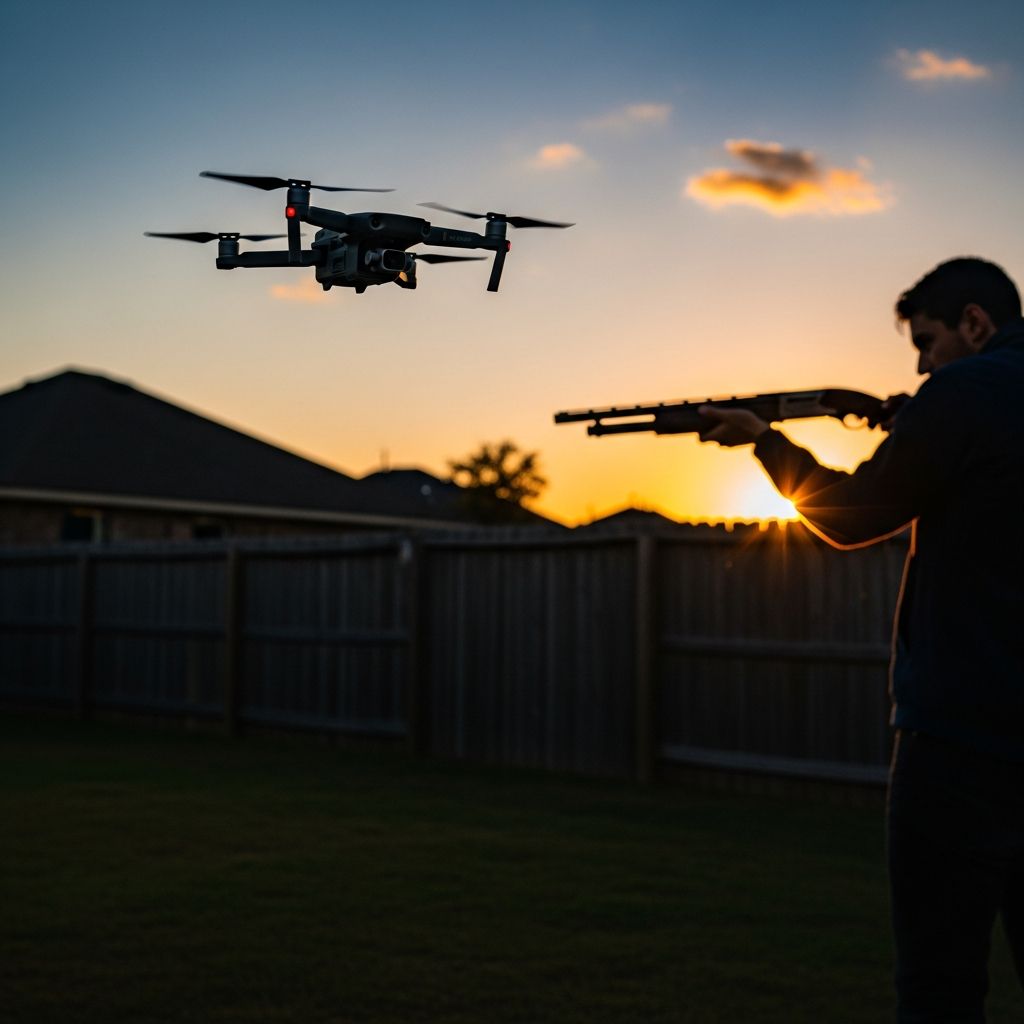
Drones have become commonplace, raising concerns about privacy when they hover over private property. However, taking matters into your own hands by shooting one down is strictly prohibited under U.S. law. Drones are classified as aircraft by the Federal Aviation Administration (FAA), making any attempt to damage or destroy them a serious federal offense.
The Federal Classification of Drones as Aircraft
The FAA regulates all navigable airspace in the United States, including the space above private land. Unmanned aerial vehicles (UAVs), commonly known as drones, fall under this jurisdiction as aircraft. This means no individual owns the airspace beyond what is necessary for reasonable land use, such as building structures.
Property rights extend vertically only to a limited height—typically what allows for practical enjoyment of the land. Beyond that, federal authority prevails. Attempting to interfere with a drone violates this framework, regardless of whether it’s perceived as intrusive.
Key Federal Law: The Aircraft Sabotage Act
Central to this issue is 18 U.S.C. § 32, known as the Aircraft Sabotage Act. This statute criminalizes the willful damage, destruction, disabling, or wrecking of any aircraft. Penalties are severe: up to 20 years in federal prison and fines reaching $250,000. Even if the shot misses, interfering with flight operations can trigger charges.
The FAA has explicitly stated that shooting at drones poses significant safety risks. A damaged drone could crash into people, vehicles, or structures on the ground, or collide with manned aircraft. Private citizens lack authority to police the skies themselves.
Potential Legal Consequences of Shooting a Drone
Those who shoot down a drone face multifaceted repercussions. Federally, prosecution under the Aircraft Sabotage Act is likely. Civil lawsuits from the drone owner for property damage are common, potentially costing thousands in repairs or replacement.
| Consequence Type | Description | Possible Penalties |
|---|---|---|
| Federal Criminal | Aircraft sabotage (18 U.S.C. § 32) | Up to 20 years prison, $250,000 fine |
| State Criminal | Reckless endangerment, illegal firearm discharge | Varies by state; fines, jail time |
| Civil Liability | Property damage, personal injury claims | Damages in thousands to millions |
| FAA Penalty | Civil violation for airspace interference | Additional fines |
Local laws may add charges like discharging a firearm within city limits or endangering public safety. In residential areas, bullets fired upward can travel far, posing risks to neighbors.
State Laws and Federal Preemption
While states have enacted drone-specific regulations—such as restrictions on surveillance or flight heights—federal law preempts them in aviation matters. No state permits shooting drones as self-defense against perceived privacy violations. For instance, even in states with strong property privacy acts, like Texas, firearm use against drones remains illegal.
- Federal aviation rules override state attempts to allow drone destruction.
- State privacy laws focus on operator penalties, not vigilante action.
- Landowners must pursue civil remedies or reports, not violence.
Privacy Concerns and Drone Intrusion: Valid but Actionable Legally
Many drone disputes stem from fears of spying or harassment. Drones equipped with cameras can capture images or video, prompting invasion of privacy claims. However, the remedy lies in law enforcement intervention, not personal force.
Federal law requires recreational drones over 0.55 pounds to be registered, with numbers visible externally. Capturing this detail aids complaints. Commercial operators must follow stricter Part 107 rules, including remote pilot certification.
Legal Steps to Address Nuisance Drones
Instead of risking felony charges, follow these evidence-based protocols:
- Document the Activity: Note dates, times, flight paths, and registration numbers. Use photos or video from the ground without interfering.
- Report to FAA: Use the FAA Drone Hotline (1-866-TELL-FAA) or online portal for suspected violations like low-altitude flights or no-fly zones.
- Contact Local Police: If privacy laws are breached, file a report. Some areas have ordinances against peeping or harassment via drone.
- Civil Action: Consult an attorney for nuisance lawsuits or injunctions against repeated intrusions.
- Community Mediation: Talk to the neighbor first if safe, or involve HOA/mediators.
These methods preserve safety and legality while addressing grievances effectively.
Real-World Cases and Lessons Learned
Courts have upheld these principles in incidents nationwide. In one Pennsylvania case, a man shot down a drone he believed was filming his family, facing federal charges despite acquittal on some counts. Another in Kentucky led to convictions under aircraft sabotage laws.
These examples illustrate that juries and judges prioritize airspace safety over subjective privacy feelings. Prosecutors emphasize the broader dangers of armed responses in populated areas.
Drone Technology Trends and Future Regulations
As drone use surges—for delivery, inspections, and recreation—regulations evolve. The FAA’s B4UFLY app helps operators check restrictions, while new rules mandate remote ID broadcasting for identification.
Property owners benefit from increased enforcement tools, like FAA fines up to $33,000 per violation for unsafe operations. Congress considers privacy enhancements, but self-help via guns remains off-limits.
FAQs
What if the drone is very low over my yard?
Even low flights don’t grant shooting rights. Report it; low-altitude ops often violate FAA rules (under 400 feet generally).
Can I use a net or laser instead?
No. Any interference risks the same charges. Lasers can endanger pilots or aviation.
What height of airspace do I own?
Typically, up to 300-500 feet in practice, but FAA controls all navigable airspace. Consult local precedents.
Is it different for commercial vs. hobby drones?
No, both are aircraft. Commercial face stricter rules, aiding violation reports.
Can I sue the drone owner?
Yes, for privacy invasion or nuisance if evidence supports it. Avoid physical action.
Empowering Property Owners Safely
Knowledge of drone laws protects you better than a firearm. By reporting violations through official channels, you enforce rules without personal risk. As technology advances, staying informed ensures your rights are upheld legally.
References
- Drone Shot Down: What to Do If Someone Shoots Your Drone — Drone Pilot Ground School. 2023. https://www.dronepilotgroundschool.com/shooting-drone/
- Can I Shoot Down Drones Flying over my Property? — National Agricultural Law Center. 2024-12-01. https://nationalaglawcenter.org/can-i-shoot-down-drones-flying-over-my-property/
- Can You Shoot Down a Drone Over Your Property? — UAV Coach. 2024. https://uavcoach.com/shoot-drone/
- What To Know About Drones — Federal Aviation Administration (FAA). 2025-03-15. https://www.faa.gov/newsroom/what-know-about-drones
- Verify: Is it legal to shoot down a drone — YouTube (FAA-related verification). 2023-05-10. https://www.youtube.com/watch?v=qq6ldFE-mAU
- Why Can’t I Shoot Down a Drone? Legal Consequences — Blizzard Law Firm. 2024-12-15. https://blizzardlawfirm.com/2024/12/why-i-cannot-shoot-down-a-drone/
Similar Articles








Read full bio of medha deb




