
The Senate Filibuster: History, Gridlock, and Reform
How a procedural quirk became the Senate's most controversial tool for gridlock.
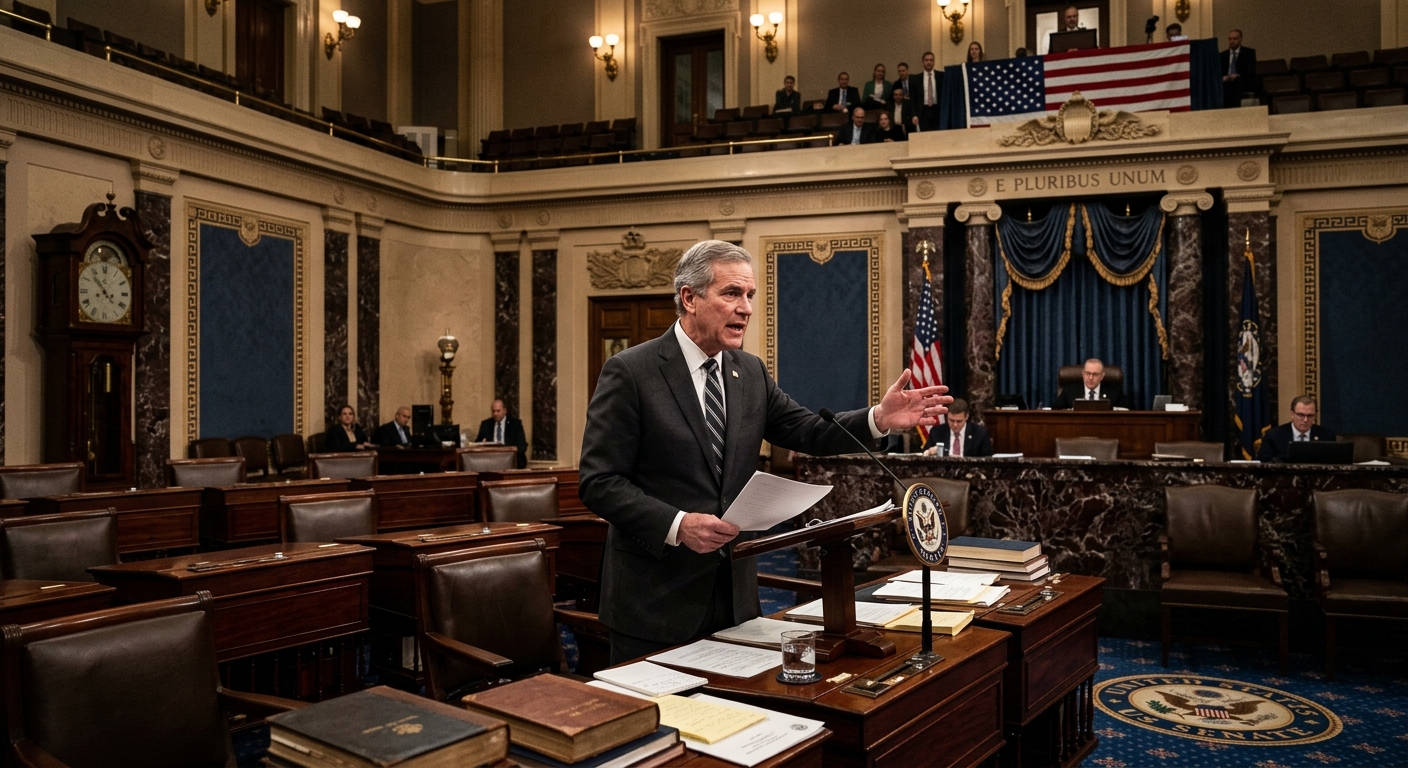
The Senate Filibuster: Unpacking America’s Most Controversial Legislative Tool
In the labyrinthine halls of the United States Capitol, few legislative procedures evoke as much passion, frustration, and widespread misunderstanding as the Senate filibuster. Popular culture often depicts this political maneuver as a lone, courageous senator speaking passionately into the night until they collapse from sheer physical exhaustiona romanticized vision famously immortalized by Jimmy Stewart in the classic Hollywood film Mr. Smith Goes to Washington. However, the modern reality of this procedural weapon is far less theatrical and vastly more consequential to the daily functioning of the American government.
Fundamentally, the filibuster is a parliamentary tactic used to delay or entirely prevent a vote on a piece of legislation, a confirmation, or a resolution. It achieves this by extending the debate phase indefinitely. Because the United States Senate operates on rules that place a heavy premium on unlimited debate, a single member or a coalition of members can hold the floor, effectively freezing the chamber’s business. Over time, this procedural quirk has fundamentally altered the calculus of American democracy, imposing a de facto supermajority requirement on a legislative body originally designed by the Founding Fathers to operate primarily on majority rule. As the nation faces compounding crises and intense partisan division, the debate over whether to preserve, reform, or completely abolish this procedural tool has reached a fever pitch.
An Accidental Invention: The Origins of Unlimited Debate
Contrary to widespread political mythology, the filibuster was not an intentional, carefully crafted creation of the Constitution’s framers. The founding document itself makes no mention of supermajority requirements for ordinary legislation. In fact, primary architects like Alexander Hamilton and James Madison explicitly warned against the inherent dangers of supermajority rules, arguing forcefully in the Federalist Papers that such mechanisms would lead to institutional paralysis and allow a fractious minority to hold the broader majority hostage.
The birth of the filibuster was, by all historical accounts, an accident. In the early days of the Republic, the Senate actually possessed a rule to cut off debate and force a vote, known as the ‘previous question’ motion. However, in 1805, Vice President Aaron Burr, while presiding over the chamber, recommended cleaning up the Senate rulebook. He suggested that the ‘previous question’ motion was redundant and could be safely eliminated to streamline procedures. The Senate blindly followed his advice the following year in 1806, inadvertently stripping away the only procedural mechanism available to end debate.
It took several decades for cunning legislators to fully realize they could exploit this newly created loophole. The first truly significant use of the filibuster occurred in 1837, when allies of President Andrew Jackson banded together in a prolonged speaking effort to expunge a prior censure resolution against him. From that moment onward, the Pandora’s box of infinite debate was officially opened.
Rule 22 and the Dawn of Cloture
For over a century following Burr’s accidental rule change, the Senate operated without any formal, codified way to force an end to a debate. This unchecked power led to increasing frustration, particularly as the United States expanded and the legislative workload grew more complex. It wasn’t until the dawn of the 20th century, amidst the tense military buildup to World War I, that the chamber was effectively forced into action.
In 1917, a determined group of anti-war senators successfully blocked a critical bill intended to arm American merchant ships against relentless German submarine attacks. Outraged by this obstruction, President Woodrow Wilson publicly demanded a change, lambasting the Senate for being rendered helpless by a ‘little group of willful men.’ The resulting political pressure culminated in the adoption of Rule 22, which introduced the parliamentary concept of ‘cloture’d a formal procedure specifically designed to break a filibuster and officially end debate.
Initially, invoking cloture was no small feat; it required a demanding two-thirds supermajority of all senators present and voting. While this rule change was heralded as a step toward restoring majority functionality, the threshold remained exceptionally high. Over the ensuing decades, cloture proved incredibly difficult to achieve, leaving countless bills stranded. In 1975, following mounting national frustration over perpetual legislative stagnation, the Senate reformed Rule 22, reducing the threshold slightly to three-fifths of all chosen and sworn senators. Today, that translates to the magic number of 60 out of 100 votes.
The Dark Legacy: Weaponization During the Civil Rights Era
No honest historical examination of the Senate filibuster is complete without acknowledging its darkest and most shameful chapter. During the mid-20th century, the filibuster was aggressively weaponized and became the parliamentary tool of choice for segregationist senators determined to block vital civil rights legislation. The tactic was deployed with devastating effectiveness to kill federal anti-lynching bills, voting rights protections, and anti-poll tax measures that had already successfully passed the House of Representatives.
The obstructionism of this era produced some of the most grueling physical spectacles in Senate history. Senators opposed to racial equality would organize tag-team speaking marathons to ensure civil rights bills never saw a final vote. The systemic abuse of the filibuster during this period deeply scarred its institutional reputation, permanently associating the tactic with the defense of institutional racism and the denial of fundamental human rights to Black Americans.
Notable Individual Filibusters in Senate History
While the modern filibuster rarely involves continuous speaking, historical records highlight the extraordinary lengths to which individuals went to block legislation. Below is a summary of the longest individual speaking filibusters on the Senate floor:
| Senator | Year | Duration | Legislative Target |
|---|---|---|---|
| Strom Thurmond (SC) | 1957 | 24 hrs, 18 mins | Civil Rights Act of 1957 |
| Alfonse D’Amato (NY) | 1986 | 23 hrs, 30 mins | Military spending amendment |
| Wayne Morse (OR) | 1953 | 22 hrs, 26 mins | Tidelands Oil legislation |
| Robert La Follette Sr. (WI) | 1908 | 18 hrs, 23 mins | Aldrich-Vreeland currency bill |
The Two-Track System and the Rise of the ‘Silent’ Filibuster
Today, the grueling, physically exhausting filibusters of the past are exceedingly rare. This profound procedural shift occurred in the early 1970s under the leadership of Senate Majority Leader Mike Mansfield. Seeking a practical solution to prevent a single, stubborn filibuster from completely shutting down all Senate business, Mansfield introduced a ‘two-track’ system.
This logistical innovation allowed the Senate to set aside a filibustered bill for specific hours of the day, moving on to debate and vote on other, less controversial legislative priorities while the disputed bill remained in parliamentary limbo. While Mansfield’s intention was to increase the chamber’s overall productivity, the two-track system triggered an unintended and deeply transformative consequence: it made filibustering completely costless for the minority party.
Senators were no longer required to hold the floor, speak around the clock, or read from the telephone book to delay a bill. Instead, a senator or their staff could simply signal their intent to filibusterdoften via a brief email or a formal notice to the leadership desk. This invisible maneuver immediately imposed a 60-vote cloture threshold on the legislation. This gave rise to the modern ‘silent’ filibuster, a procedural veto that requires zero physical exertion but has effectively transformed the Senate from a majoritarian institution into a rigid supermajoritarian one, dramatically increasing legislative gridlock.
Carve-Outs and Loopholes: Bypassing the 60-Vote Threshold
Because the 60-vote requirement has proven so insurmountable in an era of hyper-partisanship, the Senate has gradually carved out specific loopholes and exceptions. These mechanisms allow certain critical actions to bypass the filibuster and pass with a simple majority of 51 votes.
- The Nuclear Option: In 2013, faced with unprecedented minority obstruction of executive branch nominees and lower-court judicial appointments, Democratic Majority Leader Harry Reid invoked the ‘nuclear option.’ This maneuver changed the chamber’s precedent by a simple majority vote, entirely eliminating the filibuster for those specific nominations. In 2017, Republican Majority Leader Mitch McConnell expanded this controversial carve-out to include Supreme Court nominees, fundamentally altering the ideological makeup of the nation’s highest court with mere majority support.
- Budget Reconciliation: The most significant legislative loophole is the budget reconciliation process. Created by the Congressional Budget Act of 1974, reconciliation allows bills strictly related to federal taxes, spending, and the debt limit to bypass the filibuster entirely. This arcane, highly regulated process has been utilized by both political parties to pass massive, generation-defining legislative packages without requiring a single vote from the minority party.
The Modern Debate: Preservation, Reform, or Abolition?
The deep polarization of modern American politics has placed the filibuster squarely in the center of a national debate over institutional reform. The ongoing argument pits the traditional preservation of minority rights against the fundamental democratic principle of majoritarian governance.
Defenders of the filibuster passionately argue that the 60-vote threshold forces bipartisanship and essential consensus-building. They maintain that the rule prevents sudden, radical swings in national policy whenever control of the Senate flips from one party to the other. Proponents, including institutionalist senators from both sides of the aisle, warn that abolishing the filibuster would irreversibly turn the Senate into a mirror image of the highly partisan, volatile House of Representatives, destroying its historic role as the nation’s ‘cooling saucer.’
Conversely, advocates for abolition counter that the filibuster has entirely failed to foster bipartisanship; instead, it has paralyzed the legislative process, empowered political extremism, and fueled deep public cynicism. By allowing a minoritydoften representing a significantly smaller fraction of the overall U.S. populationto routinely block highly popular legislation ranging from voting rights expansions to environmental protections, critics view the filibuster as a fundamentally anti-democratic tool.
Some moderate reformers advocate for a middle-ground solution: reviving the ‘talking filibuster.’ This proposed reform would preserve the minority’s right to delay legislation but would require them to physically hold the floor and speak continuously, thereby reintroducing a heavy physical and political cost to obstructionism.
Frequently Asked Questions (FAQ)
What is the exact difference between a filibuster and cloture?
A filibuster is the strategy or action of delaying a vote on a measure through prolonged debate or procedural hurdles. Cloture is the formal parliamentary procedure used by the Senate to forcibly end that debate and bring the measure to a final vote. Currently, invoking cloture requires 60 votes.
Is the right to filibuster guaranteed by the U.S. Constitution?
No. The U.S. Constitution does not mention the filibuster or require supermajorities for standard legislation. The filibuster is strictly a product of the Senate’s internal rulebook, specifically emerging from a procedural oversight made in 1806.
Why can’t the Vice President break a filibuster tie?
While the Constitution grants the Vice President the power to cast a tie-breaking vote in the event of a 50-50 deadlock, overcoming a filibuster requires a 60-vote supermajority to invoke cloture. Therefore, a simple 50-50 tie-breaker is mathematically insufficient to end a filibuster.
What does invoking the ‘nuclear option’ mean?
The ‘nuclear option’ is a parliamentary procedure that allows the Senate to override a standing rule, such as the 60-vote cloture requirement, with a simple majority vote (51 votes) rather than the two-thirds vote normally required to officially rewrite Senate rules. It has been used to exempt judicial and executive nominees from the filibuster.
References
- About Filibusters and Cloture | Historical Overview d United States Senate. 2024-01-01. https://www.senate.gov/about/powers-procedures/filibusters-cloture.htm
- Filibusters and Cloture in the Senate d Congressional Research Service (CRS). 2017-04-07. https://crsreports.congress.gov/product/pdf/RL/RL30360
- The History of the Filibuster d Brookings Institution / Sarah A. Binder. 2010-04-22. https://www.brookings.edu/testimonies/the-history-of-the-filibuster/
- The Case Against the Filibuster d Brennan Center for Justice. 2020-10-30. https://www.brennancenter.org/our-work/research-reports/case-against-filibuster
Similar Articles








Read full bio of Sneha Tete


