
Section 230: What Platforms Must Know About Immunity In 2025
Unpacking the protections and boundaries of Section 230 for online platforms in the digital era.
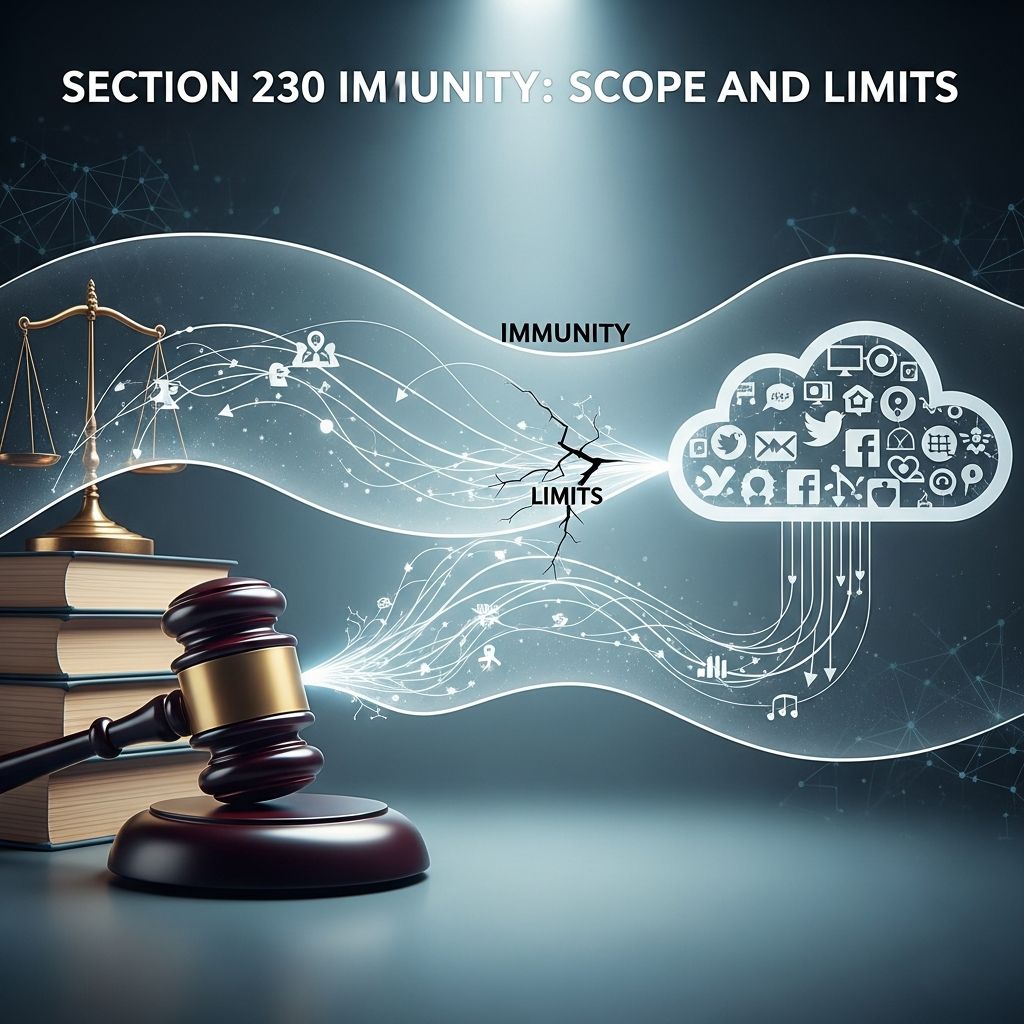
Section 230 of the Communications Decency Act stands as a cornerstone of internet law, offering robust protections to online platforms from liability for user-generated content. Enacted in 1996, this provision has enabled the growth of the digital economy by shielding providers of interactive computer services from being treated as publishers of third-party information.
Foundations of Online Platform Protections
The law emerged during the early internet era to foster innovation without the burden of constant legal oversight for user posts. At its heart, Section 230(c)(1) states that no provider or user of an interactive computer service shall be held as the publisher or speaker of information supplied by another content provider. This distinction is critical: platforms like social media sites or forums are not legally responsible for defamatory, harmful, or illegal posts made by individuals.
Courts have broadly interpreted ‘interactive computer service’ to include a wide array of entities, from traditional ISPs to modern apps and websites that host user content. This expansive reading has allowed platforms to thrive, knowing they won’t face lawsuits for every user mistake.
Key Legal Tests for Immunity
To qualify for these safeguards, defendants must meet a three-part test established through case law. First, they must operate as a provider or user of an interactive computer service. Second, the plaintiff’s claim must attempt to impose publisher or speaker liability. Third, the problematic content must originate from a third-party information content provider, not the platform itself.
- Provider or User Status: Covers websites, apps, and services enabling user interaction.
- Publisher Liability: Applies to claims like defamation where the platform is blamed for distribution.
- Third-Party Origin: Immunity fails if the platform materially contributes to the content’s creation.
This framework ensures platforms are protected when merely hosting or distributing user material without altering its core substance.
Defenses for Content Moderation Practices
Beyond shielding publication, Section 230(c)(2) grants immunity for good-faith efforts to remove or restrict access to objectionable material, including content deemed obscene, violent, or harassing—regardless of whether it enjoys First Amendment protection. Platforms can thus moderate without fear of lawsuits claiming overreach or underreach.
This dual protection promotes self-regulation: sites can curate feeds, ban users, or delete posts to maintain community standards, all while insulated from liability.
Defined Boundaries and Exclusions
Despite its breadth, Section 230 includes explicit carve-outs. It does not protect against federal criminal prosecutions, such as those involving child exploitation or fraud schemes facilitated through platforms. Electronic privacy violations under laws like the Stored Communications Act also fall outside its scope.
Intellectual property claims, including copyright and trademark disputes, remain actionable, allowing rights holders to pursue platforms directly in some cases. State laws consistent with these exceptions can apply, though federal preemption often limits broader state criminal impositions.
| Protected Areas | Excluded Areas |
|---|---|
| Third-party defamation | Federal crimes |
| Good-faith moderation | Privacy violations |
| User post distribution | IP infringements |
This table highlights the balance: broad civil immunity paired with accountability in targeted domains.
Court Interpretations Shaping the Landscape
Judicial decisions have reinforced Section 230’s strength. In early cases, courts dismissed suits against platforms for user libel, affirming that even awareness of harmful content does not strip immunity—mere knowledge isn’t enough to transform a host into a publisher.
Moderation activities, including editing for clarity or removing posts, generally preserve protection unless changes substantially create new illegal meaning. For instance, minor formatting tweaks are safe, but transformative alterations could expose platforms.
Recent rulings continue this trend. Platforms escaped liability in scams involving misleading ads and privacy breaches via impersonation profiles, underscoring the law’s resilience amid evolving tech.
Challenges from Algorithmic Recommendations
A growing contention involves algorithms that curate and promote content. Critics argue that personalized feeds make platforms co-creators, potentially voiding immunity. In one high-profile case, the Supreme Court grappled with whether algorithmic distribution equates to content development, though it ultimately sidestepped a definitive ruling on Section 230 grounds.
Courts have so far upheld protections, viewing recommendations as neutral tools akin to traditional distribution. However, this remains a flashpoint, with plaintiffs pushing boundaries in suits over targeted harmful material.
Reform Proposals and Policy Debates
As social harms like misinformation and extremism rise, calls for Section 230 overhaul intensify. The Department of Justice has suggested carve-outs for platforms aiding illegal acts, such as child abuse or terrorism, conditioning immunity on cooperation with authorities.
Other ideas include narrowing moderation immunity to explicitly unlawful content, creating commissions for best practices, or introducing new causes of action for negligence in preventing harms without repealing core protections.
Defenders caution that weakening immunity could stifle speech and burden smaller platforms disproportionately. Proposals aim to balance innovation with responsibility, perhaps via case-by-case liability rather than blanket shields.
Implications for Businesses and Users
For companies, Section 230 enables aggressive growth in user-driven services, from social networks to review sites. Startups benefit immensely, avoiding the legal costs that brick-and-mortar publishers face.
Users gain freer expression, knowing platforms won’t preemptively censor out of fear. Yet, this freedom underscores the need for personal accountability—posters remain liable for their own words.
Global Comparisons and Future Outlook
Unlike the U.S., many nations impose stricter intermediary duties, requiring proactive content takedowns. Section 230’s model influences international policy, but pressures for alignment with global standards grow.
Looking ahead, congressional action seems likely if courts narrow interpretations or harms escalate. Platforms may need enhanced transparency in moderation to preempt reforms.
Frequently Asked Questions
Does Section 230 protect platforms that know about illegal content?
No, immunity holds regardless of knowledge; platforms aren’t publishers of third-party info, but they lose protection if they create the content.
Can platforms edit user posts without losing immunity?
Yes, for routine edits like grammar, but substantial changes creating new meaning may qualify the platform as a content provider.
What happens if a platform promotes harmful content via algorithms?
Courts generally view this as protected distribution, not creation, though ongoing cases test this.
Does Section 230 apply to all websites?
Primarily interactive services hosting third-party content; static sites without user input may not qualify.
Are there moves to change Section 230?
Yes, proposals target bad actors, require cooperation, or limit scope for ads and extremism.
References
- Section 230 – Wikipedia — Wikipedia. 2026 (continuously updated). https://en.wikipedia.org/wiki/Section_230
- Uproot or Upgrade? Revisiting Section 230 Immunity in the Digital Age — University of Chicago Law Review. 2023. https://lawreview.uchicago.edu/online-archive/uproot-or-upgrade-revisiting-section-230-immunity-digital-age
- Section 230 Protections — Electronic Frontier Foundation. 2026 (continuously updated). https://www.eff.org/issues/bloggers/legal/liability/230
- 47 U.S. Code § 230 – Protection for private blocking and screening of offensive material — Legal Information Institute, Cornell Law School. 2026 (continuously updated). https://www.law.cornell.edu/uscode/text/47/230
- The Future of Section 230 | What Does It Mean For Consumers? — National Association of Attorneys General. 2023. https://www.naag.org/attorney-general-journal/the-future-of-section-230-what-does-it-mean-for-consumers/
Similar Articles








Read full bio of Sneha Tete




