
Can the Secret Service Arrest Protesters Near the President?
Understanding your First Amendment rights during protests near presidential visits and when Secret Service intervention is legal.
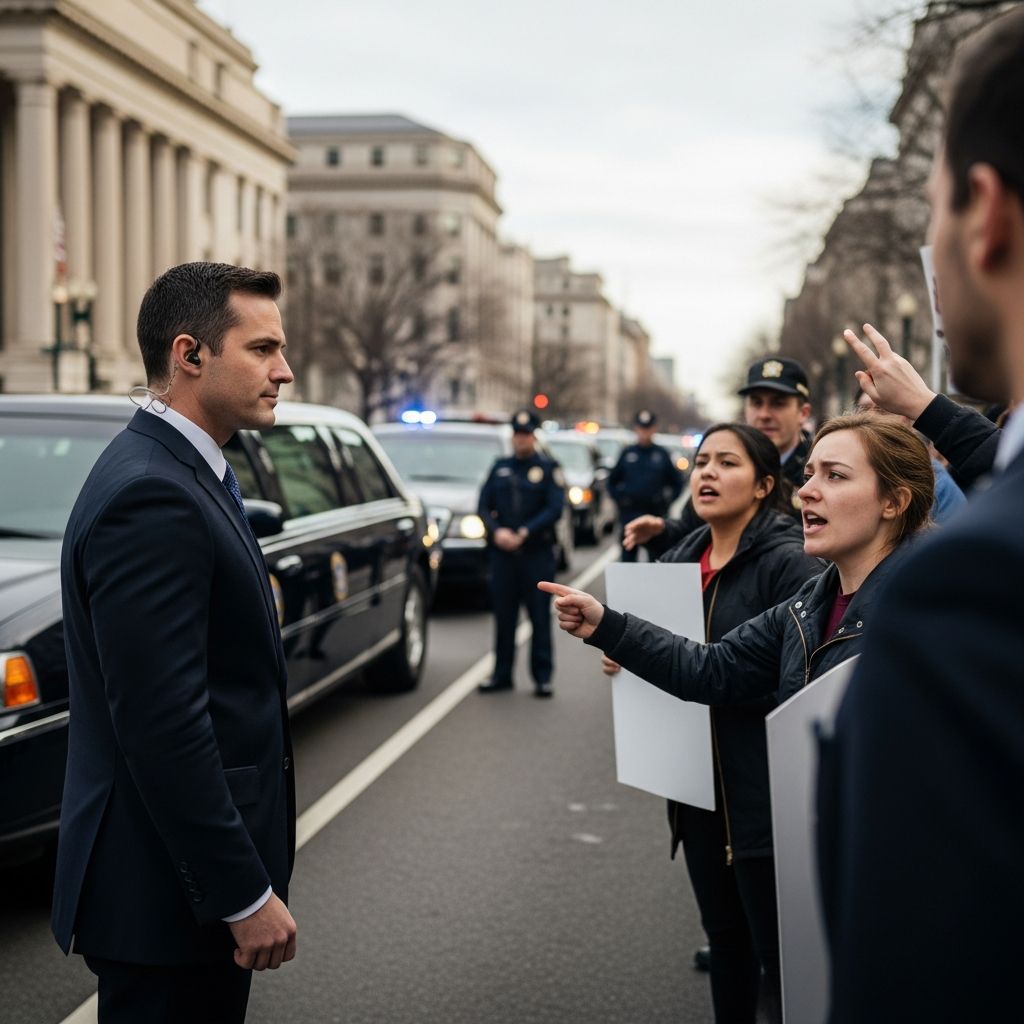
The U.S. Secret Service plays a critical role in protecting the president, vice president, and other dignitaries, but this mandate often intersects with citizens’ rights to free speech and peaceful assembly. Protests against the president are a cornerstone of American democracy, yet questions arise: under what circumstances can Secret Service agents make an arrest? This comprehensive guide delves into the legal framework, historical context, real-world examples, and practical strategies for demonstrators to exercise their rights safely.
Understanding Secret Service Protective Authority
The Secret Service’s primary mission is to safeguard national leaders from harm. Established in 1865 and expanded after President William McKinley’s assassination in 1901, the agency now operates under Title 18 U.S.C. § 3056, which outlines its powers. This statute grants agents broad authority to protect the president during public appearances, including the ability to control access to areas and respond to perceived threats.
However, this power is not unlimited. The First Amendment guarantees the right to “peaceably assemble” and petition the government. Courts have repeatedly affirmed that protests, even those critical of the president, are protected unless they cross into illegal territory. The key distinction lies between expression and actions that genuinely threaten security.
Legal Boundaries: When Protests Become Arrestable Offenses
Arrests by Secret Service agents typically hinge on specific violations rather than the content of a protest. Under 18 U.S.C. § 3056(d), it is a federal offense to “knowingly and willfully obstruct, resist, or interfere” with agents performing protective duties. This law targets behaviors that undermine security measures, such as:
- Refusing to move when directed by agents to clear a security perimeter.
- Attempting to breach restricted zones around the president.
- Physically confronting or impeding agents in their tasks.
This statute does not require violence; mere willful interference suffices for arrest. For instance, lingering too close to a motorcade after warnings or throwing objects could trigger enforcement. Importantly, peaceful chanting, sign-holding, or verbal criticism—even if directed at the president—does not qualify as interference.
First Amendment Protections in High-Security Zones
Supreme Court precedents like United States v. Grace (1983) establish that public sidewalks adjacent to government buildings are “traditional public forums” where speech restrictions must be narrowly tailored. Protests near the White House or during presidential visits fall under this umbrella, meaning blanket bans on demonstrations are unconstitutional.
Yet, temporary restrictions are permissible for security. Agents can designate “secure zones” and order dispersal if a protest poses a risk. Compliance with lawful orders preserves rights; defiance invites arrest not for protesting, but for obstruction.
| Protected Activity | Arrestable Activity |
|---|---|
| Standing with signs criticizing policy | Crossing police lines into restricted areas |
| Chanting slogans peacefully | Refusing dispersal orders from agents |
| Filming from a safe distance | Physically blocking the president’s path |
| Wearing protest attire | Throwing items toward security personnel |
Historical Incidents and Court Rulings
Real-world cases illustrate these principles. During the 2020 protests following George Floyd’s death, numerous arrests occurred near Lafayette Square, but many were later challenged as overreach. Courts ruled that peaceful protesters could not be cleared solely to facilitate a presidential photo-op, highlighting the tension between security and rights.
In another instance, anti-war demonstrators during the Iraq War era faced Secret Service scrutiny but prevailed in lawsuits affirming their right to protest within sight and sound of the president. These rulings underscore that proximity alone does not justify arrest; there must be evidence of interference.
Risks for Government Employees and Security Clearance Holders
Federal workers, especially those with security clearances, face additional scrutiny. While peaceful protest is protected, arrests can trigger reviews under adjudicative guidelines like Guideline A (Allegiance to the United States). Data from the Department of Defense shows rare denials—only one in 2019 related to extremist ties—not mere attendance at rallies.
Experts emphasize: arrests, even misdemeanors, invite investigation. Continuous vetting now monitors social media, but political expression remains safeguarded unless it involves unlawful acts or disinformation.
Practical Tips for Safe Protesting
To minimize risks:
- Know the perimeter: Respect barriers and heed verbal warnings.
- Document everything: Film interactions politely without obstructing agents.
- Follow local laws: Adhere to permits, curfews, and dispersal orders.
- Avoid escalation: Do not touch agents or equipment.
- Seek legal observers: Groups like the ACLU provide on-site support.
If arrested, invoke your right to remain silent and request an attorney immediately.
Broader Implications for Democracy
The interplay between Secret Service authority and protest rights reflects America’s commitment to dissent. Overly aggressive enforcement can chill speech, as seen in debates over “free speech zones.” Recent reforms, including body cameras for agents, enhance accountability.
State laws vary; some impose buffer zones around dignitaries, but federal supremacy governs Secret Service actions. Activists should consult local counsel for jurisdiction-specific advice.
Frequently Asked Questions (FAQs)
Is it illegal to hold a sign saying ‘Impeach the President’ near a rally?
No, such expression is core First Amendment activity, protected unless it incites imminent violence or interferes with security.
What if Secret Service asks me to leave—do I have to comply?
Yes, if it’s a lawful order within a secure zone. Non-compliance risks obstruction charges under 18 U.S.C. § 3056(d).
Can I be arrested just for being loud or close to the motorcade?
No, volume or proximity alone isn’t enough; there must be willful interference with protective functions.
Do drones or filming provoke arrests?
Filming public officials is a right, but drones may violate airspace rules near the president.
What happens if I’m a federal employee protesting?
Peaceful participation won’t cost your job or clearance, but arrests trigger mandatory reviews.
State vs. Federal Authority in Protests
Local police often handle crowd control, with Secret Service focusing on protectees. Coordination via mutual aid agreements ensures unified perimeters. Conflicts arise when state laws clash with federal rights, resolved in federal courts favoring speech protections.
For example, during international summits, enhanced powers under the Stafford Act allow broader restrictions, but post-event lawsuits frequently narrow them.
Technology’s Role in Modern Protests
Smartphones and live-streaming empower protesters to document encounters, deterring overreach. However, facial recognition and social media monitoring raise privacy concerns. The Supreme Court in Carpenter v. United States (2018) limited warrantless cell data access, offering indirect protections.
Secret Service policies now incorporate digital threats, scanning for online plots, but this doesn’t extend to silencing critics.
International Comparisons
Unlike authoritarian regimes where protesting leaders invites imprisonment, U.S. law prioritizes rights. The European Court of Human Rights similarly protects assembly, but with stricter hate speech limits. These contrasts highlight America’s robust framework.
In Canada, RCMP protective duties mirror U.S. ones, balancing security with Charter rights.
Future Trends and Reforms
Ongoing debates push for clearer guidelines on protest perimeters and agent training in constitutional law. Bipartisan bills aim to codify post-Grace standards nationwide. As threats evolve—from lone actors to cyber risks—adaptations must preserve dissent.
Citizen education via resources like the National Lawyers Guild fortifies resilience.
References
- Obstruction Of The Secret Service — 18 U.S.C. § 3056(d) — U.S. Department of Justice. 2022-10-01. https://www.justice.gov/archives/jm/criminal-resource-manual-1562-obstruction-secret-service-18-usc-3056d
- Your Security Clearance and Protests: What You Need to Know — Government Executive. 2020-06-03. https://www.govexec.com/management/2020/06/your-security-clearance-and-protests-what-you-need-know/166155/
- 18 U.S.C. § 3056 – Powers, authorities, and duties of United States Secret Service — U.S. Code (via Cornell Law School). 2024-01-15. https://www.law.cornell.edu/uscode/text/18/3056
- United States v. Grace, 461 U.S. 171 (1983) — Supreme Court of the United States. 1983-06-06. https://supreme.justia.com/cases/federal/us/461/171/
- Security Executive Agent Directive 4: National Security Adjudicative Guidelines — Office of the Director of National Intelligence. 2023-05-01. https://www.dni.gov/files/NCSC/documents/Regulations/SEAD-4-Adjudicative-Guidelines-U.pdf
Similar Articles








Read full bio of Sneha Tete




