
Understanding School Voucher Legality and Constitutional Implications
Examining the legal framework, constitutional debates, and Supreme Court rulings on educational voucher programs.
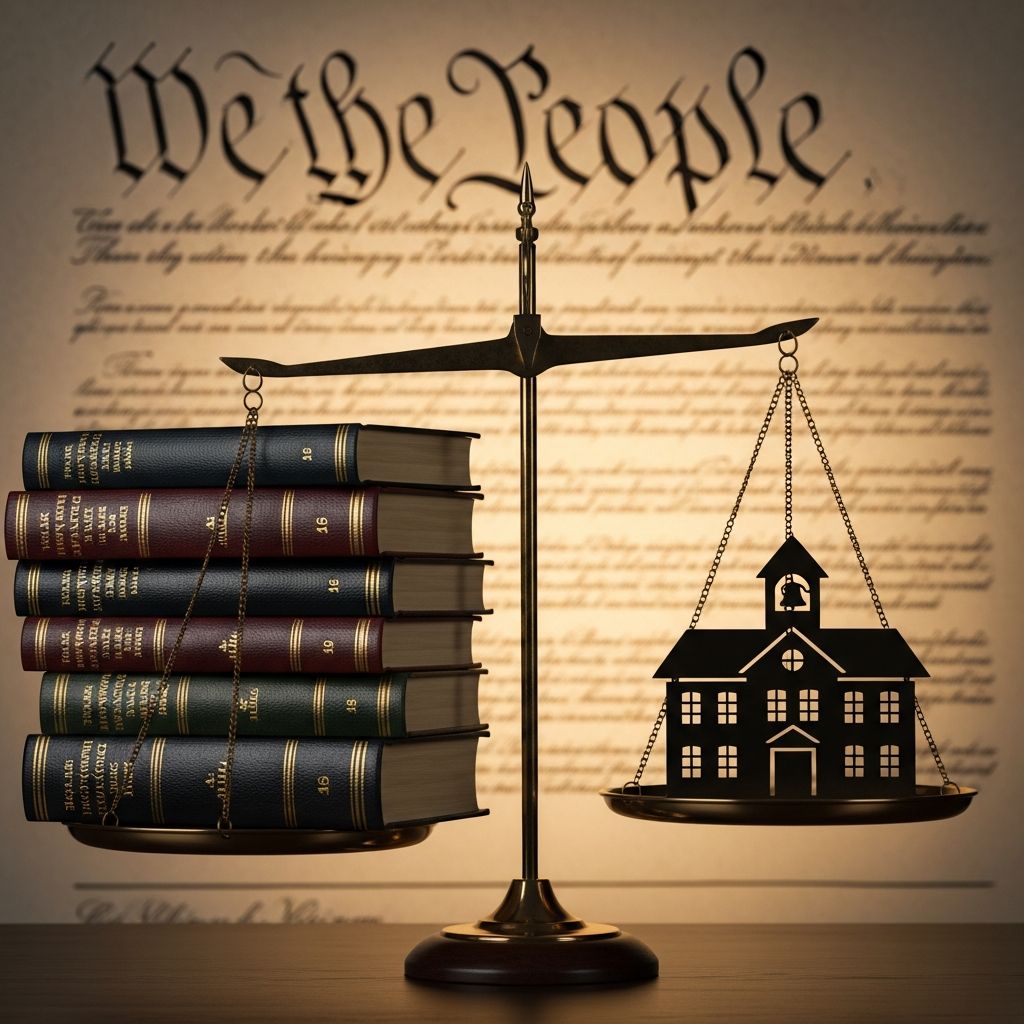
The Constitutional Foundation of School Voucher Programs
Educational choice policies, particularly school voucher programs, represent one of the most contested intersections between education policy and constitutional law in the United States. These initiatives allow parents to redirect public education funds toward private school tuition or alternative educational services. The legality of such programs depends largely on how they navigate the Constitution’s Establishment Clause, which prohibits government from making laws respecting the establishment of religion. Understanding whether voucher systems are legally permissible requires examining landmark judicial decisions, state constitutional provisions, and the evolving interpretation of First Amendment protections.
Pivotal Supreme Court Decisions on Voucher Legality
The U.S. Supreme Court’s ruling in Zelman v. Simmons-Harris (2002) fundamentally shaped the constitutional landscape surrounding educational vouchers. In this landmark 5-4 decision, the Court examined Ohio’s Scholarship Program, which provided tuition aid to students in Cleveland, including those attending private religious institutions. The central question involved whether funding flowing to religious schools through parental choice violated the Establishment Clause.
The Court determined that Ohio’s voucher program did not inherently violate the Establishment Clause simply by making funds available to religiously affiliated educational institutions. Instead, the majority emphasized that neutral programs offering benefits to a broad class of beneficiaries without regard to religion—where private individuals make voluntary choices about fund allocation—do not constitute impermissible government endorsement of religion. This decision opened pathways for states to develop and expand voucher initiatives.
However, subsequent Supreme Court action demonstrates that constitutional boundaries remain significant. In Espinoza v. Montana Department of Revenue (2020), the Court struck down Montana’s approach to excluding religious schools from a scholarship tax credit program. The ruling held that states cannot disqualify religious schools from participating in generally available public funding programs when those same funds are offered to nonreligious private schools. This decision reinforced that government cannot discriminate against religious institutions in educational funding schemes.
State-Level Constitutional Constraints on Vouchers
While federal constitutional law provides a general framework permitting voucher programs, individual states face additional restrictions through their own constitutions. Many states have enacted what are commonly called “Blaine Amendments,” which historically emerged following nineteenth-century concerns about Catholic immigration. These provisions explicitly restrict or prohibit direct public funding of religious education.
The application of these state constitutional provisions has created substantial legal obstacles to voucher expansion. The Florida Supreme Court invalidated that state’s Opportunity Scholarship Program in 2006, reasoning that the program violated Florida’s constitutional mandate to maintain a uniform, efficient system of public schools funded through public revenues. This decision illustrates how state constitutional language can impose requirements beyond federal Establishment Clause protections.
Similarly, Louisiana’s Supreme Court determined in 2013 that the state’s Practice of dedicating education funds designated specifically for public schools to subsidize a privately-operated voucher program violated Louisiana’s constitutional framework. The court found that constitutional language protecting public education funding created enforceable restrictions on diverting those resources toward private education alternatives.
The Tension Between Religious Freedom and Educational Equity
School voucher legality involves navigating competing constitutional values. While the Establishment Clause traditionally sought to prevent government favoritism toward religion, the Free Exercise Clause protects individuals’ rights to religious expression and participation. Recent Supreme Court jurisprudence, exemplified by Espinoza, has increasingly emphasized avoiding discrimination against religious actors in neutral funding programs.
This doctrinal evolution has expanded opportunities for religious schools to participate in voucher systems. However, this expansion raises distinct concerns about educational accountability and student protection. Many voucher-participating religious schools operate with minimal regulatory oversight regarding curriculum content, teacher qualifications, or admission standards. Some institutions receiving public funds through vouchers teach creationism rather than evidence-based evolutionary biology, raising questions about academic rigor and taxpayer interests in public funding.
Accountability and Transparency Challenges in Voucher Systems
Beyond constitutional dimensions, significant legal and policy questions surround voucher program administration. Most existing voucher programs lack statutory requirements ensuring transparency regarding private school finances, operational procedures, or measurable student outcomes. This accountability deficit contrasts sharply with extensive regulations governing public schools, which must maintain detailed financial records, comply with curriculum standards, and participate in standardized assessment systems.
Arizona’s Empowerment Scholarship Account program, established as the nation’s first universal voucher system in December 2022, exemplifies these transparency challenges. The program rapidly expanded to serve over 70,000 students by early 2024, yet audits revealed questionable expenditures including kayak lessons, horseback riding instruction, home gyms, and televisions—items difficult to categorize as legitimate educational expenses. The lack of statutory guardrails defining “educational expenses” permitted such spending while minimal oversight prevented detection and correction.
Federal law similarly reflects accountability gaps. The newly established national tax-credit scholarship program, enacted in 2025, permits individuals to receive dollar-for-dollar tax credits up to $1,700 for donations to scholarship-granting nonprofits, with regulations still under development by the U.S. Treasury Department. Until comprehensive regulations are finalized, the program’s actual parameters and oversight mechanisms remain undefined.
Discrimination Protections and Legal Gaps
A critical legal vulnerability in many voucher programs involves insufficient protections against discrimination. As of 2016, no state statutes explicitly required voucher programs to maintain non-discrimination policies protecting marginalized communities. Private schools receiving voucher funds may exclude students based on religion, sexual orientation, gender identity, or disability status—exclusions that would violate federal civil rights law if implemented by public institutions.
This legal gap creates situations where public funds subsidize educational exclusion. Students with disabilities may find themselves unable to access voucher-funded private schools lacking inclusive facilities. LGBTQ+ students might encounter religiously-affiliated institutions authorized to enforce restrictions on enrollment or participation based on sexual orientation or gender identity. While civil rights advocates have challenged such practices, comprehensive statutory protections remain absent from most state voucher frameworks.
Fiscal and Constitutional Implications of Voucher Expansion
The rapid expansion of voucher programs raises fundamental questions about constitutional governance and fiscal sustainability. Universal voucher systems redirect per-pupil education funding allocations into accounts that parents control, effectively removing resources from public school systems while reducing operational capacity. When predominantly existing private school families access vouchers for tuition subsidies—rather than expanding educational access—the net effect becomes a redirection of public resources toward families already utilizing private education.
This fiscal dynamic conflicts with state constitutional provisions establishing comprehensive public education systems. Multiple state constitutions charge legislatures with maintaining robust public school systems through dedicated funding. Diverting significant portions of education revenues to voucher programs arguably breaches these constitutional mandates, particularly when program beneficiaries predominantly include families outside public school systems.
Comparative Legal Frameworks and International Perspectives
Understanding American school voucher legality benefits from international context. Several democracies operate publicly-funded private school systems through approaches differing substantially from American voucher models. Some jurisdictions maintain stricter regulatory frameworks requiring participating private institutions to maintain academic standards comparable to public schools, comply with comprehensive non-discrimination provisions, and submit to regular accountability assessments.
The American legal framework remains uniquely permissive toward private school autonomy, particularly regarding curriculum content and admission practices. This permissiveness reflects constitutional protections for private association and institutional independence. However, this autonomy creates tensions when private institutions receive substantial public funding, as accountability and taxpayer interests suggest public funds warrant public oversight.
Emerging Legal Questions and Future Litigation
Several unresolved legal questions likely will generate future litigation. First, whether universal voucher systems that substantially reduce public school funding violate state constitutional provisions establishing comprehensive public education systems remains an open question in many jurisdictions. Second, the extent to which federal civil rights statutes apply to voucher-funded private schools requires clarification through additional litigation. Third, whether tax-credit scholarship programs constitute unconstitutional tax expenditures or government spending disguised through tax mechanisms awaits definitive judicial resolution.
Additionally, the relationship between voucher program accountability and due process protections raises emerging legal issues. When private schools receiving substantial public funds exclude students, whether such exclusions constitute state action subject to constitutional constraints remains contested. If voucher-participating schools function as quasi-public institutions, constitutional limitations might apply to their policies affecting student rights.
Tax Credits, Charitable Deductions, and Legal Distinctions
The national tax-credit scholarship program represents a legal innovation with distinct characteristics from traditional direct voucher funding. Rather than state appropriations funding education accounts, individuals receive tax credits for charitable donations to nonprofits distributing scholarships. Structuring educational support through tax mechanisms rather than direct appropriations reflects attempts to navigate constitutional obstacles and political opposition to explicit public funding redirection.
However, tax credits represent public revenue forgone, functioning economically as government spending despite the technical distinction. The legal classification of such programs as tax policy rather than education expenditure raises constitutional questions, particularly regarding state constitutional requirements that education appropriations satisfy specific statutory procedures and oversight mechanisms. Tax credits bypassing such procedural requirements might constitute constitutional violations despite federal constitutional permissibility.
Regulatory Approaches in Leading Voucher Jurisdictions
States implementing voucher programs have adopted varying legal frameworks. Some jurisdictions impose curricular standards, require regular outcome reporting, or mandate compliance with non-discrimination provisions exceeding federal minimums. Other states impose minimal restrictions, permitting substantial private school autonomy regarding curriculum, admissions, and operations.
Arizona’s universal voucher system represents the least restrictive regulatory approach among established programs, with minimal disclosure requirements and broad discretion regarding acceptable educational expenses. By contrast, some proposals have included provisions requiring participating schools to maintain academic standards, document student progress, and comply with enhanced non-discrimination protections. These regulatory variations reflect different balances between parental choice, educational quality assurance, and equity protections.
Frequently Asked Questions
Q: Are school vouchers constitutional under federal law?
A: Yes, the Supreme Court’s Zelman v. Simmons-Harris decision established that neutral voucher programs making funds available through parental choice do not violate the Establishment Clause. However, Espinoza v. Montana Department of Revenue prohibits states from excluding religious schools from such programs.
Q: Can states prohibit vouchers using their constitutions?
A: Yes, state constitutional provisions—including Blaine Amendments—can restrict voucher programs. Several states’ courts have invalidated voucher systems based on state constitutional language requiring comprehensive public education or restricting religious school funding.
Q: Are voucher-funded private schools subject to the same regulations as public schools?
A: Generally, no. Most voucher-funded private schools face minimal regulatory requirements compared to public institutions, creating accountability gaps regarding curriculum standards, teacher qualifications, and non-discrimination policies.
Q: Can private schools receiving vouchers discriminate against students?
A: This question remains legally contested. While federal civil rights laws apply to many discrimination scenarios, the application to private schools receiving public funds remains unclear in several contexts, particularly regarding religion and sexual orientation.
Q: How do tax-credit scholarship programs differ legally from direct vouchers?
A: Tax credits function through tax policy rather than direct appropriations, potentially allowing circumvention of certain state constitutional procedures. However, economically they function similarly as public revenue forgone for education purposes.
References
- School voucher — Wikipedia. Accessed 2026-04-03. https://en.wikipedia.org/wiki/School_voucher
- ‘No Accountability’: Vouchers Wreak Havoc on States — National Education Association (NEA). 2024. https://www.nea.org/nea-today/all-news-articles/no-accountability-vouchers-wreak-havoc-states
- School Vouchers — American Civil Liberties Union (ACLU). Accessed 2026-04-03. https://www.aclu.org/issues/religious-liberty/religion-and-public-schools/religion-and-public-schools-school-vouchers
- Just Say No to Federal Private Education Vouchers: Here’s How! — Public Funds for Public Schools (PFPS). Accessed 2026-04-03. https://pfps.org/just-say-no-to-federal-private-education-vouchers
- Federal school vouchers: 10 things to know — The Hechinger Report. 2025. https://hechingerreport.org/whats-a-tax-credit-scholarship-the-details-behind-the-first-national-school-voucher-program/
- Are school choice programs legal? — EdChoice. Accessed 2026-04-03. https://www.edchoice.org/resources/faqs/are-school-choice-programs-legal/
Similar Articles








Read full bio of Sneha Tete




