
School Slip-and-Fall: Legal Recourse Guide
Discover essential steps, negligence proof, and strategies for pursuing compensation after a slip-and-fall incident at school.
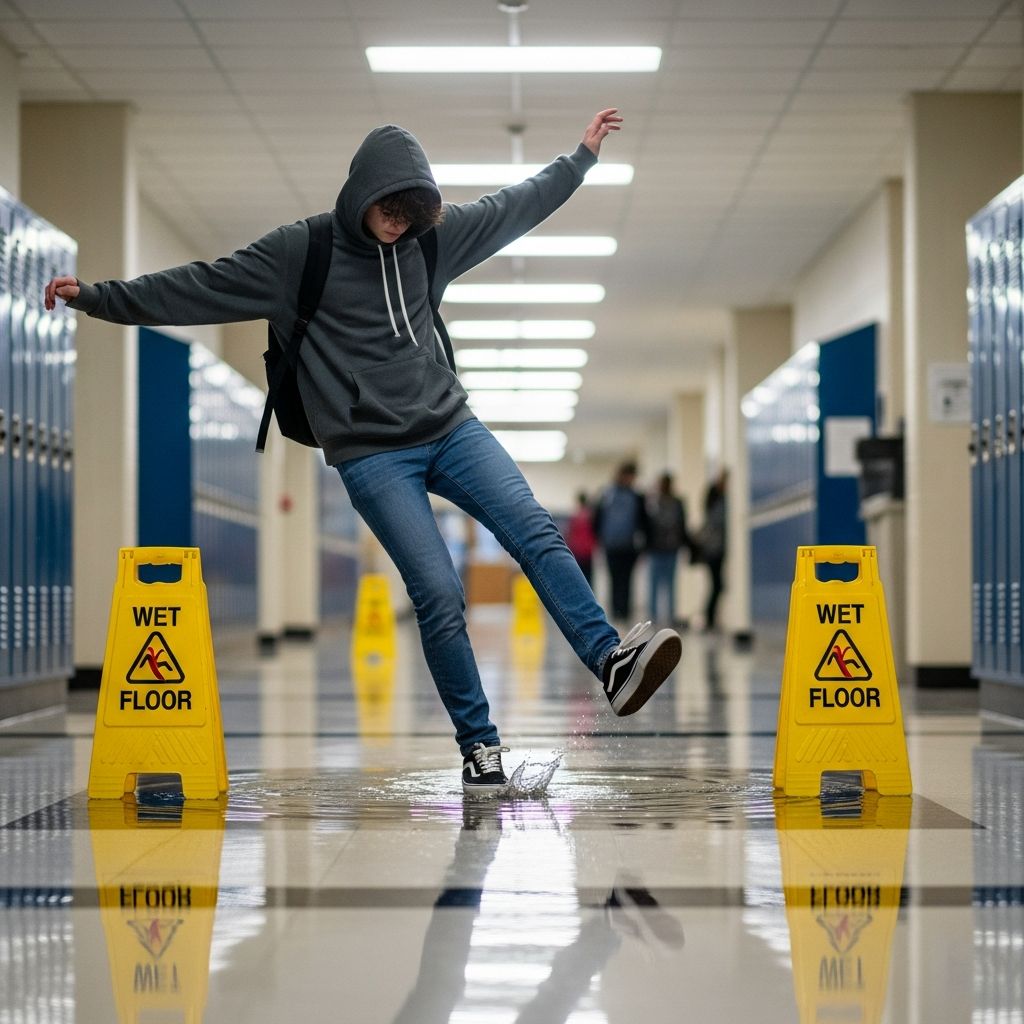
Slip-and-fall accidents in educational settings can lead to serious injuries, especially for children whose developing bodies are vulnerable to long-term harm. Schools, as property owners, owe a duty of care to maintain safe environments. When negligence causes a fall on wet floors, uneven surfaces, or unaddressed hazards, victims or their guardians may pursue compensation through premises liability claims. Success hinges on demonstrating the institution’s failure to prevent foreseeable risks, with distinct paths for public and private entities.
Understanding Premises Liability in Educational Facilities
Premises liability holds property controllers responsible for injuries from unsafe conditions. In schools, this applies to administrators, districts, or private operators who know or should know about dangers like spilled liquids, broken tiles, or poor lighting. For children, courts often apply a higher standard, recognizing their limited ability to perceive risks.
To establish a claim, four elements must be proven: a duty existed, it was breached, causation linked the breach to injury, and damages resulted. Schools must regularly inspect, clean, and repair areas frequented by students. Failure here constitutes negligence.
- Duty of Care: Heightened for minors, requiring proactive hazard mitigation.
- Breach: Ignoring known issues or neglecting routine maintenance.
- Causation: Direct link between hazard and fall, supported by timelines and witness accounts.
- Damages: Medical costs, lost wages for parents, pain, and potential future therapy.
Differences Between Public and Private Institutions
Liability processes diverge significantly based on school type, impacting timelines and procedures.
| Aspect | Public Schools | Private Schools |
|---|---|---|
| Governmental Immunity | Protected; requires Tort Claims Act notice, often 60-180 days. | No immunity; treated as businesses. |
| Filing Deadlines | Strict, short statutes (e.g., 6 months notice). | Standard 2-3 year personal injury limits. |
| Venue | Industrial Commission or special courts. | Civil court. |
| Insurance | District liability coverage. | Private policies, potentially higher limits. |
Public schools benefit from sovereign immunity, mandating pre-suit notices to allow investigation and settlement offers. Missing these bars claims permanently. Private schools face direct lawsuits but may contest vigorously with resources.
Immediate Actions After a School Incident
Swift response preserves rights and evidence. Prioritize health, then documentation.
- Medical Evaluation: Visit ER or pediatrician promptly. Records prove injury severity and tie it to the fall, countering delay arguments.
- Incident Report: Notify school administration in writing, requesting their official report.
- Evidence Preservation: Photograph hazard, injury, and scene; collect witness contacts; obtain surveillance footage before deletion.
- Policy Review: Examine school handbooks for safety protocols violated.
Parents should avoid admitting fault or signing documents without counsel. Early attorney involvement prevents missteps.
Gathering Compelling Evidence for Your Claim
Robust proof differentiates winnable cases from dismissals. Schools often deny prior knowledge of hazards, shifting burden to claimants.
- Visual Documentation: Photos/videos of spill, crack, or clutter from multiple angles, timestamped.
- Maintenance Records: Freedom of Information requests for public schools reveal ignored work orders.
- Witness Testimonies: Statements from peers, teachers confirming hazard duration.
- Expert Analysis: Engineers assess if conditions violated building codes.
- Digital Trails: Emails or logs showing complaints about the area.
Security footage is gold-standard; request via subpoena if needed. Medical imaging (X-rays, MRIs) quantifies soft-tissue damage common in pediatric falls.
Proving Negligence: Key Legal Strategies
Negligence proof requires showing actual/constructive notice. “Actual” means staff knew (e.g., recent spill report); “constructive” implies they should have known via reasonable inspections.
Common breaches: Unmopped cafeterias post-lunch, icy walkways sans salt, loose rugs in halls. For supervision lapses, link absence to incident timing. Comparative fault defenses (e.g., child running) reduce awards proportionally, but schools bear primary duty.
Attorneys deploy depositions to expose inconsistencies in school defenses. Statistical data underscores frequency: U.S. schools report thousands of annual slips, many preventable.
Navigating Claims Processes Step-by-Step
Claims unfold in phases, favoring settlements (90%+ resolve pre-trial).
- Investigation: Attorney reconstructs events, identifies liable parties (district, contractor).
- Demand Package: Detailed letter with evidence, quantifying damages.
- Negotiation: Back-and-forth with insurers; leverage trial threat.
- Filing Suit: If stalled, complaint in appropriate court/commission.
- Discovery/Trial: Evidence exchange; most settle here.
Public claims route through state-specific Tort Acts, e.g., NC Industrial Commission. Private mirror standard PI suits.
Potential Compensation and Damage Types
Awards cover tangible/intangible losses, tailored to injury gravity (concussions, fractures, PTSD).
- Economic: Bills, rehab, parental leave wages.
- Non-Economic: Suffering, diminished joy in activities.
- Punitive: Rare, for egregious recklessness.
Children’s claims consider future impacts like growth plate issues. Average settlements: $20K-$100K+, per case factors.
Common Obstacles and Rebuttals
Defenses include “open and obvious” hazards, contributory negligence, or immunity misapplications. Counter with child-specific standards: What alerts adults may evade kids. Timeliness crushes cases; calendars are critical.
Insurers lowball initially; experienced counsel maximizes value via comparables.
When to Consult a Specialized Attorney
From day one, if injuries exceed minor bruises. Specialists navigate immunities, deadlines, maximizing recovery while you focus on healing. Contingency fees (33-40%) align incentives—no win, no fee.
Frequently Asked Questions
What if the school claims the child was at fault?
Courts apportion fault; schools’ superior duty often prevails if negligence proven. Pure contributory negligence states bar partial recovery—check local law.
How soon must I file against a public school?
Typically 60-180 days for notice; statutes vary by state. Consult immediately.
Can I recover for emotional trauma?
Yes, if documented via therapy records linked to physical injury.
Do schools have adequate insurance?
Yes, but limits apply; excess verdicts possible against districts.
Is mediation an option?
Often required for public entities, speeding resolutions.
References
- Can You Sue for a Slip and Fall in a School or University? — Hill Justice. 2023. https://www.hilljustice.com/can-you-sue-for-a-slip-and-fall-in-a-school-or-university/
- Child Injuries at School: Understanding Liability and Protecting Your Child — Jason Turchin. 2024-05-15. https://www.jasonturchin.com/blog/child-injuries-at-school-understanding-liability-and-protecting-your-child/
- Can You Sue If Your Child Suffered A Slip And Fall At School? — Byrd Davis. 2023-08-10. https://byrddavis.com/can-you-sue-if-your-child-suffered-a-slip-and-fall-at-school/
- What if My Child Was Hurt at School in Raleigh, NC? — Policy Advocate. 2024. https://policyadvocate.com/blog/what-if-my-child-was-hurt-at-school-in-raleigh-nc/
- Can You Sue a School if Your Child Gets Hurt? — McCabe Law Offices. 2023-11-20. https://mccabelawoffices.com/can-you-sue-a-school-if-your-child-gets-hurt/
Similar Articles








Read full bio of medha deb




