
School Bus Crashes: Legal Guide for Families
Essential insights into school bus accident liability, safety data, claims processes, and protecting your child's rights after a crash.
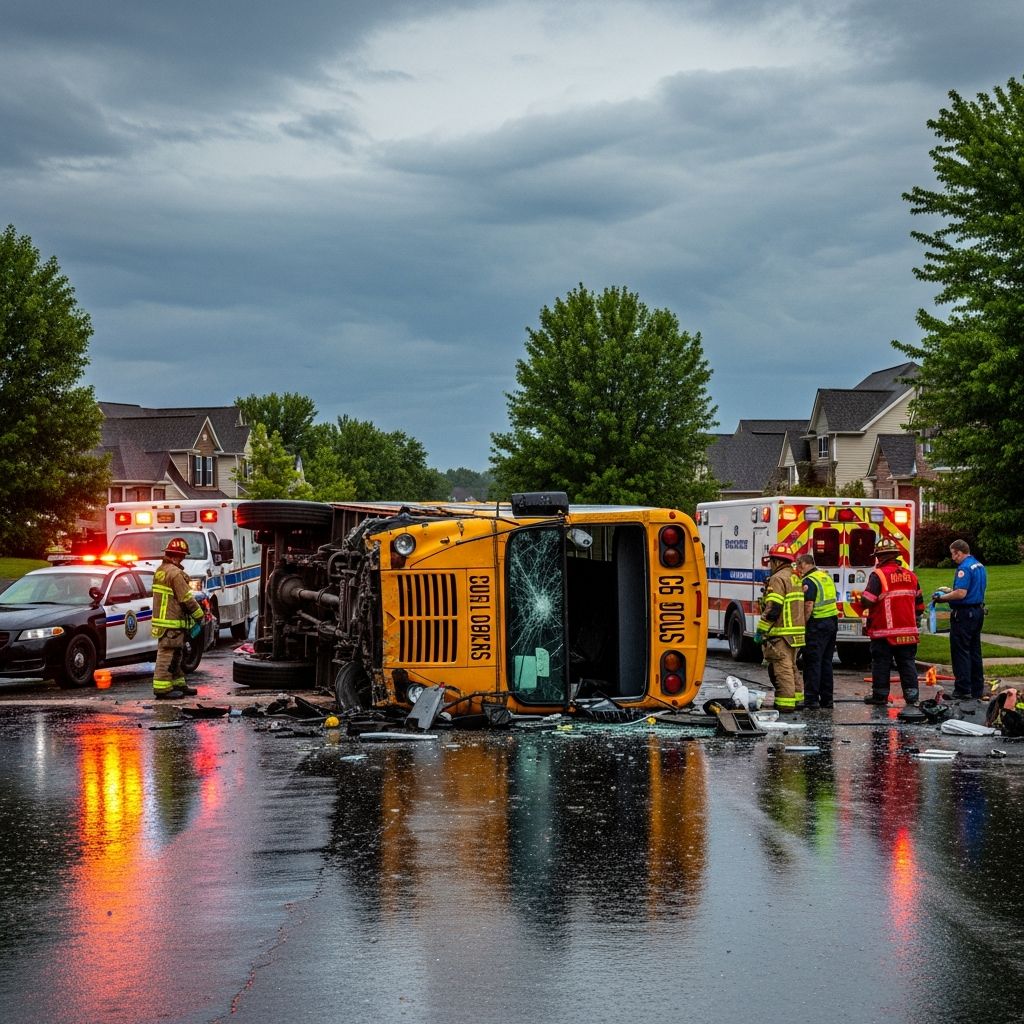
School buses transport millions of children daily, yet collisions involving these vehicles can lead to severe injuries and complex legal battles. Families need clear guidance on liability, safety facts, and recovery paths to protect their rights effectively.
Understanding the Scope of School Bus Safety Risks
Despite rigorous safety standards, school bus incidents remain a concern. Data reveals that between 2000 and 2023, 971 fatal crashes linked to school buses resulted in 1,079 deaths across all ages, averaging 108 fatalities annually. Among school-age children, 209 lost their lives in related traffic accidents, including 38 bus occupants, 83 in other vehicles, 79 pedestrians, six bicyclists, and three other nonoccupants. Additionally, 113 adults perished, with 48 drivers and 65 passengers involved.
In 2021 alone, the National Safety Council documented 108 deaths from school bus crashes, underscoring their relative rarity but high impact. Crashes constitute about 42% of incidents involving children and school buses, injuring roughly 8,000 children yearly[10]. Recent Illinois figures show 15,075 bus accidents in 2024, with an average of 33 school children dying annually in fatal crashes involving school or chartered buses. These numbers highlight why vigilance in prevention and swift legal action post-incident are critical.
Primary Causes Behind School Bus Collisions
Several factors contribute to these accidents, often rooted in human error or systemic failures. Distracted driving by bus operators, failure to yield to stopped buses, and illegal passing top the list. Notably, 61 fatalities occurred from 2000-2023 due to drivers illegally passing stopped school buses, with 26 being child pedestrians.
- Driver negligence: Speeding, fatigue, or ignoring traffic signals by bus drivers.
- Other motorists: Illegal passing, rear-ending, or disregarding stop signs.
- Vehicle issues: Poor maintenance or manufacturing defects compromising brakes or steering.
- Unsafe locations: Hazardous bus stops or inadequate loading zones.
- External elements: Weather conditions or pedestrian errors near buses.
Addressing these requires multi-party accountability, from operators to districts.
Determining Liability in School Bus Incidents
Liability hinges on negligence—failing a duty of care that causes harm. Multiple entities may share fault, complicating claims.
| Potentially Liable Party | Basis for Responsibility |
|---|---|
| Bus Driver | Direct negligence like reckless driving or improper passenger management. |
| Bus Company | Vicarious liability for driver actions; faulty hiring, training, or supervision. |
| School District | Negligent contractor selection or oversight of transport safety. |
| Maintenance Provider | Inadequate repairs leading to mechanical failures. |
| Vehicle Manufacturer | Defective design or components causing crashes. |
| Other Drivers/Pedestrians | Violating rules around stopped buses or careless actions. |
Government-owned buses invoke sovereign immunity, demanding special procedures like timely notices. Comparative negligence rules in states like Illinois reduce awards if the claimant shares over 50% fault, or proportionally below that. Thorough investigations uncover all liable parties.
Navigating Compensation for Injuries and Losses
Injured students can seek damages for medical bills, pain, lost education, and future care. Parents may claim emotional distress or lost income. No-fault states like Michigan offer Personal Injury Protection (PIP) covering 100% medical costs, 85% lost wages up to three years, and $20 daily for services, regardless of fault—often via parents’ policies for minors.
Governmental caps apply in places like California: $50,000 per person/$300,000 per occurrence for non-catastrophic claims against public entities. Overlapping insurances from districts, companies, and drivers can maximize recovery, but expert navigation is key.
Critical Time Limits for Filing Claims
Statutes of limitations vary by jurisdiction and defendant type, with extensions for minors.
- General personal injury: 2-3 years (e.g., 3 years in New York, 2 years in Illinois for non-government cases).
- Government entities: Shorter windows, like 6 months notice/1 year filing in Chicago for districts; 1 year notice in Illinois.
- Minors: Tolling until age 18 in New York; state-specific extensions elsewhere.
Missing deadlines bars claims, so prompt action is essential.
Immediate Steps for Families After a Crash
Prioritize safety, then preserve your case:
- Ensure medical care: Seek evaluation even for minor injuries, documenting everything.
- Report promptly: Notify police, school, and district; get bus/driver details.
- Collect evidence: Photos, witness contacts, videos; request maintenance logs and footage.
- Avoid statements: Limit insurer talks without counsel.
- Hire an attorney: They handle investigations, notices, and negotiations.
Acting fast secures evidence before it vanishes.
The Legal Process: From Claim to Resolution
Attorneys investigate fault, file notices (e.g., to Attorney General for government claims), submit insurance demands, and litigate if needed. Complexities like immunity or multi-party suits demand professionals. Contingency fees mean no upfront costs.
Safety Measures to Prevent Future Incidents
Beyond legal recourse, awareness saves lives:
- Obey stop signals; never pass on the right.
- Drivers: Maintain distance, scan for children.
- Districts: Regular training, bus inspections.
- Parents: Teach kids bus rules, monitor stops.
National School Bus Safety Week emphasizes these.
Frequently Asked Questions
Can I sue a school district for a bus accident?
Yes, but file notice quickly (e.g., 6 months in some areas) due to immunity rules.
What if my child shares blame in the accident?
Comparative negligence allows recovery if under 51% at fault in states like Illinois, reduced proportionally.
Does no-fault insurance cover school bus injuries?
In no-fault states, yes—via parents’ policy for medical and wages regardless of fault.
How much time do minors have to file?
Often tolled until 18, but check local laws and government deadlines.
Who pays if multiple parties are liable?
Joint liability; attorneys apportion shares via evidence.
References
- Legal Rights Of Students Injured In School Bus Accidents — Spektor Law. Accessed 2026. https://www.spektorlaw.com/legal-rights-of-students-injured-in-school-bus-accidents/
- Chicago School Bus Accident Lawyer — Chicago Lawyer. Accessed 2026. https://www.chicagolawyer.com/bus-accidents/school-bus-accidents/
- Key Legal Differences Between School Bus Accidents vs. Public Transit Bus Accidents — Callahan Law. Accessed 2026. https://www.callahan-law.com/school-bus-accidents-vs-public-transit-bus-accidents/
- Who Is Liable in a School Bus Accident? — Lowe Law Group. Accessed 2026. https://www.lowelawgroup.com/blog/school-bus-accident-liability/
- What Are the Most Recent Illinois Bus Accident Statistics? — Rosenfeld Injury Lawyers. 2024. https://www.rosenfeldinjurylaw.com/chicago-bus-accident-lawyer/statistics/
- School Bus Accidents in Chicago — McCready Law. Accessed 2026. https://mccreadylaw.com/chicago-bus-accident-lawyer/school/
- School Bus Accidents: Who is Responsible? — Call Sam. Accessed 2026. https://callsam.com/blog/school-bus-accidents/
- School Bus Accident Statistics & Safety Tips — Tario Law. Accessed 2026. https://www.tariolaw.com/school-bus-accident-statistics-national-school-bus-safety-week/
Similar Articles








Read full bio of medha deb




