
Scalia’s Passing: Key Impacts on Small Business Law
Examining how Justice Scalia's death reshaped Supreme Court dynamics and influenced labor, arbitration, and business regulations for small enterprises.
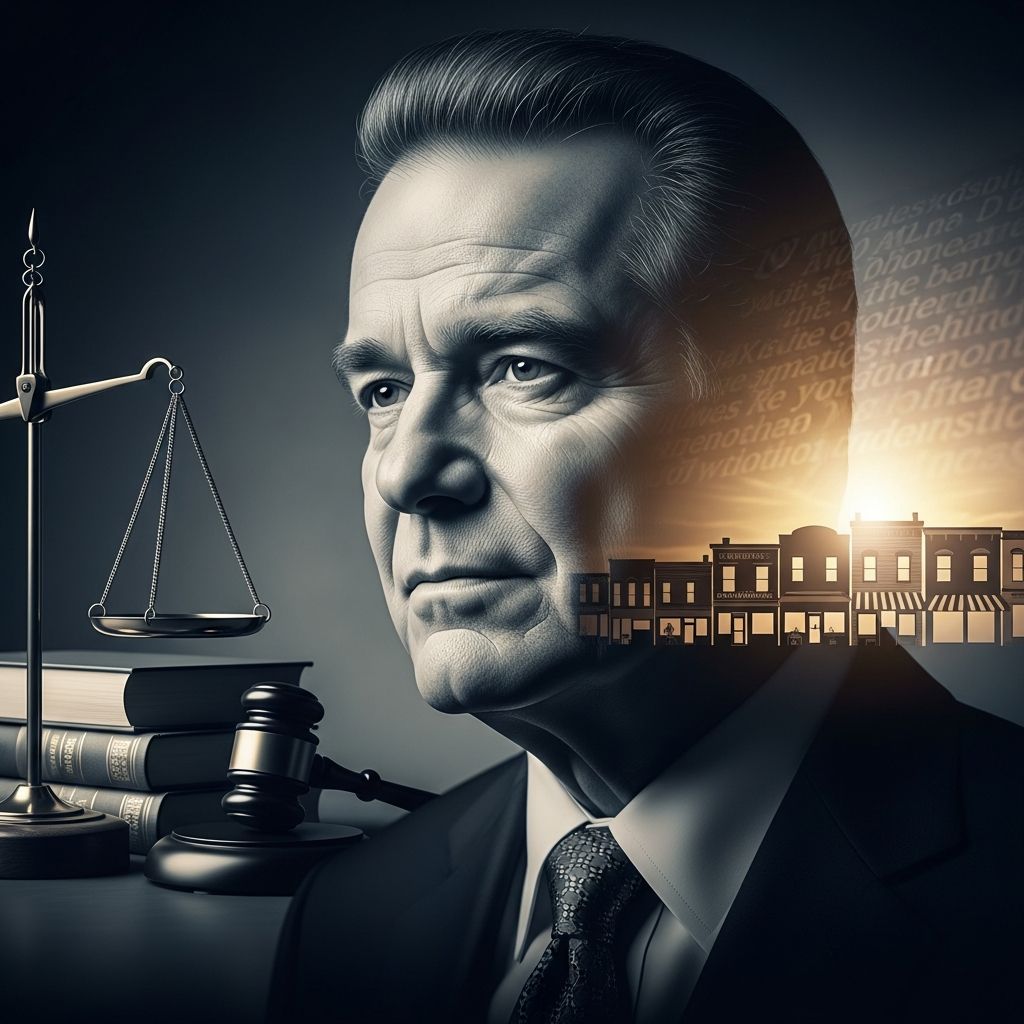
Justice Antonin Scalia’s death in February 2016 created immediate ripples across the U.S. legal landscape, particularly for small businesses navigating employment disputes, class actions, and regulatory compliance. With the Supreme Court left at eight justices, pending cases faced deadlocks, and foundational pro-business precedents hung in precarious balance. This shift introduced uncertainty that small enterprises, often operating with limited legal resources, had to contend with directly.
The Supreme Court’s New Balance and Immediate Disruptions
The loss of Scalia, a staunch conservative voice, tilted the Court’s ideological makeup toward potential 4-4 splits. These deadlocks affirm lower court rulings without setting nationwide precedent, leaving fragmented legal standards across circuits—a nightmare for small businesses seeking uniformity in operations. For instance, cases argued before his passing but undecided required reassignment of any opinions he drafted, delaying resolutions and prolonging uncertainty for employers.
Small business owners faced heightened risks as politically charged nomination battles stalled replacements, extending this limbo into subsequent terms. This environment prompted some corporations to settle disputes early, citing Scalia’s absence as a factor, a strategy small firms with tighter budgets might emulate to avoid drawn-out litigation.
Employment Law Cases in Limbo: What Small Businesses Need to Know
Several high-stakes employment cases were upended, directly impacting hiring, union fees, and overtime rules for small operations. In Friedrichs v. California Teachers Association, a 4-4 deadlock preserved mandatory union fees for non-members in public sector roles, though private small businesses dodged direct hits. However, it signaled broader vulnerability in labor relations.
- Union Fees and Agency Shop Rules: The tie upheld lower court mandates, maintaining revenue for unions but reminding private employers of potential future challenges to similar arrangements.
- Overtime Exemptions for Service Workers: In an auto dealership case, the Court vacated a Ninth Circuit ruling and remanded it, leaving businesses outside that circuit free to apply exemptions under the Fair Labor Standards Act (FLSA), while others awaited clarity.
- Constructive Discharge Claims: Green v. Brennan expanded timelines for filing retaliation suits, allowing ex-employees to claim constructive discharge up to 180 days post-event, increasing liability exposure for small firms.
These outcomes underscored the need for small businesses to audit payroll practices and employee handbooks proactively, as fragmented rulings could lead to inconsistent compliance costs nationwide.
Class Action Defenses Weakened: A Blow to Cost Control
Scalia’s pivotal role in curbing class actions through decisions like Wal-Mart Stores, Inc. v. Dukes (2011) and Comcast v. Behrend (2013) was irreplaceable. These 5-4 rulings set strict standards for certifying nationwide classes, shielding employers from massive aggregated suits. His absence threatened their stability, as a new justice might tip future reviews toward plaintiffs.
In Campbell-Ewald Co. v. Gomez, a 6-3 loss for employers limited the ‘offer of judgment’ tactic to kill class claims early, potentially flooding dockets with more litigation. Small businesses, least equipped for such battles, saw arbitration clauses as a vital remaining shield—a legacy from Scalia’s AT&T Mobility v. Concepcion (2011) and American Express v. Italian Colors Restaurant (2013), which upheld class waivers.
| Case | Scalia’s Contribution | Post-Death Risk | Small Business Impact |
|---|---|---|---|
| Wal-Mart v. Dukes | Authored majority limiting class certification | Potential overturn | Higher exposure to mass employee suits |
| Comcast v. Behrend | Restricted damages models | Vulnerable to challenge | Increased settlement pressures |
| Campbell-Ewald | Dissenting | Adverse ruling stands | Harder to dismiss class actions cheaply |
Owners should prioritize robust arbitration agreements in contracts to mitigate these risks, as lower courts continue applying Scalia’s precedents broadly.
Arbitration’s Enduring Strength Amid Uncertainty
Scalia’s pro-arbitration stance fortified small businesses’ ability to sidestep costly court battles. DirecTV, Inc. v. Imburgia (2015), a 6-3 win, enforced state law interpretations favoring arbitration clauses despite conflicts, boosting confidence in such provisions. Similarly, Concepcion invalidated state rules blocking class waivers, extending to employment and consumer pacts.
Even post-Scalia, these rulings empower small firms to include mandatory arbitration in vendor deals, leases, and hires, reducing jury trial exposures. However, deadlocks in related cases could embolden challenges, urging immediate legal reviews of existing agreements.
Campaign Finance Shifts: Regulatory Burdens on the Horizon
Beyond labor, Scalia’s First Amendment advocacy influenced campaign finance via Citizens United v. FEC (2010), enabling unrestricted corporate political spending—a boon for small businesses pooling resources for advocacy. His death sparked speculation of revisits, potentially reinstating limits and complicating political engagement.
Disclosure rules, supported by seven justices, remain stable, but 4-4 splits loom on core issues. Small enterprises lobbying for tax reforms or deregulation must monitor nominations closely, as a liberal replacement could amplify compliance hurdles.
Securities and Broader Business Litigation Ripples
In securities law, Scalia’s Morrison v. National Australia Bank (2010) narrowed extraterritorial reach, curbing foreign claims against U.S. firms. This protected small public companies from global plaintiff fishing expeditions. His absence risks erosion, heightening defense costs for those eyeing IPOs or expansions.
Business cases overall faced reargument delays, with Justice Kennedy’s swing votes becoming pivotal. Small owners should track dockets for sectors like tech or retail, where fragmented rulings could dictate operational norms.
Strategic Advice for Small Businesses Navigating the Void
To weather this era:
- Strengthen Dispute Resolution: Embed enforceable arbitration with class waivers in all agreements.
- Compliance Audits: Review FLSA exemptions, union policies, and EEOC timelines annually.
- Risk Assessments: Model worst-case class action scenarios and reserve funds accordingly.
- Political Vigilance: Engage trade groups for advocacy amid shifting finance rules.
- Legal Partnerships: Retain counsel versed in SCOTUS trends for proactive filings.
These steps transform uncertainty into opportunity, leveraging Scalia’s enduring legacy while preparing for evolution.
Frequently Asked Questions (FAQs)
What was the biggest immediate effect of Scalia’s death on businesses?
The Court split 4-4 in key cases like Friedrichs, affirming lower rulings without precedent and delaying clarity.
Are arbitration agreements still safe for small businesses?
Yes, precedents like Concepcion and Imburgia remain robust, offering strong protection against class actions.
How might a new justice change class action risks?
A liberal appointee could undermine Wal-Mart and Comcast, easing certifications and raising litigation costs.
Did Scalia’s death affect private sector overtime rules?
Indirectly; remands like the service advisor case left exemptions intact outside certain circuits.
Should small businesses worry about campaign finance now?
Potentially, as Citizens United faces revisit risks, limiting political spending flexibility.
Long-Term Legacy and Future Outlook
Scalia’s textualist approach endures in hundreds of opinions, but his tie-breaking power in 5-4 business wins amplifies the void. Small enterprises thrived under his deregulatory bent; now, diversification of legal strategies is paramount. As terms progress, monitor for rearguments and nominations—these will redefine compliance landscapes for years.
References
- How Justice Scalia’s Death Could Have Profound Reverberations for Employers — Ogletree Deakins. 2016-02. https://ogletree.com/insights-resources/blog-posts/how-justice-scalias-death-could-have-profound-reverberations-for-employers/
- Some Observations On The Impact Of Justice Scalia’s Death On Pending Business Cases — vLex. 2016-02. https://vlex.com/vid/some-observations-on-the-618977242
- Justice Scalia’s Business Law Legacy — The D&O Diary. 2016-02. https://www.dandodiary.com/2016/02/articles/class-action-litigation-2/justice-scalias-business-law-legacy/
- Justice Scalia’s Death Throws SCOTUS Term Into Turmoil — Fisher Phillips. 2016-08. https://www.fisherphillips.com/en/news-insights/justice-scalia-s-death-throws-scotus-term-into-turmoil.html
- Justice Scalia’s Impact on Campaign Finance and How His Death Could Alter Legal Landscape — Wiley Rein. 2016-02. https://www.wiley.law/newsletter-Justice-Scalia-Impact-Campaign-Finance-Death-Alter-Legal-Landscape
Similar Articles








Read full bio of Sneha Tete




