
Santa Claus: Mythical Icon or Legal Outlaw?
Unpacking the festive felonies: Could Santa's chimney drops and global gift spree land him in hot legal water this holiday season?
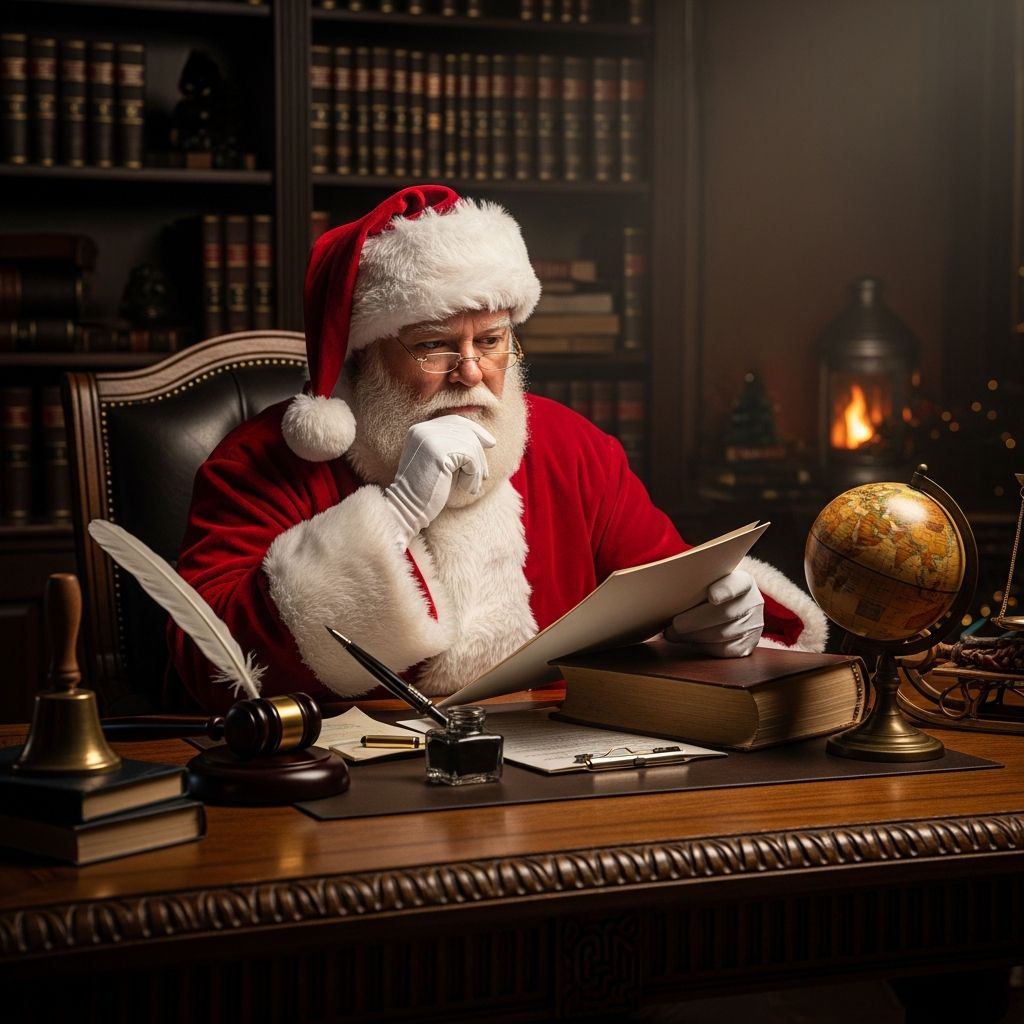
The image of Santa Claus soaring through the night sky, delivering toys to children worldwide, captivates imaginations every December. But beneath the ho-ho-ho lies a flurry of activities that, if examined under a legal microscope, could raise eyebrows in courtrooms from the North Pole to New York. This exploration delves into the hypothetical legal pitfalls of Santa’s operations, blending holiday cheer with courtroom scrutiny to assess whether the red-suited legend would face charges for trespass, smuggling, labor violations, and beyond.
Navigating Chimneys: Trespass and Unauthorized Entry
Every Christmas Eve, Santa slips down millions of chimneys worldwide without a formal invitation. In legal terms, this could constitute trespassing, defined as entering private property without permission. Under common law principles, property owners hold the right to exclude others, and unauthorized entry—even through a chimney—might qualify as a civil tort or criminal offense depending on jurisdiction.
Consider U.S. jurisdictions: many states classify unlawful entry as a misdemeanor if no damage occurs. Santa’s method, squeezing through flues without breaking locks, avoids ‘breaking and entering’ charges that require force. Yet, intent matters. If prosecutors argue Santa intends theft (taking cookies or milk), it escalates to burglary. However, cultural norms provide a shield: families worldwide leave out treats and stockings, signaling implied consent. This tradition acts as a de facto license, undermining claims of unauthorized access.
- Implied Consent: Milk, cookies, and ‘Santa Stop Here’ signs invite entry, negating trespass claims.
- No Damage Rule: Chimney descents without structural harm dodge aggravated entry statutes.
- Global Variations: In places like Jersey, ‘illegal entry’ requires criminal intent, which Santa’s benevolent motives refute.
Without overt hostility from homeowners, Santa’s visits remain festive, not felonious.
Global Toy Deliveries: Smuggling and Customs Evasion
Santa’s sleigh, packed with toys from an undisclosed North Pole workshop, crosses international borders unchecked. U.S. Code Title 19, Section 1590 prohibits aviation smuggling of contraband into the country. Toys might not seem harmful, but unregulated imports bypass customs duties and safety inspections, potentially violating trade laws enforced by U.S. Customs and Border Protection.
Proceeds of Crime Act 2002 in the UK could target gifted toys as laundered goods if deemed smuggled. Recipients might face scrutiny if authorities deem their lifestyle ‘criminal,’ though this stretches thin for innocent children. Santa’s magic—flying without radar detection—further complicates aviation regs under Title 49, Section 46316, which mandates airworthiness certificates for aircraft.
| Potential Violation | Relevant Statute | Santa’s Defense |
|---|---|---|
| Aviation Smuggling | 19 U.S.C. § 1590 | Magical sleigh not classified as aircraft |
| Unregistered Flight | 49 U.S.C. § 46316 | Reindeer propulsion exempts FAA oversight |
| Customs Evasion | Proceeds of Crime Act 2002 (UK) | Gifts to ‘nice’ lists, not criminal proceeds |
Enforcement hurdles, like tracking a supersonic sleigh, render these charges impractical.
Elf Labor Practices: Exploitation in the Workshop
Behind the scenes at the North Pole, hundreds of elves toil year-round crafting toys. Modern labor laws demand fair wages, safe conditions, and unions—none evident in Santa’s operation. U.S. Fair Labor Standards Act requires minimum wage and overtime; elves, likely undocumented immigrants from toy-making realms, evade this. Child labor prohibitions under the same act could apply if young elves participate.
Internationally, ILO Convention No. 182 bans hazardous child labor, yet Santa’s high-pressure deadlines suggest otherwise. No OSHA inspections mean unchecked workshop hazards like toy glue fumes or assembly line speeds. Critics argue elves volunteer cheerfully, motivated by holiday spirit, not coercion—sidestepping exploitation claims. Still, a DOL raid could shut down the operation faster than a lump of coal.
Surveillance Scandals: Naughty or Nice Listkeeping
Santa’s omniscience—knowing if you’ve been bad or good—mirrors modern privacy nightmares. Compiling global surveillance data on children violates GDPR in Europe, requiring consent for personal data processing. In the U.S., no federal privacy law exists, but state wiretap statutes could snag wiretapping accusations for eavesdropping on behavior.
Stalking laws demand repeated unwanted attention; Santa’s annual check-ins might qualify for obsessive parents. Yet, data minimization principles under privacy regs aren’t breached if lists self-destruct post-delivery. Publicly shared wish lists via letters grant implied consent, framing surveillance as customer service.
Tax Troubles and Financial Shenanigans
How does Santa fund endless toys without IRS filings? Undisclosed income from undisclosed sources screams tax evasion. Gifts in kind count as taxable events; recipients might owe on fair market value, per IRS Publication 525. Santa’s nonprofit facade crumbles without 501(c)(3) status.
Prosecutors could pierce the veil, alleging unreported global commerce. Defenses invoke magical self-replenishing resources, untestable in court. No paper trail means no audit trail—Santa stays off the naughty ledger.
Magical Mischief: Witchcraft and Supernatural Statutes
Flying reindeer and infinite toy bags invoke witchcraft bans, like the UK’s repealed Witchcraft Act 1541. Modern fraud statutes target deceptive magic for gain, but Santa profits nothing. Countries still criminalizing sorcery pose risks abroad, though benevolent intent and verifiable miracles (empty stockings filled) provide acquittals.
Civil Liabilities: From Emotional Distress to Product Defects
Beyond crimes, torts loom. Intentional Infliction of Emotional Distress (IIED) suits from coal-receiving ‘naughty’ kids claim psychological harm. Product liability hounds defective toys, like recoil mishaps with BB guns—strict liability applies regardless of Santa’s gift-giver status.
Once gifted, toys transfer fully; Santa dodges recall duties. Families’ invitations waive negligence claims for chimney soot or reindeer droppings.
Intellectual Property Infringers: Patents and Trademarks
Toys mimicking branded items invite IP lawsuits. Hundreds of patent violations for custom gadgets pile up. Trademarks on ‘Santa Claus’ itself, held by entities like the Anti-Defamation League in some contexts, complicate branding. Fair use for holiday lore might prevail, but cease-and-desist letters could clutter the North Pole mailbox.
Environmental and Animal Welfare Concerns
Reindeer emissions across hemispheres breach Clean Air Act standards. Graziage on federal lands violates grazing permits. PETA might protest animal labor, demanding sleigh retirement. Santa’s carbon-neutral magic offsets this, unprovable but folklore-backed.
Frequently Asked Questions (FAQs)
What is the strongest defense against Santa trespassing charges?
Implied consent from global traditions like leaving out cookies and stockings provides a robust shield in most jurisdictions.
Could children be taxed on Santa’s gifts?
Potentially yes, under IRS rules for gifts over certain values, though enforcement is nil due to unverifiable provenance.
Does Santa violate labor laws with his elves?
Hypothetically, yes—missing wages and safety regs—but voluntary mythical labor evades human statutes.
Is Santa’s surveillance legal?
In the U.S., yes due to lax privacy laws; in EU, GDPR breaches loom without consent forms.
Why does Santa evade arrest annually?
Practical impossibilities: no witnesses, magical alibis, and universal goodwill trump legal action.
Why Santa Remains Legally Untouchable
Despite the laundry list, Santa’s operation thrives on consent, magic, and merriment. Courts prioritize substance over folklore; no victim complains, no case proceeds. This thought experiment highlights law’s limits against legends, reminding us holidays transcend legalese.
References
- Santa Claus: Christmas’ Most Celebrated Criminal? — Acuity Law. 2023. https://acuitylaw.com/santa-celebrated-criminal/
- Santa Claus: Jolly fellow, trespasser, or common criminal? — BCR Law LLP. 2024-12-21. https://www.bcrlawllp.com/reading-room/santa-jolly-trespasser-criminal
- Is Santa a Criminal? — Civics 101 Podcast, NHPR. 2023. https://www.civics101podcast.org/civics-101-episodes/santa
- If Santa Were Real, He’d Be Facing Arrest — Libertas Institute. 2021. https://libertas.institute/justice-and-due-process/if-santa-were-real-hed-be-facing-arrest/
- Is Santa a Criminal? — North Carolina Criminal Law, UNC School of Government. 2024-12-20. https://nccriminallaw.sog.unc.edu/2024/12/20/is-santa-a-criminal/
Similar Articles








Read full bio of medha deb




