
Same-Sex Marriage Legalization Across United States
Complete overview of marriage equality laws and recognition status in all 50 states.
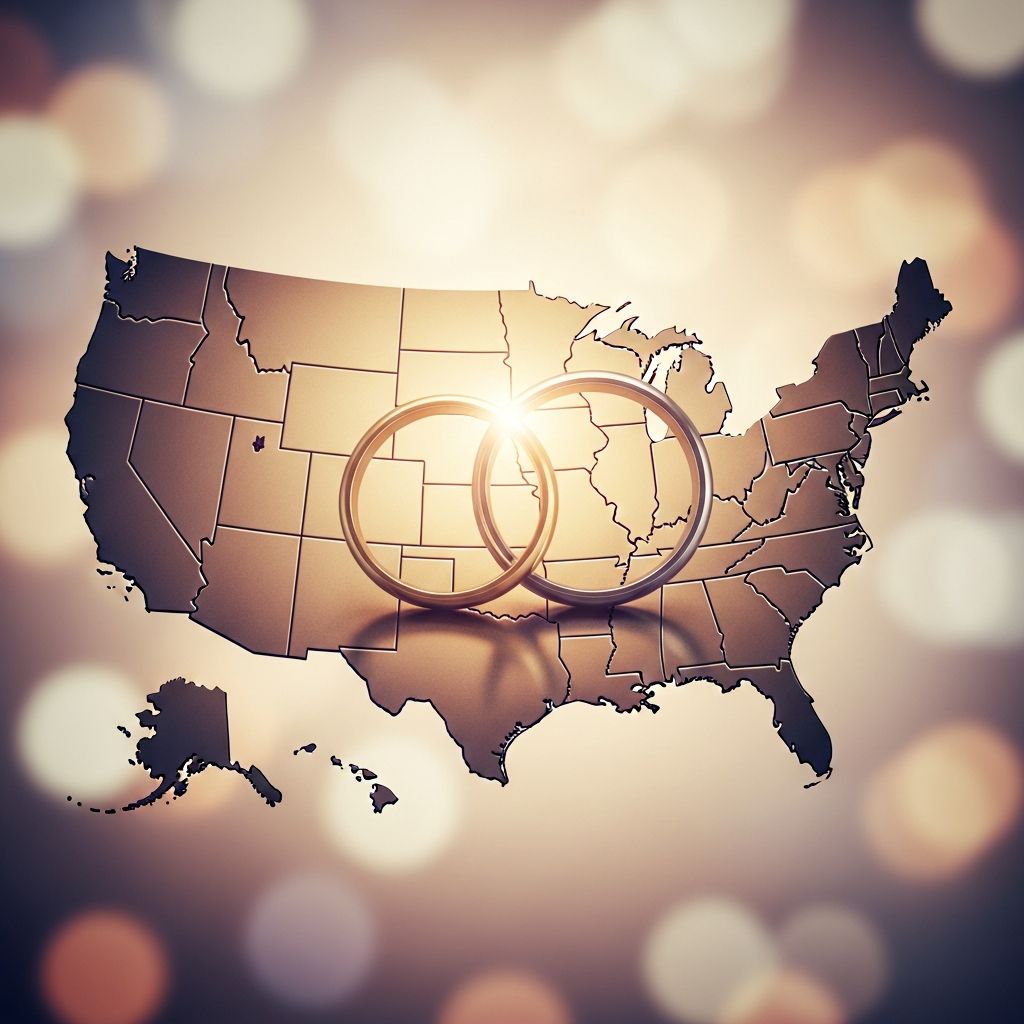
Understanding Marriage Equality Across America
The landscape of marriage recognition in the United States has undergone significant transformation over the past two decades. What was once a patchwork of varying state laws has evolved into a framework where same-sex couples enjoy legal marriage rights throughout the nation. This comprehensive overview examines the current status of marriage equality, tracing the journey from early state-level victories to nationwide recognition, while addressing the complexity of state constitutions and statutory provisions that continue to reflect older restrictions.
The Timeline of Legalization and Historical Progression
The path to marriage equality in the United States unfolded through multiple avenues and timeframes. The earliest breakthroughs came through state legislative action and judicial decisions rather than through uniform federal mandate. Massachusetts became the first state to legalize same-sex marriage in 2004, setting a precedent that would eventually inspire other jurisdictions to reconsider their own marriage statutes.
By 2008, a significant milestone was reached when both California and Connecticut legalized same-sex marriage, signaling growing momentum toward equality. The period between 2008 and 2012 demonstrated varied approaches to legalization across different states. Some states pursued legislative reform, others relied on court decisions interpreting state constitutional protections, and still others looked to federal court rulings for guidance.
A pivotal moment in the democratic process occurred on November 6, 2012, when Maine, Maryland, and Washington made history by becoming the first states to legalize same-sex marriage through direct popular vote rather than legislative or judicial action. This development demonstrated that voters could be persuaded to support marriage equality when given the opportunity to express their preferences directly.
The landscape shifted dramatically following the 2015 Supreme Court decision in Obergefell v. Hodges, which established that same-sex couples possess a constitutional right to marry. This landmark ruling effectively legalized same-sex marriage nationwide, superseding all prior state constitutional bans and statutory prohibitions on same-sex marriage recognition.
Current Legal Status Across All Fifty States
As of 2026, marriage equality is fully recognized across all fifty states and the District of Columbia. This universal recognition represents the culmination of decades of advocacy, legal challenges, and legislative efforts. However, the path to this comprehensive recognition remains complex when examining the underlying state law framework.
Thirty-seven states have actively legalized same-sex marriage through their own state laws or constitutional amendments since the beginning of the marriage equality movement. These states have taken affirmative steps to recognize same-sex relationships either through legislative enactment, popular referendum, or state court decisions prior to the Obergefell ruling.
The remaining thirteen states—Arkansas, Georgia, Kentucky, Louisiana, Michigan, Mississippi, Missouri, Nebraska, North Dakota, Ohio, South Dakota, Tennessee, and Texas—have not independently legalized same-sex marriage. However, these states must issue marriage licenses to same-sex couples as a result of the federal constitutional mandate established by the Supreme Court, regardless of their own state law positions.
States with Comprehensive Relationship Recognition Programs
Beyond basic marriage equality, some states have implemented additional protections and recognition mechanisms for same-sex relationships. Approximately nine states and the District of Columbia have established comprehensive civil union or domestic partnership frameworks that provide legal recognition and protections separate from or in addition to marriage.
These jurisdictions include:
- California—comprehensive civil union framework
- Colorado—comprehensive civil union framework
- District of Columbia—comprehensive civil union framework
- Hawaii—comprehensive civil union framework
- Illinois—comprehensive civil union framework
- Maine—comprehensive civil union framework
- Maryland—comprehensive civil union framework
- Nevada—comprehensive civil union framework
- New Jersey—comprehensive civil union framework
- Oregon—comprehensive civil union framework
These comprehensive frameworks offer same-sex couples additional legal pathways and may provide specific protections related to medical decision-making, inheritance rights, adoption, and other family law matters that extend beyond traditional marriage licensing.
Religious Exemption Provisions and Their Implications
While marriage equality is universally recognized, some states have incorporated religious exemption provisions into their laws. Kansas permits faith-based organizations to deny services to married same-sex couples based on religious objections. Additionally, North Carolina has enacted legislation allowing state officials to decline to solemnize marriages for couples whose unions they personally disapprove of, on religious grounds.
Mississippi previously passed legislation in 2016 permitting state officials to refuse to marry couples based on religious objections, though this law has faced legal challenges and remains stayed from enforcement. These exemptions represent an ongoing tension between religious freedom protections and comprehensive equal protection under law, a tension that continues to generate litigation and legislative debate.
Demographic Patterns in Same-Sex Marriage Adoption
The prevalence of same-sex marriages varies significantly across different regions of the United States. Washington, DC leads the nation with the highest proportion of married households headed by same-sex couples at 5.96% of all married couples. This concentration reflects both the relatively younger, more urban demographic composition of the district and potentially greater comfort levels with diverse family structures in more cosmopolitan areas.
Northeastern states demonstrate notably higher percentages of same-sex married couples compared to national averages. Delaware ranks second nationally at 2.34%, followed by Vermont at 2.11%, Maine at 1.88%, Massachusetts at 1.83%, and Rhode Island at 1.81%. These northeastern concentrations suggest regional differences in LGBTQ+ population distribution and social acceptance.
Western states also show significant adoption rates of same-sex marriage. Nevada reports 1.95% of marriages involving same-sex couples, Washington 1.77%, California 1.66%, and Oregon 1.64%. Colorado presents an interesting regional outlier among western states, with 1.53% of marriages being same-sex couples, demonstrating demographic variation even among geographically proximate jurisdictions.
Ongoing Legislative Developments and Future Considerations
Despite the comprehensive nature of current marriage equality protections, several states are actively revisiting their approach to same-sex marriage laws as of 2026. This legislative activity reflects broader national conversations about federal versus state authority, religious liberty protections, and the potential vulnerability of the Obergefell decision to future legal challenges.
States engaging in legislative reconsideration include Arizona, Colorado, Delaware, the District of Columbia, Florida, Hawaii, Illinois, Iowa, Kansas, Kentucky, Maryland, Mississippi, Missouri, Nebraska, New Hampshire, New Jersey, Ohio, Oklahoma, Oregon, South Dakota, Utah, Virginia, and West Virginia. Many of these states are examining proposals to eliminate remaining discriminatory language from their state constitutions and statutes, aligning their fundamental law with current federal constitutional requirements.
Additionally, some states are considering legislation that would strengthen protections for marriage equality in the event that federal constitutional protections face legal vulnerability. These legislative efforts represent a proactive approach to ensuring marriage equality remains secure at the state level, independent of federal constitutional protections.
Constitutional Bans and Statutory Prohibitions Still in Effect
Although all states must recognize same-sex marriages under federal constitutional law, the underlying state law framework reflects older policy positions that have not been formally repealed in all jurisdictions. Approximately 26 states maintain constitutional provisions that ban same-sex marriage or other types of same-sex relationship recognition, while 30 states have statutes containing similar prohibitions.
These provisions remain technically on the books despite being unenforceable under current constitutional law. As federal same-sex marriage rights have appeared increasingly vulnerable in recent years, some states have taken affirmative steps to remove discriminatory language from their foundational documents. Nevada became a pioneering example when it became the first state to formally repeal its constitutional ban on same-sex marriage following the Obergefell decision.
California, Colorado, and Hawaii have similarly signaled voter support for removing discriminatory constitutional language, recognizing that such provisions undermine equal protection principles even when their enforcement is prohibited by federal law. These efforts represent a broader movement toward eliminating legal vestiges of prior discrimination from state constitutions and statutes.
Federal Law Supremacy and Potential Future Challenges
The legal architecture protecting same-sex marriage rights depends fundamentally on the continued validity of the Obergefell decision and the constitutional interpretation it established. Should the Supreme Court reconsider its position on marriage equality, the underlying state law framework would potentially regain significance.
In response to concerns about potential constitutional vulnerability, some observers and policymakers have advocated for federal legislation that would independently protect same-sex marriage rights through statutory authority rather than relying exclusively on constitutional interpretation. Such approaches would provide additional layers of protection insulating marriage equality from potential future constitutional developments.
The current legal status demonstrates that while constitutional interpretation has been the primary driver of marriage equality, state-level legislative action and constitutional reform continue to play important complementary roles in establishing durable protections for same-sex couples.
Frequently Asked Questions
Q: Is same-sex marriage legal in all fifty states?
A: Yes, as of 2015, same-sex marriage is legal in all fifty states and the District of Columbia due to the Supreme Court’s ruling in Obergefell v. Hodges, which established it as a constitutional right.
Q: Which states were the first to legalize same-sex marriage?
A: Massachusetts was the first state in 2004, followed by California and Connecticut in 2008. Vermont, Iowa, and New Hampshire also legalized it around the same period through various legal mechanisms.
Q: Do all states have identical same-sex marriage laws?
A: While all states must recognize same-sex marriages under federal constitutional law, they vary in how they have addressed marriage equality through their own state laws. Some actively legalized it through statutes or constitutional amendments, while others have not independently modified their laws despite being required to recognize such marriages.
Q: Are there any states that allow religious exemptions for same-sex marriage?
A: Yes, Kansas permits faith-based organizations to deny services to married same-sex couples based on religious objections, and North Carolina allows state officials to decline to perform marriages based on personal religious beliefs.
Q: Which states have the highest concentrations of same-sex married couples?
A: Washington, DC leads at 5.96% of married households, followed by Delaware at 2.34%, Vermont at 2.11%, Maine at 1.88%, and Massachusetts at 1.83%.
Q: What is a comprehensive civil union or domestic partnership?
A: These are legal relationship recognition frameworks that some states have established in addition to or separate from marriage, providing specific legal protections and recognition for same-sex couples in areas such as medical decision-making, inheritance, and adoption rights.
Q: Are there still discriminatory provisions in state constitutions?
A: Yes, approximately 26 states still have constitutional bans on same-sex marriage, though these are unenforceable under federal constitutional law. Some states like Nevada, California, Colorado, and Hawaii have moved to remove this discriminatory language.
References
- List of States That Authorize Same Sex Marriage — U.S. Office of Personnel Management. https://www.opm.gov/healthcare-insurance/healthcare/enrollment/dependents/list-of-states-that-authorize-same-sex-marriage/
- Same-Sex Marriage by State 2026 — World Population Review. 2026. https://worldpopulationreview.com/state-rankings/same-sex-marriage-states
- Same-sex marriage law in the United States by state — Wikipedia. https://en.wikipedia.org/wiki/Same-sex_marriage_law_in_the_United_States_by_state
- How Will Marriage Laws Change in 2026? Legislation to Watch — Movement Advancement Project. 2026. https://theamm.org/articles/2718-how-will-marriage-laws-change-in-2026-legislation-to-watch
- How is same-sex marriage in the US changing? — USAFacts. 2023. https://usafacts.org/articles/what-is-the-state-of-gay-marriage-in-the-us/
- Marriage Recognition Laws — Movement Advancement Project. 2026. https://www.lgbtmap.org/equality-maps/recognition/marriage_relationship_laws
- Voters in California, Colorado, and Hawaii Signal Support for Marriage Equality — State Court Report. 2025. https://statecourtreport.org/our-work/analysis-opinion/voters-california-colorado-and-hawaii-signal-support-marriage-equality
Similar Articles








Read full bio of Sneha Tete




