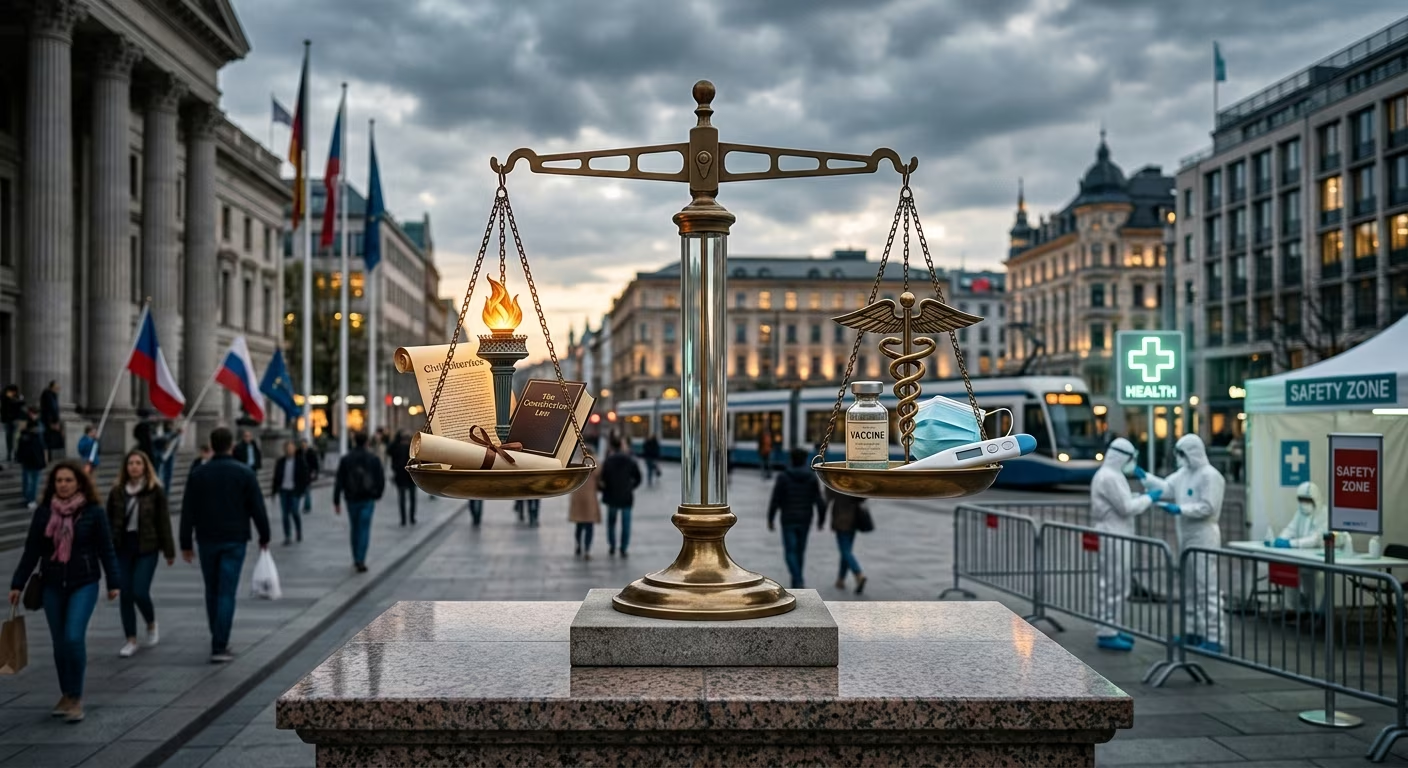
The intersection of a global public health emergency and constitutional law creates a volatile environment where rapid government action often collides with deeply entrenched civil liberties. When the COVID-19 pandemic swept across the globe, federal, state, and local governments invoked sweeping emergency powers to curb the virus’s spread. While many of these measures were rooted in legitimate epidemiological necessity, they simultaneously triggered an unprecedented wave of legal scrutiny. Civil liberties organizations, legal watchdogs, and constitutional scholars mobilized instantly, transforming courtrooms into the ultimate battlegrounds for preserving individual rights amid collective peril. The core challenge was clear: how to protect the public from a deadly contagion without sacrificing the fundamental freedoms that define a democratic society.
During a crisis of this magnitude, the balance of power shifts rapidly toward the executive branch. This shift is designed to facilitate swift, decisive action, yet it inherently bypasses the slower, deliberative processes of the legislature and public debate. Consequently, civil rights advocates were forced to operate at an accelerated pace, filing emergency injunctions and class-action lawsuits to ensure that government mandates remained strictly tailored, proportionate to the threat, and temporary. This article explores the multifaceted legal strategies deployed by civil liberties advocates to safeguard vulnerable populations, defend democratic processes, and ensure that emergency mandates did not become permanent fixtures of state overreach.
The Extent and Limits of Executive Emergency Powers
Historically, governments are granted wide latitude during catastrophic crises. The legal foundation for this deference often traces back to the 1905 Supreme Court case Jacobson v. Massachusetts, which established that local health authorities could mandate vaccines during a smallpox outbreak to protect the collective welfare. In the modern era, the Congressional Research Service notes that the invocation of national emergency powers allows the executive branch to bypass standard regulatory hurdles to respond to immediate, life-threatening scenarios . However, civil rights attorneys consistently argue that the invocation of such powers is not a blank check to indefinitely suspend the United States Constitution.
Throughout the pandemic, legal advocates monitored executive orders closely to ensure they adhered to the constitutional standard of “strict scrutiny” when fundamental rights were burdened. This legal standard requires that any government action restricting a fundamental right must serve a compelling state interest and be executed in the least restrictive means possible. Watchdog organizations challenged curfews, stay-at-home orders, and restrictions on public gatherings when they appeared arbitrarily enforced or explicitly targeted specific forms of expression or religious practice. The central thesis of these legal challenges was not to deny the severity of the pandemic, but to reinforce the principle that public health and civil liberties are not mutually exclusive; rather, they must be harmonized even in times of extreme distress.
Advocating for Vulnerable and Incarcerated Populations
Perhaps nowhere was the collision between the pandemic and civil rights more devastatingly apparent than within the criminal justice system. Congregate settings—specifically prisons, county jails, and immigration detention facilities—became extreme health hazards due to overcrowding, inadequate ventilation, and substandard medical care.
Litigating for Compassionate Release in Prisons and Jails
As the virus infiltrated the nation’s penal system, civil liberties groups argued that leaving incarcerated individuals trapped in facilities where social distancing was physically impossible constituted a violation of the Eighth Amendment, which protects against “cruel and unusual punishment.” Advocates pointed to explicit guidelines from the Centers for Disease Control and Prevention (CDC) regarding the management of COVID-19 in correctional and detention facilities, which highlighted the severe risk of rapid viral transmission in these environments .
In response, legal teams filed hundreds of lawsuits and emergency petitions demanding the implementation of rigorous health protocols, the provision of adequate personal protective equipment (PPE) and soap, and, crucially, the immediate release of medically vulnerable individuals. These efforts resulted in the strategic depopulation of some facilities, focusing on non-violent offenders, the elderly, and those with underlying health conditions. By leveraging the legal mechanisms of habeas corpus and compassionate release, advocates fought to prevent state-imposed sentences from effectively becoming death sentences due to viral exposure.
Protecting Immigrant Communities in ICE Detention
Similar humanitarian and constitutional crises unfolded within facilities operated by Immigration and Customs Enforcement (ICE). Civil liberties organizations highlighted that civil detainees, many of whom were awaiting administrative hearings rather than serving criminal sentences, were being subjected to unconscionable risks. Litigation in federal courts successfully compelled ICE to reduce the population density of certain facilities and adhere more strictly to infectious disease protocols. Furthermore, advocacy groups worked tirelessly to ensure that undocumented immigrants living in the community were not deterred from seeking medical testing or treatment out of fear of deportation, arguing that public health relies on the safety and participation of all residents, regardless of their immigration status.
Defending the Democratic Process: Voting Rights Under Pressure
As the 2020 election cycle approached, the pandemic posed severe logistical threats to the foundation of American democracy: the right to vote. Traditional, in-person voting presented a significant public health risk, prompting an immediate need to radically adjust election infrastructure. However, efforts to expand voting access frequently met fierce political and legal resistance.
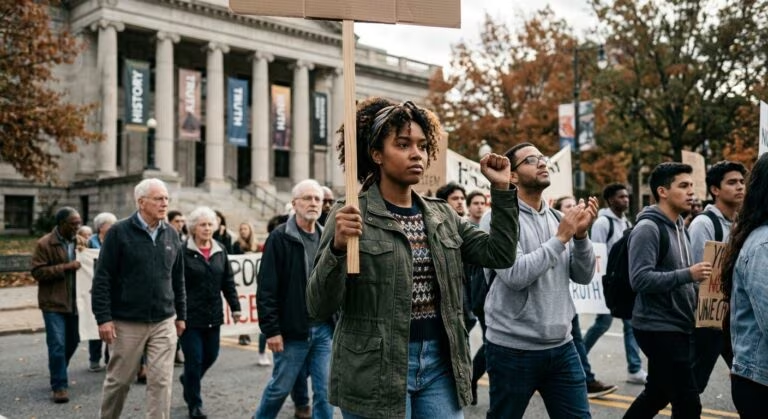
Civil liberties organizations spearheaded a massive, state-by-state legal campaign to ensure that no citizen had to choose between their health and their constitutional right to cast a ballot. According to reports from the Brennan Center for Justice, the pandemic period saw unprecedented levels of voting rights litigation aimed at both expanding access and preventing opportunistic voter suppression . Advocates fought to eliminate restrictive absentee voting requirements, such as forcing voters to obtain a notary or witness signature to validate a mail-in ballot—a demand that was virtually impossible for vulnerable populations isolating at home.
Additionally, legal battles were waged over ballot receipt deadlines. Organizations argued that delays in the United States Postal Service, combined with unprecedented mail-in voting volume, necessitated extended deadlines to ensure all legally cast ballots were counted. Through litigation, public education campaigns, and direct advocacy with state election boards, civil rights groups secured expanded early voting periods, the widespread installation of secure ballot drop boxes, and the broad availability of no-excuse absentee voting in numerous jurisdictions.
Preserving Bodily Autonomy and Healthcare Access
The pandemic emergency was, in some instances, weaponized by state executives to push unrelated political agendas, most notably concerning reproductive rights. As hospitals braced for a surge of infectious patients, many states issued executive orders pausing “non-essential” or “elective” medical procedures to conserve hospital beds and PPE.
While this was a sound epidemiological strategy for delaying cosmetic surgeries, several state governors seized the opportunity to unconstitutionally categorize abortion services as non-essential, effectively banning the procedure under the guise of public health. Research and policy tracking by the Guttmacher Institute highlighted how these state executive orders explicitly singled out and aggressively limited reproductive health services during the early months of the pandemic .
Civil liberties and reproductive rights lawyers filed emergency lawsuits arguing that abortion is deeply time-sensitive essential healthcare. Delaying the procedure by even a few weeks could permanently strip an individual of their constitutional right to bodily autonomy. Federal courts largely agreed with the advocates, granting preliminary injunctions that blocked these opportunistic bans. The litigation underscored a vital legal precedent: fundamental constitutional rights, including the right to reproductive freedom, cannot be arbitrarily suspended through executive public health decrees.
Data Privacy in the Age of Digital Surveillance
Public health surveillance—specifically contact tracing—became a crucial tool for epidemiologists trying to track and contain the virus. However, the deployment of digital contact tracing apps, location tracking, and health status passports raised profound Fourth Amendment concerns regarding unreasonable searches and the right to privacy.
Advocacy groups actively engaged with both technology companies and government agencies to establish strict guardrails around data collection. They demanded that any digital public health tools prioritize data anonymization, strictly limit data retention periods through mandatory “sunset clauses,” and ensure that participation remained strictly voluntary. The objective was to prevent the pandemic from becoming a Trojan horse for a permanent, expanded state surveillance apparatus. By drafting model legislation and issuing privacy guidelines, civil liberties defenders ensured that emergency technological measures did not irreversibly erode digital privacy rights.
Key Areas of Civil Liberties Litigation During Pandemics
| Civil Liberties Focus Area | Government Action / Crisis Implication | Advocacy Response & Legal Action |
|---|---|---|
| Criminal Justice & Prisons | Overcrowded facilities lacking sanitation; inability to distance. | Habeas corpus petitions for compassionate release; Eighth Amendment lawsuits to enforce CDC guidelines. |
| Voting & Democratic Access | In-person voting risks; restrictive absentee ballot rules. | Litigation to expand mail-in voting, eliminate witness requirements, and extend ballot receipt deadlines. |
| Reproductive Rights | Classifying abortion as “non-essential” to conserve medical supplies. | Emergency injunctions arguing time-sensitivity and constitutional protections of bodily autonomy. |
| Digital Privacy | Implementation of location-tracking and digital health surveillance. | Demand for data anonymization, voluntary participation, and strict sunset clauses on data retention. |
Setting Legal Precedents for Future Emergencies
The extensive litigation initiated by civil liberties organizations during the global health crisis did more than address the immediate emergencies of the day; it forged critical legal precedents for future crises. Courts across the country were compelled to clarify the boundaries of executive emergency power, ultimately reaffirming that while the government possesses expanded authority to protect public safety, this authority is not infinite. The legacy of this era’s legal battles is a robust framework that demands transparency, proportionality, and an adherence to constitutional norms, even in the face of unprecedented societal disruption.
Frequently Asked Questions (FAQs)
- Can the government completely suspend constitutional rights during a pandemic?
No. While the government can impose certain temporary restrictions (like gathering limits) to protect public health, these measures must pass strict legal scrutiny. They must serve a compelling state interest and be executed using the least restrictive means possible without completely abolishing constitutional rights. - How did civil liberties groups help incarcerated people during the crisis?
Advocacy organizations filed lawsuits under the Eighth Amendment, arguing that failing to protect inmates from a deadly virus constitutes cruel and unusual punishment. They successfully lobbied for improved sanitation, the implementation of CDC protocols, and the compassionate release of medically vulnerable individuals. - Were the changes to voting laws made during the pandemic permanent?
It varies by state. Many of the expansions, such as universal mail-in voting and the use of secure drop boxes, were instituted as temporary emergency measures. While some states have codified these accessible voting methods into permanent law, others have since rolled them back, leading to ongoing legal battles over voter access. - How was digital privacy protected during contact tracing efforts?
Civil rights advocates pressured governments and tech companies to ensure that digital contact tracing apps were decentralized, anonymized, and strictly voluntary. They also fought for sunset clauses to ensure that health data collected during the emergency would be deleted once the crisis abated.
References
- Guidance on Management of Coronavirus Disease 2019 (COVID-19) in Correctional and Detention Facilities — Centers for Disease Control and Prevention (CDC). 2022-05-03. https://www.cdc.gov/coronavirus/2019-ncov/community/correction-detention/guidance-correctional-detention.html
- Voter Suppression in 2020 — Brennan Center for Justice at New York University School of Law. 2021-08-20. https://www.brennancenter.org/our-work/research-reports/voter-suppression-2020
- National Emergency Powers — Congressional Research Service. 2021-02-03. https://crsreports.congress.gov/product/pdf/RL/RL31133
- Surveying State Executive Orders Impacting Reproductive Health During the COVID-19 Pandemic — Guttmacher Institute. 2020-07-24. https://www.guttmacher.org/article/2020/07/surveying-state-executive-orders-impacting-reproductive-health-during-covid-19