
Police Lineups: Sixth Amendment Rights And Expert Guide In 2025
Understand your constitutional protections during police identification procedures to safeguard against unfair eyewitness testimony.
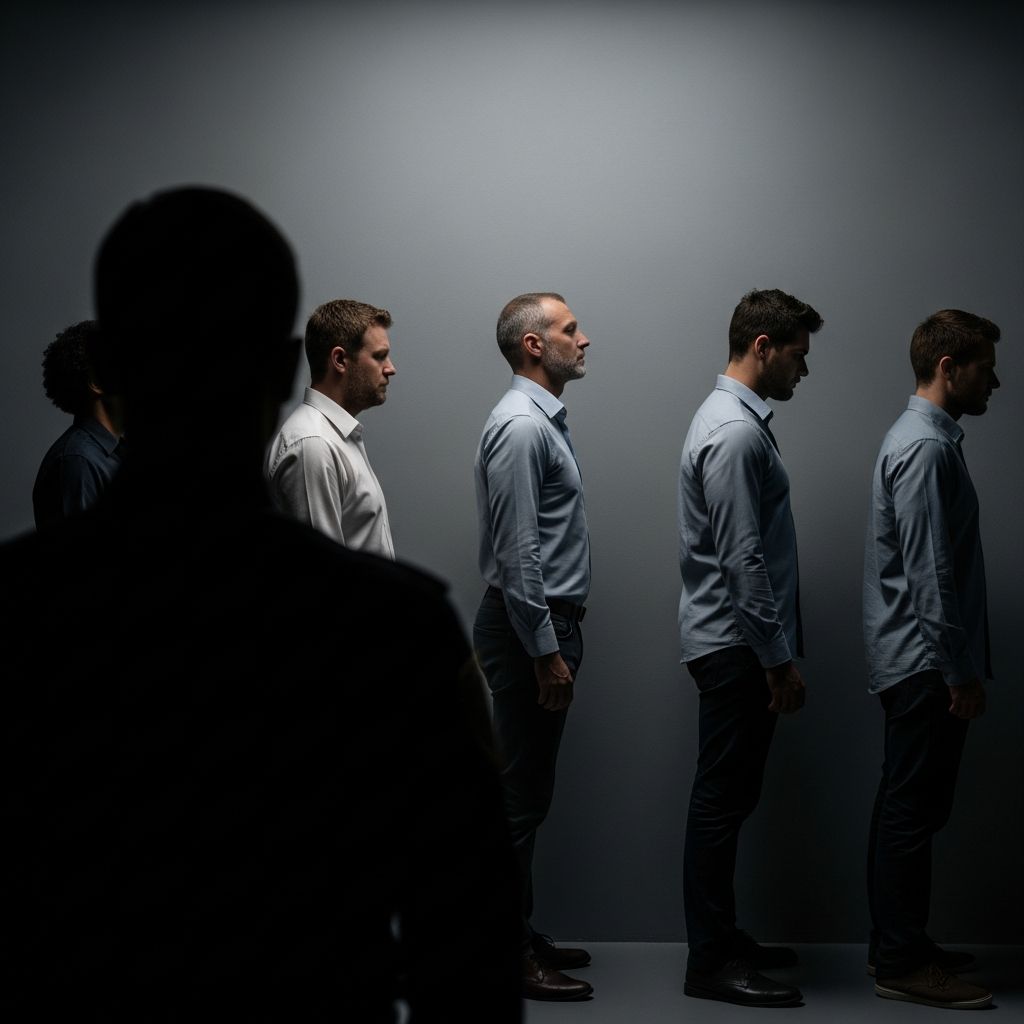
Police lineups serve as a fundamental tool in criminal investigations, allowing eyewitnesses to identify potential suspects. However, these procedures must adhere to strict constitutional standards to ensure fairness and prevent miscarriages of justice. Suspects possess critical rights, primarily under the
Sixth Amendment
, which guarantees legal counsel during key identification stages.Understanding Police Identification Methods
Law enforcement employs various techniques to match witnesses with suspects, each carrying specific procedural requirements. Lineups typically involve a suspect standing among several fillers—individuals resembling the suspect in age, build, and appearance. Witnesses view them from behind one-way glass or in controlled settings to minimize bias.
Alternative methods include showups, where a single suspect is presented shortly after a crime, and photo arrays, displaying multiple images for selection. While effective, these can introduce errors if not conducted properly. The U.S. Supreme Court has emphasized that post-indictment lineups qualify as “critical stages” requiring counsel’s presence.
Constitutional Foundation: Sixth Amendment Protections
The
Sixth Amendment
provides the right to counsel “in all criminal prosecutions,” extending to pretrial stages where the accused confronts prosecution evidence. Landmark cases like United States v. Wade (1967) established lineups as critical confrontations prone to suggestive influences. Without counsel, inadvertent biases—such as poor lighting or dissimilar fillers—may taint identifications, undermining trial fairness.Similarly, Gilbert v. California ruled that out-of-court identifications without counsel render related testimony inadmissible. This protection activates upon initiation of adversary proceedings, including indictment or arraignment. Pre-indictment procedures, like field showups, may not trigger this right but still demand due process scrutiny.
When Does the Right to Counsel Attach?
- Post-Indictment Lineups: Full Sixth Amendment protections apply; counsel must be present.
- Investigatory Showups: No automatic right, but procedures must avoid undue suggestiveness.
- Custodial Interrogations: Miranda rights precede, but lineup counsel is distinct.
Courts assess timing: if charges are filed, counsel is mandatory. Delaying a lineup until after indictment without counsel risks suppression of evidence.
Obligation to Participate in a Lineup
While in custody, police can compel lineup participation without violating the Fifth Amendment, as it involves no testimonial communication. Refusal may lead to court-ordered compliance. However, voice exemplars or compelled speech could implicate self-incrimination protections if they reveal guilt-admitting content.
| Procedure | Fifth Amendment Impact | Sixth Amendment Right |
|---|---|---|
| Physical Stand-in | None | Required post-charges |
| Voice Sample (Neutral) | Limited | Required |
| Incriminating Speech | Protected | Required |
Ensuring Fair and Unbiased Procedures
Due process under the Fourteenth Amendment prohibits “unnecessarily suggestive” lineups risking irreparable misidentification. Factors include filler similarity, witness instructions, and officer conduct. For instance, telling a witness “the suspect is in the lineup” biases results.
Best practices, per DOJ guidelines, involve blind administration where the officer doesn’t know the suspect’s position. Witnesses should view sequentially, not simultaneously, to reduce relative judgment errors. New York protocols exemplify this: clear instructions like “the perpetrator may not be present.”
Role of Legal Counsel During Procedures
An attorney observes to detect irregularities, such as mismatched fillers or prompting. Counsel can object real-time, ensuring recordings capture all interactions. Absent counsel, defense later challenges admissibility via motion to suppress, arguing taint under Wade standards.
If violated, remedies include:
- Barring pre-trial ID testimony.
- Scrutinizing in-court IDs for independent basis (clear and convincing evidence required).
Consequences of Procedural Violations
Improper lineups yield fruit-of-the-poisonous-tree exclusions. In Moore v. Illinois, suppressed showup evidence barred related trial testimony. Courts weigh reliability via Manson v. Brathwaite factors: opportunity to view, attention, description accuracy, certainty, and time elapsed.
Statistics underscore risks: eyewitness error contributes to 70% of wrongful convictions overturned by DNA. Rigorous safeguards protect both justice and innocence.
Practical Advice for Suspects
Upon detention, invoke rights immediately: “I want a lawyer.” Refuse statements until counsel arrives. Document details post-lineup for your attorney. Never assume fairness—procedures vary by jurisdiction, but federal minima apply universally.
State Variations and Reforms
While federal law sets baselines, states enhance protections. Some mandate video-recording; others require double-blind lineups. Emerging reforms include confidence statements from witnesses before feedback, boosting reliability.
Frequently Asked Questions
Do I have to participate in a lineup if arrested?
Yes, courts can order it as non-testimonial, but you retain counsel rights post-charges.
Can police make me speak during a lineup?
Neutral phrases yes; potentially incriminating ones may violate Fifth Amendment.
What if no lawyer is available right away?
Delay the lineup or risk suppression; right attaches at critical stages.
Are photo arrays treated like lineups?
Similar standards apply; counsel required post-indictment.
Can I challenge a fair lineup later?
Only if new evidence shows suggestiveness or unreliability.
Advancements in Identification Protocols
Modern reforms address scientific critiques. Sequential lineups—viewing one at a time—outperform simultaneous by 20-50% in accuracy studies. Confidence qualifiers, captured pre-feedback, predict accuracy better than post-suggestions.
Jurisdictions adopting these reduce false positives. For example, New York’s model policy mandates non-leading instructions and filler selection criteria matching witness descriptions.
Innovations like computer-generated composites or AI-assisted arrays promise further objectivity, but human oversight remains essential.
Historical Evolution of Lineup Rights
Pre-Wade, lineups lacked oversight, fostering abuses like stacked fillers. The 1967 trilogy—Wade, Gilbert, Stovall v. Denno—imposed counsel and due process. Prospective application minimized retroactive burdens.
Kirby v. Illinois (1972) limited pre-charge counsel, balancing investigation needs. Subsequent rulings refined: no counsel for photo arrays pre-indictment, but due process always.
Impact on Trial Strategy
Defense attorneys dissect lineup videos for bias: Did the suspect stand out? Was feedback given prematurely? Expert witnesses on memory science bolster suppression motions.
Prosecutors must prove independent origins for in-court IDs, a high bar post-violation. Successful challenges dismiss cases reliant on shaky eyewitnesses.
Suspects: Retain counsel early. Lineups often precede charges; prompt legal aid preserves options.
References
- What to Know About Police Lineups & Eyewitness Identification — Hogan Eickhoff. Accessed 2026. https://www.hoganeickhoff.com/blog/what-to-know-about-police-lineups-eyewitness-identification/
- Constitutional Ramifications of the Police Lineup — Villanova Law Review. 1966. https://digitalcommons.law.villanova.edu/cgi/viewcontent.cgi?article=1749&context=vlr
- Power to Order Lineup—Right to Counsel — U.S. Department of Justice. Accessed 2026. https://www.justice.gov/archives/jm/criminal-resource-manual-239-power-order-lineup-right-counsel
- Lineups and Other Identification Situations — Legal Information Institute, Cornell Law School. Accessed 2026. https://www.law.cornell.edu/constitution-conan/amendment-6/lineups-and-other-identification-situations
- Identification Procedures: Photo Arrays and Line-ups — New York State Division of Criminal Justice Services. Accessed 2026. https://www.criminaljustice.ny.gov/pio/press_releases/ID-Procedures-Protocol-Model-Policy-Forms.pdf
- Lineup—Due Process — U.S. Department of Justice. Accessed 2026. https://www.justice.gov/archives/jm/criminal-resource-manual-241-lineup-due-process
Similar Articles








Read full bio of Sneha Tete




