
Essential Steps for Retailers After a Customer Slip and Fall
Protect your business from liability pitfalls after a customer slip and fall with proven strategies and legal insights for store owners.
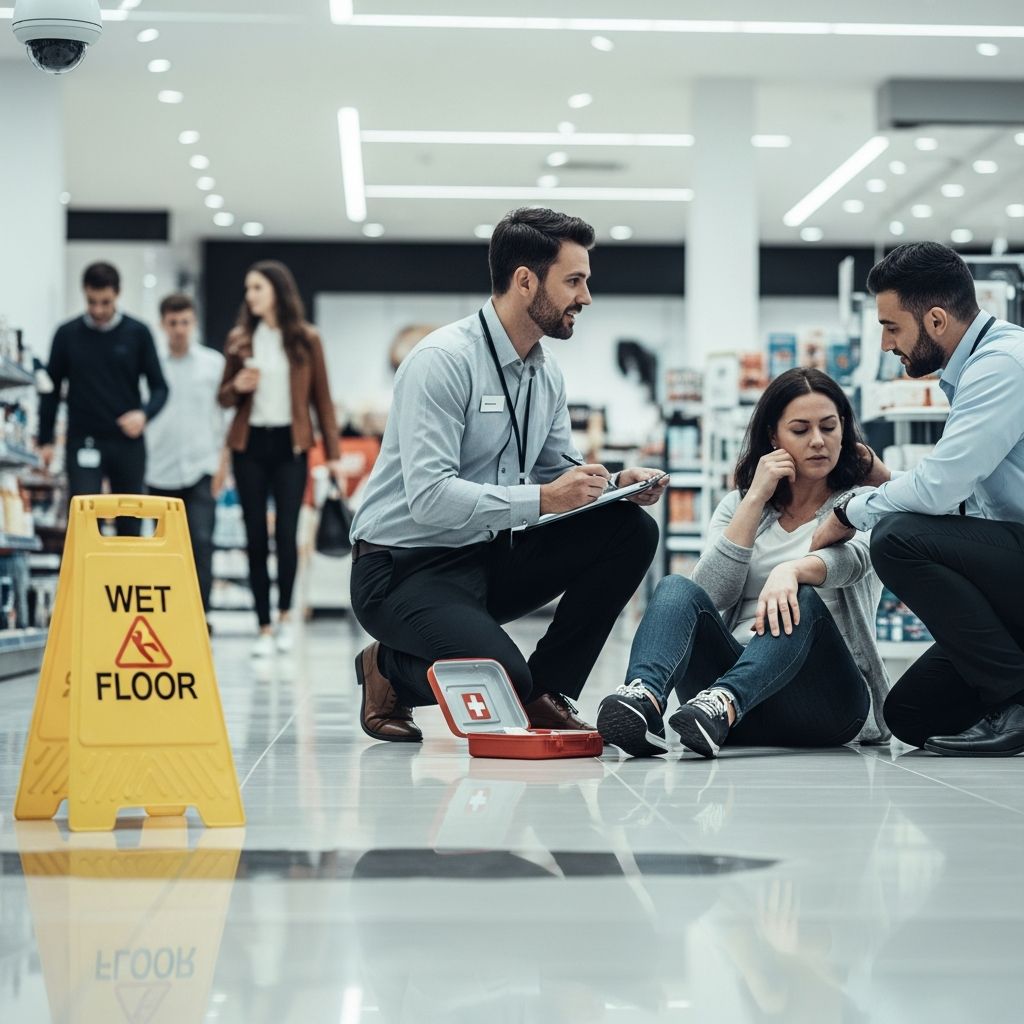
Slip-and-fall incidents in retail environments represent a significant risk for business owners, potentially leading to injuries, legal claims, and financial losses. According to the U.S. Consumer Product Safety Commission, falls are a leading cause of emergency room visits, with retail stores often implicated due to hazards like wet floors or uneven displays. This comprehensive guide equips store managers and owners with actionable strategies to respond effectively, protect their enterprise, and foster a safer shopping experience.
Understanding Retail Premises Liability
Retailers bear a legal duty known as premises liability, requiring them to maintain reasonably safe conditions for invitees—customers entering for business purposes. This obligation stems from common law principles upheld in state statutes across the U.S. Failure to address known hazards, such as spills or clutter, can result in negligence claims. Courts evaluate factors like the foreseeability of the risk and the reasonableness of preventive measures. For instance, the Occupational Safety and Health Administration (OSHA) mandates clear walkways and prompt hazard cleanup in commercial spaces to prevent such occurrences.
Businesses must recognize that even minor slips can escalate into major lawsuits if mishandled. Statistics from the National Floor Safety Institute indicate that slips contribute to over 1 million workplace injuries annually, with retail sectors disproportionately affected. Proactive management not only reduces liability but also enhances customer trust and operational continuity.
Immediate Response Protocols for Store Staff
When a customer falls, the first minutes are crucial. Train employees to prioritize safety without admitting fault. Direct them to:
- Secure the area by placing caution signs and cordoning off the hazard.
- Offer assistance calmly, asking if medical help is needed without speculating on injury severity.
- Notify a supervisor immediately to oversee documentation.
Avoid rushing the customer to leave or pressuring them to minimize the event. Such actions can be interpreted as evasion, strengthening plaintiff arguments in court.
Critical Documentation Every Retailer Must Gather
Thorough records form the backbone of any defense against claims. Implement a standardized incident reporting form that captures:
| Element | Purpose | Best Practices |
|---|---|---|
| Date and Time | Establishes timeline | Record to the minute using store clocks |
| Location | Identifies hazard site | Include aisle, department, and precise spot |
| Witness Names | Provides corroboration | Collect contact info voluntarily |
| Customer Details | Tracks follow-up | Obtain only if provided, note any statements factually |
| Hazard Description | Documents conditions | Photograph before cleanup |
Digital tools like apps or cloud-based logs ensure tamper-proof storage. Retain surveillance footage for at least 30 days, as it often proves pivotal in liability disputes.
Mistakes That Can Jeopardize Your Business Defense
Certain responses amplify risks. Here’s what to steer clear of:
- Admitting responsibility verbally or in writing: Phrases like “We’re sorry this happened because of our spill” can be used as admissions of negligence.
- Delaying hazard mitigation: Leaving spills unattended invites further incidents and demonstrates neglect.
- Discouraging medical evaluation: Suggesting “You’re fine, no need for a doctor” undermines legitimate claims and appears callous.
- Altering the scene prematurely: Cleaning before photographing erases evidence of the hazard’s extent.
- Overlooking staff training gaps: Untrained employees may mishandle situations, exposing the business to vicarious liability.
Navigating Insurance and Legal Consultations
General liability insurance typically covers slip-and-fall claims, but policy specifics vary. Promptly notify your carrier using their designated portal or hotline, providing the incident report without speculation. Insurers investigate swiftly, often assigning adjusters to assess validity.
Consult your attorney early, especially if injuries appear severe. Legal counsel reviews documentation, advises on state-specific statutes like comparative negligence rules, and prepares for potential litigation. In many jurisdictions, the statute of limitations for personal injury is two years, but shorter notice periods may apply to commercial claims.
Enhancing Store Safety to Prevent Future Incidents
Prevention trumps reaction. Implement a robust safety program including:
- Regular floor inspections with logged checklists.
- Non-slip mats in high-risk areas like entrances.
- Employee protocols for immediate spill response—clean within 15 minutes.
- Clear signage and lighting upgrades.
- Annual safety audits by third-party experts.
OSHA’s guidelines emphasize these measures, noting that consistent enforcement can reduce incidents by up to 50%. Invest in training programs that simulate scenarios, ensuring staff confidence in real events.
The Role of Technology in Modern Retail Safety
Emerging tools like AI-powered floor sensors detect spills instantly, alerting staff via apps. Smart cameras with hazard recognition software provide real-time monitoring. Integrating these with inventory systems flags high-risk periods, such as post-delivery clutter. While initial costs exist, reduced claims yield long-term savings. Retail giants like Walmart employ such tech, reporting measurable declines in slip-related injuries.
Case Studies: Lessons from Real Retail Claims
Consider a mid-sized grocery chain facing a lawsuit after a customer slipped on a grape. Proper documentation of routine produce checks and video evidence disproved negligence, leading to dismissal. Conversely, a boutique store lost a $150,000 verdict due to no incident log and staff statements implying fault. These examples underscore documentation’s power.
In another instance, a department store’s quick insurance notification and attorney involvement settled a fractured hip claim for policy limits, avoiding trial. Key takeaway: Swift, structured responses mitigate escalation.
Financial Implications and Risk Management
Claims average $30,000 per incident per the National Safety Council, encompassing medical costs, lost wages, and pain damages. Beyond payouts, legal fees and reputational harm compound losses. Comprehensive risk management—blending insurance, training, and tech—shields profitability. Budget 1-2% of revenue for safety initiatives; returns via fewer disruptions are substantial.
Frequently Asked Questions (FAQs)
What should I do immediately if a customer falls in my store?
Secure the area, offer non-committal assistance, notify a supervisor, and document facts without admitting fault.
How long should I keep incident records?
At least the statute of limitations period, typically 2-3 years, plus any insurer requirements.
Does my business insurance cover all slip-and-fall claims?
Most general liability policies do, but exclusions for intentional acts or known hazards apply—review with your agent.
Can I be sued even if the customer was careless?
Yes, under comparative fault laws; your liability percentage determines shared responsibility.
What training is essential for employees?
Hazard identification, incident response, documentation, and customer communication protocols.
Building a Culture of Safety in Retail
Fostering vigilance starts at the top. Leadership must model accountability, rewarding proactive hazard reports. Customer feedback loops, via surveys or signage, identify blind spots. Partnering with local safety councils provides free resources and certifications, bolstering credentials in disputes.
Ultimately, viewing safety as a customer service pillar differentiates thriving retailers. Committed owners not only avert crises but cultivate loyalty in an era of heightened consumer awareness.
References
- Occupational Safety and Health Administration (OSHA) Guidelines for Retail Facilities — U.S. Department of Labor. 2023-05-15. https://www.osha.gov/retail-industry
- Premises Liability Standards — Cornell Law School Legal Information Institute. 2024-01-10. https://www.law.cornell.edu/wex/premises_liability
- Slip, Trip, and Fall Prevention Guide — National Safety Council. 2025-02-20. https://www.nsc.org/work-safety/safety-topics/slip-trip-and-fall
- Consumer Product Safety Commission Injury Statistics — U.S. CPSC. 2024-11-08. https://www.cpsc.gov/s3fs-public/SlipTripFallReport.pdf
- National Floor Safety Institute Data on Retail Falls — NFSI. 2023-09-12. https://www.nfsi.org/slip-fall-prevention
Similar Articles








Read full bio of Sneha Tete




