
Technology-Facilitated Domestic Abuse: 5 Smart-Home Threats Now
Can courts protect victims by including smart thermostats, locks, and cameras in restraining orders against tech-savvy abusers?
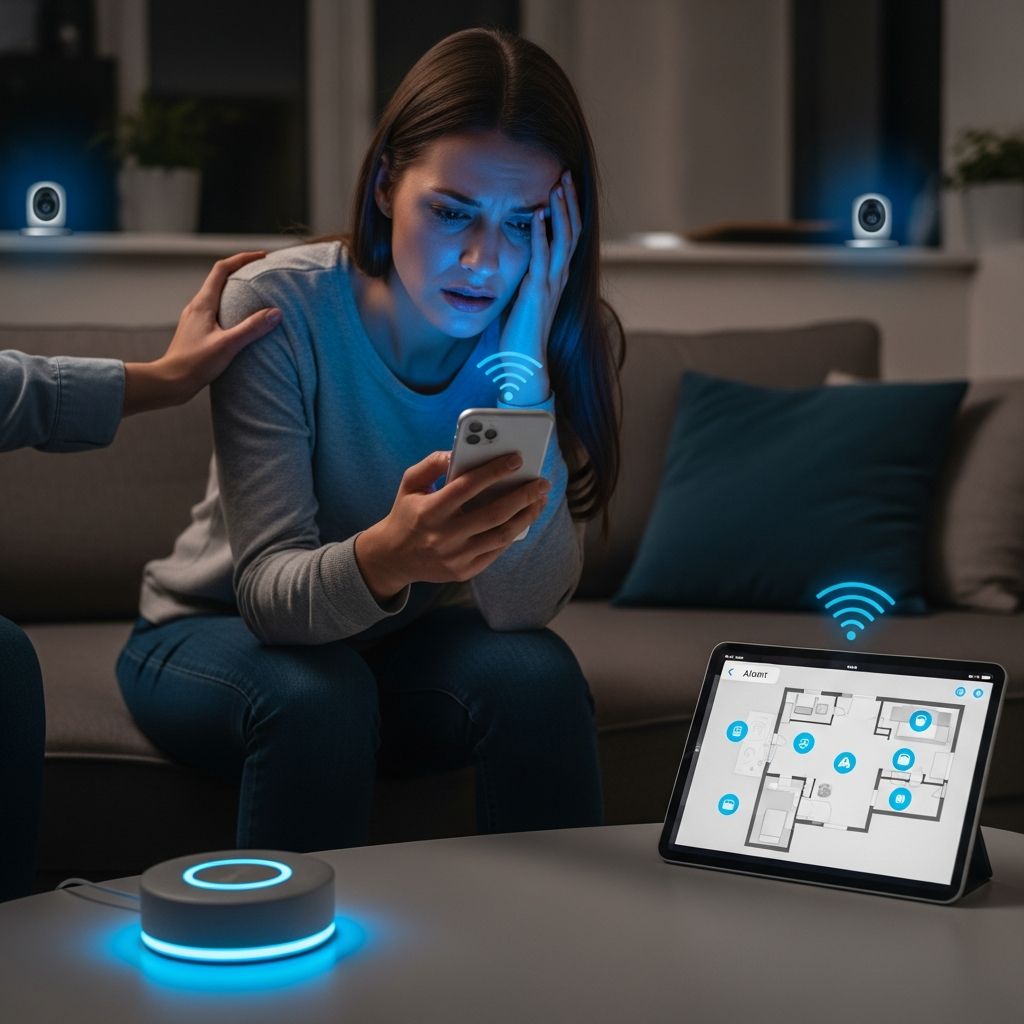
In an era where homes are increasingly connected through the Internet of Things (IoT), domestic abusers have found new ways to exert control long after physical separation. Smart devices like thermostats, door locks, cameras, and lights can be manipulated remotely, turning a victim’s sanctuary into a tool of ongoing torment. Courts are grappling with whether traditional restraining orders—designed primarily for physical no-contact rules—can encompass these digital intrusions. This article delves into real-world cases, legal hurdles, and potential reforms to bridge the gap between outdated laws and cutting-edge technology.
The Rise of Technology-Facilitated Domestic Abuse
Technology-assisted domestic violence, often abbreviated as tech abuse, represents a sinister evolution in abusive tactics. Abusers no longer need to be physically present to harass; a smartphone app suffices. Reports indicate that perpetrators remotely blast loud music at 3 a.m., lock victims out of their own homes, or spike indoor temperatures to unbearable levels. These acts, while not always fitting neatly into criminal statutes, erode a victim’s sense of safety and autonomy.
Advocacy groups highlight that many victims remain unaware of shared account access until post-separation sabotage occurs. For instance, ex-partners retain login credentials for devices installed during the relationship, enabling continued interference. This form of abuse disproportionately affects women, who comprise the majority of domestic violence survivors, amplifying power imbalances through invisible digital chains.
How Abusers Exploit Connected Devices
Smart home ecosystems from companies like Amazon, Google, and Ring offer convenience but also vulnerabilities. Here’s a breakdown of common misuse patterns:
- Thermostat Manipulation: Changing temperatures to extremes, causing discomfort or health risks, especially for vulnerable household members like children or the elderly.
- Smart Locks: Remotely locking doors to trap victims inside or deny access, mimicking imprisonment without physical presence.
- Lighting and Appliances: Flickering lights, activating TVs to blare noise, or turning on ovens—tactics designed to induce fear and sleep deprivation.
- Cameras and Doorbells: Continuous surveillance, with footage sometimes shared online, intersecting with revenge porn laws in certain jurisdictions.
- Voice Assistants: Devices like Alexa or Google Home can play disturbing sounds or record private conversations for later blackmail.
These actions often evade detection because they leave no physical trace, complicating law enforcement response. Victims report feeling gaslit, as neighbors or police dismiss erratic home behavior as technical glitches.
Legal Framework: Do Current Laws Suffice?
Traditional restraining orders, also known as protection orders, prohibit contact, threats, or proximity. However, they rarely address digital realms explicitly. In the U.S., state laws vary, but most focus on physical and communicative harassment. Federal statutes like the Violence Against Women Act (VAWA) provide funding and guidelines but defer to states for specifics.
Courts in progressive states like California apply broader interpretations. Under the California Invasion of Privacy Act (CIPA), unauthorized recordings may violate two-party consent rules. Yet, proving intent and access remains challenging when abusers claim legitimate prior authorization.
| Statute/Law | Scope | Strengths | Limitations |
|---|---|---|---|
| State Restraining Orders | Physical contact, communication | Quick issuance, enforceable via contempt | Often ignores digital access |
| Computer Fraud and Abuse Act (CFAA) | Unauthorized computer access | Criminal penalties | Hard to prove lack of authorization if shared accounts exist |
| Revenge Porn Laws | Non-consensual image sharing | Civil/criminal remedies | Doesn’t cover non-visual harassment |
| State Cyberstalking Laws | Online harassment course of conduct | Adaptable to tech | Requires repeated acts, proof of fear |
As shown, gaps persist. Abusers who remain ‘authorized users’ dodge CFAA, while one-off lockouts may not qualify as ‘stalking.’
Court Precedents: Pushing Boundaries
Judges are adapting. In California, the case of Sandra Mezger v. Randy Ralph Bick Jr. affirmed that privacy tests for consumer surveillance apply to smart devices, allowing authenticated digital evidence in disputes. Though not directly about restraining orders, it signals judicial willingness to engage with IoT.
Elsewhere, a New Hampshire ruling compelled Amazon to release Echo recordings in a murder investigation, setting a precedent for data subpoenas. Family law courts, too, are intervening; a notable appellate decision upheld findings of abuse via drone surveillance and smart home tampering, expanding predicate acts under domestic violence statutes.
Advocates push for explicit inclusions: requesting judges list ‘all known and unknown smart home accounts’ in orders. Yet, enforcement falters—remotely flipping a light switch isn’t ‘contact’ under many statutes.
Challenges in Enforcing Digital Protections
Even tailored orders face hurdles:
- Overbreadth Concerns: Vague clauses risk invalidation as unenforceable.
- Technical Ignorance: Judges and officers may overlook device specifics.
- Platform Policies: Tech giants like Amazon require warrants post-FTC scrutiny, delaying victim relief.
- Victim Burden: Proving remote access demands tech forensics, often beyond survivors’ means.
Moreover, shared family plans complicate ownership. Changing passwords isn’t always feasible without mutual consent during cohabitation.
Strategies for Victims and Advocates
- Document Everything: Screenshots of app access, timestamps of incidents, witness statements from neighbors noticing odd lights.
- Secure Accounts: Factory reset devices, create new accounts, enable two-factor authentication.
- Seek Tech-Savvy Legal Help: Consult attorneys familiar with digital evidence, like those referencing California Evidence Code §250 for IoT admissibility.
- Involve Specialists: National Domestic Violence Hotline or tech abuse projects offer device audits.
- Push for Amendments: Lobby for laws defining ‘digital contact’ in protection orders.
Civil suits for damages under torts like intentional infliction of emotional distress provide alternatives, though slower than criminal routes.
Future Reforms: Legislating for the Smart Home Era
Experts call for federal guidelines under VAWA reauthorizations, mandating digital provisions in orders. States like New York and Illinois are piloting ‘smart home clauses.’ Internationally, the UK’s Online Safety Bill addresses coercive control via tech.
Tech companies must step up: mandatory account severance upon court order, transparent logging of access attempts. Until then, interdisciplinary training for judges, police, and shelters is crucial.
Frequently Asked Questions (FAQs)
Can a restraining order stop an ex from controlling my smart thermostat?
Possibly, if explicitly worded to prohibit remote access to devices. Courts increasingly include such language, but enforcement depends on proof of violation.
What if my abuser has my Nest camera login?
Immediately change credentials and document access. Seek a court order revoking digital permissions; evidence from device logs strengthens your case.
Is remotely locking my door a crime?
It may violate cyberstalking or harassment laws if part of a pattern causing fear. Consult local statutes—some states treat it as criminal mischief.
How do I get smart device evidence for court?
Preserve data via screenshots/apps, then subpoena providers. Authentication under evidence codes is key; forensic experts help chain of custody.
Are there resources for tech abuse victims?
Yes—Women’s Law.org, Legal Momentum, and the National Network to End Domestic Violence offer guides and referrals.
References
- Smart Home Devices as Witnesses in Domestic Violence Cases — Kelman Law. 2023. https://kelmanskylaw.com/smart-home-devices-as-witnesses-domestic-violence/
- Thermostats, Locks and Lights: Digital Tools of Domestic Abuse — Legal Momentum. 2022-02-15. https://www.legalmomentum.org/media/thermostats-locks-and-lights-digital-tools-domestic-abuse
- Technology-Assisted Domestic Violence — National Network to End Domestic Violence (via stopvaw.org). 2023. http://www.stopvaw.org/technology_assisted_domestic_violence
- A Haunted Smart House: Smart Home Devices as Tools of Harassment and Abuse — Georgetown Law Technology Review. 2022-02. https://georgetownlawtechreview.org/wp-content/uploads/2022/02/Holmstrand_A-Haunted-Smart-House_Missing-Author-Bio.pdf
- Abuse Using Technology: What types of laws address computer crimes? — WomensLaw.org. 2025 (last updated). https://www.womenslaw.org/about-abuse/abuse-using-technology/ways-survivors-use-and-abusers-misuse-technology/computer-3
- Technology-Facilitated Abuse in Family Law: Courts Catch Up — Fox Rothschild LLP. 2024-06-10. https://www.foxrothschild.com/publications/technology-facilitated-abuse-in-family-law-courts-catch-up-to-emerging-risks
Similar Articles








Read full bio of medha deb




