
Restaurant Legal Responsibility in Choking Incidents
Understanding when restaurants face legal accountability for customer choking emergencies and food-related injuries.
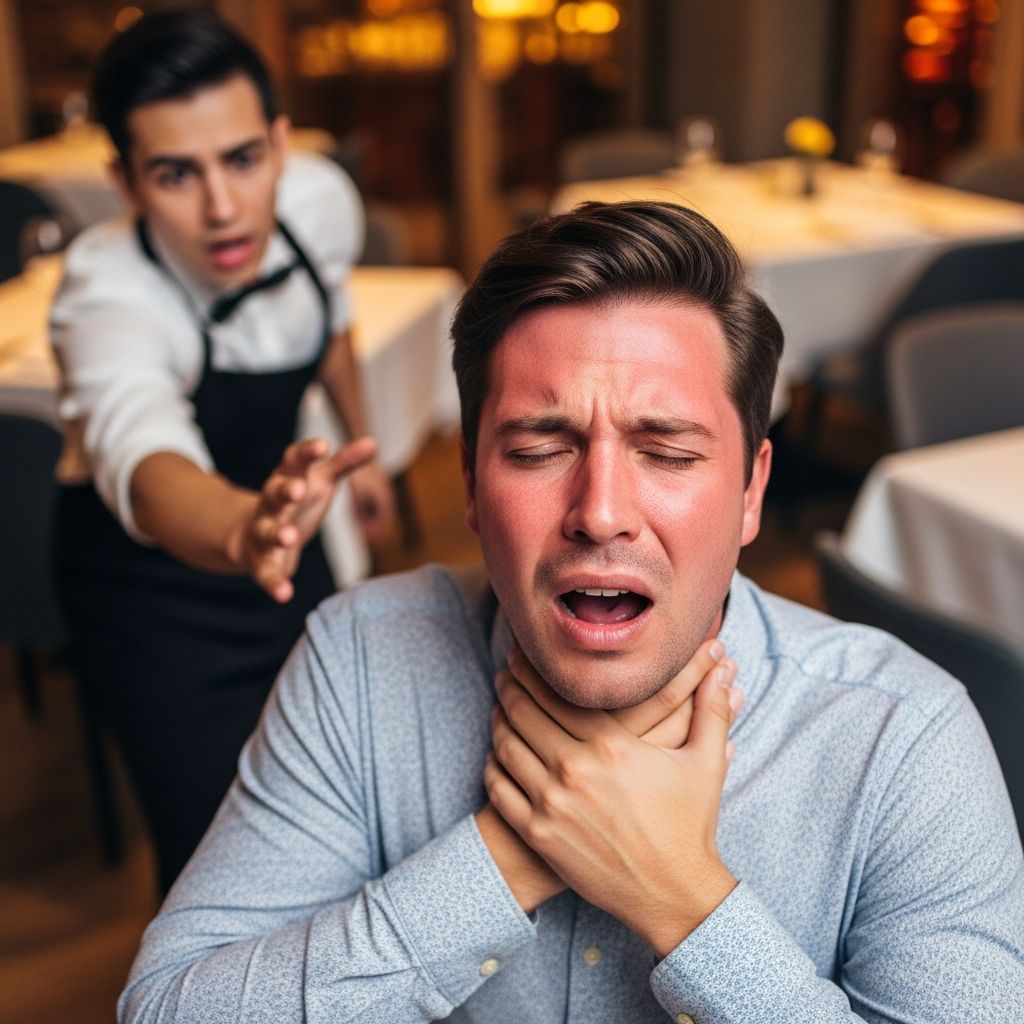
Understanding Restaurant Legal Accountability for Choking Emergencies
When a customer experiences a choking incident at a restaurant, questions naturally arise about who bears responsibility for the emergency and any resulting injuries. The legal framework surrounding restaurant liability in choking situations is multifaceted, involving principles of negligence, duty of care, and food preparation standards. Restaurant owners and operators must navigate complex liability considerations while also understanding their obligations to provide safe dining environments and appropriate emergency response.
The fundamental question of whether a restaurant can be held legally responsible for a customer’s choking incident depends on several critical factors, including how the food was prepared, what caused the obstruction, whether the restaurant fulfilled its duty of care, and how staff responded to the emergency. Understanding these elements helps both restaurant operators and consumers grasp the boundaries of legal responsibility in food service settings.
The Foundation of Restaurant Duty of Care
Restaurants operate under an implied duty of care toward their customers, a legal obligation that extends beyond simply serving food. This duty encompasses maintaining a reasonably safe environment, preparing food in accordance with health and safety standards, and responding appropriately when emergencies occur. The concept of duty of care is foundational to premises liability law and establishes the baseline expectation that restaurants must act reasonably to prevent foreseeable harm to patrons.
The specific scope of this duty includes several dimensions. First, restaurants must ensure that food is prepared in a manner consistent with industry standards and applicable health codes. Second, they must maintain their facilities in a condition that minimizes hazards. Third, they must train staff adequately to handle routine operations and potential emergencies. When a restaurant fails to meet any of these obligations, it may create grounds for legal liability if a customer is injured as a result.
Food Preparation Standards and Liability
One of the most significant liability issues in choking cases involves the quality and safety of food preparation. Restaurants can be held accountable if a customer chokes on food that contains foreign objects or has not been prepared according to appropriate standards. Foreign objects in food—such as small bones in deboned chicken, metal fragments from kitchen equipment, or pieces of shell in seafood dishes—represent a serious liability concern.
The presence of foreign objects in food may constitute negligence because customers have a reasonable expectation that food served at restaurants has been properly inspected and cleaned before cooking and serving. When restaurants fail to implement adequate food preparation procedures or quality control measures, they expose themselves to liability claims. Additionally, food that is not cut into appropriate sizes, not sufficiently cooked, or otherwise improperly prepared can contribute to choking hazards.
Different types of cuisine and dishes present varying levels of choking risk. Establishments serving foods commonly known to present choking hazards bear an enhanced responsibility to prepare these items with extra care and potentially to provide appropriate warnings to customers. This heightened standard reflects the principle that restaurants must account for foreseeable risks associated with the specific foods they serve.
Emergency Response and the Duty to Assist
A critical aspect of restaurant liability emerges when a choking incident actually occurs. The question of how restaurant staff responds to the emergency significantly impacts potential legal responsibility. While most jurisdictions do not require restaurants to train staff in first aid or to provide direct medical intervention during choking incidents, there is a general expectation that restaurants will take reasonable steps to obtain professional help.
The most fundamental response obligation involves immediately contacting emergency services. Restaurants may be found negligent if they delay calling 911 or fail to call emergency responders altogether when a patron is choking. This obligation reflects the principle that restaurants should not make a dangerous situation worse through inaction during a medical emergency.
Beyond calling for emergency services, the duty to assist becomes more complex. Some jurisdictions may hold restaurants accountable if staff members witness a choking emergency and take no action whatsoever, as passive observation during a crisis may violate the basic duty of care. However, the restaurant’s obligation typically does not extend to requiring employees to perform medical procedures like the Heimlich maneuver, which carries its own risks and requires specialized training.
State-by-State Variation in Choking Laws
The legal landscape surrounding choking liability varies considerably across different states. While federal law establishes some baseline food safety standards, individual states have developed their own specific statutes and regulations regarding choking emergencies and restaurant responsibilities. Understanding these variations is essential for both restaurant operators and consumers seeking legal remedies.
Currently, only a limited number of states have enacted specific legislation addressing choking protocols in restaurants and other food service establishments. Among these states, requirements typically focus on informational measures rather than mandatory intervention. Many state laws require restaurants to display signage informing customers and employees about first aid procedures for choking, ensuring that basic information is readily available in the event of an emergency.
Some jurisdictions have developed more comprehensive frameworks that specify training requirements, emergency response protocols, or the availability of emergency equipment. Restaurants operating across multiple states must be aware of the applicable requirements in each jurisdiction where they operate, as compliance standards may differ significantly from one location to another.
Good Samaritan Laws and Staff Protection
Many states have implemented Good Samaritan laws specifically designed to encourage bystanders and staff members to render emergency assistance without fear of legal liability. These laws protect individuals who provide emergency medical care from being held legally responsible for injuries that occur during their efforts to help, even if the assistance is performed imperfectly or causes secondary injuries.
Under Good Samaritan protections, a restaurant employee who attempts to dislodge food from a choking customer’s airway is generally shielded from personal liability for any injuries that result from the attempt. This protection extends to restaurants themselves, as they cannot typically be held liable for injuries caused by their employees’ good-faith emergency assistance if that assistance qualifies for Good Samaritan protection. The law recognizes that emergency situations require quick decisions and that perfect outcomes cannot always be guaranteed.
These protections have important implications for restaurant liability. They reduce the likelihood that restaurants will face claims based on employees’ emergency responses, assuming those responses were made in good faith and without gross negligence. However, Good Samaritan laws do not protect employees or restaurants from liability for failing to respond to emergencies or from gross negligence in their response efforts.
Negligence Standards and Legal Liability
To successfully establish that a restaurant is legally liable for a customer’s choking incident, the injured party typically must demonstrate four elements of negligence. First, they must prove that the restaurant owed them a duty of care. Second, they must show that the restaurant breached that duty through action or inaction. Third, they must establish a causal connection between the breach and the customer’s injury. Fourth, they must demonstrate actual damages, including physical harm or economic losses.
The breach of duty is the critical element that transforms a tragic accident into a matter of legal liability. A breach occurs when a restaurant fails to meet the standard of conduct that a reasonably prudent restaurant operator would maintain under similar circumstances. This might involve serving inadequately prepared food, failing to remove foreign objects before serving, neglecting to implement proper food handling procedures, or failing to respond appropriately to an emergency.
Courts apply an objective standard when evaluating whether a breach occurred, comparing the restaurant’s conduct to what a hypothetical reasonable restaurant would do in the same situation. This prevents restaurants from claiming that they met their obligations simply because they subjectively believed they were acting safely; instead, their conduct must align with industry standards and legal requirements.
Foreign Objects and Defective Food Claims
A specialized category of restaurant liability involves claims based on foreign objects or defects in food that cause choking. When a customer chokes on a foreign object that should not be in the food, this often provides a clear basis for establishing that the restaurant breached its duty of care. Common examples include small bones in chicken dishes, metal fragments, plastic pieces, glass shards, or other debris that contaminated the food during preparation.
These cases differ from situations where a customer chokes on food that is prepared as intended but happens to present a choking hazard due to size or texture. If a chicken bone is properly removed during food preparation but a tiny bone fragment remains, courts must consider whether this represents negligence or an unavoidable aspect of serving certain foods. The standards applied depend on the type of food, industry practices, and what customers could reasonably expect.
Restaurants can strengthen their liability defenses by implementing comprehensive quality control procedures, training staff in proper food preparation techniques, and using appropriate equipment to remove potential foreign objects. Documentation of these procedures demonstrates that the restaurant took reasonable precautions, even if an occasional foreign object inadvertently made its way into a dish.
Compensatory Damages Available to Injured Customers
When a customer successfully proves that a restaurant is liable for injuries sustained during a choking incident, various types of damages may be available. Economic damages compensate customers for measurable financial losses directly resulting from the incident. These include medical expenses for emergency treatment, hospitalization, surgery, or ongoing care related to choking-related injuries. Lost wages during recovery periods are also included, along with costs for any necessary rehabilitation or therapy.
Beyond economic damages, injured customers may pursue non-economic damages for subjective harms that do not have a precise dollar value but nonetheless represent genuine injuries. Pain and suffering damages compensate for the physical pain, discomfort, and emotional distress caused by the incident and recovery process. Emotional distress damages recognize the psychological impact of experiencing a choking emergency and its aftermath. The severity of the choking incident and resulting injuries influences the amount of non-economic damages that courts or juries may award.
The total compensation available depends on the specific facts of each case, including the nature and extent of injuries, the customer’s age and health status, the permanence of any injuries, and the degree of the restaurant’s negligence. In cases involving particularly egregious conduct by the restaurant, punitive damages may also be considered in some jurisdictions, though these are less common in choking cases than in situations involving intentional wrongdoing or gross negligence.
Defenses Available to Restaurants
Restaurants facing liability claims for choking incidents have several potential defenses available. One common defense asserts that no foreign object was present in the food and that the choking resulted from a natural characteristic of the food itself. For example, if a customer chokes on a piece of food that is the appropriate size for the dish being served, the restaurant may argue that this represents an inherent risk of eating rather than negligence.
Another defense argument contends that the customer was aware of or should have been aware of the choking risk associated with the food. For certain foods traditionally known to present choking hazards, restaurants may argue that customers have sufficient knowledge of these risks. However, this defense is typically weaker when applied to regular restaurant customers who have no special expertise about food preparation or inherent choking risks.
Restaurants may also present evidence that they implemented reasonable procedures to prevent choking hazards and that the incident resulted from an unavoidable accident or customer negligence rather than restaurant negligence. This might include demonstrating proper food preparation training, quality control procedures, and appropriate emergency responses. Additionally, restaurants may argue that a customer’s own actions or assumptions contributed to the choking incident, potentially reducing the restaurant’s liability.
Comparison of Restaurant Liability Scenarios
| Scenario | Likely Liability | Key Factor |
|---|---|---|
| Customer chokes on small bone fragment in deboned chicken | Moderate to High | Bone fragments should be removed during preparation |
| Customer chokes on appropriately-sized piece of food served as intended | Low | Natural characteristic of food; customer assumed risk |
| Restaurant staff fails to call 911 during choking emergency | High | Failure to provide basic emergency assistance |
| Staff member performs Heimlich maneuver and injures customer under Good Samaritan law | Low | Protected by Good Samaritan law; good-faith emergency response |
| Metal fragment from kitchen equipment found in food | High | Clear evidence of inadequate quality control procedures |
Frequently Asked Questions About Restaurant Choking Liability
Q: Are restaurants legally required to train staff in first aid and CPR?
A: Most jurisdictions do not legally mandate first aid training for restaurant staff, though many restaurants voluntarily provide such training. However, restaurants must ensure that staff can quickly contact emergency services, and some states require that first aid information be displayed in the workplace.
Q: What should a restaurant employee do if a customer is choking?
A: The primary obligation is to immediately call 911 and request emergency medical assistance. Employees may provide assistance if they are trained and feel confident doing so, and Good Samaritan laws generally protect them from liability for good-faith emergency efforts. However, attempting intervention without training is optional rather than required.
Q: Can a customer sue a restaurant for a choking incident caused by natural food characteristics?
A: Suing for choking caused by natural food characteristics is more difficult but may still be possible if the restaurant failed to warn about choking risks or served inappropriate portion sizes. However, customers are generally assumed to understand risks associated with eating certain foods.
Q: How much time does a customer have to file a lawsuit after a choking incident?
A: The timeframe depends on state law and is governed by statutes of limitations. Most states allow between one and three years from the date of injury, though some allow longer periods for injuries discovered later. Consulting an attorney quickly is important to avoid missing these deadlines.
Q: Do Good Samaritan laws protect restaurants from all choking-related liability?
A: Good Samaritan laws protect employees and restaurants from liability arising from good-faith emergency assistance attempts. However, they do not protect restaurants from liability for negligent food preparation, failure to call emergency services, or other breaches of duty that led to the choking incident.
Q: What types of foreign objects most commonly cause choking liability cases?
A: Bone fragments, metal pieces from kitchen equipment, glass, and plastic fragments are among the most common foreign objects cited in choking liability claims. These objects should not reasonably be present in properly prepared food and indicate inadequate quality control.
References
- Restaurant Injuries Liability — Goldberg Law. 2024. https://goldberglaw.com/restaurant-injuries-liability/
- What Are Restaurant Policies If Someone Is Choking? — Dechoke International. 2024. https://dechokerinternational.com/real-life-saves/what-are-restaurant-policies-if-someone-is-choking/
- Restaurant Negligence — Stein Law Injury Lawyers. 2024. https://www.steinlaw.com/injury-location/premises-liability/restaurant-negligence/
Similar Articles








Read full bio of medha deb




