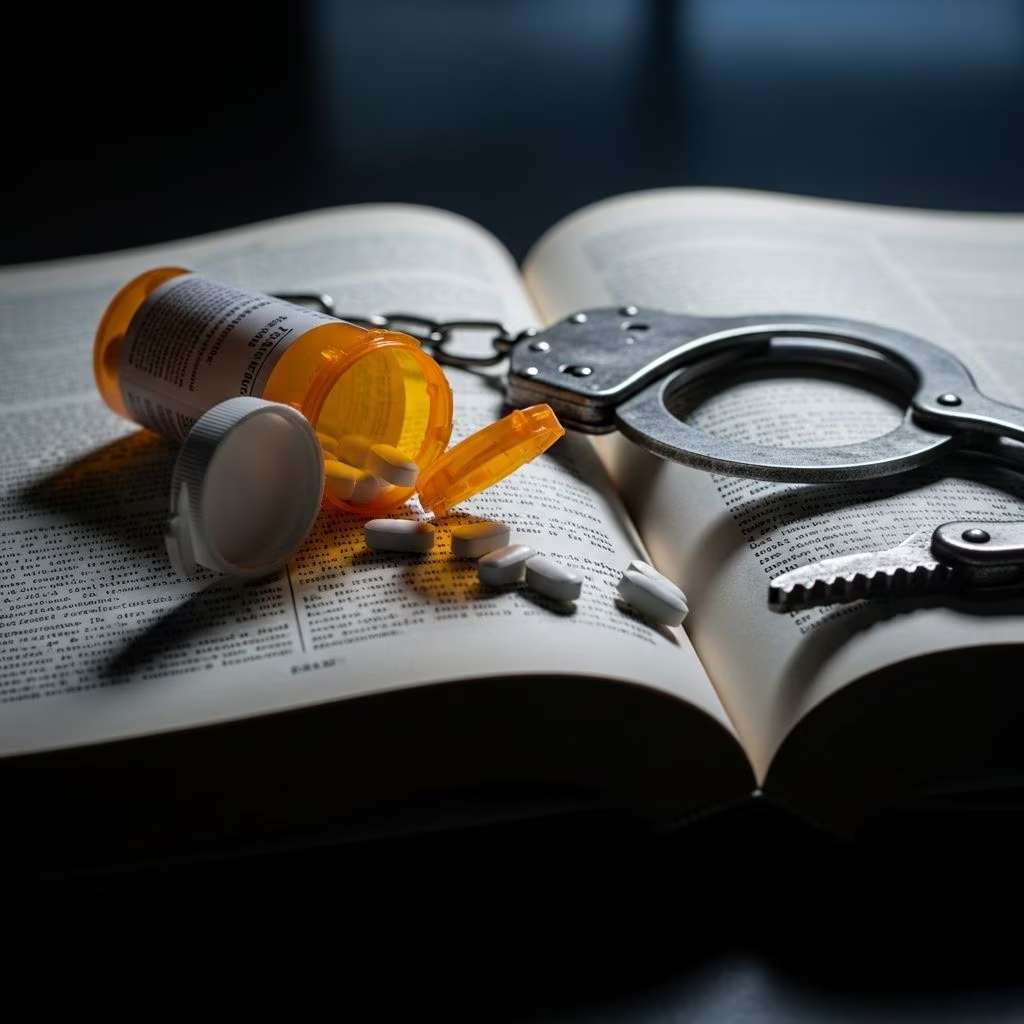
Prescription medications, particularly controlled substances, are tightly regulated to prevent abuse and diversion. When these drugs or the prescription pads used to obtain them are lost or stolen, specific reporting requirements kick in under federal and state laws. Failing to report promptly can lead to legal troubles, license suspension, or accusations of negligence. This article breaks down who must report, how, and why, drawing from official regulations.
Why Reporting Matters: Preventing Diversion and Protecting Yourself
Controlled substances like opioids, stimulants, and benzodiazepines carry high risks of misuse. Theft or loss reporting helps law enforcement track potential black-market activity and shields reporters from liability if forged prescriptions surface later. For instance, physicians reporting stolen pads can prove subsequent illegal scripts weren’t theirs. Pharmacies and patients also face rules to maintain accountability in the supply chain.
Non-reporting can result in fines, professional sanctions, or criminal charges, especially if losses suggest internal diversion. Early reporting creates a paper trail essential for audits and investigations.
Federal Requirements for Pharmacies and Registrants
The Drug Enforcement Administration (DEA) mandates swift action for theft or significant loss of controlled substances. Registrants, including pharmacies, must notify their local DEA Field Division Office in writing within one business day of discovery, using DEA Form 106. This form details the substance, quantity, NDC number, and circumstances of the loss.
Form 106 covers burglary, robbery, employee theft, or even inventory discrepancies deemed significant. While all thefts require reporting, only substantial losses trigger the one-day rule; however, when in doubt, report immediately to local law enforcement and DEA. The form is submitted electronically via the Theft/Loss Reporting Online (TLR) system or manually.
| Loss Type | Reporting Timeline | Required Form |
|---|---|---|
| Theft (any amount) | 1 business day | DEA Form 106 |
| Significant loss (e.g., inventory shrinkage) | 1 business day | DEA Form 106 |
| Listed chemicals (unusual/excessive loss) | 1 business day | DEA Form 107 |
Note: State laws often add parallel requirements, such as notifying the Board of Pharmacy alongside federal filings.
State-Specific Rules: Focus on California Examples
California imposes multi-step reporting for lost or stolen prescription pads and drugs. Physicians must report pad theft/loss to local law enforcement first, obtaining a police report number. Within three days, submit to the Department of Justice (DOJ) CURES program using that number. Immediately notify the State Board of Pharmacy and Medical Board via email.
- Step 1: File police report for evidence.
- Step 2: Report to DOJ/CURES within 3 days (Health & Safety Code §11165.3).
- Step 3: Email California Board of Pharmacy at stolenrx@pharmacy.ca.gov.
- Step 4: Notify Medical Board at stolenpads@mbc.ca.gov or by mail.
For pharmacies, California Code of Regulations (16 CCR §1715.6) requires reporting drug theft/loss to the Board within 30 days. This includes any controlled substance loss from employee theft or significant discrepancies (e.g., over 99 oral dosage units). Additional details like NDC, prior losses, and involved license numbers strengthen the report.
Prescription Pads vs. Actual Drugs: Key Differences
Lost pads pose unique risks since thieves can forge prescriptions for controlled substances. Prescribers must act fast to flag pads on public lists, alerting pharmacists and police. In contrast, drug losses focus on inventory audits and diversion probes.
| Item Lost/Stolen | Primary Reporters | Key Agencies | Timeline |
|---|---|---|---|
| Prescription Pads | Physicians/Prescribers | Local Police, DOJ/CURES, Boards | 3 days (CA) |
| Controlled Drugs | Pharmacies/Registrants | DEA, State Pharmacy Board | 1 business day (Fed); 30 days (CA Board) |
Patients rarely have formal reporting duties for personal losses but must document theft via police reports for insurance or refill requests.
What Patients Need to Know About Lost or Stolen Meds
Individuals losing personal prescriptions, especially controlled substances, cannot get early refills legally, even with a police report. Federal and state laws prohibit replacements to curb abuse. Providers for stimulants (e.g., Adderall), opioids, or benzos are bound by these rules.
- Stimulants: No early refill; consider non-controlled alternatives like Strattera for ADHD.
- Opioids/Benzos: Strict no-refill policy until scheduled date.
- Documentation: Always file a police report for records.
Insurance may cover losses with proof, but pharmacies forward reports to PBMs for review.
Consequences of Failing to Report
Neglecting reports invites scrutiny. Pharmacies risk DEA sanctions, license revocation, or fines up to $10,000 per violation. Physicians could face Medical Board discipline. In audits, unreported losses fuel suspicions of diversion.
Recent federal updates extend Form 106 submission to 45 days for investigations, but initial notification remains urgent.
Best Practices for Compliance
To minimize risks:
- Secure storage: Use locked cabinets and tamper-evident pads.
- Inventory regularly: Catch discrepancies early.
- Train staff: On reporting protocols and red flags.
- Digital tools: Leverage electronic prescribing to reduce pad thefts.
- When in doubt: Report to law enforcement first.
Frequently Asked Questions (FAQs)
What is DEA Form 106 used for?
It’s the official report for theft or significant loss of controlled substances, submitted within one business day to the DEA Field Office.
Can I get an early refill for stolen Adderall?
No, federal regulations prevent early refills for controlled substances like stimulants, even with a police report.
How soon must California physicians report stolen pads?
Police first, then DOJ/CURES within 3 days, plus immediate board notifications.
Does ‘significant loss’ include small inventory errors?
DEA defines it broadly; report if unsure, especially for controlled drugs.
What if drugs are lost in transit?
Include carrier details in reports to state boards and DEA.
This comprehensive guide equips prescribers, pharmacists, and patients with actionable knowledge. Always consult local regulations and legal experts for case-specific advice.
References
- 4 Reporting Requirements for Lost or Stolen Prescription Pads — Brown License Law. Accessed 2026. https://brownlicenselaw.com/4-reporting-requirements-for-lost-or-stolen-prescription-pads/
- DEA Form 106 and Loss of Controlled Substances — U.S. Pharmacist. 2015-12-01. https://www.uspharmacist.com/article/dea-form-106-and-loss-of-controlled-substances
- Lost or Stolen Controlled Meds — Mending Mental Health. Accessed 2026. https://www.mendingmh.com/lost-or-stolen-controlled-meds
- Report a Drug Theft/Drug Loss — California State Board of Pharmacy. Accessed 2026. https://www.pharmacy.ca.gov/licensees/facility/dea106.shtml
- Lost, Stolen, Spilled or Broken Medication — Ambetter Health (PDF Policy). Accessed 2026. https://www.ambetterhealth.com/content/dam/centene/Buckeye/policies/pharmacy-policies/OH.PHAR.05-LostStolenSpilledBrokenMedication.pdf
- Cal. Code Regs. Tit. 16, § 1715.6 – Reporting Drug Loss — Cornell Law (CA Regs). Accessed 2026. https://www.law.cornell.edu/regulations/california/16-CCR-1715.6
- Theft/Loss Reporting — DEA Diversion Control Division (USDOJ). Accessed 2026. https://www.deadiversion.usdoj.gov/21cfr_reports/theft/theft-loss.html
- Reporting Theft or Significant Loss of Controlled Substances — Federal Register. 2023-06-22. https://www.federalregister.gov/documents/2023/06/22/2023-13085/reporting-theft-or-significant-loss-of-controlled-substances