
Removing GPS Trackers from Vehicles: Legal Risks Explained
Uncover the legal boundaries of discovering and detaching GPS trackers from your car—know when it's permitted and when it could lead to charges.
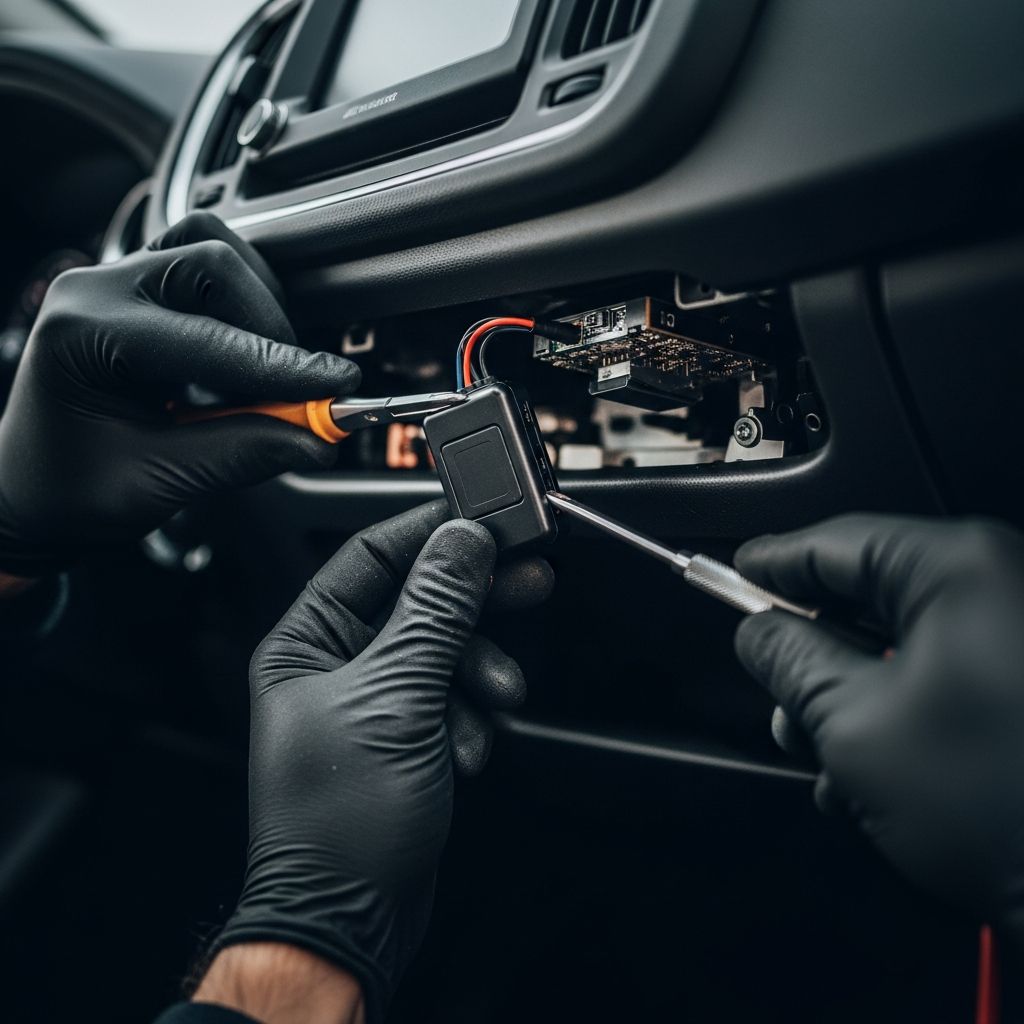
GPS tracking devices on personal vehicles raise significant privacy concerns, but removing them isn’t always straightforward. Legality hinges on ownership, consent, installer identity, and jurisdiction-specific rules, potentially turning a defensive action into charges like theft or evidence tampering.
Understanding GPS Trackers and Their Common Uses
GPS trackers are small electronic devices that monitor a vehicle’s location in real-time using satellite signals. They serve legitimate purposes, such as fleet management for businesses, recovery of stolen cars by insurers, or parental oversight of teen drivers. However, unauthorized installation often stems from suspicion in relationships, debt collection by lenders, or covert surveillance by private parties.
In financed or leased vehicles, lenders frequently mandate trackers as collateral protection. For instance, ‘buy-here-pay-here’ dealerships may install them without clear disclosure, leading to disputes. Law enforcement deploys them too, but only under strict constitutional limits established by landmark rulings.
- Private sector applications: Employers track company cars; parents monitor family vehicles.
- Financial agreements: Lenders enforce loan terms via embedded devices.
- Government use: Investigatory tools requiring judicial oversight.
Discovering one unexpectedly can provoke alarm, prompting immediate removal. Yet, this impulse demands caution, as context determines if the act constitutes self-protection or a crime.
Key Supreme Court Precedent: United States v. Jones
The 2012 Supreme Court decision in United States v. Jones fundamentally shaped GPS tracking laws. The Court ruled that physically attaching a GPS device to a vehicle and monitoring its movements constitutes a ‘search’ under the Fourth Amendment, necessitating a warrant for law enforcement. This unanimous holding emphasized that prolonged surveillance invades reasonable expectations of privacy, even on public roads.
Justice Scalia’s majority opinion clarified that trespassory placement of tracking tech triggers constitutional protections. While the case involved police actions, it influenced private use interpretations, bolstering arguments against warrantless tracking by non-government entities. Post-Jones, agencies must secure warrants under standards like probable cause, typically via statutes such as California’s Penal Code sections 1524(a)(12) and 1534(b).
This precedent empowers vehicle owners facing unauthorized trackers but doesn’t grant blanket removal rights. Destroying or discarding a device presumed to be police property could invite separate charges, as seen in cases where ‘static’ signals led to theft accusations.
When Removal of a GPS Tracker Is Legally Permissible
Ownership and consent form the bedrock of legality. If you outright own the vehicle—free of liens—and discover a tracker installed without permission, removal is generally lawful. This applies to devices placed by ex-partners, suspicious spouses, or unlicensed private investigators lacking court orders.
| Scenario | Legal Status | Key Factors |
|---|---|---|
| Owner finds unknown tracker | Legal | No consent; outright ownership |
| Electrical interference from device | Legal | Safety risk to vehicle |
| Court order authorizes removal | Legal | Judicial permission obtained |
| PI-installed without warrant | Legal | No government authority |
Preservation matters: photograph the device in place, note its location, and store it safely rather than destroying it. This documents good faith and avoids tampering claims. In states like California, Civil Code 2983.37 mandates disclosure for certain dealers, allowing complaints to consumer protection agencies if violated.
Circumstances Where Removing a Tracker Could Be Illegal
Not all situations favor removal. Interfering with authorized devices risks contract breaches, obstruction, or property crimes. Financed cars often include tracker clauses in loan documents; disabling them breaches agreements and may constitute hindering a secured creditor, a crime under laws like Texas Penal Code § 32.33.
- Leased or financed vehicles: Tracker part of lender terms—removal voids contract.
- Law enforcement with warrant: Federal crime if identified as government property.
- Court-ordered monitoring: Common for probationers or sex offenders.
- Non-owner removal: Theft if vehicle belongs to another.
Over 30 states criminalize unauthorized placement as stalking, but removal by non-consenting owners remains defensible if not destructive. Prosecutors may pivot to evidence concealment under codes like California’s Penal Code § 135 if the device is discarded.
State-Specific GPS Tracking Regulations
Laws vary widely. California’s Penal Code § 637.7 prohibits electronic tracking without consent, with misdemeanor penalties up to 6 months jail and $1,000 fines—exempting lawful law enforcement. South Carolina’s Bill 3213 bans non-consensual use by individuals or police.
The National Conference of State Legislatures tracks statutes prohibiting unapproved trackers on motor vehicles, defining them as devices intended for location monitoring. Indiana requires warrants mirroring federal standards. Always verify local penal codes, as violations carry civil and licensing repercussions for installers.
Practical Steps If You Discover a Suspicious Tracker
- Do not touch immediately: Inspect without disturbing; take timestamped photos/videos from multiple angles.
- Document everything: Log date, location found, vehicle details, and any markings.
- Consult a lawyer: Contact a criminal defense attorney before acting to assess context.
- If removing: Gently detach, place in a Faraday bag to block signals, and secure it.
- Report if needed: File with state AG for consumer violations or police for stalking.
Avoid driving to isolated areas post-discovery, as it could fuel suspicions. In employment contexts, company policy demands disclosure; undisclosed removal risks termination.
Potential Criminal Charges and Defenses
Charges like theft arise if the tracker is deemed ‘property’—police have argued this in warrant applications after signals cease. Tampering defenses hinge on lack of knowledge: proving you reasonably believed it unauthorized. Fourth Amendment challenges can suppress evidence from illegal tracking.
In the Indiana case of Derek Heuring, courts examined if unmarked removal equals theft, often ruling against if ownership was unknowable. Strong defenses include ownership proof, absence of consent, and professional installation evidence pointing to illegality.
Frequently Asked Questions About GPS Tracker Removal
Is it ever okay for police to track my car without a warrant?
No. United States v. Jones mandates warrants for GPS use; warrantless tracking violates the Fourth Amendment.
What if the tracker is on a company vehicle?
Employers must disclose tracking; undisclosed removal breaches policy but not necessarily criminal if no contract clause.
Can I destroy a tracker I find on my own car?
No—preserve it to avoid destruction of evidence charges. Store securely after documentation.
Do all states have anti-stalking laws covering GPS?
Over 30 do, criminalizing non-consensual placement; check NCSL for specifics.
What penalties face unauthorized installers?
Misdemeanors like California’s § 637.7: up to 6 months jail, $1,000 fine.
Protecting Your Privacy in a Tracked World
As technology proliferates, vigilance is key. Regularly inspect undercarriages, wheel wells, and OBD-II ports—common hiding spots. Anti-tracker sprays or detectors exist but consult legality first. Ultimately, legal counsel bridges the gap between instinct and compliance, safeguarding rights amid evolving surveillance norms.
References
- Is It Illegal To Remove GPS Tracking Device On Car? — Konnect GPS. 2023. https://konnectgps.com/blogs/news/is-it-illegal-to-remove-gps-tracking-device-on-car
- Can You LEGALLY Remove a Police GPS Tracker From Your Car — YouTube (Video Transcript). 2023. https://www.youtube.com/watch?v=4wkO-Y83J5A
- Can You Legally Remove a GPS Tracker From Your Car in Los Angeles? — LA Criminal Defense Attorney. 2026-03-01. https://www.lacriminaldefenseattorney.com/blog/2026/march/can-you-legally-remove-a-gps-tracker-from-your-c/
- Is it Illegal to Remove GPS Tracker from a Financed Car? — Moto Watchdog. 2023. https://www.motowatchdog.com/blog/is-it-illegal-to-remove-gps-tracker-from-a-financed-car
- Is it illegal to remove a gps tracking device put on my car by a creditor without my permission? — Avvo Legal Answers. 2012. https://www.avvo.com/legal-answers/is-it-illegal-to-remove-a-gps-tracking-device-put–709125.html
- GPS Tracking Laws by State (Comprehensive Guide) — FreightWaves. 2023. https://www.freightwaves.com/checkpoint/gps-tracking-laws/
- Private Use of Location Tracking Devices: State Statutes — National Conference of State Legislatures. 2023. https://www.ncsl.org/technology-and-communication/private-use-of-location-tracking-devices-state-statutes
Similar Articles








Read full bio of medha deb




